This Adventurous Age

Adventures travelling and working around Australia.


Leave a comment

1999 Travels September 10

FRIDAY 10 SEPTEMBER     MORNINGTON

Despite the background of urban and traffic noise again, we slept in somewhat.

After breakfast, John went back to the hospital. N died an hour or so later.

There had been drama during the night. H got a shock from a light switch in the hospital and was taken by ambulance to the larger Frankston Hospital! She is alright, though, and home now.

John had a big whisky after he got back to the van – in a salute to N, who liked her whisky too.

We went to the shops for some much needed supplies. I put films into a shop there for processing. I phoned our dentist and made an appointment. John phoned and booked Truck in for a service at Frankston – next Friday. It would be more convenient from here, if we decided to stay longer than the week we’d booked.

After lunch, drove to H’s place at Beaumaris. Her daughter was there too. We sat round and talked – mostly about her shock, our travels, gemstones. We had tea there – take away chicken and fried rice, and a superb bottle of champagne.

The drive back from Beaumaris to Mornington at night, was not too bad.


Leave a comment

1999 Travels September 9

THURSDAY 9 SEPTEMBER   BALLARAT TO MORNINGTON   180kms

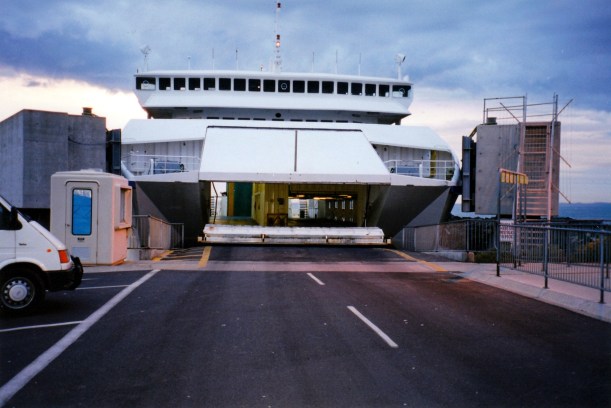
We had established, via some phone calls  yesterday, that we would be able to take the Truck and van across Port Phillip Bay on the ferry from Queenscliff to Sorrento, and that the first one left at 7am. This seemed a much better option than negotiating the morning traffic through Melbourne.

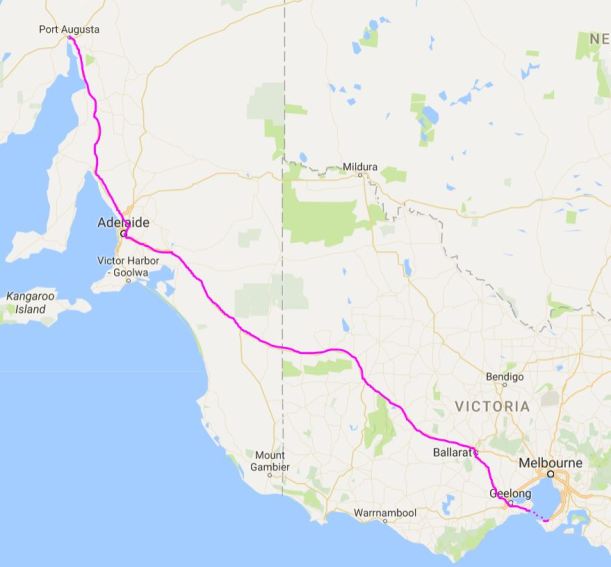
We left the caravan park at 4.30am and travelled down the Midland Highway, through Geelong, to Queenscliff, getting there about 6.30 am.

Because it was the early run, the caravan was free on the ferry, which was a lovely bonus! It cost $58 for Truck and us, though.

Somewhere on the drive, we realized that today was the 9-9-99!

The 45 minute trip across the narrow part of the Bay, just inside the Heads, was interesting – we hadn’t done that before. It certainly was a much more pleasant alternative to the city in peak hours.

09-09-1999 driver view q-s ferry.jpg

Driver’s eye view of the Queenscliff ferry, before loading ramp was put down

We were off the ferry and had driven the 20 kms to Mornington, by 8.30.

Drove straight to the hospital and were able to find a place quite close to park the rig. I waited in Truck, while John visited his sister, for about three hours. I read, and got out and walked around, every so often.

While I was waiting, a man stopped and came over to talk. He was a local Trakmaster owner and he was interested to look at our bike rack arrangement. He was planning a trip like ours, so was interested to hear what we had done, to date.

While I was talking to him, John came out of the hospital, with another sister, E.

We booked into the Mornington Caravan Park, which looked alright from the outside, for $12 a night. Booked in for a week, given some uncertainty about how long we might need here. Our allocated site was very nice, surrounded by hedges, which made it quite private. The amenities were clean and quite adequate. We’d had to pay a $30 key deposit for these, too.

After we got set up for a stay of at least a week, John went back to the hospital.

I did some cleaning and ordering of the van – needed after our dash from just about half way across the continent!

John came back at tea time and we had soup, fettucine with sauce from a jar.

It was a very early night for both of us. We were exhausted, rather like jet lag. I feel almost disoriented – had expected to be relaxing by a very different coast, at this point in time.

John said that N was so pleased to see him, so it was worth the effort of the past couple of days.

09-09-1999 to mornington

Our last two days…….


Leave a comment

1999 Travels September 8

WEDNESDAY 8 SEPTEMBER   PORT AUGUSTA TO BALLARAT   970kms

It was still dark when we left the caravan park, at 5.20am.

Given where it is located, at the crossroads of both the north-south and the east-west routes, there was no problem finding an open fuel outlet, at that time, and we filled the tank – at 75cpl.

We had an uneventful run south, opting to go through Adelaide, as the route that would allow us the fastest driving. By the time we reached there, the morning rush hour was over, and traffic more normal. However, given the months we’d been in the outback, even that seemed rather busy!

Truck pulled the van up the Adelaide Hills steadily. The section from Adelaide to Murray Bridge has been vastly improved from how I remember it, in the 60’s and 70’s, and was much easier driving than I expected.

We alternated the driving, changing each hour. Had a brief fuel and lunch stop at Tailem Bend – fuel was 74cpl.

Crossing the border into Victoria meant, of course, that we “lost” half an hour of time.

It was dark by the time we reached Ararat, so the last hour and a half of driving was again in the dark. Like yesterday, the number of trucks seemed to suddenly proliferate.

There was another fuel stop at Beaufort – 75cpl. Towing on the highways, at a fairly steady speed, I was able to calculate that we were doing about 7.4kms per litre of fuel.

We reached Ballarat at 8pm, and very tired we were, too. Booked into our old friend, the Lake Wendouree Caravan Park – $15.75, after discount. That was actually cheaper than we paid in January last year – must be because it is outside the holiday period.

Tea was leftover chicken, from last night’s meal, with some salad that I threw together quickly. Then we fell into bed, after making phone calls. Sister N was still hanging on.

Today’s drive has set a record for the distance we have towed in one day. I fervently hope it is a record that we never break!


Leave a comment

1999 Travels September 7

TUESDAY 7 SEPTEMBER   MT IVE TO PORT AUGUSTA   477kms

Today’s plan was to drive south west, to Streaky Bay, on the coast of the Eyre Peninsula. We were definitely ready for some sea again! We still had, roughly, six weeks before needing to be in Melbourne to catch the ferry to Tasmania. Time enough to explore sections of the coast as we headed back that way.

Before leaving Mt Ive, spent some time adjusting the van brakes because the left wheel was locking when the brakes were applied. We seemed to fix it, by trial and error, and driving up and down a station track, testing the adjustments.

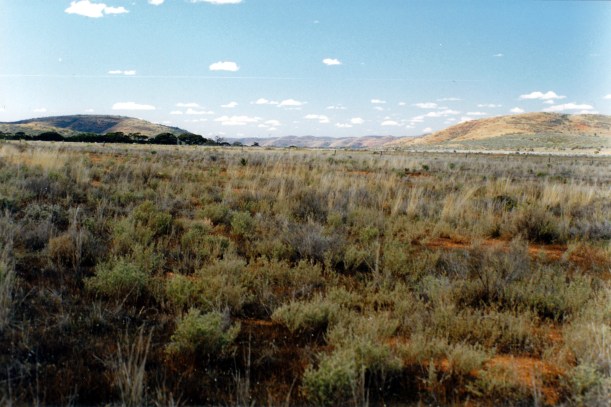
The drive south, through the Gawler Ranges, past Yardea and Paney Stations, was very pleasant and varied. The roads were unsealed, of course, to Minnipa. In places, the surface was gravel, but there were occasional slightly sandy sections too.

09-07-1999 01 Gawler ranges from Yardea road.jpg

Gawler Ranges from Yardea road

John had done the usual entering of navigation points on the GPS, last night – useful, because the wasn’t a lot of signage.

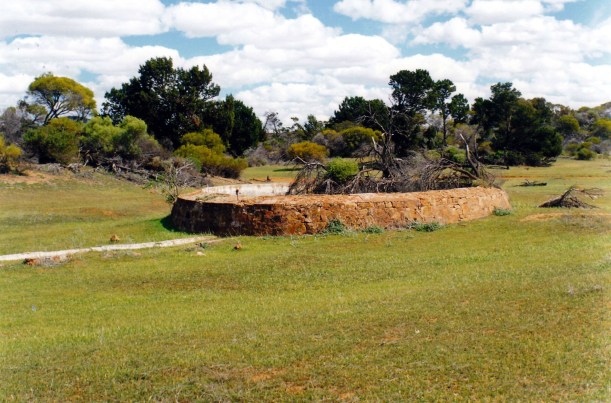
We stopped to look at an unusual, large, round stone tank or well. The pastoral relics in these parts are most interesting, with a history of sheep grazing going well back into the 1800’s.

09-07-1999 02 old well yardea

Old stone water tank on Yardea Station

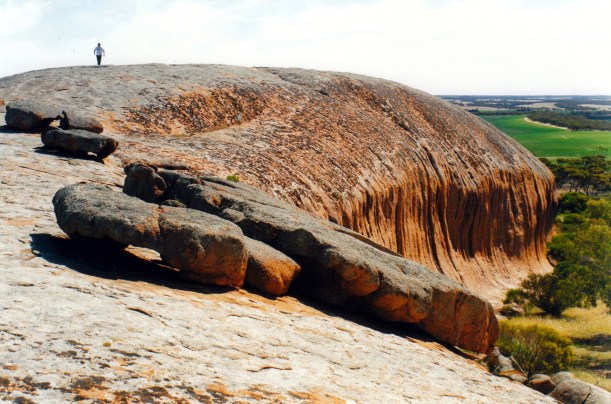
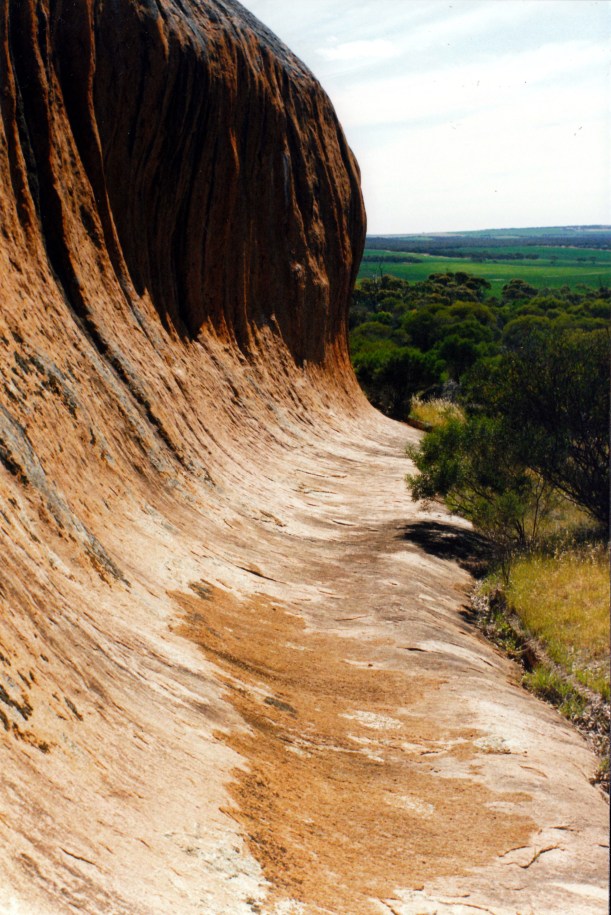
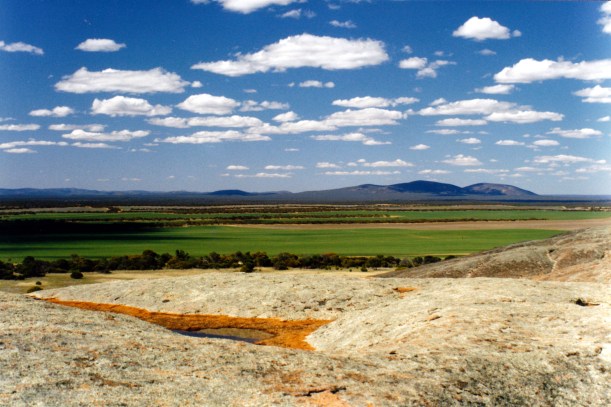
We detoured slightly, to Pildappa Rock, not far from Minnipa. This is a “wave” rock formation, quite high, with good views from the top. Technically, it is a pink granite inselberg.

09-07-1999 04  wave rock minnipa.jpg

On top of Pildappa Rock

There were stone gutters built at the base of the rock, to collect and channel water – every little helps, in that dry country.

09-07-1999 05  Wave Rocks and water collecting gutters.jpg

Water collecting gutter built at base of Pildappa Rock

We had our lunch at Pildappa Rock, then climbed to the top – which was quite easy as one side is almost stepped, with gradual rises up. The walk up, and exploring on the top, was interesting. There were natural rock waterholes, of varying sizes, in the rock surface, some with plants growing due to the moisture. The top was quite extensive and we  wandered all over it.

09-07-1999 06  Gawler Ra from Pildappa Rock.jpg

Gawler Ranges seen from top of Pildappa Rock, and a gnamma rock waterhole

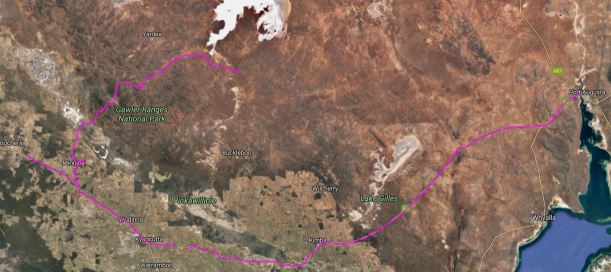
We reached the Eyre Highway at Minnipa, about 3pm, and turned west. Turned on the mobile phone and found there was a signal and a message downloaded from John’s sister H, asking him to phone her. We stopped and John did this. One of the other sisters, N, was in hospital in Mornington, in her last days, and was hoping to see John.

We continued driving on, debating about what we should do. Our initial reaction was that we were too far away, and that it would take us days to reach Melbourne. But, near Poochera, we decided to turn around and try to make it back before she died. John needed to at least think that he had made the effort. If he was too late, he would at least be there with the family for the funeral.

From then, we alternated the driving, having about 320kms to go to reach Port Augusta, which seemed like a feasible place to stop for the night. The last hour was spent driving in the dark. The number of semi-trailers on the road seemed to suddenly increase as it got dark! That last hour was not enjoyable at all – and it was me driving!

We made no stops, except to change drivers, and to get fuel at Kimba – adding just a top up of 20 litres, at 84 cpl.

Noted that the bulk of Iron Knob, as we passed it, looked huge and impressive.

In Port Augusta, bought take away chicken and chips, and went to the Port Augusta Holiday Village. After the Big 4 discount, this cost $15.30. We were able to stay hitched up, and did a very minimal set up.

John phoned H for an update and to let her know what we were doing.

We went virtually straight to bed after that, gearing up for a very early start tomorrow.

09-07-1999 to pa.JPG

Our roundabout route to Port Augusta


Leave a comment

1999 Travels September 6

MONDAY 6 SEPTEMBER   MT IVE STATION

Today was a pleasant one, not too hot, with some cloud and some sunshine.

We obtained a mud map of station tracks, when we booked in yesterday.

Were able to top up our fuel with 20 litres here – 86cpl.

Our first destination today was Kath’s Castle – a columnar rhyolite rock formation – which means pillar like shapes. The track was narrow, but not too rough. From its end, we walked up a small, dry, creek bed to reach the wall-like formation.

09-06-1999 01  scene from Kaths Castle.jpg

Kath’s Castle

We then climbed the hill beside Kath’s Castle, to see what the view from the top was like. The walk was longer than we’d anticipated, as the skyline was further than it looked!

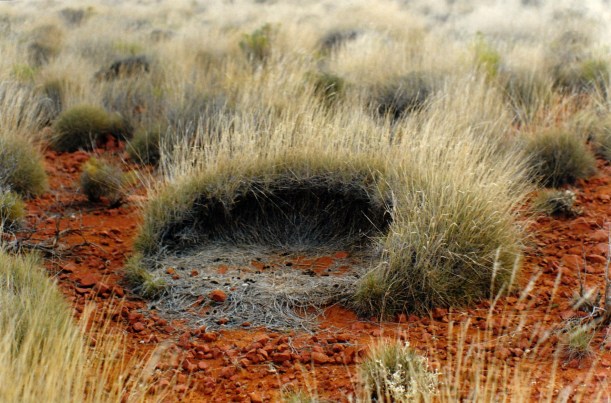
Along the way, disturbed a number of wallabies and euros or kangaroos – I still can’t tell the difference, much of the time. We saw where they make circular “nests” in the spinifex that was prevalent through here.

09-06-1999 02  roo nest.jpg

The nest of a wallaby or euro in the spinifex

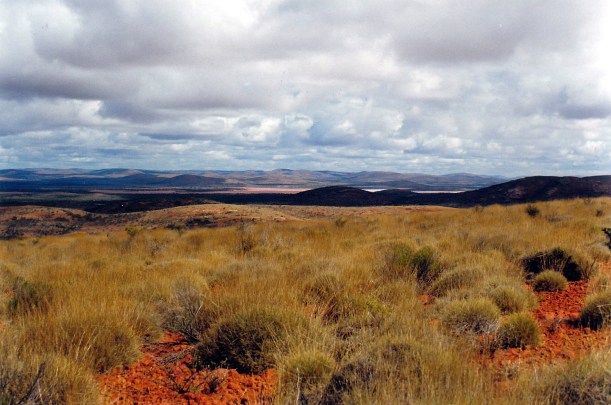
The view from the ridge was worth the effort. There were good views over the distant Lake Gairdner.

09-06-1999 03  view from mt gairdner.jpg

The outlook from the ridge behind Kath’s Castle

Clambered back down to Truck and drove on to Lake Gairdner. This was so surprising and so brilliant that we had some difficulty taking in what we’d come across, by a chance reading of a snippet in a magazine.

09-06-1999 05  lake gairdner.jpg

Lake Gairdner

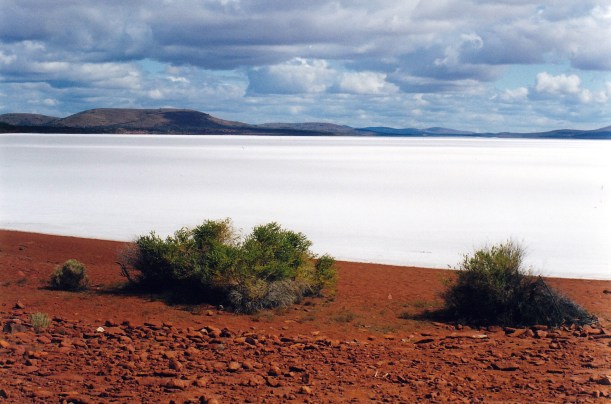
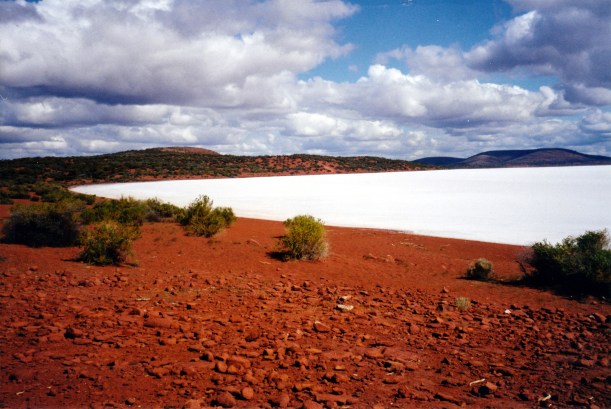
Lake Gairdner is a huge, brilliant white, dry, salt lake. On a map, it looks nearly as big as Lake Eyre, and is, in fact, Australia’s third largest salt lake. Yet we had never before heard of it! It is really beautiful and certainly should be better known.

09-06-1999 lake gairdner view north.jpg

Looking north – Lake Gairdner receding into the distance

With its red shores, and low hills surrounding it distantly, and the really white surface, it is much more scenic than Lake Eyre.

09-06-1999 12  Lake Gairdner panorama 1.jpg

The contrasts of Lake Gairdner

We sat and ate lunch, just taking in the outlook over the Lake – in all directions.

When the sun came out from behind clouds, interesting light effects were created on the salt surface of the Lake.

09-06-1999 06 on Lake Gairdner looking nth

Sun shining through a hole in the cloud, onto the Lake surface

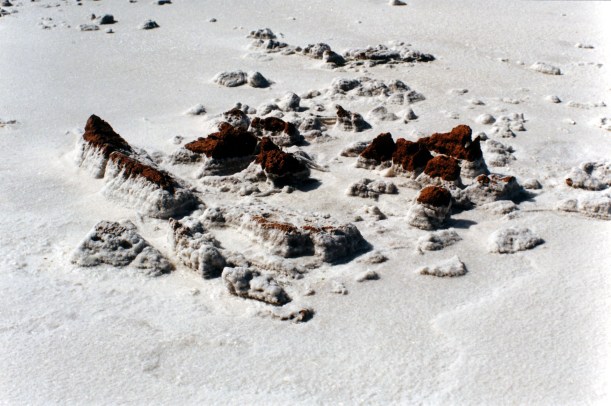
We spent some time on the Lake – walking on it and taking photos. The salt crust is about a metre thick, though in places some underlying red earth outcrops through the salt in some more shallow sections.

09-06-1999 07  wendy on.jpg

This lake is vast….

09-06-1999 10  Lake Gairdner surface detail.jpg

Salt grains encrusting an outcrop of red earth, on the lake

The sand grains are coarse and the patterns they make are interesting in themselves.

It was an absolutely fascinating, impressive place that will remain a highlight of our travels.

09-06-1999 11 Lake Gairdner John in distance

The dot out on the Lake is John walking

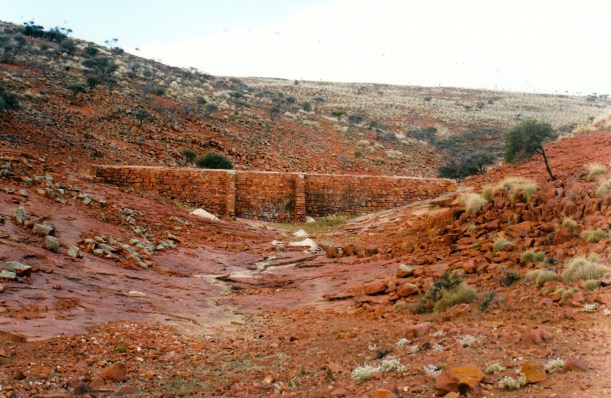
Our final destination for the day was an old rock wall dam, built across a little creek valley by the early pastoralists. It showed great craftsmanship in the stone wall construction, worthy of somewhere more significant than this old sheep property.

09-06-1999 17  old dam mt ive.jpg

Dam wall on Mt Ive Station

09-06-1999 18  Mt Ive old dam detail.jpg

John inspecting the workmanship of the dam wall

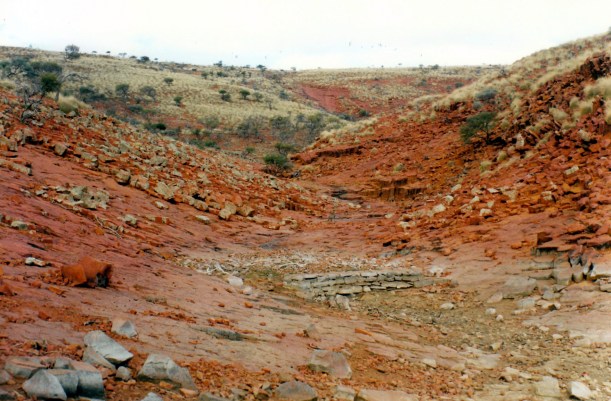
We walked up the dry creek valley for some distance and saw numbers of wallabies, euros and a small herd of goats. It was, therefore, a very smelly creek bed!

09-06-1999 dam valley

Dry valley behind the dam wall – with goats

We drove a total of 81kms today, on station tracks that were fairly slow going and sometimes rather rough and stony.

09-06-1999 20  Mt Ive kangaroo drinks.jpg

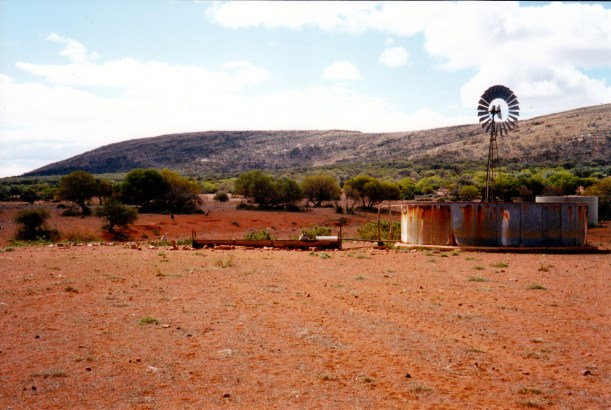
Water from underground – windmill, tanks and drinking trough, with kangaroos drinking

Tea was soup, BBQ steak, baked potatoes and vegies.

What a full day we had! What a wonderful place we stumbled upon!

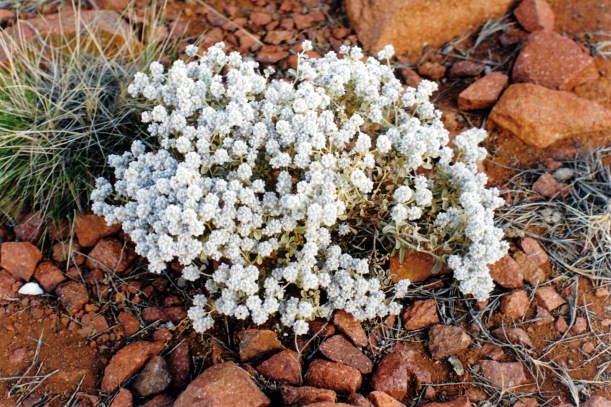
09-06-1999 19 gawler range wildflowers


Leave a comment

1999 Travels September 5

SUNDAY 5 SEPTEMBER   WOOMERA TO MT IVE STATION  419kms

Today was much less windy, and also cooler.

We left Woomera about 9.15am, after getting fuel – 80cpl.

We had to retrace our route of a couple of days ago, back north up the Stuart Highway, for the 115kms to Glendambo, which was a bit tedious. We noticed puddles of water beside the road, where there had been none of Friday.

Topped up the fuel at Glendambo – 89cpl. That says something about the nature of roadhouses on main highways!

Then we were on to new ground again, heading west to Kingoonya, through rather flat and dull country. The road was a reasonable gravel surface. Just before Kingoonya, we merged with the main Perth and Alice Springs railway and had to cross it before we got into the township. This is a battling little place, once a centre for local farming and for railway workers, but the latter were relocated and the place is heading to be a ghost town. There was no reason for us to stop there – it has no fuel supplies.

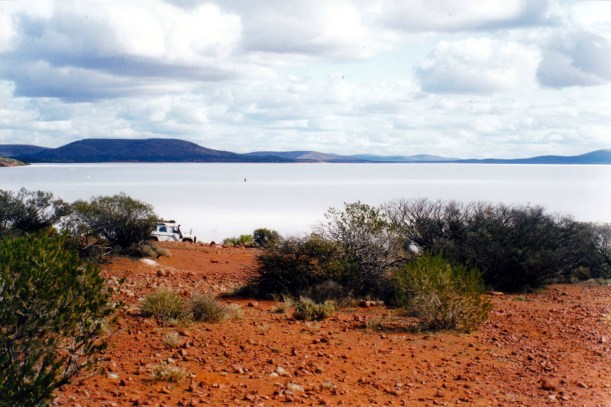
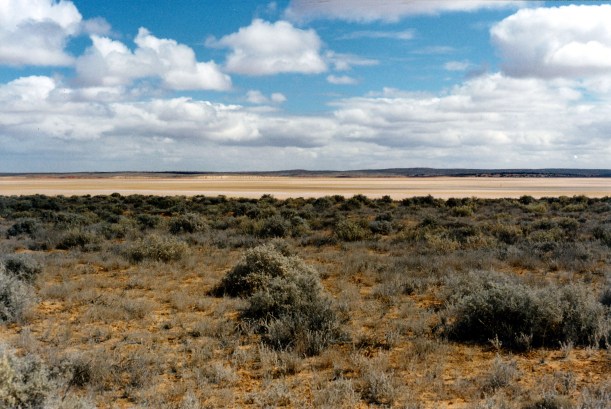
We took the dirt road south, and the country almost immediately became more interesting, with some hills. At first, these were mostly low dunes, but further on became rocky hills. We passed a number of salinas – salt lakes and salt pans. The way took us between the large salt lakes of Lakes Harry and Everard, to our west, and the large Lake Gairdner to the east, but we did not see much of these.

09-05-1999 01  Lake Everard by Kingoonya rd.jpg

Dry Lake Everard, beside the road from Kingoonya

It was – rather surprisingly – sheep country, and we passed lots of those. There were structures that we thought were shelter sheds for the sheep, at drinking tanks – later, I read that these were roofs to collect water and funnel it into these tanks.

09-05-1999 02  pastoral relics near Kangaroo Well .jpg

Pastoral relics near Kangaroo Well

The vegetation varied a lot, between the sandy and rocky sections, and with a lot of blue bush.

We did not see any other traffic, south of Kingoonya, so our drive felt very remote.

We stopped to have lunch beside the track, south of Kokatha Homestead. Even homesteads are scarce on this route – we passed by three. While we were eating, I had a bit of a wander around, and gathered some dried kernels from a bush that had red fruit. The kernels have a pitted surface, and could make unusual jewellery. Later, I found out that these were the seeds of the quandong, or native peach.

This was quite an interesting drive, overall. The roads stayed reasonable.

There were occasional spots of rain, and quite a lot of cloud.

We reached Mt Ive about 5pm. The homestead is at the northern edge of the Gawler Ranges, which trend NW to SE through this area. The Ranges were discovered by Eyre, in his explorations westwards, and named for the then Governor of SA.

09-05-1999 mt ive entry.jpg

Entering Mt Ive

Mt Ive is also at the southern edge of Lake Gairdner. It has been a sheep grazing property for over a hundred years. The homestead looks old, and we thought the place, overall, looked rather untidy.  It cost us $15 a night to camp, with power, flush toilets and warm showers. We booked in for two nights.

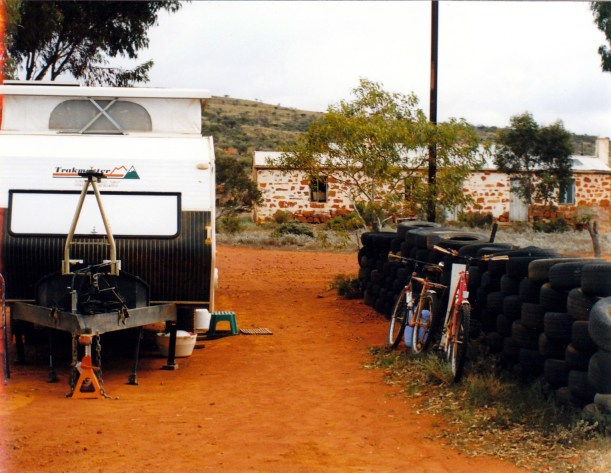
There was not much choice about where to set up, as there was only one power pole. So we parked in a bay delineated by rows of old tyres – not very scenic!

09-05-1999 03 mt ive camp

Our camp site at Mt Ive

There is a real conglomeration of buildings here – some old stone ones, but also a big building brought from Maralinga (the former settlement at the atomic testing range in the desert). I made a joke to the lady who booked us in, about radioactivity, only to be told that it did register some!

Power is from the homestead’s generator, which provides “background noise” to the camp.

The van’s contents had been a bit shaken up by the rougher roads, and there was a very fine film of dust on the surfaces. Just needed a quick dust and sweep. The scupper vent does a pretty good job of keeping dust levels inside right down.

The freezebox door had come off in the fridge; the meats in there were still frozen, though. John fixed the door. He did the radio sched to Adelaide base.

Tea was tinned soup, a packet pasta with its own sauce, and salad. Quick and easy.

We have decided to explore some of the private station tracks tomorrow.

It was a chilly night.

09-05-1999 to mt ive

Our route to Mt Ive


Leave a comment

1999 Travels September 4

SATURDAY 4 SEPTEMBER     WOOMERA

It remained windy all night, but did seem to lessen off somewhat towards morning. The night was warm enough to not need the doona, but it did get a little chilly by morning, and got progressively colder through the day.

We drove to the shops. Got fuel – 80cpl. I bought bread, a paper, a lottery ticket.

Drove on to Roxby Downs, about 80kms to the north – on a sealed road, through very flat and featureless country,  with big power lines running beside the road, for some of the way. In places, we travelled through areas of low sand dunes with occasional dry salt pans.

This town was built about a decade ago, to service the new Olympic Dam copper and uranium mine project. The mine workers live here, and various services the mine needs are provided. The actual mine is a few kms away.

Roxby Downs town centre is much bigger than I had expected, and was very busy. I bought vanilla slices to have with lunch. Got to support these remote area shops!

We drove out to the mine area, where – from by the fence and gate – there were buildings to be seen – it is a big complex. But the actual mining is down a large shaft, and so cannot be seen.

From the township, took the unsealed road east, for 30kms, to the opal mining village of Andamooka. As we approached the township, there were the tell tale white mullock heaps, typical of opal fields. The place was rough and untidy looking, which also seems typical.

The lines of diggings seemed to follow the sides of a creek valley. The whole place is very higgledy and hard to navigate. Apparently, there is no local council for here, therefore no rules to be followed, in terms of buildings and development. A lot of the structures are shacks.

We followed signs to the Long Bus opal sales centre – a strange little place, where we had to walk through their kitchen and living room, to get to the opal sales room.

There were some aboriginal artefacts and tacky tourist souvenir stuff for sale, but also some good solid opal and matrix opal.

We had not heard of matrix opal before, and we rather fascinated by it. The opal has formed in little spaces in parent limestone rock. Opal in other places forms in other sorts of rock, where the background colour refracts light through the opal, giving it colour. That is kind of a non-technical explanation! Here, the unusual formation in white limestone causes the colour to be very pale. At some stage, some bright persons discovered that, if matrix opal is “cooked” in sugar solution and acid, the colour is brought out. It shows as little pinprick dots in the rock – most unusual and very attractive. I suppose that, if the limestone structure allowed it, bigger opal areas would show up, too.

09-04-1999 matrix opal

Matrix opal – enlarged

I liked this matrix opal much more than the pale Coober Pedy opal, and bought a pendant, for $300, bargaining it down from $390. It has a browny colour, with the really bright pinpricks of colour in it, but also with a slightly larger chip of opal in it, which makes it really unusual. I loved it, on sight!

J phoned sister H and told her about the opals available here. On her instructions, bought her  a solid opal piece – suitable for a ring, pendant or brooch – for $250.

We ate our lunch, late, at Andamooka, then drove around looking at the township, for a little while. Debated about whether we could find a track that might take us out to the nearby Lake Torrens – a dry salt lake – but decided it was too hard, and headed back to Woomera instead.

It had become quite cloudy by the time we left Andamooka.

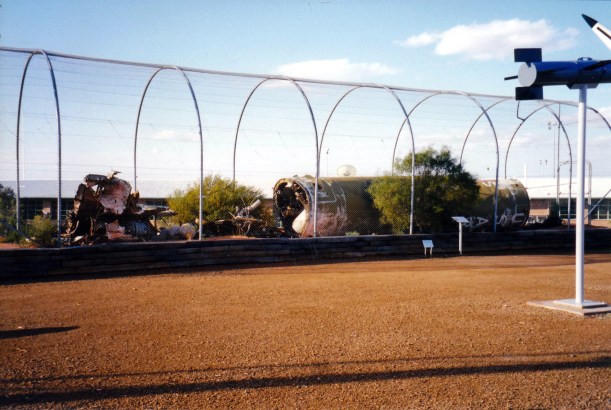
Back at Woomera, we visited the display area. John went into the adjacent history museum, which cost him $4. I wandered around, looking at missiles, bombs and satellite launcher displays. I took a photo of the launcher of the first Australian satellite sent into space – the fourth in the world. Its remains were recovered from a remote part of the Simpson Desert. There were Jindivik target planes there, and a Jabiru atmospheric research vehicle. I actually found it all quite interesting.

09-04-1999 bits and first rocket for satellite from woomera.jpg

Assorted Woomera related relics

09-04-1999 remains first rocket for satellite.jpg

Remains of the launcher of Australia’s first satellite

When we got back to the van, we’d driven 288 kms today.

Tea was soup, chilli con carne.

It was a cool evening, still with some wind.

I phoned K from the pay phone in the park, to report our whereabouts and possible plans. John phoned H to tell her about the opal he’d bought. He also phoned a place I’d read about that was setting up a camping ground – Mt Ive Homestead, to establish that they do have camping. We will head there tomorrow.

John reported to Adelaide Base of the VKS network, that we’d be going to Mt Ive, in the Gawler Ranges, via Kingoonya. It is a bit remote, so we thought it wise to sched in.

John spent some time working out and entering waypoints on the GPS, for tomorrow’s trip. Then he played games on his computer till after midnight.

Leave a comment

1999 Travels September 2

THURSDAY 2 SEPTEMBER     COOBER PEDY

Today was a hot day, and a fairly quiet one for us.

We read in the morning.

After lunch, walked around town, browsing in a number of shops.

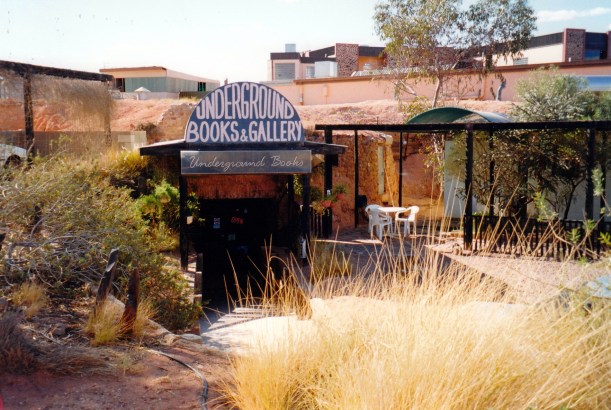
I went to the Underground Book Shop, where I found and bought, of all things, the latest edition of the Lonely Planet Guide to Tasmania.

09-02-1999 21  underground shop.jpg

John bought two triplet opals, with nice colour, for $50. Coober Pedy opal has a milky white background, with colour flashes.

09-01-1999 20 Coober Pedy scene

Coober Pedy scene – old mines, dugout entrances, mining gear

We spent some time in the Desert Cave Hotel, wandering about and reading the information in their underground corridors – interesting. It is a rather upmarket place.

09-02-1999 18  bits of first truck and breakaways.jpg

The first tree seen in Coober Pedy – made from scrap iron!

We bought fish and chips for tea. Whilst out, John filled Truck – 84cpl.

John’s daughter phoned. They discussed the ceremony to do with her qualification as a lawyer. John feels he should try to attend this, but she did not seem all that keen.

John played computer games till 3.30am.