This Adventurous Age

Adventures travelling and working around Australia.


Leave a comment

2005 Travels February

 BACKGROUND……

In 2003, we worked the tourist season at Adels Grove, in far NW Qld. During the course of this, we met O, who managed a new, small, tourism venture at a remote property in the NT Gulf country. He invited us to visit there, with a view to seeing if we would like to work there in 2004.

We did drive up there and camped in our tent for a week, finding out about the safari camp operation and the property in general. I came away with plenty of doubts about the conditions in which I would be expected to cater for guests. John came away very keen.

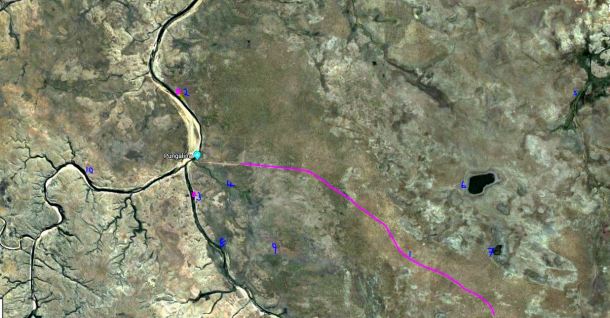
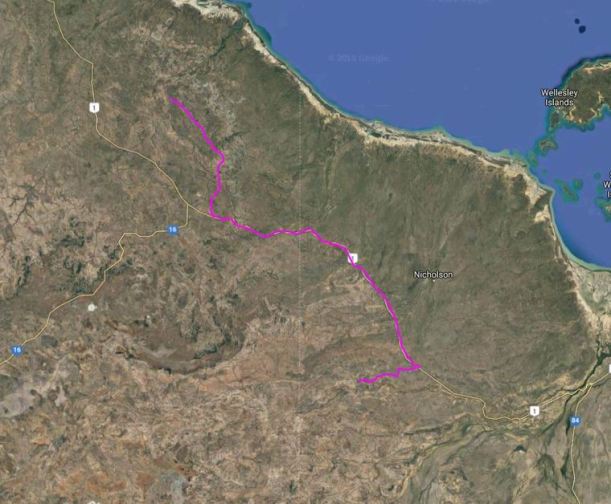
Resize of 02-02-2005 map.png

During 2003 at Adels, I also encountered A, the Melbourne based owner of a small aviation company, that conducted tours to interesting and remote places. I had mentioned Pungalina to him, as a possible new stop over on his tours of the Top End.

The 2004 employment did not come to pass. When O contacted us he simply said that things had changed and what would happen in 2004 was uncertain. And so we went touring in WA.

O contacted us again, late in 2004, to say that the way forward was more clear and to ask if we might still be interested. When we said possibly, he replied that the new owner of Pungalina – A, the aviation company owner, would contact us to interview us about working there.

In 1999, the Pungalina pastoral lease had been bought by a Melbourne man, in a kind of partnership with O, who scouted the property for him. R provided the finance; O would live there as a caretaker, and do necessary development work, like building an airstrip.

As we’d found out, in 2003, R and O had started the small tourism venture there – a safari camp for small groups. When we’d been to look at it, that year, it seemed quite ad hoc and reliant on young backpacker type staff.

Unfortunately, in 2004, R had to sell the place, as part of a divorce settlement. It was bought by A and his wife S – as dovetailing neatly with their air tour business. They had visions of it becoming a significant destination on their tours. They maintained a similar arrangement with O – he would live at Pungalina and do the required development work, in a form of partnership.

2005 would be the first full operational season under this new ownership.

A and S came to see us at home, and I made a light lunch for them. We discussed their expectations for the way the safari camp should be run. I sensed an undercurrent that they were looking for a more professional, less casual approach. S seemed particularly unimpressed that when they called in there, last year, with a tour group, they were fed pumpkin soup by the backpacker staff person – and not much else. It had not made a great initial impact! But maybe they also were not fully aware of the issues of managing somewhere so remote?

It was agreed that we would take on the roles of managing the safari camp and looking after guests – although obviously O would still be in overall charge and have the key role in guiding visitor activities.

We would receive the same pay as at Adels – $350 clear a week, and keep. Industry super would be paid. We would have 1.5 days off a week, but would take those flexibly, when it suited the camp needs.

One very good piece of news was that A had bought, last year, a second hand commercial gas stove and oven, and had it transported in, with considerable difficulty, late in the year. So the cooking facilities would not be the hole in the top of a fire drum that I’d feared. However, A still seemed to expect some “bush cooking” – for the atmosphere.  He mentioned barramundi wrapped in ti-tree leaves and cooked in a fire pit! Really? Unless O could do that, it wasn’t going to happen! I had visions of unwrapping fish charcoal in front of hungry guests.

A clearly wanted us to provide greater feedback about what was going on up there, than he had received to date. This, we could see, had the potential for a rather difficult situation for us, in terms of loyalties, but was something we’d have to figure out as we went along.

They also mentioned that O was arranging for a mechanic friend of his from northern Victoria, to go and spend two or three months there, later in the year, working on the camp vehicles – particularly on building what A called the “billy cart” – a large, open air vehicle that could transport 12-14 people at a time around some of the property’s tracks.

It certainly seemed that S and A were serious about turning the Pungalina camp into a quality experience for guests.

So our plans firmed up. We would drive up to Adels Grove and work there over the busy Easter period and after, until such time as the Gulf Track was opened. O would make contact to arrange for us then to drive into Pungalina.

We would manage the safari camp there, then, for the season – maybe as late as October or November  – then come home.

M at Adels was very happy that we were available to work in the lead up to Easter and beyond. She accepted the uncertainty about how long this would be for.

A arranged with us that we would take some things that they had bought, up for the camp, and they would in return pay our fuel and accommodation costs en route. There were new towels, some hot water bottles (I guess mid-year nights could be chilly), water drinking bottles, some pairs of boot protectors, small mirrors, water shoes, snorkelling masks.

It was agreed that John would make some of his folding wooden tables to take up for use at the accommodation tents. He would be paid for these. We would buy some solar powered lights for around the camp. I would get some staple food supplies in Cloncurry on the way through – non perishables, of course. All such costs would be reimbursed.

S and A seemed very open to the idea that there may be quite a lot needed to bring the camp up to the standard they wanted.

A folder containing a draft of their Procedures Manual was dropped in for us. Clearly, a good deal of thought had gone into this and I found it very useful, if a little daunting! I thought that, in parts, it was perhaps geared to backpacker workers – who had not worked in hospitality before, or in remote parts. There was quite a lot of emphasis on cleanliness! And on behaving like staff, rather than guests….

ABOUT PUNGALINA

The property was 500,000 acres. It was a pastoral lease, but seemed to have never really been operating as a successful venture – too small for those parts! It originally was part of neighbouring Seven Emu Station, to its west, but was of such little value to the operation that it was separated off and sold as a separate lease in about 1971. During the 70’s some improvements were made to the place, as was supposed to happen for pastoral leases: some yards were built, some parts fenced, a large shed/house built, some cattle were run.  In the early 80’s, a government built track provided access to the “homestead” area. By the mid 80’s, however, any occupancy or work on Pungalina had been abandoned. The destocking for Brucellosis and TB in the early 80’s appeared to have been the final thing making the property unviable.

Apparently there had. at some stage way back, been a home of sorts, further north than the 70’s home site, on Pungalina Creek, a tributary of the Calvert. This was over the western side of the Calvert, on Seven Emu, and presumably accessed from that side. Some mango trees still remained there.

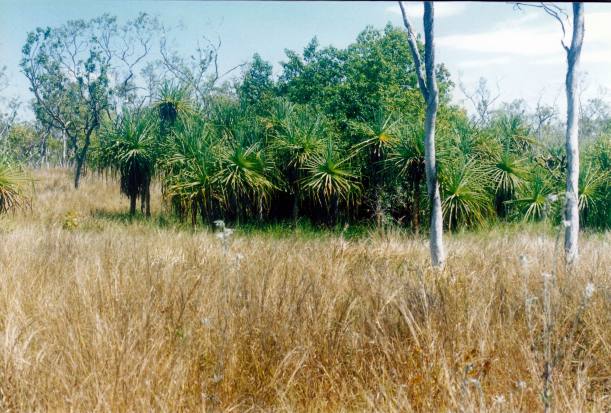
Pungalina contained a range of landform types and habitats. Sandstone escarpments, low limestone ranges with caves under some sections. Some wetland areas were filled by rain events, some were spring fed and permanent. There was the riverine environment along the Calvert. Clearly, it was rich in animal and bird life. The decades of neglect, coupled with the fact that it was never really consistently grazed, had allowed the place to return to virtually its original state, which made it really quite unique.

In the late 1990’s, O was working with a hunting safari business in the Gulf country and it was there that he met the client who expressed a wish to own a cattle station. O found that Pungalina could be available and they went and inspected it – as best they could, given the years of neglect of its few tracks. R was convinced that the property had potential to fulfill his dreams of having a cattle station and perhaps a hunting safari venture.

So R purchased the lease and O moved onto the property in late 1999. He occupied the old tin shed “house”, set on a bluff above the Calvert River.

The initial idea of running a cattle operation did not happen. There were some feral cattle on the place – left over from earlier times and probably some strays from neighbouring Seven Emu and Wollogorang. Early on, they did a muster of the place, with the help of staff from Seven Emu, and sold off the feral beasts that were rounded up, excepting a small herd destined to provide meat for O and any tourism venture.

O had a massive array of tasks before him, after he moved in. He made the old tin hut and the elderly caravan that was there, habitable. A verandah went onto part of the hut. One end of it was to be the living quarters. He lined inside the tin roof with great sheets of paperbark – effective insulation, but I always hated the thoughts of what was actually living up in there! Most of the tin walls of this part of the  original hut were replaced by a low wall of mud bricks with shade cloth above it completing the wall. One full, solid wall of mud brick provided the framework for the wood burning stove and a sink.

The other end retained its tin walls and was the store area and garage for his vehicle. An old caravan – the Silver Bullet – once used to house mobile road work crews – provided a bathroom and toilet (once there was water connected), a spare bedroom and another bedroom or – for a while – schoolroom; in our time there it served as an office. Another old caravan behind the house was vaguely habitable.

O had installed running water to the house and Silver Bullet – from a pump in the river that fed into a tank he’d put up on a nearby low hill. A diesel generator eventually provided electricity.

It should be noted that there was little to work with when he’d moved in to the place. Everything he needed had to be gotten, somehow, to either Wollogorang Roadhouse or the Redbank Mine, and then he would drive the 64km long, rough, sandy track to the Gulf Road to go collect whatever. This was only possible, of course, in the Dry season.

Initially, O had no means of contact with the outside world, but eventually, through Telstra, a sat phone service was installed.

An early imperative was to construct an airstrip – for Flying Doctor access as well as access to the outside world in the Wet season. O’s big old bulldozer was brought from storage at Charleville. R helped source some second hand machinery. Then, a new machinery shed needed to be built.

The airstrip build was a massive achievement by O. The space for it was made 500 metres wide and the strip was 1.5kms long. The area had to be flattened, huge rocks moved out of the way. It was made even with gravel – plenty of that around the river – then it was rolled, watered, rolled some more.

Unfortunately, just after the airstrip was finished, there was the huge Wet season of 2000/01 and over 100 inches of rain fell on Pungalina. The airstrip was washed away by the flooding Calvert River. It was rebuilt by O and serviceable by mid 2001. Apart from air access in a medical emergency, that also meant service by the weekly mail plane from Tennant Creek, and an alternative way for guests to come in. Once O bought a small light plane, he was able to use that to scout the property, find various features worth checking out and plot where access tracks might go.

Pungalina-airstrip.jpg

The airstrip and machinery shed

A vegetable garden was set up – sort of; it was fenced to keep the feral cattle out. Banana and pawpaw trees were encouraged to grow around the house.

O fenced a sizeable area that would become a paddock for some cattle, where it would be easier to find and kill a beast, as needed.

Then the tasks were exploration, track making, setting up a camp to accommodate the tourists that O and R had decided the venture would focus on. By the time we were there in 2005, O had gained the agreement of the owner of Seven Emu, and made a rough track from the northern border of Pungalina, through Seven Emu, to the tidal section of the lower Calvert River, close to the coast.

So, after a mammoth and difficult endeavour, that would have defeated many mortals, the safari camp tourism venture started in 2003.

Resize of IMG_NEW.jpg


Leave a comment

2004 Travels January – March

BEFORE THE TRIP…….JANUARY – MARCH

After last year in the Gulf Country, we’d had some possibility of working the tourist season at the Pungalina safari camp. John was quite keen on the idea. I was somewhat ambivalent.
A tough decision was postponed – or maybe avoided altogether – when we received a phone call, early in the New Year, from O at Pungalina. He told us that the plans for the place, for 2004, were uncertain, and that he was not in a position to arrange workers.

Later, we were to find out that the personal circumstances of the main owner of Pungalina had changed, and he had to sell the property. That was actually to become good news for us – but more about that in 2005!

We were both quite pleased to not have any work commitments  for this year.

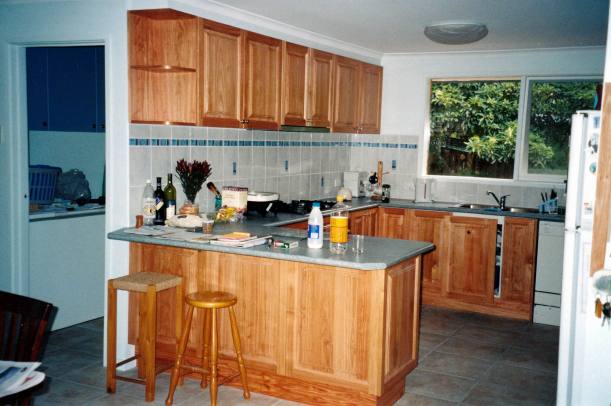
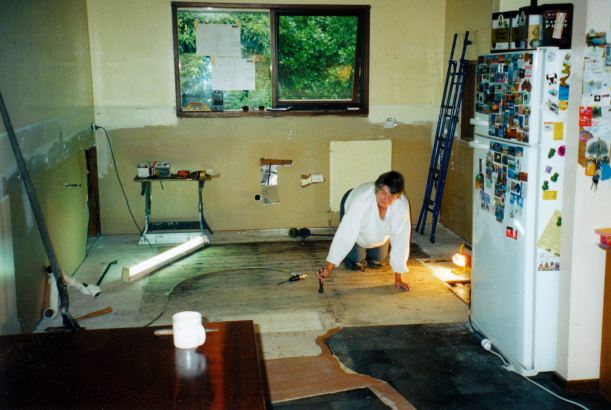
Much of the early part of the year had involved the hard work of renovating our kitchen, family room, lounge  and laundry. A kitchen fitting firm did the fit out, but demolition, tiling of floors and walls, painting, was done by us.

Resize of 1-9-2004 removing old nails.jpg

Removing the old flooring nails

John had the extra stress of ensuring that the Tasmanian silver wattle we’d chosen in 2000, was shipped across Bass Strait, and used by the cabinet maker for our new cupboards.

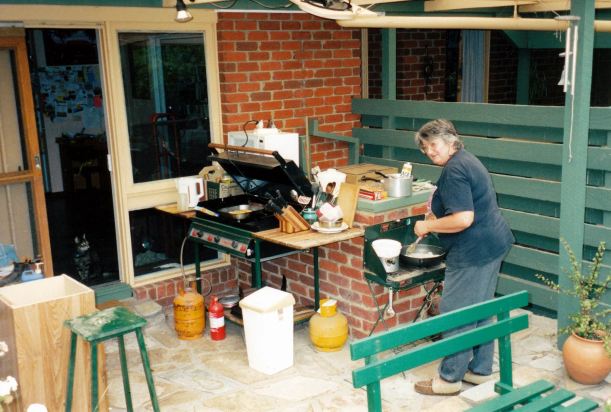
The process, together with the usual  “unexpected delays”, not of our making, meant that for several weeks, my cooking, food preparation and washing up, was done outside, using our camping table, stove and washup bowl. Meals were very basic, over this time. At least, summer lent itself to lots of cold meats and salads. Meals were eaten sitting in the camp chairs, wherever they happened to have been put. After weeks of this, the prospect of heading off in the caravan was distinctly attractive.

resize of 1-12-2004 makeshift kitchen

Makeshift kitchen

Plan B for 2004 quickly came into being – a trip to Western Australia.

Back in 2000, we’d planned to spend much of the following year exploring parts of the vast WA, that we had not been to in 1993 (our long service leave trip) or 2000. Lots of unfinished business there, after we’d had to return home instead, at the end of that year.

L, our lovely resident house sitter, was happy to continue our arrangement. She had missed the renovation chaos by spending the long uni break back home in NSW.

Resize of 3-11-2004 kitchen view.jpg

The new kitchen – laundry too


Departure date was dictated by the end of John’s bowls season.

There was no detailed plan – just to make our way to WA, in our own time.


Leave a comment

2003 Travels September 21

SUNDAY 21 SEPTEMBER   PUNGALINA TO ADELS GROVE   340kms

Our week was up and it was time to leave, for the long drive back to Adels.

Resize of 09-20-2003 05 Fig Tree camp in paperbarks.jpg

It was hard to leave this wonderful camping place

Resize of 09-18-2003 02 airstrip, mailbox and track out.jpg

Sign points to “Civilization” – down the airstrip. Side track goes to safari camp

Despite the heat, we’d had a great time at Pungalina – quite a unique set of experiences. The country was absolutely stunning. Purely as a camping experience, it was well worth the effort to go there – and the money paid! But we had some reservations about future work there, though. Apart from the primitive conditions for catering for guests who expect decent meals, we had the distinct impression that O was looking for workers who would labour for love of the experience – whereas we had money in mind as part of the equation! However, we left matters open, with an understanding that O would contact us early next year.

Resize of 09-20-2003 pung.JPG

1: The track in. 2: Fig Tree Camp. 3: Squeaky Trees Camp. 4: Safari Camp. 5: Fern Swamp. 6: Croc Hole. 7: Lake Crocodyllus. 8: Jabiru Wetland. 9: Caves and stromatolites. 10: escarpment.

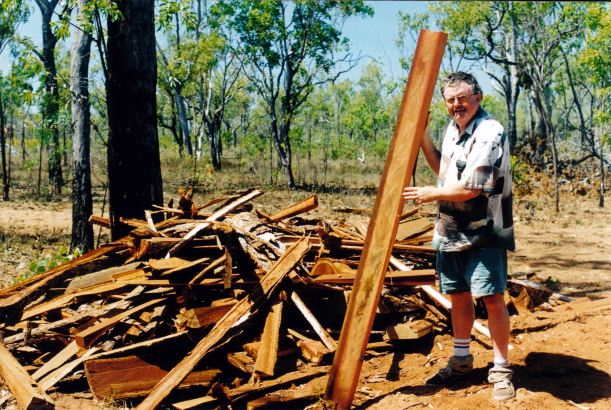
We stopped again at the wood mill area and John picked up a couple of last-minute pieces of ironwood.

resize of 09-18-2003 01 scavenging ironwood

It was very hot – definitely over 40 degrees, as we thought it had been for much of the week.

Made our slow way back the 64kms to the entrance. This seemed a little easier than on the way in, probably because it was no longer the unknown. If we did decide to come and work here, the long sections of fairly deep sand in a couple of parts of the track in, might create problems with the van towing.

Stopped at Hells Gate Roadhouse to refuel. Still $1.39cpl. John only put in 10 litres, to ensure we got back to Adels.

Decided to go back via Doomadgee and the back track. This was considerably quicker than going via Bowthorn, but not nearly as interesting. The Gulf Country was in late Dry season dress: dry, brown and dusty.

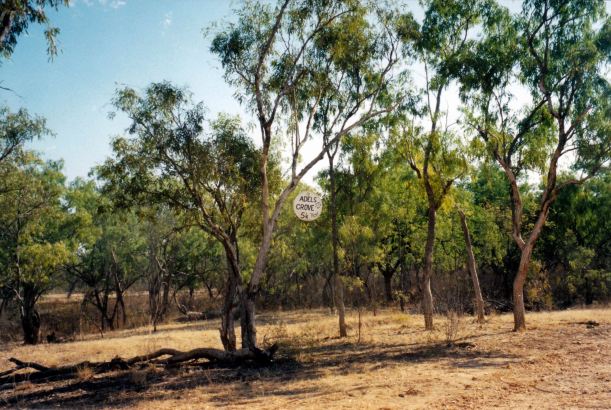
As we approached Adels, admired John’s painted drum lid signs, which he’d attached to trees at various points from the Gregory corner, south.

resize of 09-21-2003 johns sign near adels grove

We got back about 6pm. Very weary.

The staff compound was looking empty. B and M had gone while we were away – so she hadn’t stayed to work the Variety Bash, which was still to come. Cook and D were still there, but talking of leaving soon. So, although visitor numbers had continued to reduce, with the heat, a staff shortage could loom. A couple who were friends of the boss, had come to visit and decided to stay on a while and they were working, and staying in a donga room. But the man was a heavy drinker and this was showing up to be a problem. Drinking whilst on duty at the canoes was not a good look for a staff member!

It was so nice to have a proper shower and wash my hair – and to sleep in the caravan bed again!

resize of 09-21-2003 to ag


Leave a comment

2003 Travels September 18-September 20

THURSDAY 18 – SATURDAY 20 SEPTEMBER    PUNGALINA

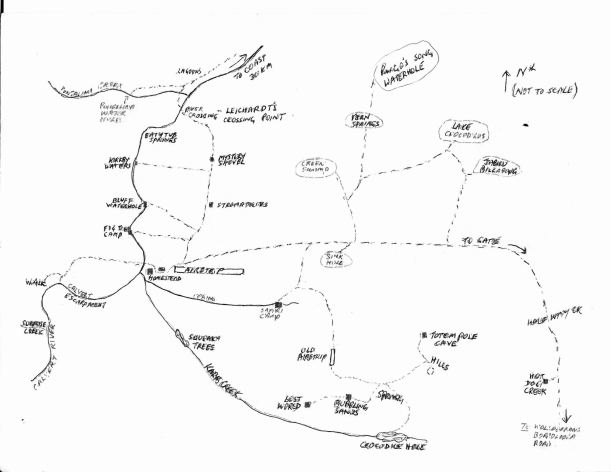
We alternated activity between relaxing at the lovely camp site, in the heat, and exploring some of the property, using a mud map that O had given us. He was busy providing activities and guiding his group of paying guests – who arrived in their private plane.

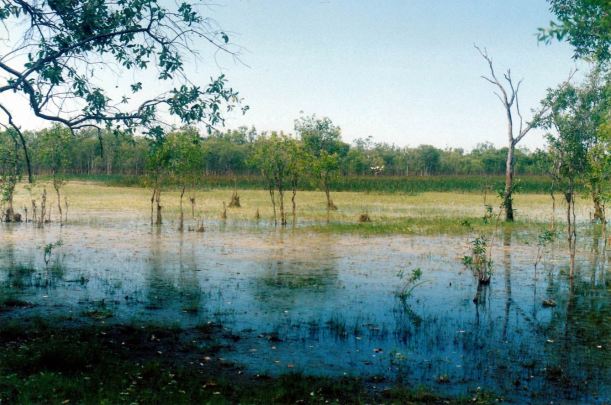
We drove ourselves back to the wetlands. Lake Crocodyllus was a large, lake-like area, with extensive stands of dead trees standing in the water. It had quite a surreal atmosphere. It was quite extensive, and there were lots of water birds using it.

Followed a track from that wetland lake, further around to Jabiru Billabong, which was very different in character, being edged by reeds and green growth, whereas the previous lake was edged by dried mud and quite open by comparison.

Resize of 09-20-2003 06 a pungalina wetland.jpg

The white in background trees were egrets

O had told us that earlier in the year, a friend of his had set up a portable sawmill and milled some of the local timber. He’d taken what he wanted, along with his mill, but had left some for O. We went to the area, beside the track in, where the mill had been. There were still some lengths of ironwood left there that John wanted to have a look at. He collected a couple of pieces to take home with us.

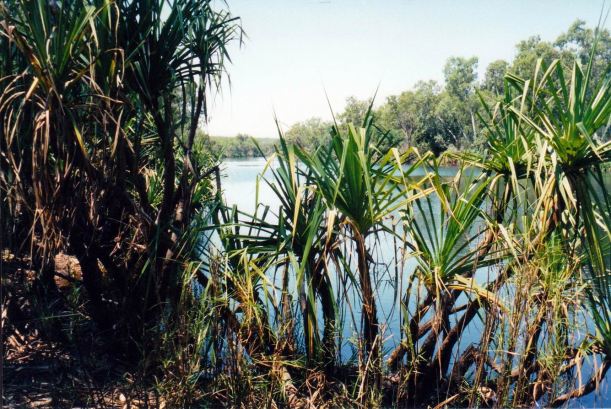
Another driving exploration took us to the limestone area where the springs started that fed the safari camp creek. These were evident by stands of vivid green pandanus, contrasting with the brown dryness of the surrounding area.

Resize of 09-19-2003 18 Pan 1 from L springs area where creek starts.jpg

Pandanus and different trees mark where springs emerge

resize of 09-19-2003 spring near safari camp

Little creek formed from nearby springs


We’d been told of spectacular caves below, in the limestone, and we were able to locate the entry to one of these. But there was no way either of us was venturing down into the narrow cleft, to explore same.

Resize of 09-19-2003 23 entry to big cave.jpg

Entrance to one of the caves – just a hole in the ground

Resize of 09-19-2003 25 looking down cave entry.jpg

Another cave entry point

resize of 09-19-2003 24 tree by cave entry

These trees are usually found at cave entrances – more moisture?

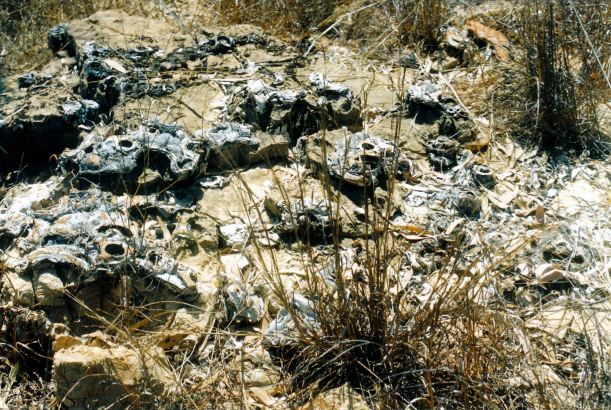
There were areas of old stromatolite formations there, too. Until now, all I’d known about these were that the ones at Hamelin Pool, in WA, were regarded as living fossils. I’d rather assumed that they were unique there. So I was surprised when O told us that there were several places on Pungalina where stromatolites occurred as rock like formations. At one stage, way back in time, when this area had been under water – hence the formation of limestone – these had been living stromatolites. Their formation was due to the activity of certain types of bacteria and they are regarded as the earliest fossil evidence of life on earth. Wow!

resize of 09-19-2003 22 pungalina stromatolites

Fossilized stromatolites

Having seen the living ones at Shark Bay, I could relate these to the strange rock shapes we saw near the cave entrances. This was yet another way in which it was becoming apparent that this place really was quite unusual and interesting.

Resize of 09-19-2003 27 many more stromatolites.jpg

Most of the tracks we followed to these various features were just wheel tracks through the dry grass. Crawling speed was the norm. John topped up our fuel with the 25 litre jerry can we’d brought with us.

resize of 09-19-2003 17 a pungalina track

A good section of a Pungalina track!

We found the large water hole on Karns Creek, called Croc Hole. This was notable for a huge old fig tree, and where O had a boat parked for use with his guests.

Resize of 09-19-2003 15 huge old cluster fig tree by Carns Creek.jpg

Huge old cluster fig tree

resize of 09-19-2003 14 cluster fig

Cluster figs

As I was wandering around that area, I was startled to come face to face with a Barking Owl, just sitting on a branch, at my eye height, watching me. He stayed there, not seeming at all disturbed by our presence. There were Barking Owls around our camp, too. We would sit, in the late afternoon, and “talk” to them – making yapping noises – and they would answer back!

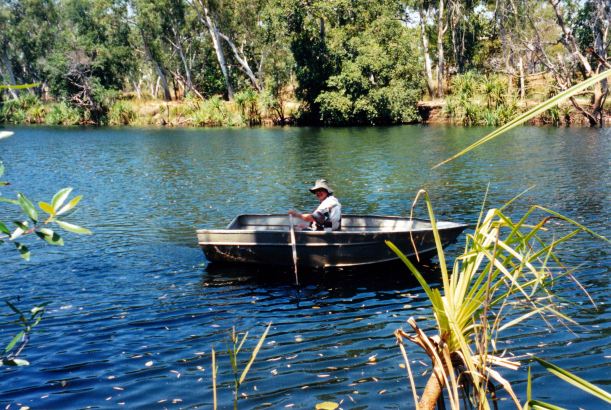
There were oars with the boat and we went for a short trip on the water hole in the boat – with John rowing.

Resize of 09-19-2003 13 John on Carns Creek waterhole.jpg

Boating on Karns Creek at Croc Hole

Domestic chores around camp took time – just our basic cooking and cleaning up. I did some clothes washing – by hand – one morning, using water heated on our campfire.

Resize of 09-18-2003 04 washing.jpg

Doing the washing

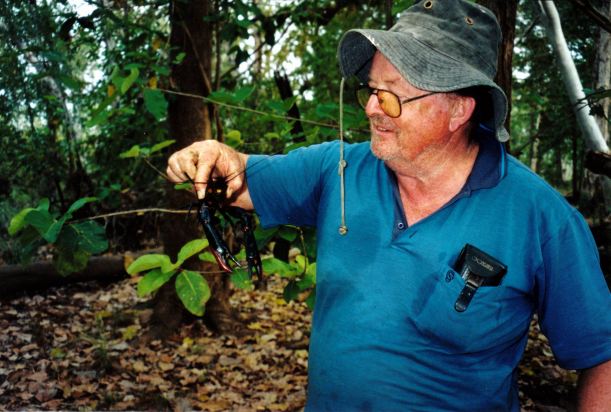
John caught lots of red claw yabbies in the net he kept in the creek near camp. We made a couple of meals from these. Very yummy – but they were also very rich. (Note: at the time, in our ignorance, we thought they were red claw yabbies. Later found out that some were cherabin)

resize of 09-20-2003 02 more redclaw

Resize of 09-20-2003 03 John with redclaw yabby.jpg

One afternoon, we went to the safari camp – invitation from O – to meet the guests and see again how the operation worked. We stayed for dinner with them – roast beef again. They were a group of doctors and wives, from Melbourne. They seemed to be very satisfied with their experience, to date, and most impressed with the features the property had to offer. Again, we helped with the clean up after dinner, while O and his guests sat out by the campfire.

Resize of 09-19-2003 09 creek scene at safari camp.jpg

Safari Camp creek

It was always hot and not conducive to doing much. We’d had to push ourselves a bit to go out and do the exploring.

resize of 09-19-2003 10- scene near safari camp

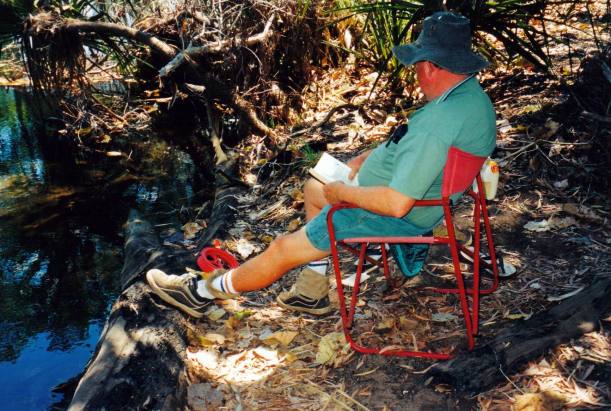
We spent a lot of time just sitting by the creek. We read a lot. John fished, some of the time, using a hand reel.

resize of 09-18-2003 05 watching passing reptile

One afternoon, while we were thus relaxing, we were visited by a large water monitor. It just strolled casually across, right in front of our feet.

Resize of 09-18-2003 06 relaxing at camp.jpg

Just passing by!

One afternoon, John got a bite on his fishing line, from something big that pulled the whole line and reel into the water. He called me to help retrieve it, by “just” stepping into the shallows there, between the pandanus clumps. Right! The supposed shallows turned out to be chest deep and down I went. John thought it was hilarious. I scrambled to get out again, fast – I did not want to tangle with whatever had taken the line!

Resize of 09-15-2003 pandanus calvert.jpg

And down I went – in there!

Most afternoons we had a float about in the open section of our creek – to get cool, mostly. Clean was incidental. The little fish always found us to have their nibble on our feet – a tickling sensation, mainly.


Leave a comment

2003 Travels September 17

WEDNESDAY 17 SEPTEMBER     PUNGALINA

Today we packed up camp, to move to a new area. O assured us this – Squeaky Trees Camp  – was much nicer.

From his house we were directed to take a track that crossed the little creek – which was the one that flowed past the safari camp – then follow that track south till it ended in a big grove of paper bark trees.

Resize of 09-17-2003 map.jpg

Mud map of Pungalina – 2003 version

This camp was closer to O’s house – probably about 4kms away.

Our new location was a total contrast to the first. There was lots of shade, from big cluster fig and Leichardt Pine trees, and paper barks. The camp area was much larger. It was beside Karns Creek – a tributary of the Calvert.

The paperbark tree branches rubbing together when there is wind, make a squeaking sound – hence the name.

resize of 09-20-2003 04 fig tree camp

Camp at Squeaky Trees

After we set up the camp again, we were able to go for a swim – rather cautiously – in the creek in front of our camp. At least, we got cleaner, and cooler, though the sensation of little fish nibbling the skin on our feet was unusual!

Resize of 09-16-2003 creek at fig tree.jpg

Karns Creek by Squeaky Trees camp

The creek seemed fairly deep, in parts, and likewise wide. Although O had assured us it was safe to swim there, I was not totally convinced. So we did not venture far from the bank, or splash around. But it was so good to be in cool water.

resize of 09-16-2003 01 leichardt pine tree with flood debris

Leichardt Pine tree at Squeaky Trees – note height of Wet season flood debris!

The gas fridge was working very feebly, so we continued putting wet towels over it, which maintained the inside temperature just slightly lower than outside!

O had asked us to go to the safari camp for tea tonight, so we made ourselves as presentable as possible and drove around there. In a straight line, we would not be too far from it, but had to go back to the house and out again, on the other side of the creek.

They were doing a run through of meal arrangements and preparation, because a group of paying guests were due in tomorrow. O’s helpers were a young couple who were staying in a tent pitched on the lawn by O’s house. I was not sure how they came to be here.

They cooked a meal of roast beef and vegies – it was quite nice and, I thought, an achievement, using the camp ovens.

I’d prepared and took along a plate of melon and other fruit, such as I could dredge up from the supplies we’d brought from Adels. It was well received.

Dining in the big tent was quite lovely. Some of the walls were mesh, so the sound of the nearby little creek, running over rocks, was all around.

After tea, we helped the couple with the wash up. Then it was the night drive back to camp. The bush looked totally different in headlights, as opposed to daylight – not quite as benign.

I had serious doubts about my ability to produce a meal like that, with just that equipment.


Leave a comment

2003 Travels September 16

TUESDAY 16 SEPTEMBER     PUNGALINA

First thing this morning, there was a light mist lying over the river. This gave it a totally different look, with the trees on the opposite bank being reflected in the water. The sun burned the mist off fairly quickly, though.

Resize of 09-15-2003 01 Calvert River early morning.jpg

Misty morning Calvert River

After breakfast, drove ourselves back to O’s house, feeling quite proud of ourselves for remembering the way – there were a few side tracks. Once away from the river, the country we went through was tall, dry grass interspersed with some scrub and taller trees.

Near the house, the track passed a fenced paddock. This was the only fence we’d seen, since passing through the locked gate back out near the Savannah Way.

Resize of 09-20-2003 01 wildlife.jpg

Wildlife!

O directed us to go out to the escarpment overlooking the Calvert River, upstream from the house. He gave us directions for crossing the Calvert, in a shallow section just north of the house, and then for how to get to the Escarpment.

The river crossing was wide but not too rough. But the tracks were rough and rocky in parts.

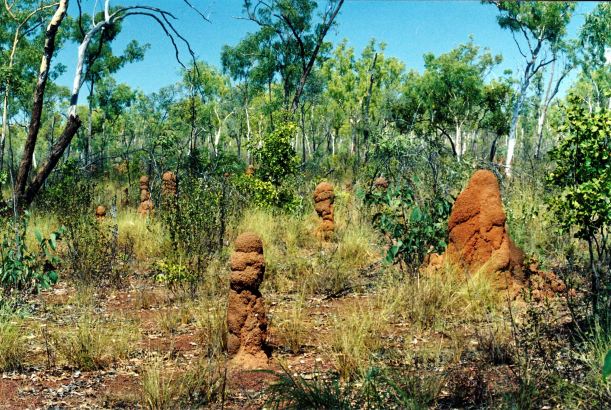
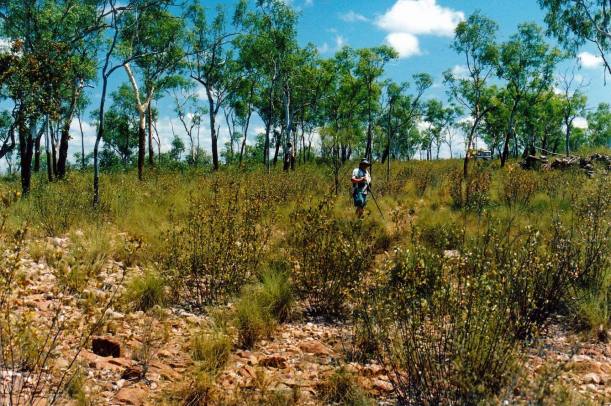
The scarp country was rocky and dry and different to other parts of the property that we’d seen, to date. There were several “families” of large termite mounds beside the track to the scarp.

resize of 09-15-2003 07 termite mounds on escarpment track

A family of termite mounds

There were certainly a variety of different environments on this property.

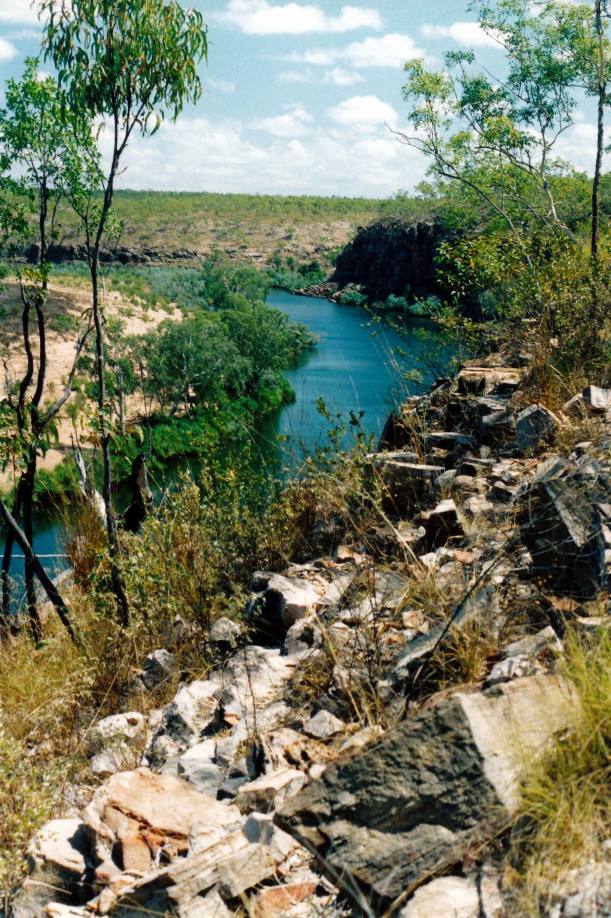
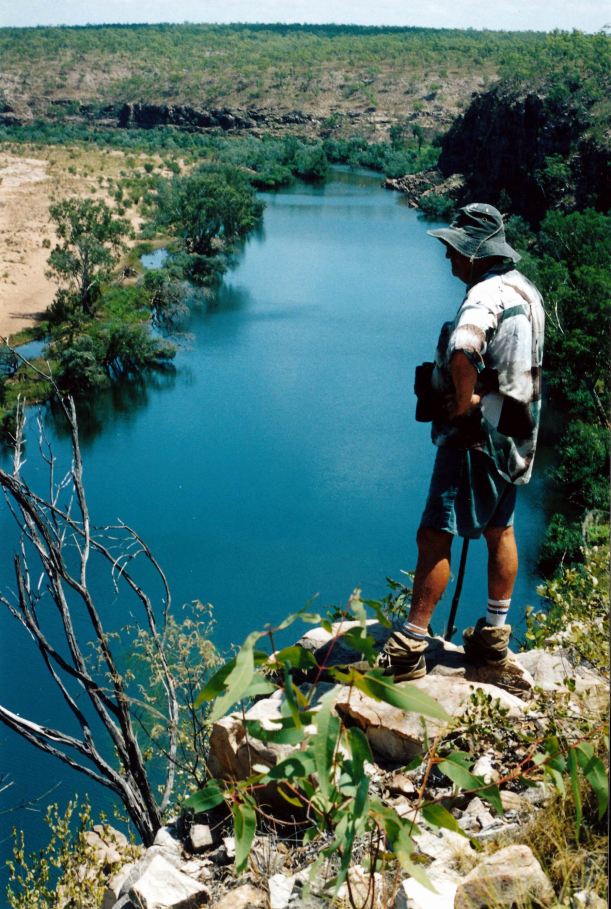
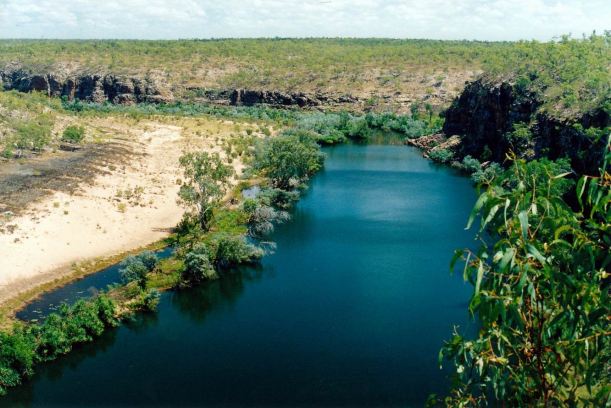
From the top of the cliff, we looked down on a great curve in the river, in one of its deeper sections. It was quite breath taking.

Resize of 09-15-2003 09 Calvert River from escarpment.jpg

The Calvert River from the top of the escarpment

The bank on the far side was sandy and would certainly be under water in the Wet.

Resize of 09-15-2003 12 Calvert R at escarpment.jpg

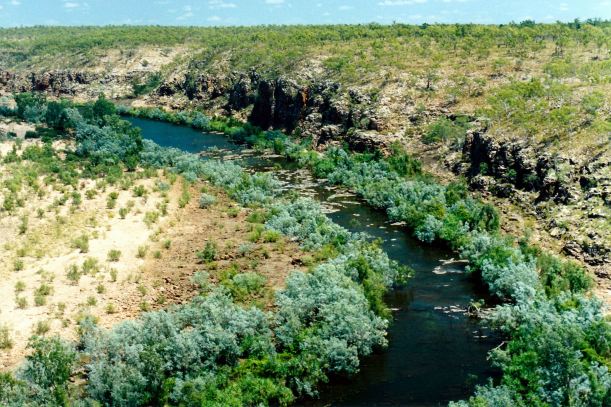
The change of vegetation from the dry grass and scrub, to the lush riverine growth beside the water, was really obvious from above. From what we saw on our walk, the river was a series of long, deep waterholes, separated by sections of shallows and rockResize of 09-15-2003 16 Calvert River from escarpment.jpg


We spent several hours wandering around out there, and walking for quite a distance along the top of the scarp.

resize of 09-15-2003 13 john at calvert river escarpment

Resize of 09-15-2003 10 exploring the escarpment country.jpg

Exploring the escarpment; Truck parked on track behind

Resize of 09-15-2003 18 Calvert River from escarpment.jpg

Looking downstream at the edge of the escarpment – where John stood, earlier

Slowly negotiated our way back to the river then across it. There was quite a wide section of river worn rocks and pebbles, then a wet section to a little bank of land, followed by another wet section and a steep climb up the bank on the house side.


Resize of 09-15-2003 20 from escarpment track to Owens house on bluff.jpg

Approaching the river. Tree line shows main channel.

resize of 09-15-2003 21 calvert ford section

Track through rocky section. Would be under water in the Wet season

resize of 09-15-2003 22 calvert ford on escarpment track

Crossing goes over little bank in the middle, then through the main channel

Back on the home side of the river, again following O’s directions, we drove to the safari camp, following a track, roughly south, that started near the homestead. The camp seemed to be about 5kms from the house.

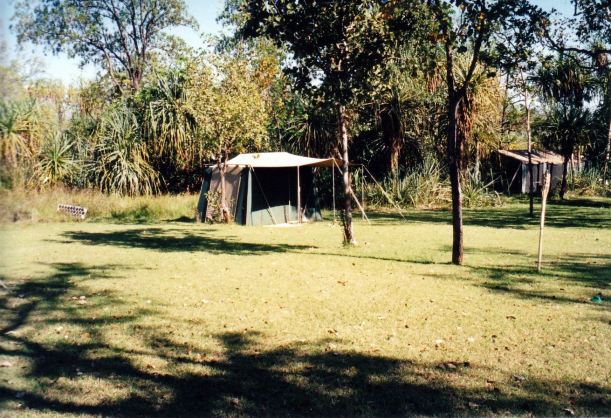
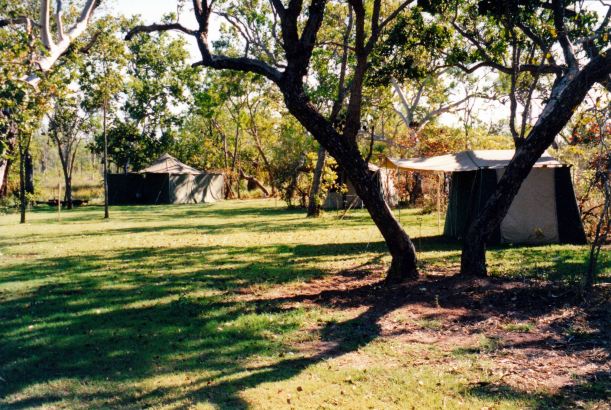
We found a really attractive setup at the safari camp. It was designed to cater for a small number of guests at a time – full catering and guiding.

Resize of 09-19-2003 01 safari camp tent.jpg

A guest tent. Dining tent at back

resize of 09-19-2003 03 safari camp pungalina

Guest tents. Kitchen tent in background

A lush looking green grassed central lawn had several two person tents well spaced out around it. In a curve of a small creek was a large marquee style tent that was a dining “room” and another that was the kitchen tent. Facilities in the latter were rather primitive, though. There were some portable benches, a small sink, a domestic refrigerator and a few metal storage shelves. One wall was flyscreen mesh, which provided a little ventilation, but it was really hot in there!

Resize of 09-19-2003 06 kitchen tent at safari camp.jpg

Kitchen tent

Outside the kitchen tent was a campfire area. Here was a 44 gallon drum, with some circles cut out of the top, and a square opening down towards the base. A fire was lit in the drum and the top was the “stove” – temperature control would be rather imprecise.

Resize of 09-19-2003 04 safari camp cooking area.jpg

Creek side camp fire seating area. Drum “stove” by tree.

There was a collection of camp ovens used for cooking in the campfire.

Apart from the drum top and camp oven cookery, there was talk of cooking locally caught barramundi, wrapped in bark from paperbark trees, in a fire pit dug in the ground. This was a very long way from my comfort zone!

I was somewhat dubious about being required to prepare meals in these conditions, but John was, of course, sure it could be done. Hmmm – I would have to think hard about that one!

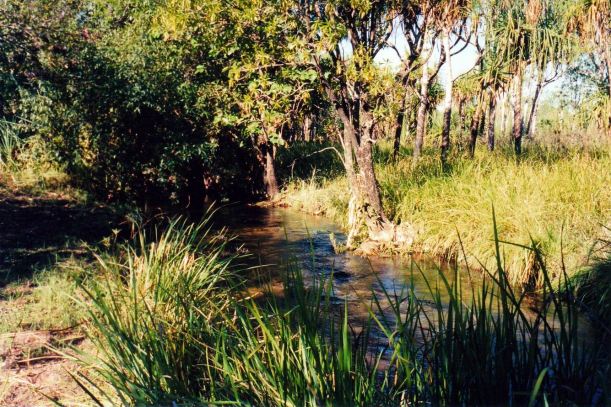
Around the campfire pit were seats made from logs. This area, too, was close to the creek, with a constant little background noise of the water flowing past – it was a spring-fed, permanent creek.

resize of 09-19-2003 05 camp creek safari camp

Creek by the seating area and camp fire

It was certainly a very attractive area, contrasting with the wild grass growth across the creek, and the scrub beyond the cleared camp area.

resize of 09-19-2003 07 safari camp creek

Spring fed creek by safari camp

The camp had only been established and going for a couple of seasons – early days yet. We did not like to ask how many guests they’d had, to date. There were just the two types of accommodation – bush camping, with no real facilities, as we were doing, or the catered camp, with a fee of over $300 per night per person.

After wandering around and exploring the camp, we made our way back to our river side establishment, and spent the rest of the afternoon and evening, as last night. There was much discussion about the pros and cons of working here. John was very keen on the idea – a new adventure beckoned! But I had reservations, mostly to do with cooking facilities.

resize of 09-19-2003 11 big waterhole on calvert

The big river water hole by Fig Tree Camp – and pandanus


Leave a comment

2003 Travels September 15

MONDAY 15 SEPTEMBER     PUNGALINA

We were in no hurry to get up this morning, having slept soundly through a night free of noise from generators, other campers and civilization in general.

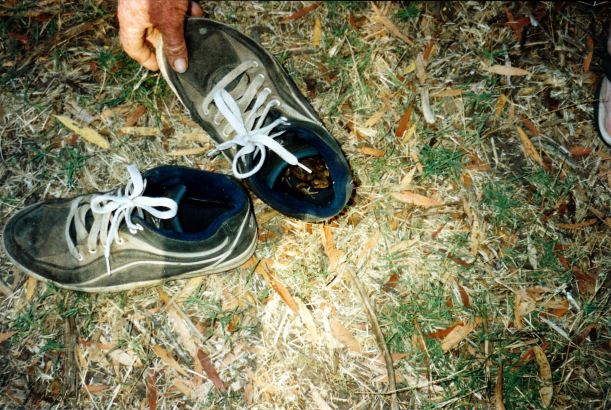
I’d been a bit silly and left my shoes outside the tent. This morning, one was inhabited by a little frog. I was fortunate that the inhabitant was something so innocuous. The frog was fortunate that I discovered it before putting the shoe on.

Resize of 09-15-2003 06 shoes left outside overnight.jpg

The bait net that John had put in the river yesterday afternoon now contained some small fish.

Resize of 09-14-2003 04 getting Bait.jpg

Getting bait

We lazed around the camp all day. It was very hot and we were not motivated to do much, except watch the river go by.

resize of 09-15-2003 05 calvert view from first camp

Outlook from camp

John tried some fishing, and actually caught dinner!

resize of 09-14-2003 05 dinner maybe

Black bream for tea

It was just great to laze about, knowing that our time was now our own.

We saw no one, heard no one. There was just peace.

Resize of 09-19-2003 12 life at big waterhole.jpg

Plant growth in the river


Leave a comment

2003 Travels September 14

SUNDAY 14 SEPTEMBER   KINGFISHER CAMP TO PUNGALINA  265kms

Tried to manage an efficient breakfast and pack up. But breaking down a tent camp is never as fast as getting a caravan ready to go.

From camp, drove the 45kms north to the Gulf Track, then turned west on this. We stopped briefly, on the KFC track, to take photos of dead tree remains whose ballerina style remains intrigued John.

Resize of 09-13-2003 14 tree skeleton again.jpg

Stopped at the Hells Gate Roadhouse, to refuel – $1.33cpl. Ouch!

We had travelled, last year, as far west on the Gulf Track as Wollogorang Roadhouse, about 110kms from the KFC turnoff. Beyond this was new territory – and saw us into the NT. The road was fairly corrugated – only to be expected, towards the end of the tourist season. We crossed several dry creek gullies, smoothed out by traffic.

About 50kms beyond the border, we entered a rather rugged range area and then went through the Redbank Gorge, with the Redbank copper mine just beyond this. We hadn’t been expecting this really interesting looking range country, but did not have time to stop and explore.

The Redbank copper mine had not been worked for several years, but there were caretaking staff there, we had been told.

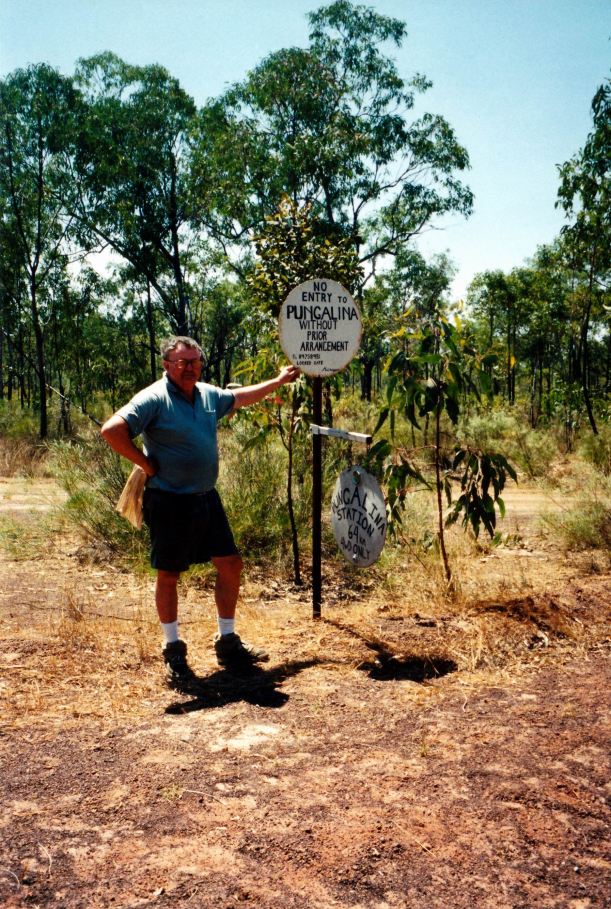
About 20kms beyond the mine, we found the turnoff to Pungalina, to the north. There were two hand made signs beside the road. One read “Pungalina. No entry without prior arrangement”. The other read “64kms. 4WD”.

Resize of 09-14-2003 01 turn off to Pungalina from Gulf Track.jpg

The track – that was all it was – soon became quite rough and rocky in parts, but fair in other sections. Just a few kms along the track there was a gate that had to be opened. We assumed that this was locked when there was no one in residence.

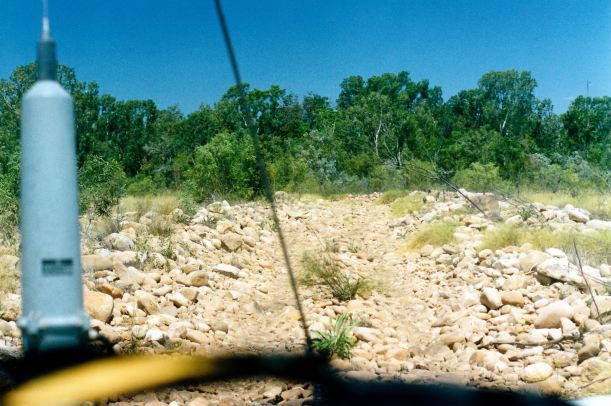
The 64kms from the Gulf Track, to the Pungalina “homestead” was slow going, and took us nearly four hours.

Resize of 09-14-2003 02 some of Pungalina's driveway.jpg

Track in to Pungalina

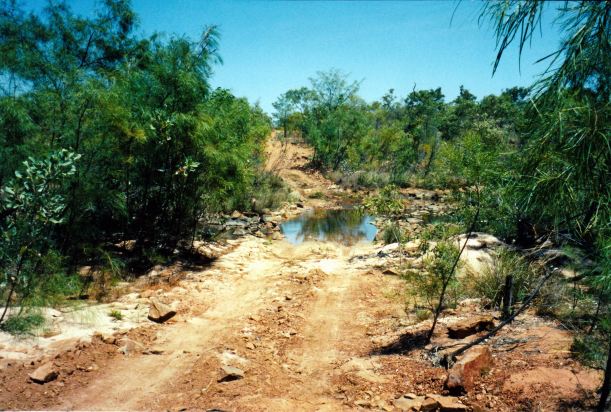
There was a great variety of country on the way in: flat savannah scrub and grassland, lots of rocky outcrops, little dry creek gullies and a few shallow water crossings. The track surface varied from stony and rocky, to some shallow sandy lengths. At least, we had no doubts about being on the right track, because there were no noticeable side tracks that looked much used.

Being late in the Dry season, the tall grasses had dried right out and were brown.

Resize of 09-19-2003 21 pan 4 springs rhs.jpg

Pungalina country in the late Dry season

Eventually, the track emerged at the end of an airstrip runway and we drove along the length of this, then past where there was a large open fronted machinery shed, and beyond that a wire fenced “yard” – quite large, with fruit trees scattered about it.

Past these was O’s “house” – which looked like a long, low shed. There was a tin roof, some walls of tin, some walls of stacked logs with mud or mortar in the cracks between them, some mud brick. One end of the shed was a car garage, the other end was the living quarters. Here, the log and mud brick walls ended at about waist height. Above that, was mesh all round – creating an almost open air but insect proof large room – combined living room, bedroom and kitchen, with a wood burning stove and a sink in one corner. Real old-time bush stuff and definitely not luxury living!

Off from one side of the house, which sat up on a bluff overlooking the Calvert River, was a large fenced off garden.

The Calvert River flowed past the house, down in a valley, although apparently a big Wet would still flood the home area. O told us that one of the first jobs he had done, after taking over as manager of this long-abandoned and neglected property, in 2001, was to construct the airstrip. Then, the next season’s Wet washed most of it away, and he had to start again. Unforgiving country, this!

We chatted with O, at the house, for a while. It became clear that he expected us to pay the same camping fee as anyone else. $25 a night. Hmmm – I’d thought we were coming to check the place out for work, next year, like doing him a favour, as staff were hard to find for a place this remote. Anyway, we were here now, and paid him for a week – cash, of course.

O had his son lead us, in a camp vehicle, to our camp area. The best site was currently occupied, but we would be able to relocate there in a couple of days.

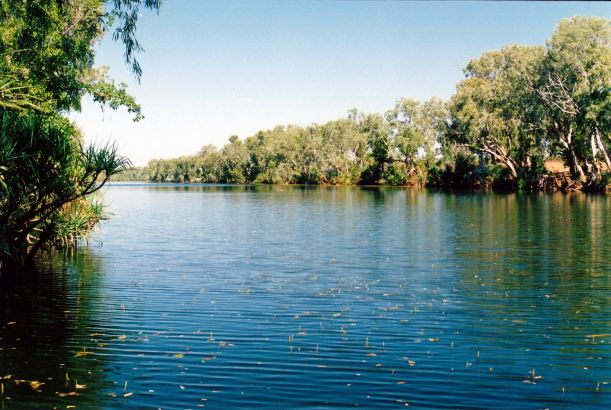
The one we were taken to – that they called Fig Tree Camp – was to the north of the homestead and maybe 8 or 10kms or so away. It was on a high bank of the Calvert, on a deep looking reach of the river. There was no shade to speak of – and the days were hot by now. The river banks and all around the outside of the small, cleared, grassy camp area was Noogoora Burr infested. So, there was a clear area on which to put the tent, and a cleared area to the side of the river. It was not a great camping spot!

resize of 09-15-2003 03 first camp pungalina

Fig Tree camp

However, the pandanus and paperbark fringed river was lovely to look at. No swimming there – it would most likely have a resident crocodile somewhere.

resize of 09-14-2003 03 calvert waterhole at our first pungalina camp

Calvert River at Fig Tree camp

It felt very hot and exposed there.

We set up the tent and camp. Discovered that the fridge had stopped working. We turned it upside down and shook it, but it did not work properly at all. I draped a couple of wet towels over it to try to help the contents stay a bit cool.

We wondered what we would do now? Nothing had been said about where we could go or what we could do – it felt very uncertain.

In the later afternoon, O arrived at our camp and said he’d come to show us around the place, a bit. This was more like it!

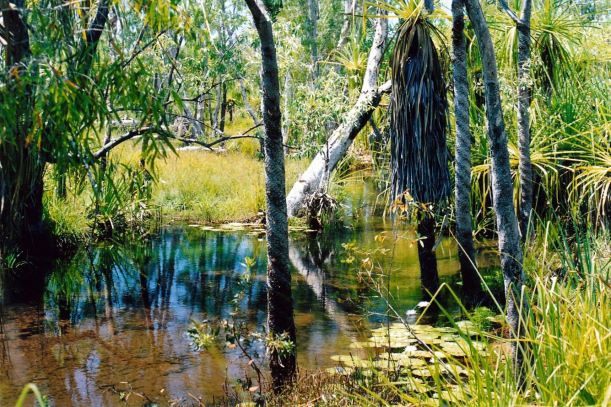
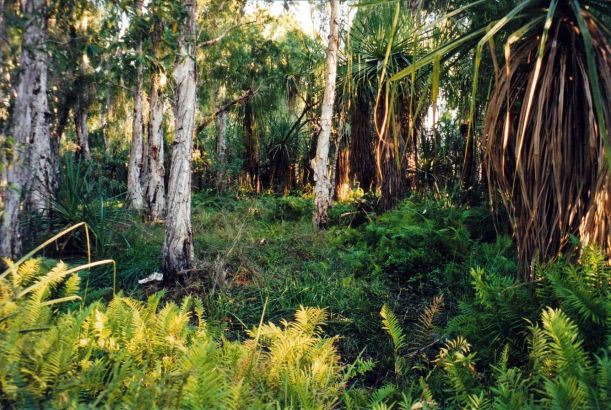
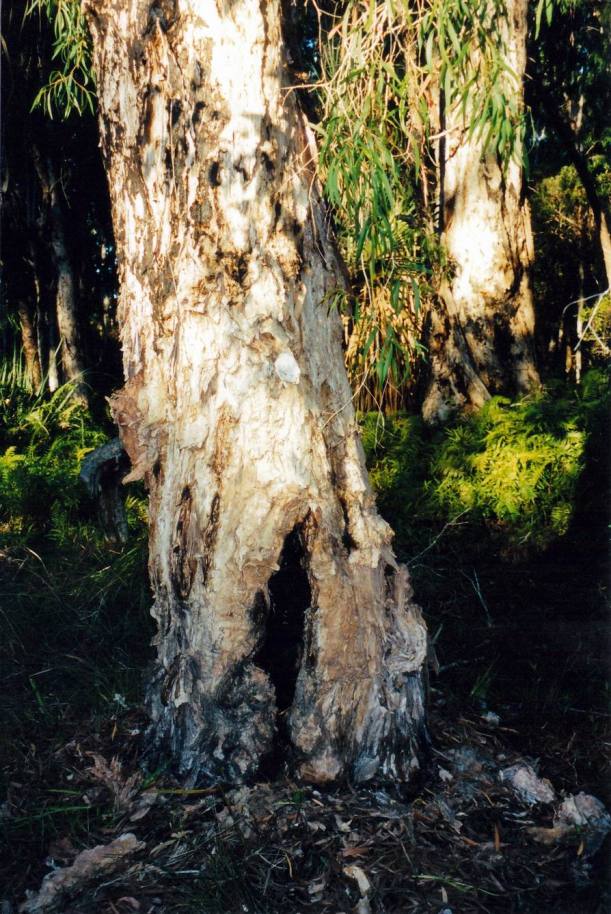
We went in his vehicle – a troop carrier – and received a demonstration of the great variety and beauty of the area. He drove us to an area of huge paperbark swamp – all vivid green ferns and pandanus and large paperbark trees. Then on to a wetland swampy area where water was lying on the surface. This, he told us, had not been there in 2001 but appeared after the subsequent big wet seasons. The swamp paperbarks were huge and beautiful.

resize of 09-14-2003 07 paperbark swamp

Fern and paperbark swamp

resize of 09-14-2003 paperbark at figtree

Huge old paperbark tree

Resize of 09-14-2003 06 Pungalina wetlands.jpg

Wetlands

We probably drove about 30kms.

He then deposited us back at our camp, saying that he was busy tomorrow, but that the next day we should make our way to the house and discuss what to do then.

The property lease had been bought, in 2001, by a Melbourne dentist. O had found the place for him and was to manage the safari camp tourism venture they planned. It was still really early days for this.

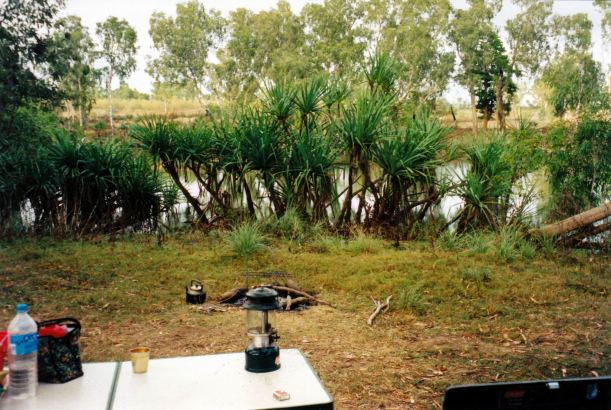
We had no problems finding wood for our campfire, not far from camp, lit that, and cooked tea – on the gas stove – using the open fire to heat water. We did not need the fire for warmth, that was for sure, but it was comforting to have – and between us and the river, just to deter any unwanted visitors!

After tea, we relaxed near the fire, listening to the myriad of night sounds – insects and the occasional splash from the river – these seemed fish sized, not anything larger. The sky seemed full of stars – so bright. Back in the grove at Adels, when sitting outside the van, we didn’t see much of the stars at night, because of the thick tree canopy.

Eventually stoked up the fire and went to bed. It had been a tiring day, travelling over the rough roads.

Resize of 09-14-2003 to p.JPG


Leave a comment

2003 Travels September 2-September 10

TUESDAY 2 – MONDAY 10 SEPTEMBER     ADELS GROVE

We had the usual mix of rostered duties.

I was starting to really feel the increasing heat now, especially when working in the tents.

Business had tailed right off. I was actually hunting for things to do to keep me occupied. I folded stacks of the brochures that we gave out to guests on check in. These came, printed, as flat sets in boxes, to be folded in half to make a little booklet. I folded hundreds of the things – enough for well into next year.

Printed off a heap of my mud map of the area, when I could access the printer in the office area at the back of the shop.

I tried to tally up the campground numbers from the book-in books – needed for the establishment paper work. this was not an easy task, because entries were made in a fairly small space. Campers in the informal grove area, where there were no allocated sites, were just listed by name and number of campers, in a couple of lines at the bottom of the page. That was times was very full and very hard to decipher, later.

When I was on tent duties, there were regular repairs to be done. I hated doing the patching of holes because I always ended up with super glue all over my fingers, and it took a real effort with eucalyptus oil, to begin to get that off – usually with some skin thrown in.

Boss told B she was no longer needed to work, except for later in the month, when the big Variety Bash group was expected. B was feeling very hurt by this. Her husband was still needed, though. So B was spending all her time down at her camper trailer, doing some of the very clever hand made knitwear work that had been her business once. I thought the boss should have assigned B to mending tents, with her sewing machine – would have been very useful.

B and M ate down at their trailer, now, so the staff contingent on the dining deck at meal times was fast dwindling.

resize of 09-01-2003 our van looking very lived in

Our van looking like it had been there a very long time!

Due to the decline in tourists, with the rising temperatures, we had no problem negotiating to finish a few days earlier than planned, on the 11th now. That would give us time for a quick trip to Pungalina before we headed home.

We would also throw in a quick break at Kingfisher Camp, on the way, just because we liked it.

J phoned O at Pungalina to arrange to go camp there and check out the possible work there for 2004. Phoned Kingfisher Camp and booked in there – not that they would be very busy now, either.

The prospect of exploring somewhere new, again, was exciting.


Leave a comment

2003 Travels July 17

THURSDAY 17 JULY     ADELS GROVE

I was on reception, John canoes.

I was wrong about a fall off in trade! We were still very busy. There was a pick up again in the campground business – we were just about full again.

A fly-in guest from a DBB tent, came to me and complained that a camera had been stolen from his tent. Such a happening was unheard of here, so we were surprised. Eventually, we decided that his claim was a bit suspect. The camera and lens were gone, but his very fancy camera bag was still there. Nothing else was missing from their tent – the contents of his wife’s handbag were intact. We wondered whether he had simply left it somewhere, or maybe lost it in the creek – they had been canoeing – and was trying to set up an insurance claim?

OD, the manager of Pungalina Station, over the border in the NT, came in to stay the night, with his mother and his two children. He was driving them back from Pungalina to the plane at Mt Isa. After tea, we got talking to him, sitting around on the dining deck. He was running an upmarket  safari camp operation there, and had just opened up a bit of a camp area. The safari camp only dealt with small groups, and specialized in tailor-made experiences – fishing, sightseeing and the like. He said they were trying to serve “local” food – such as yabby cocktails, their own beef.

He invited us to go and camp there, when we finish here in September – with a view to potentially working there in 2004. It sounded like really rugged and interesting country, and off the usual tourist track. Quite fascinating, in fact. John was interested too. We decided we would definitely go and suss it out. Small guest numbers, and not constantly busy – sounded workable to me!

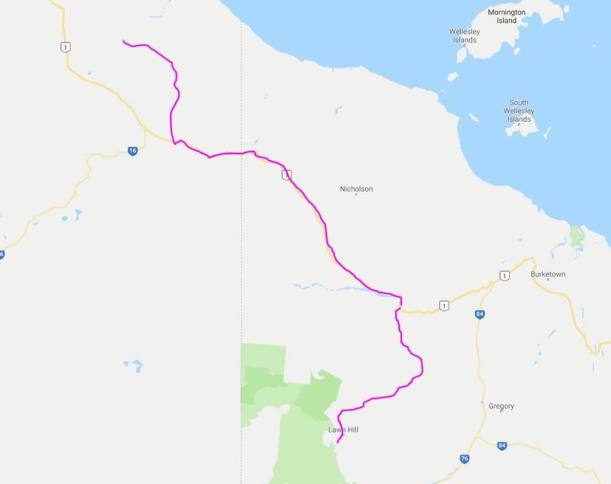
Resize of 07-17-2003 location p.JPG

The location of Pungalina, relative to Adels/Lawn Hill

The supply truck came in at 7.30pm – late, of course. We had been hanging out for supplies of bread and ice creams for days! But we refused to unload it until morning, so the driver had to stay over.