This Adventurous Age

Adventures travelling and working around Australia.


3 Comments

2012 Travels January to June

VALE TRAKMASTER – JAN – JUNE 2012

The year started in line with what seemed to have been the main theme of recent times: I had to have surgery. This time, to release a trapped nerve in the ankle, that was causing foot to go numb.

When I told the physio who was overseeing the ongoing shoulder rehabilitation, about the coming foot operation, his response was not reassuring…..enough sympathy  and comments like “Poor you!” to make me suspect he knew things I didn’t. Like, the shoulder reco was a breeze, compared to tarsal tunnel surgery!

Some people can never really master the use of crutches, and I am one of those. It all did not go smoothly, with the wound becoming infected, a common occurrence according to the surgeon, after the event. But with time, most feeling was restored to the foot.

The last day of March was a milestone event – for the first time this year, I was able to walk around the supermarket! By mid-April was again walking dog around the lake at Lilydale, although the surgery wound on ankle was not pronounced fully healed until the end of that month.

Fig season again – and dog’s annual weight gain……

Any prospect of renewed van travel  seemed even more distant. Clearly, the remote regions we used to frequent, and the extended trips, would no longer be sensible or possible. So the offroad van would go.

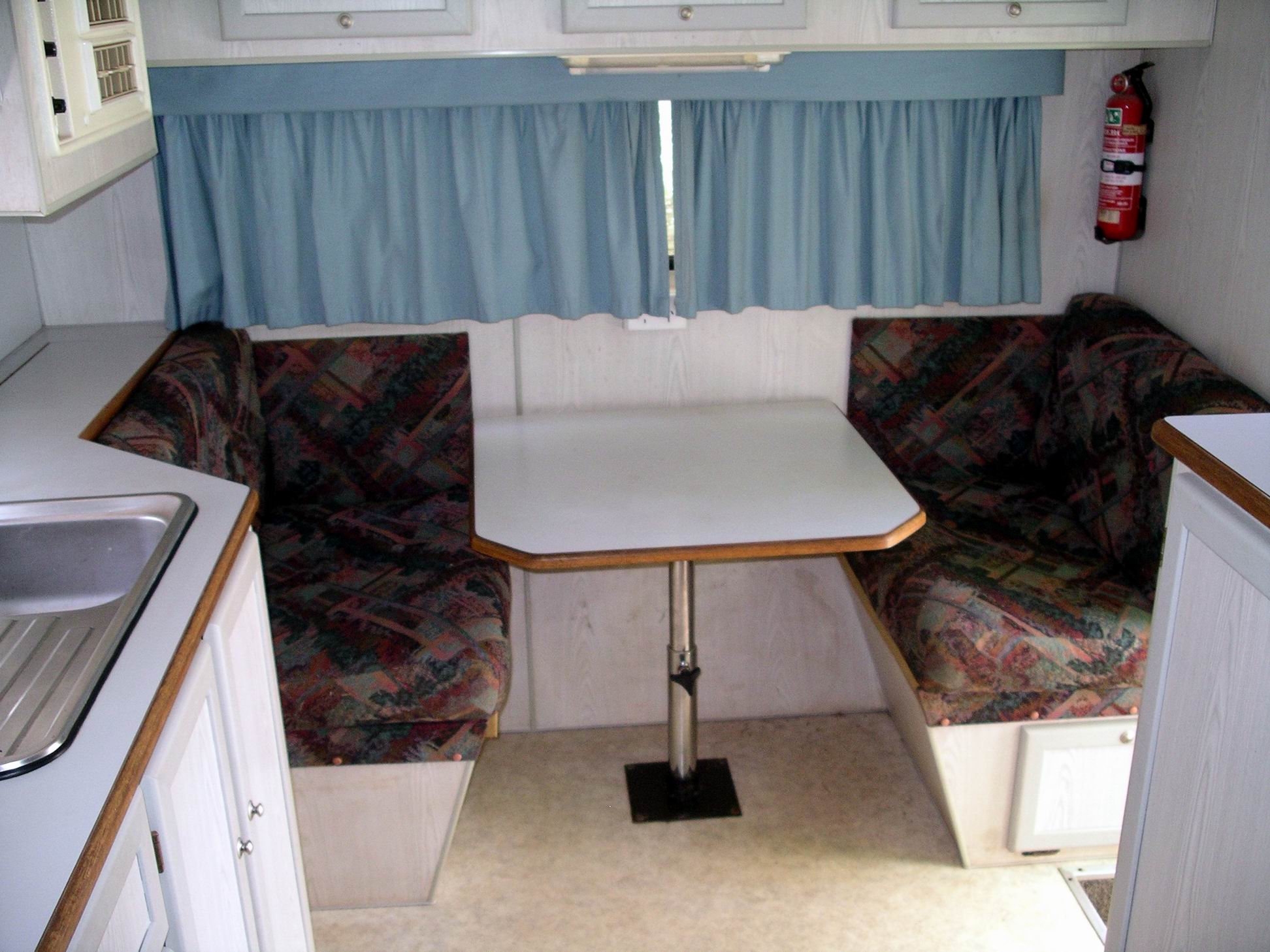
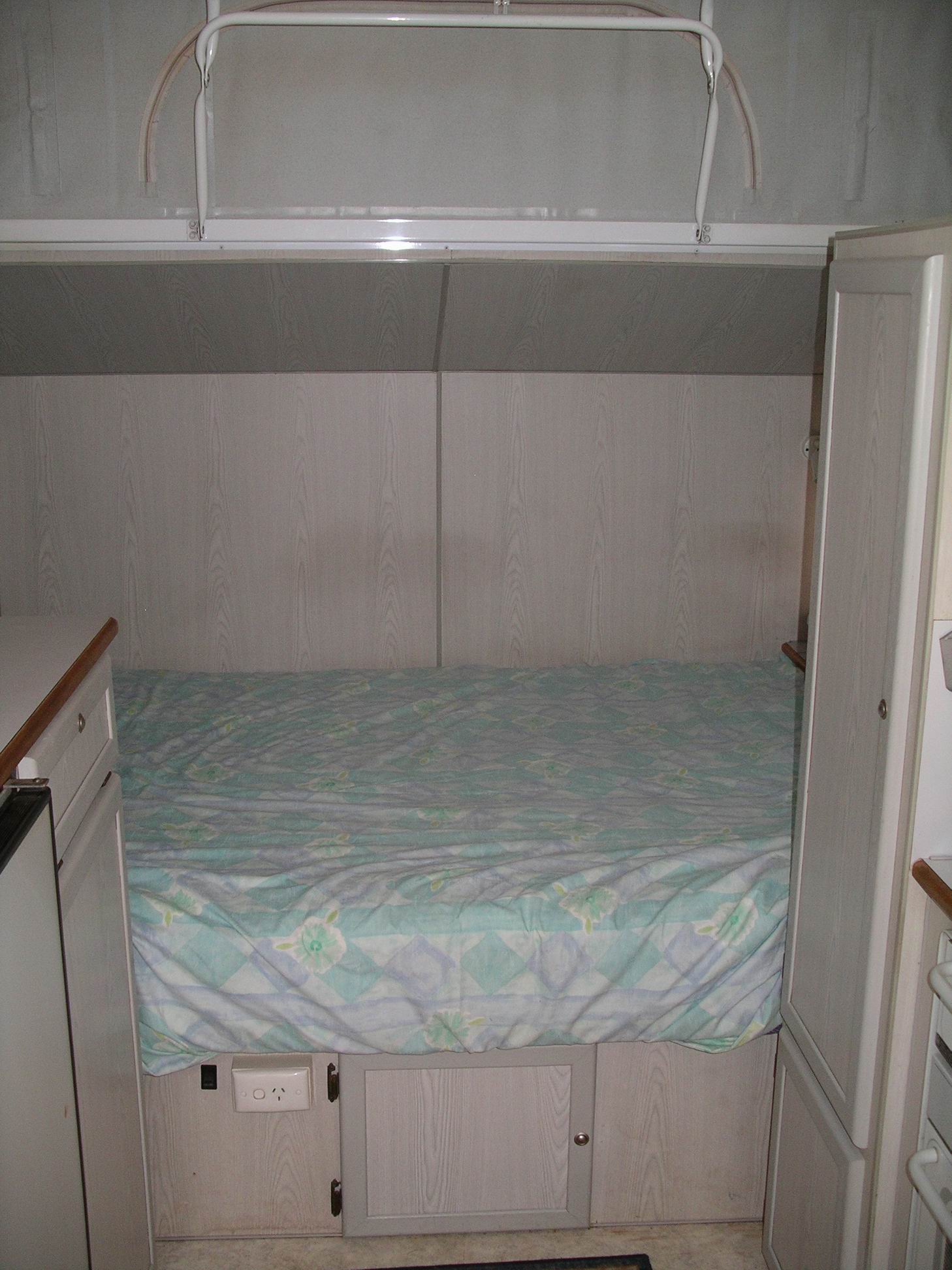
Crutches and rehab aside, I managed to remove all the permanent travel gear, and stores, from the van, and give it a thorough cleaning. I reckon there were generations of red dust in the more out-of-the-way cracks and crevices. Yep, I recognize that colour from Central Australia, and that patch from the Pilbara……

Van came up looking pretty good for its age, and was duly advertised.

All cleaned up……

There was clearly interest in used Trakmasters and we fielded initial shows of interest. But one wanted single beds, another a bathroom, yet another a major reduction in our asking price.

A lady came from the ACT to inspect van and seemed on the verge of purchase. Then, she found a suitable one closer to home, that saved the hassle of coming back with a tow vehicle.

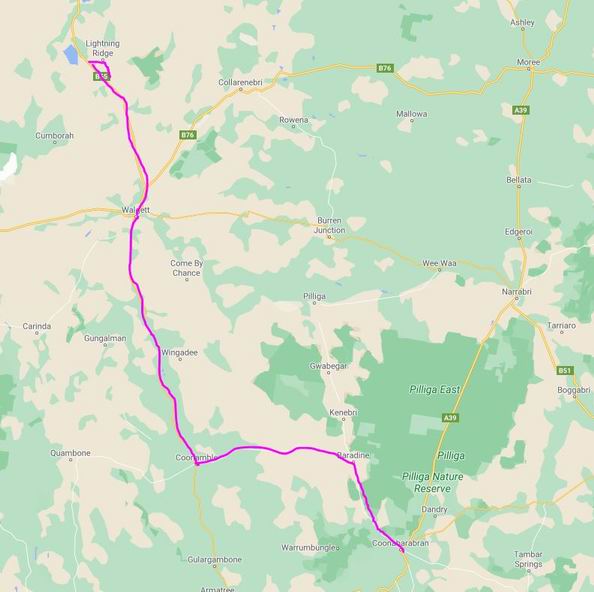
Friend M headed off in April to house sit for friends in Toowoomba. Then we heard from her. En route, the Troopy’s engine had seized. Near Coonabarabran. That part of the country has not been kind to M! That was a “new” reconditioned engine, too – put in after her accident  up that way, last year. Now it will need yet another reconditioned engine. That work would be done up there.

While M was in the Toowoomba/Brisbane area, she planned to go and have a look at a factory that converted Coaster buses and other small bus-like vehicles to motorhomes. She was curious, as was I.

Daughter and family celebrated 40th birthdays with a holiday in Thailand. We were invited to go, but – health issues aside – travel to international resorts really did not appeal to us. I’d visited assorted S.E. Asian places to attend work conferences and the like, and had no ambition to return to any of those.

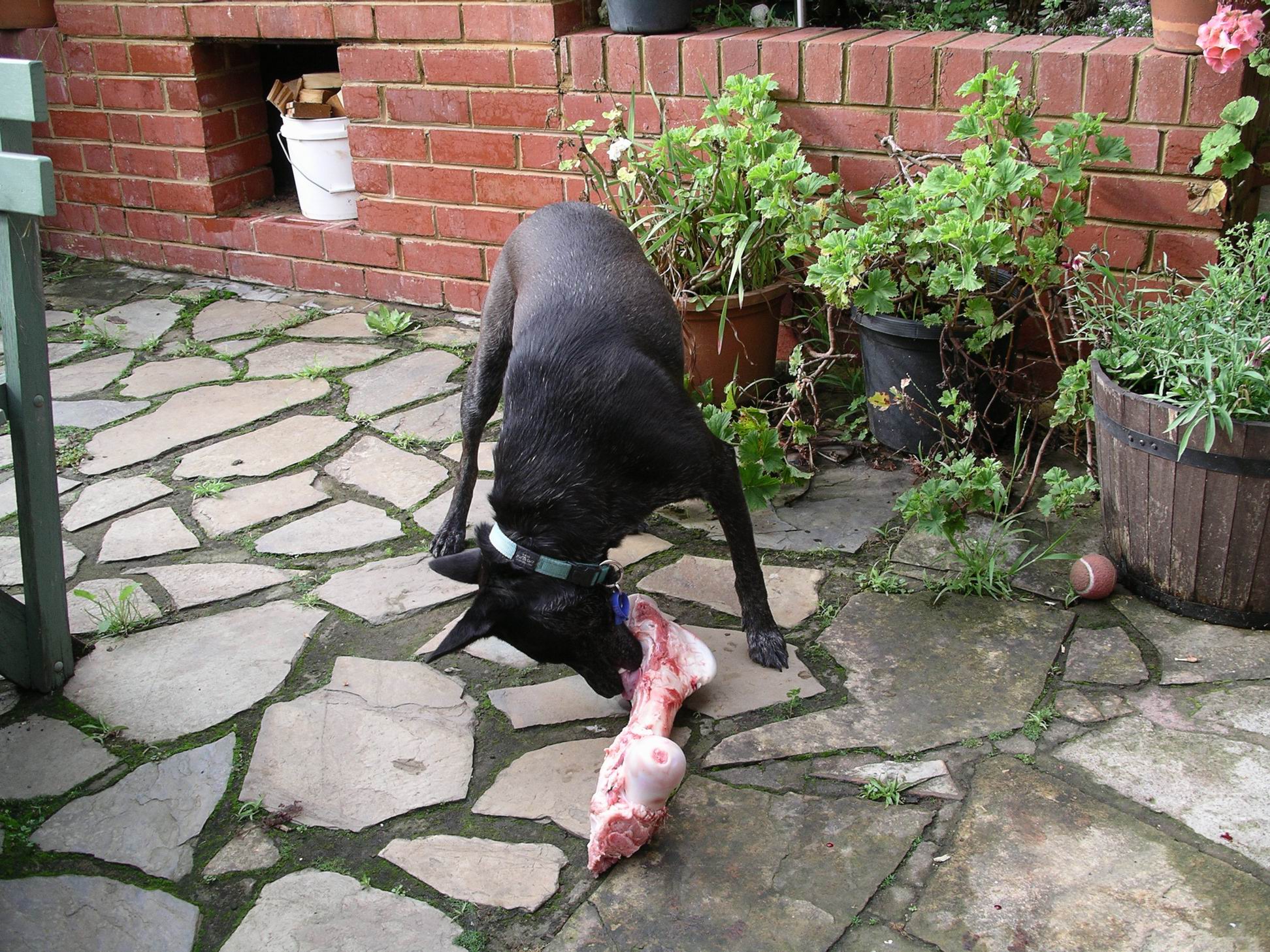
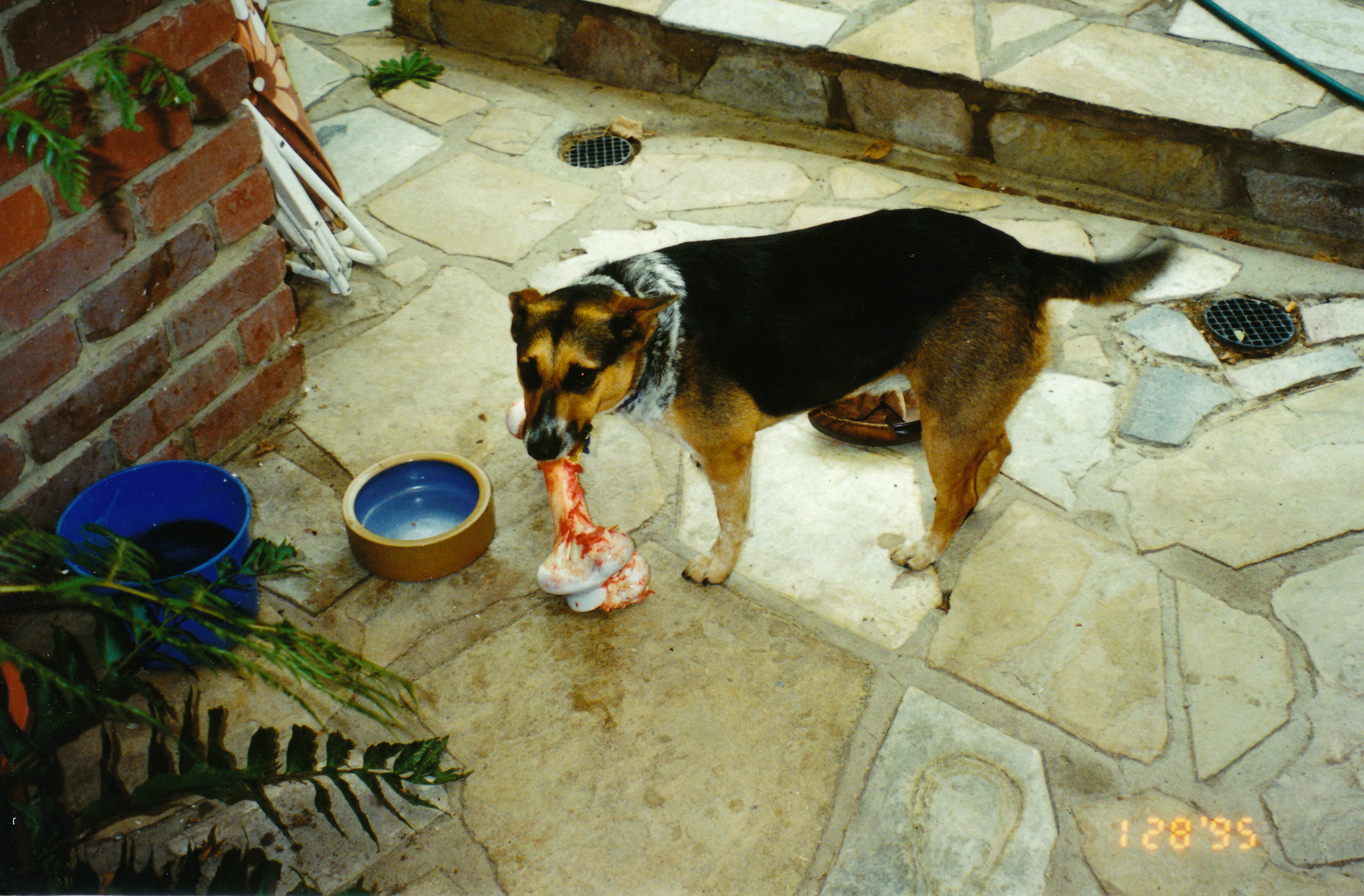
After a series of “accidents” and messes, we worked out that we had a dog who can’t eat bones without getting a badly upset stomach. Who would have thought?

Dog loved bones, but they didn’t love her!

 Daughter and partner visited with their six month old son. It was dog’s first contact with the baby – she was curious about the interesting smells and different noises coming from that direction.

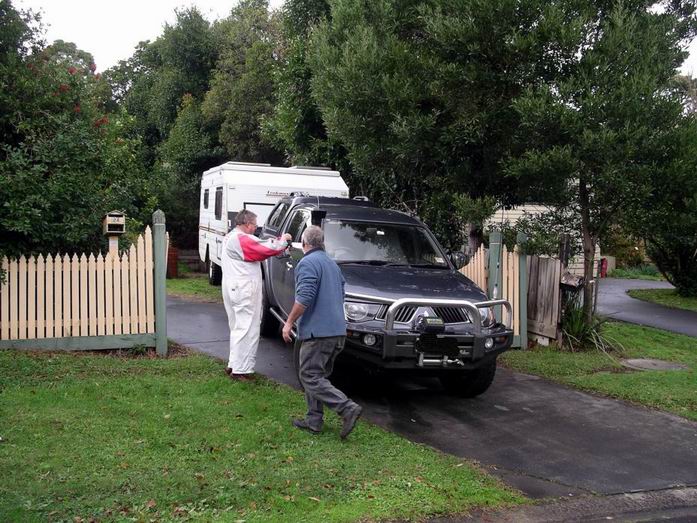
In May, we sold the caravan, for the price we wanted – to a man who lived a couple of blocks away! All that money spent on advertising far and wide…… Whilst he was finalizing the arrangements, the ACT lady got back to us – her van purchase had fallen through and was ours still available? Too late.

I shed a tear as I watched our little van depart the driveway for the last time.

Setting off for adventures without us.

I worked out that we had slept in it for about nine and a half of the past fourteen years, since commencing travel in early 1998. We had towed it some 120,000kms, a good third of that on rough dirt roads. We’d certainly had our money’s worth from the van – and sold it for almost what we’d paid for it, new. Trakmasters certainly held their value well.

Then, there was that big vacant space off the drive, where once the van had lived…….


Leave a comment

2009 Travels May 8

FRIDAY 8 MAY     COONABARABRAN TO LORNE STATION   310kms

We both slept in until nearly 9am – naturally, since this was a day for pack up and move!

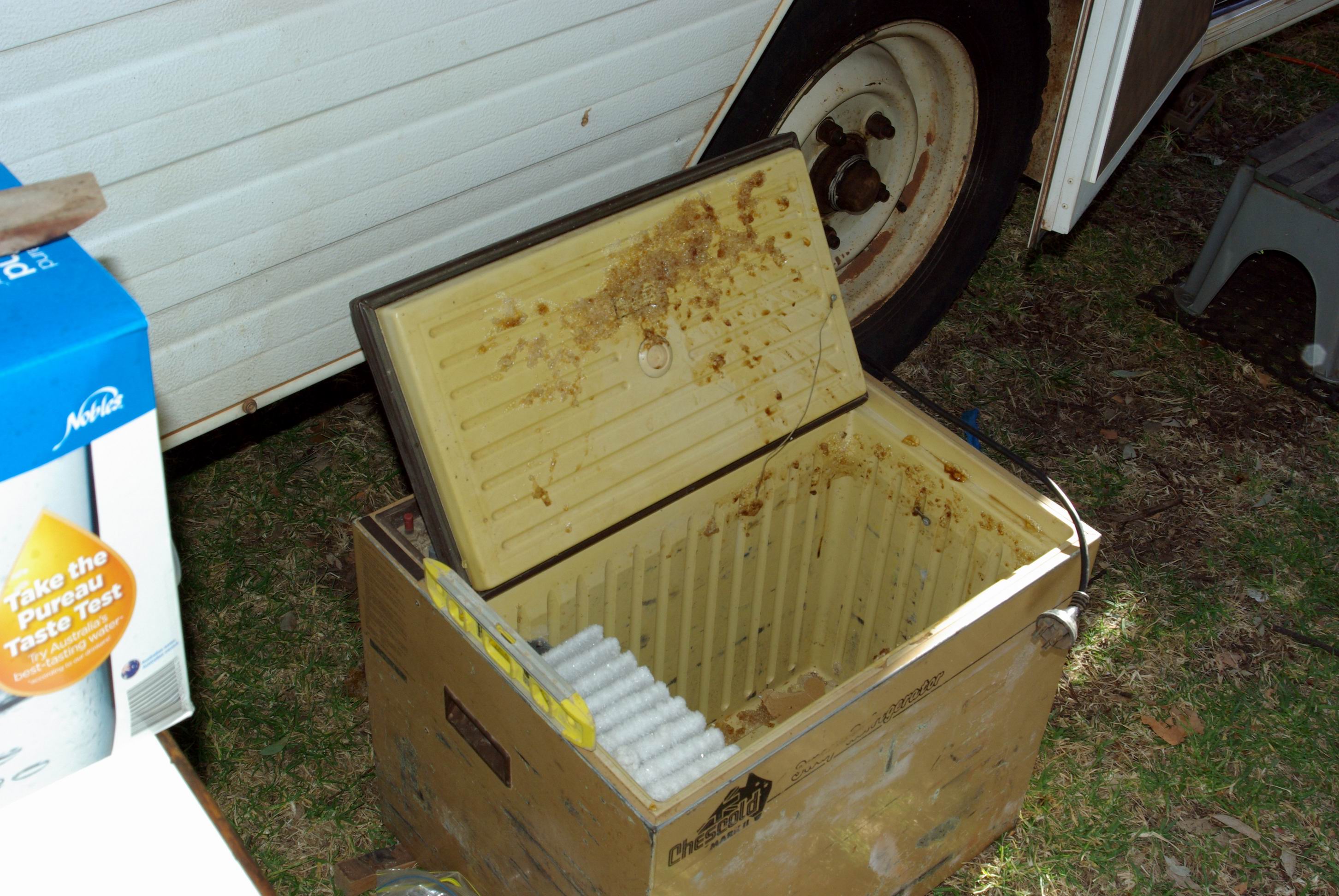
When John went to do his outside packing up, he found the source of last night’s loud bang.

Note the iced up element

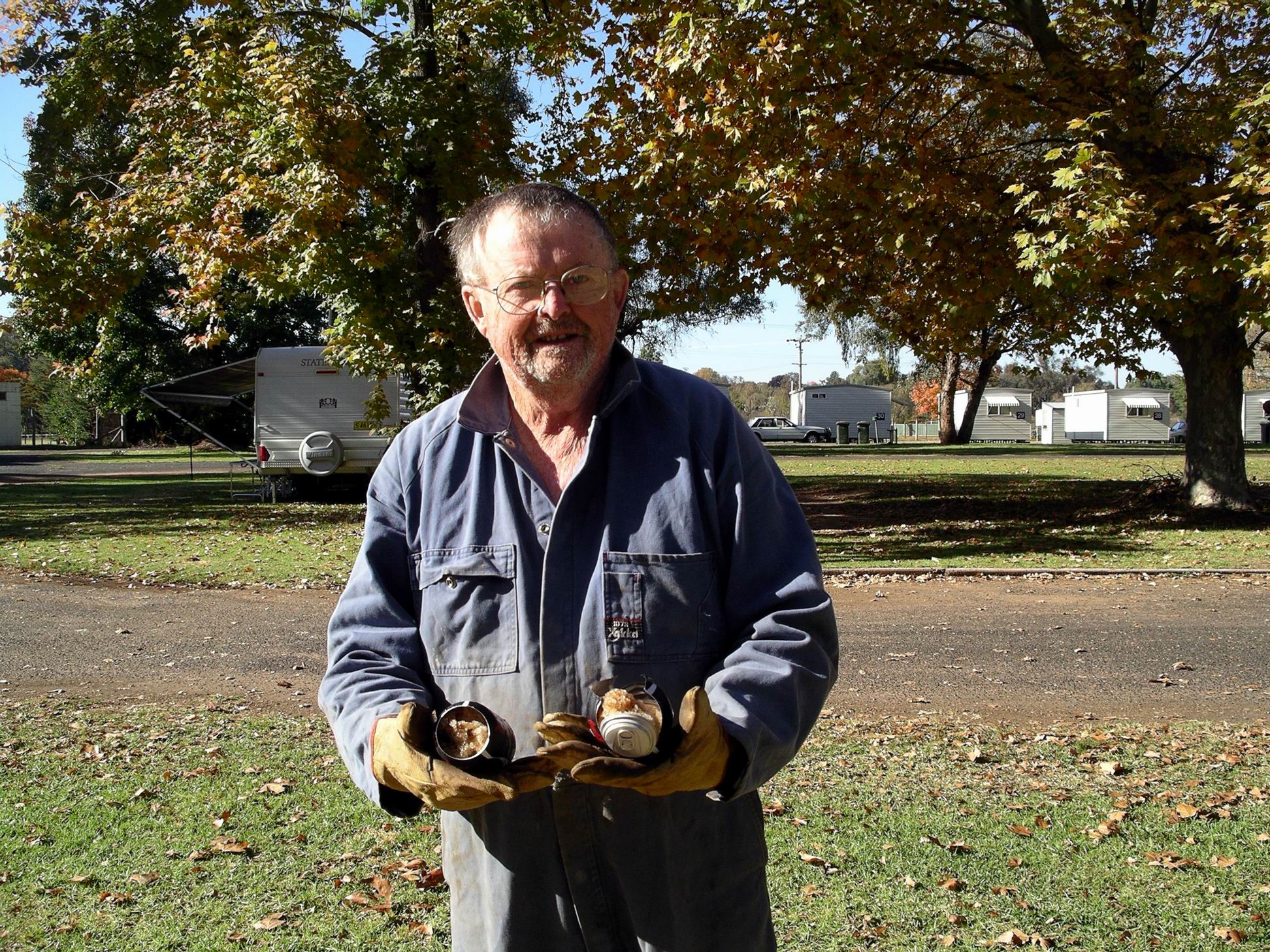
We keep the Chescold camping fridge outside, as a drinks fridge. This avoided a lot of “discussion” over the relative merits of food Vs beverage, in the limited interior fridge space. On these freezing nights, John had been turning off the Chescold, but he forgot to do this last night. Partially frozen Zero certainly had great penetrative power in a small space! Interestingly, the beer cans were intact.

They certainly went bang in the night!

While John cleaned up the mess in the fridge, from two exploded cans, I had a chat with the lady from the broken down rig. Their needed car parts still had not arrived; they were booked to be elsewhere by now, but their arrangements were all disrupted. They were certainly not going to be positive referees for that make of 4WD.

Despite these distractions, we still managed to leave at 10.15am.

The drive back to Baradine was a really pretty one, initially passing the flank of the Warrumbungles. The road from there to Coonamble was better quality bitumen than I’d expected. We travelled through farming country, seeing cattle and some crops.

The road was, in part, a designated route for travelling stock, with wide unfenced areas each side of the road, and with dams at regular intervals on that roadside area. At one point, we proceeded – slowly – through a large mob of cattle. With a thin aluminium skin on both Truck and the van, it was a good idea to avoid close encounters with large, horned beasts like those. It was an even better idea to avoid transferring what they had deposited on the road – in copious amounts – to the surfaces of said Truck and van! It was a very smelly section of road.

There were a couple of stock “camps” beside this road, with vans, horses and dogs. In these drought times, there was a lot of stock travelling stock routes like these, where there was slightly better grazing to be had than on their home properties.

A passing ute threw up a stone that took a chunk out of the windscreen, in front of me. It was not the first, by any means. Judging by the punishment ours had received over the years, Defender windscreens were really tough. I wondered if that was because they were actually flat, rather than curved.

We also went through several swarms of locusts, a goodly number of which remained plastered to the front of Truck. That was going to be a tedious cleaning task, some day soon.

Coonamble was a fair sized town, and looked as if it would be an adequate place to overnight, if we came this way again. Here, we crossed the Castlereagh River again and paralleled it much of the way north to Walgett. It joined the Barwon River, east of Walgett, with the waters eventually flowing into the Darling River, well to the west. It was rather awe inspiring to think that, ever since coming over the Dividing Range between Yea and Yarra Glen, over a fortnight ago, we had been driving in the Murray Darling River system catchment area. I wondered when we would eventually leave it?

I was surprised at how much surface water there was near Coonamble, and between there and Walgett. I knew there had been a lot of rain in the area at Easter, but much of it looked to be more permanent. There was one swamp area, south of Walgett, with lots of different water birds evident there, but we did not stop to do any bird spotting.

We did stop briefly at a rest area on the southern edge of Walgett.  It had good shade trees, tables, shelters – and a distinctly odorous pit toilet. Unfortunately, the morons had been busy – fastener missing from the toilet door, water basin partly demolished. So, despite the overall attractiveness, I concluded that it might be a dubious spot for overnighting – too close to Walgett?

Large rest area near Walgett

Walgett was a sad looking town. It reminded me in some ways of Bourke – vandalized empty shops, heavy duty mesh screens on house and shop windows, strong iron fences and gates around hotels and motels. It was fairly obvious that it had a similar demography and issues to Bourke.

There were signs of cotton crop movement in these parts: the white fluffy bits on the roadsides that looked like a giant had made merry with bags of cotton balls.

We passed through another herd of travelling cattle – another layer of crap, literally, for the undersides of the rig.

The town of Lightning Ridge was some 6kms along a side road from the highway: the Bill O’Brien Way. (I never did find out who he was, to be so immortalized). The approach to town, and the place itself, was very different to the other opal mining settlements we’d visited, over the years. To begin with, the surrounding country was less arid, so it just seemed a normal grazing area. The occasional distant  mound of earth provided a clue that this was not just another small country town, as did opal-related roadside signs. But the town was both more substantial and much more “normal” country town than I had expected.

As we drove into town, John was very pleased to see a very prominent bowls club! He was not so pleased when he realized that Lorne Station, where we were booked in, was “a bit” out of town, like 5kms. Then came his crucial question – had I asked if they had TV reception? Well, no – I just don’t think TV, not in my priority sights, I’m afraid. I gave the unhappy one the option of turning around and going back to find somewhere else to stay, in town. He declined, thereby removing any further grounds for complaint, as far as I was concerned!

As we left the town area, heading south, the opal mining rationale of the place became much more evident. By the turn off to the airport (airstrip?), was the older area known as Kangaroo Hill. Here were the mounds of white clay earth and the quirky, innovative dwellings that typify the fields. We passed a dwelling made from an old red railway carriage. Beyond the airport turnoff the road turned to gravel and dirt.

We were welcomed at Lorne by a gregarious couple who had run the camp ground, for the owners, for the last four years. Our powered site cost $100 for the week – very reasonable.

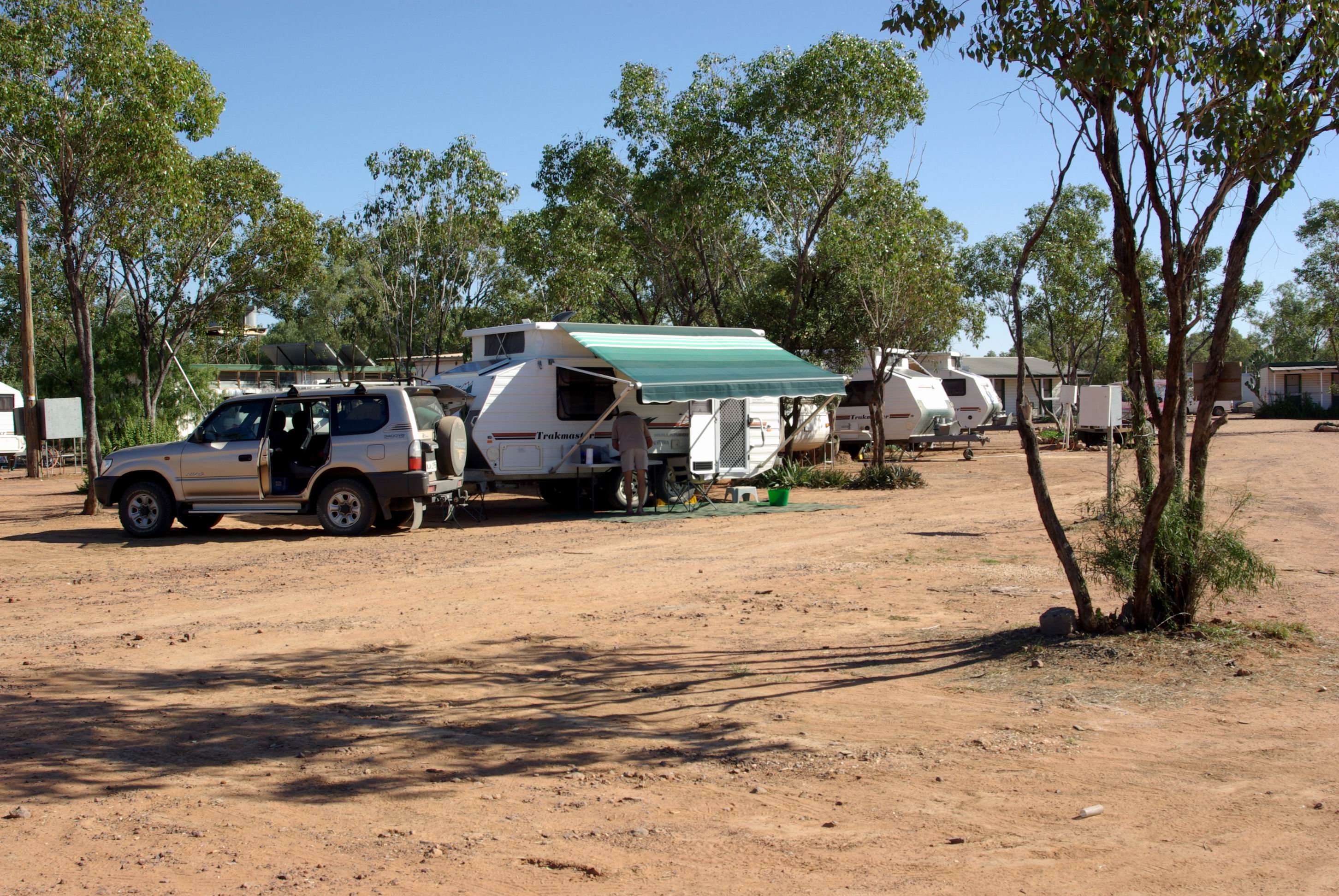
The place was nothing flash, or groomed. The ground was mostly bare, with scattered clumps of saplings. The main area of powered sites – maybe 14 or 16 of those – was fairly standard drive through places, fairly close together with no screening or definition. When we arrived, most of these were occupied by – of all things – a group of 11 Trakmaster caravans! Shades of 2007, at William Creek! I had been told, when I’d phoned to book, that they were expecting a large group in, but it hadn’t occurred to me they might be Trakmasters. There was a range of the vans, from the small Perentie, up to the large ones. They were on the annual E-W trek, from Byron Bay in NSW, to Steep Point in WA, where they would be by July 4, so they would not be stopping for long, anywhere!

Clones….

There were a few other campers, and vans on power, and some scattered more widely over the large area, away from power, including a Bushtracker van. The more distant reaches of the area were criss crossed by vehicle tracks in dried mud – guess it rained over Easter here, too. There were odd cabins/small houses, and row of backpacker cabins. Presumably, most of these structures were originally station worker accommodation.

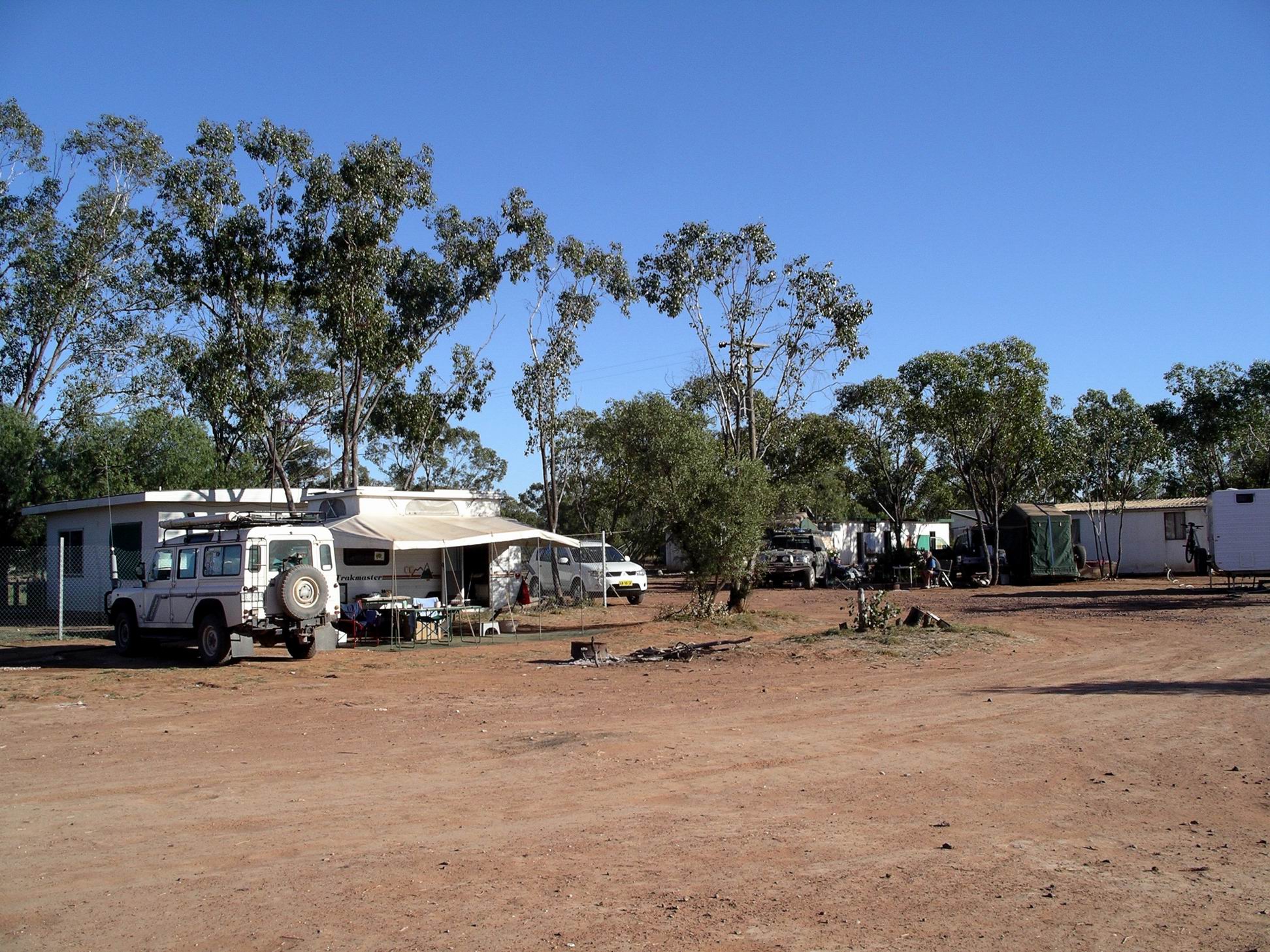
We did not have many options about where to park. There was a powered site, very exposed, close to a traffic route, next to a Trakkie van, just dirt and a power pole. Or we could have one away from the herd, next to a fence around an (empty) cottage. This had a little fire ring and a small clump of saplings, and we chose it – pronto! Our power and water connections were on the side of the cottage. We had no threat of ultra close neighbours. Not that we are anti-social, just…….?

The anti-social Trakmaster…

The amenity block, though a bit rough, like the rest of the place, was clean. An effort had been made to pretty up inside the Ladies, with flowers.

We set up, being thankful that our power lead and water hose were loooong.

I had a brief chat with a couple of the Trakkie people, mostly about the brand. Because the annual trek was escorted by experienced leaders, those new to inland, outback and rough road travel could learn with a degree of security. Others just enjoyed the group camaraderie.

An opal miner – T – came by, with a couple of dogs. He told me he was born 100kms from here and had lived all his life in the area. He had been a permanent dweller here for twelve years and lived in a small house on the other side of the camp area. He showed us a small jar of opal pieces – it was the usual act of making a beeline for the new arrivals! He let us know – fairly subtly – that he sold opals. I had noticed a sign up in the office saying that no responsibility was taken for opals NOT bought at the office! Fairly pointed, I thought. Buyer be very beware. He did offer to show John how to clean up opal chips, tomorrow, so John might go learn how to do that. He would probably have to withstand another sales pitch, though – at which he isn’t all that good where opal is concerned. T was very talkative. I hoped he didn’t get to be a pest, as can sometimes happen.

We drove back into town. Naturally, the Defender made a beeline for the Bowls Club, where John arranged to play on Sunday, in association with a Mothers Day meal. So that was BOTH of us to play – and in formal uniform too. Just what I always wanted on Mothers Day – not!

On the drive back, we collected some wood. John lit a fire and we had our happy hour by our fire ring.

Although this was a commercial camping operation, it did have some of the feel of being camped in the bush. I had decided already that I liked Lightning Ridge and liked being out here.

As far as John was concerned it WAS the bush as there was only one or two bars on our phone and no internet. He had erected the TV aerial on its usual pole at the front of the van, but just to get it out of the way – there was no TV.

I made vegie patties for tea. John did not like the idea of these at all – the clue was in the word vegie! But I noticed that he did go back for seconds.

The night got down to about 5 degrees – much better than where we had been.


Leave a comment

1999 Travels October 11

MONDAY 11 OCTOBER     HEALESVILLE

We needed a fairly early start this morning, because we had to hitch up the van and take it to Trakmaster for a service. Obviously, the outside furniture, awning  and the like didn’t need to go too, and we were lucky to be able to move them to the new site we would occupy from this afternoon.

We stayed with the van at Trakmaster. They are very busy with orders through to next June. We like the sound of there being ongoing demand for the brand. They do seem to be developing a solid reputation. We chatted to a couple of prospective customers, while we were waiting.

I added our black lines to the wall map they keep on display in the office, showing where their vans have been taken. It is getting to be quite an impressive display, especially of unsealed road travels.

The original plastic cupboard catches in the van were all replaced with metal ones, at no cost to us, because there has been a lot of the originals breaking.

We collected the seat covers and sleeping bag from the dry cleaners. The wool seat covers look like new – all the dust from remote regions has gone! The sleeping bag smells strongly of chemicals.

Back at Healesville, our new site is an en-suite one. We opted for this, in view of John’s coming travails, and because we had the van mobile today, anyway. It is pleasant to have the convenience of the en suite; now we are paying $22 a night.

Set the van back up again. It was an effort for John because he was feeling most unwell.


Leave a comment

1999 Travels March 16

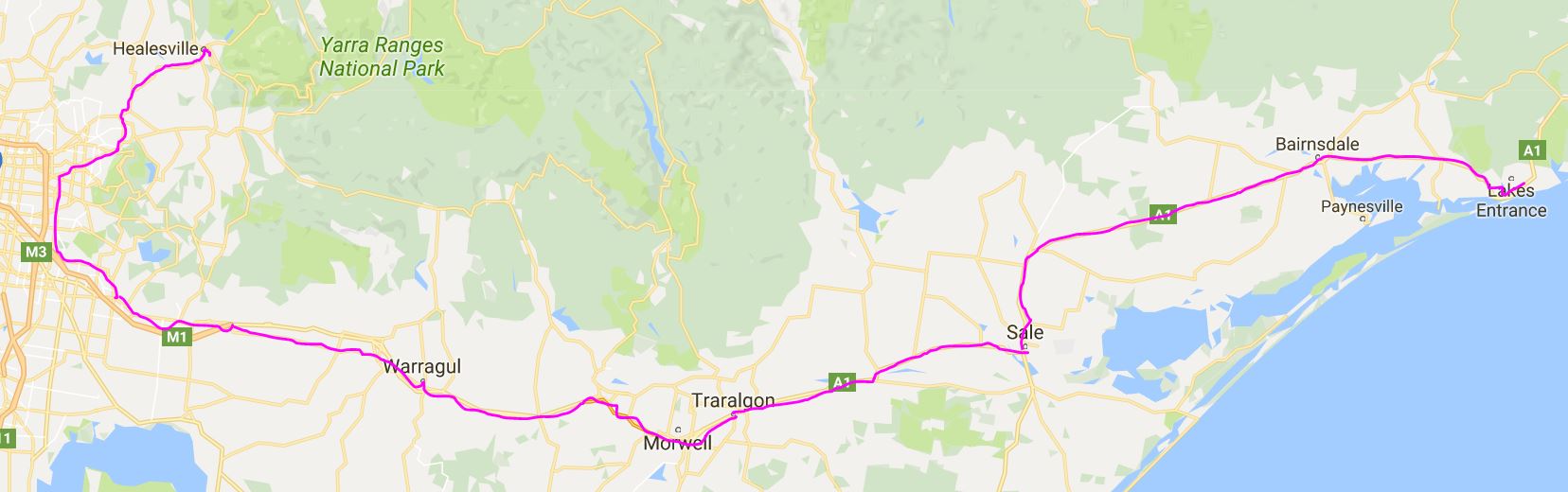
TUESDAY 16 MARCH   LAKES ENTRANCE TO HEALESVILLE   373kms

We unintentionally slept in till 9am. The morning was grey, cloudy and cool, which may explain the sleep in. Managed to leave the park at 10am though.

During the night, some fishing rods were stolen from a boat in the caravan park. It seems Lakes Entrance may have a problem, as we were told in Tathra, by other travellers, that there had been a problem with break-ins to cars in several of the caravan parks in the town.

It seemed a long drive to Melbourne. We reached the Trakmaster factory in Bayswater just before 3pm. Refuelled at Sale – 70cpl –  and had  a short lunch stop in the Latrobe Valley.

Owner C seemed really pleased to see us. The other owner R was there too. One of their vans returning from adventures! We sat and watched their new promotional video, and talked about the 1998 Trakmaster Trek that R had led, and his plans for the 1999 one. These annual expeditions are a great idea, to get new owners used to their vans, and see – in the security of an organized trip – the offroad capabilities of their vans. However, they are not for us – we do not much like travel in a group, and the Trek occurs at a time of each year when we are elsewhere.

J arrived – rather late. He couldn’t fix the problem! But he remains convinced that it is a control box. He arranged to bring a new one out to Healesville on Thursday and install it there. Whilst we were at the factory, one of the Trakmaster men worked on the support/brace to stop the fridge sliding forward in its cavity when we travel. It looks like they might have left something off when it was built! They also cut an extra vent for ventilation of the rear of the fridge, through the cupboard wall beside the cavity. There was already such a hole on the other side, plus the grated vent in the bench top above. We have not had any issues, but it just seems wise to ventilate the back as much as we can.

03-16-1999 fridge out for repair.jpg

The fridge out of its cavity and being worked on at Trakmaster

It was nearly 5.30pm when that work was all done, so we had to deal with peak hour traffic, through Bayswater and Kilsyth. It is a good thing we are familiar with the roads.

So it was heading for 7pm when we reached the Badger Creek Caravan Park – $16 a night, with the seventh night free. Back here again!

By the time we set up, it was very late, so we went and bought a pizza for tea.

Phoned K – no one home – so we left a message that we had arrived back in the area.

It seemed really cold to us, and we’d had a tiring couple of days, so went to bed at 10.30pm. Soon after, K rang. We arranged to go there to collect our mail, tomorrow, and for tea on Saturday. He offered to have a game of bowls with John – I think he misses the game, which he no longer plays due to having to work some weekends.

03-16-1999-lakes-to-healesville


Leave a comment

Background and Preparation – 1997

The 1993 long service leave trip crystallized our desire to travel full time, sooner rather than later. John would be able to take early retirement, with superannuation income, once he turned 57 – in September, 1997. This would also be the year that his younger daughter completed her final year of university, thus ending a major financial outgoing for us. So our thoughts turned to retirement at the end of that year.

We had plenty of time to research and make important decisions. What vehicle would we use? What would we use for accommodation? And – after the late-1996 death of my father, who lived at our place, what would we do about our house, dog and two cats?

Accommodation:

This was the issue that caused us most deliberation. For the four months of our LSL trip, we’d tented it, carrying all the needed camping gear in our Hilux. We put up a hike tent for short stays and a larger one when staying longer in one place. The process of setting up camp was time consuming, though, and more than once we were affected by wet and windy weather.

6-19-1993 our Windjana Gorge camp.jpg

A typical camp with our hike tent

Although tenting seemed to offer the greatest flexibility about where we could go, it really did not seem a desirable option for extended travel.

At the same time, we really did not want to tow anything!

And there the issue sat, for a couple of years, during which time we bought a very sturdy and expensive, locally made,  large tent, to replace the old one that had disintegrated in a Mallacoota storm, in 1994. The new tent was much quicker and easier to put up, and much more weatherproof – and after a few school holiday trips with it,  we thought this might do for our future travel.

07-02-1995 camp at Mungo NP.jpg

The new, easy to put up, tent – in 1995

By the end of 1996, it was becoming obvious that John was going to need hip replacement surgery, before much longer. It would be best to have this done before we set off travelling.

Our tent based camping involved much packing and unpacking of the Hilux, lifting the heavy camp fridge, and the like. This was not going to be very workable with a newly replaced hip, so it was time to seriously consider other options.

We still wanted to be able to access places “off the beaten track”, and certainly off the bitumen, so wanted to retain 4WD capability. Camper trailers fitted this requirement, but the ones we’d seen in our travels to date seemed as time consuming as our tent to put up, and we would still have to carry a lot of the gear in the vehicle, with attendant lifting and packing for John. I hated the idea of maybe having to drop wet canvas sides onto the bed, as we’d seen others having to do.

So, with considerable reluctance, the thoughts turned to caravans. On a holiday trip the previous year, camped at Mootwingee, we’d seen an unusual caravan – a small Supreme Getaway. Until then, we’d had no idea that there was such a thing as an off road caravan! Out of curiosity, back home, we arranged to go to the factory and have a close-up look at one of these units.

Just about convinced that one of these would suit us, we went off to the Melbourne Caravan and Camping Show, in early 1997, intending to have a really good final inspection of the Supreme, and order one. However, at the Show, there was another offroad caravan display – that of Trakmaster, a fairly new entrant to the realm of such vans. We spent several hours going back and forth between the two displays, and ended up putting a deposit on an order for a Trakmaster Kimberley, to be built in late 1997. Apart from the merits of the van itself, the factory was only a few kms away from home, and it turned out that, through work, I had links to the owners. Everything aligned.

John’s hip was replaced in August, but resulting health dramas kept him hospitalized for over a month, and convalescent for some time after that.

It came time to finalize the details of our van build; Craig from Trakmaster very obligingly came to us, as John was not mobile. What we wanted was the minimum required for comfort and utility, in our 14 foot pop top.

Storage had to be maximized, as we would be living full time in the van. Two 9kg gas bottles and 120L of fresh water storage gave us considerable capacity to be away from services. A gas cook top and oven was chosen – no microwave, thinking that corrugated roads would not be good for same. We minimized electricity use by not having a hot water service, or electric water pump – no bathroom, either. We did buy a porta potty – but ended up never using it, though the shovel we carried on the roof rack got a good workout in some places!

I had read about a marine 12v compressor driven fridge that was used in boats and worked in the roughest of seas – a Vitrifrigo – sounded like it might endure rough roads, too. Compressor driven would work better in the tropics than the conventional 3-way fridges. Craig agreed to install the Vitrifrigo for us. The van would be built with provision for solar panels to be installed later – we didn’t think we’d need same for the first year or so, and wanted to wait for the emerging technology to develop further. The fridge, lights and range hood fan would be powered from the 12V battery, which would be charged from 240v hook ups in caravan parks, until we eventually put in solar power.

On camping trips, we had been taking our two mountain bikes on a sturdy carry frame on the tow ball of the 4WD. Craig worked out that he could extend the A frame of our van and build a cross member on it that would hold a tow ball and thus enable the bikes and carrier to go at the front of the van. Then, we would have the flexibility of still being able to use the bike carrier on the back of the 4WD, on day trips.

07-01-1995 Balranald Mungo road near Bidura HS.jpg

Our bikes on the rack we wanted to also use on the caravan

We opted for an awning that fitted into a sail track channel – more work in setting up, but we did not want an attached one that could pull the pop top askew, or be scraped off by trees on narrow tracks. There would be two jerry can carriers on the back bumper frame of the van. One of my farewell presents from work colleagues was three metal jerry cans! The three wheels would be the same as on our 4WD, thus making spares interchangeable.

Trakmaster vans featured sturdy off road independent trailing arm suspension and Treg poly block hitches, that enabled a considerable variation in angle between van and tow vehicle, such as one might get on rough tracks.

Through October and November, 1997, John had to go to Knox Hospital once a week for blood tests. His “reward” after each procedure, was to call in at the caravan factory at Bayswater and see how our build was progressing. So we closely followed the van’s construction, from the time of the chassis delivery, on. At times we had wondered about the wisdom of going with such a new caravan manufacturer, but were reassured by the quality of the construction we saw.

In late November, we took delivery of our Kimberley – the 36th caravan built by Trakmaster! Trakmaster staff attached the van to the receiver on our vehicle, and we towed it the 10kms home. Neither of us liked the feel of driving with the van on – a distinct forward and back pitching sensation. We could only hope that the loaded van would feel different!

John had contacted Hayman Reece, about setting up a weight distribution system on the rig. We were lucky, in that they had just developed a hitch that was compatible with the Treg coupling – in fact, they were looking for customers for this to give them feedback. John took the rig to have this fitted – and a great, cumbersome thing it was, too. But he reported that the pitching sensation was less.

As our travel plans began to become clearer, it was decided that we would carry, in the 4WD, both the large tent and a  hike tent, as well as some camping gear.  If John’s hip permitted, we had some plans to visit places where we wouldn’t want to tow, but would store the van and take to the tents.

The vehicle:

Since 1992, our travel vehicle had been a Toyota Hilux. This had served us well, most of the time, but it was not a very comfortable ride. It had a very low tow rating, and would not be suitable to tow much at all.

I started buying 4WD magazines and reading reviews. We needed a capable off-road vehicle, capable of towing a caravan. This research threw up one we’d never even heard of before – the Landrover Defender! They received great reviews for off road ability, and were rated to tow 3.5 tonnes.

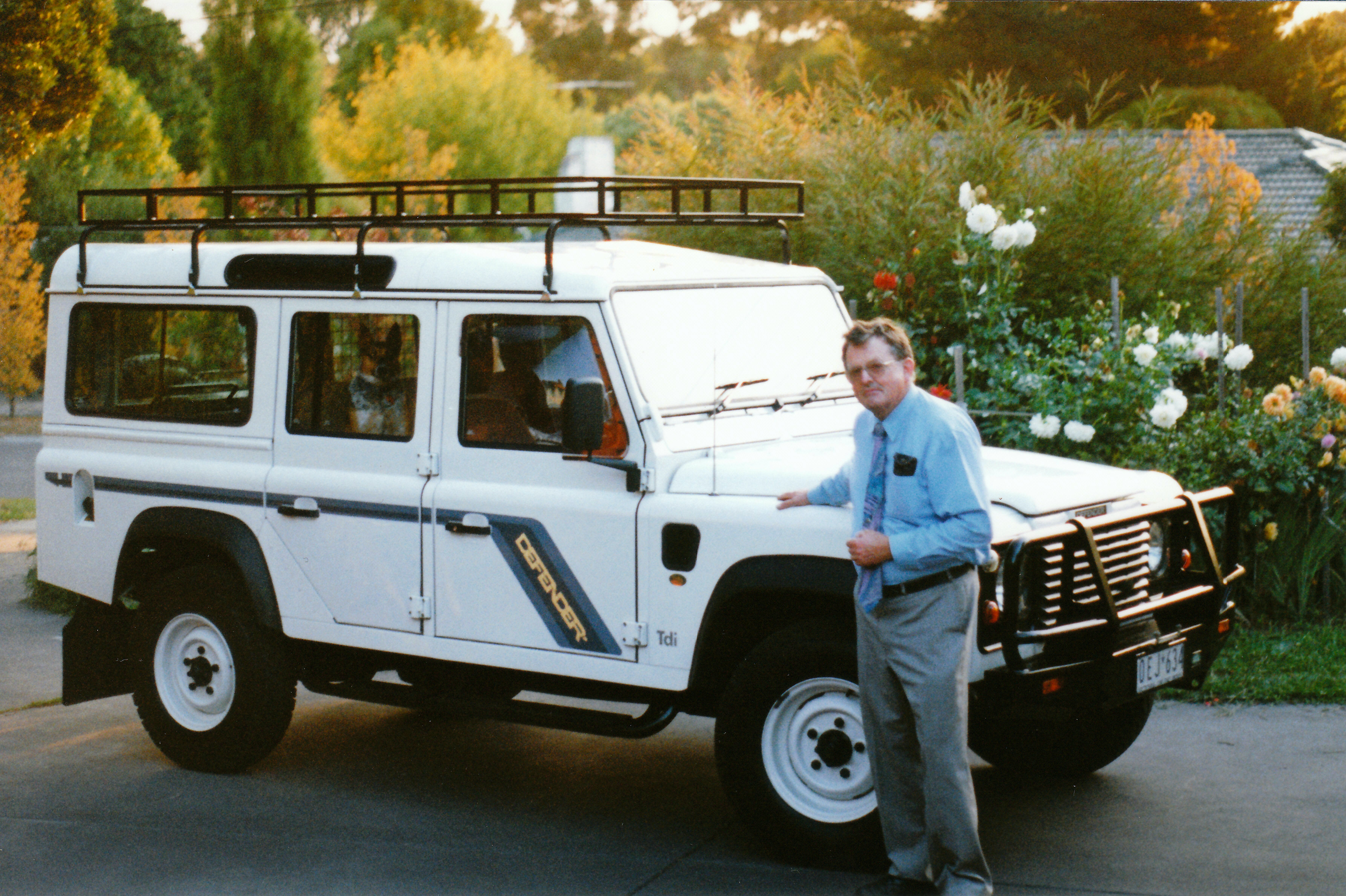
It was not that easy to find a Defender to look at! There were not many Landrover dealers in Melbourne and most did not have a Defender to display – not exactly being an urban car. In early 1997, John located a demo model of a 110 Tdi wagon at the Frankston dealership, went and had a look at it, liked the deal they offered, took me there the next day to inspect – and we bought it! 5000kms already done – for a diesel engine, hardly run in! Being a demo version it had some valuable extras – side steps, bull bar, cargo protector, roof rack and a back ladder to access same. It also had a very “rural” appearance – brick-like! Although I initially found it rather claustrophobic inside, after the space of the Hilux, this was easy to adjust to – and the seats were much more comfortable.

02-27-1997 arrival of new truck.jpg

The arrival of the new Truck at home

I had only one real reservation about the new Truck – the whole unit was one integrated piece. I still had vivid memories of the time we loaded firewood into the back of the Hilux, along with a colony of huntsmen! I resolved that no wood would ever go in the new Truck.

Through 1997, we had the vehicle fitted out for the travel we planned. Winch fitted to the front. Both a CB and HF radio fitted; they went on a shelf above the front window; the main part of the HF radio went under the rear passenger seat. A snorkel was installed. So was a second cranking battery – there was space under my seat for this. An inbuilt air compressor fitted under the back seat, with the storage tank under the Truck body. We put in a cargo barrier. We found that the already fitted side steps precluded putting in a second fuel tank, and decided the steps were of more value.

Hayman Reece took care of towbar installation. A brake controller for the van brakes was fitted.

We trialled the new Truck on a couple of school holiday trips. What did surprise us was how much gear could be fitted into the back – very capacious.

The house and pets:

My son K, and his partner, P, agreed to move from their rented house  into our home and mind it and our pets, for the duration. As well as solving the pet care issue, this would enable them to save more towards ultimately buying their own first home.

We debated and agonized over whether to take dog Butch with us on our travels, or leave her at home. She had travelled with us on some of our school holiday trips and managed the travel well. But we knew having her with us would preclude the National Parks visits we hoped to do, and I was dubious about taking her into parts where there were things like crocodiles, 1080 baits, and wild dogs. She had initially been son’s dog, so in the end we left her home.
01-28-1995-butch-and-bone

We thought long and hard about taking Butch with us

Through 1997, we did some downsizing of our possessions, with the aim of being able to pack away all our furniture and belongings into our bedroom, John’s study, and his shed – which would also store my small Barina car, with its battery removed.  Between us, we’d accumulated over a thousand books that had to go – a very eclectic lot, that sold to a booklover who had lost her collection in a fire.

The budget:

We will have to be fairly careful with money, as we still have the fixed costs associated with our home to cover, like rates and insurance. Can only do a rough travel budget estimation, until we see what the realities of travel are. That estimate is $100 a week for caravan park/camping fees; $100 a week for diesel; and $200 a week for food and all else. Some weeks we will exceed these amounts, but other weeks will be under – and hopefully the average will be about right.

We aim to keep enough in savings for things like vehicle servicing, tyres and unforeseen events.

The initial plan:

The starting point was a broad plan to be “up north” in the Dry season, and somewhere more comfortable once the rains and humidity set in, up there.

We focussed on Queensland, because John had never been there, and I had only holidayed briefly around the south east corner. After our successful foray into the wilds of the Kimberley, a few years before, Cape York seemed to beckon as a key destination for the first year of travel.

IMG_NEW.jpg

Our plan for several years of travel

We would have to be back in Melbourne for a few weeks in March of 1999, for K and P’s wedding, and to “mind” our own home while they honeymooned overseas. My daughter, V, and John’s elder daughter, S, both rather conveniently had their weddings during 1997!

John was determined to come off the Warfarin medication that he’d been on since September, with its attendant blood tests and uncertainties about dosages, that could really impact on our travels. The physician was dubious, but under pressure decided John should have tests to see if he had a clotting disorder. The complication was that he would have to wean gradually off the Warfarin, then go to Royal Melbourne Hospital for these special tests, which could not be done until February.  By this time, it was December. Son and partner had already moved into our place, when their lease expired in November, and were expecting us to depart just after New Year!

We decided to stick to planned departure date, and do a six week shakedown trip through the Western District, returning close enough to Melbourne for John to have the tests, before then heading north. As it worked out, this was really of benefit, because it enabled us to assess what we had and had not packed, and adjust things before we finally set off. Remember that we had not even done an overnight trip in the van, at this stage!

It also meant that there was no pressure on John to do great distances – we could take it easy and let his leg adjust and get stronger.

December was a whirlwind – all the usual end of school year work for me, complicated by having to sort/pack/discard the accumulation of sixteen years at the place; farewell functions for me; hosting the family Xmas; having P and K living with us; organizing what we would take away; packing all else into two rooms. John’s ability to lift or carry anything heavy or bulky was limited, so much of the packing fell to me. There seemed no end to the last minute things, but eventually it was 1998 and we were ready to go………adventuring, we hoped.

It was a good thing that we had focussed on the Western District for our short, initial trip, as just about all the other parts of Victoria had significant bushfires going by the time we were ready to leave.