This Adventurous Age

Adventures travelling and working around Australia.


Leave a comment

2009 Travels May 7

THURSDAY 7 MAY     COONABARABRAN

It was a one degree night. The new heater was much appreciated in the morning – turned it on and scurried back to bed to let the van warm up before venturing out again.

Got going, complete with sandwiches for lunch, mid-morning.

A local attraction was the Newcastle Hats factory and shop, out in the industrial area. It was heartening to find this type of industry in a country town. We supported it by buying John  a new hat for bowls, in a style he had wanted for a while, but which wasn’t available in his local bowls shop. It was very reasonably priced. I bought a pretty, pale blue, soft cotton hat, with a fairly narrow brim, for $6.

My “to do” list had, for years, included exploring the Pilliga Scrub, and that was today’s plan.

The Pilliga is the largest inland native forest in NSW, and really significant in terms of its biodiversity. For a long time, it was logged for cypress pine and ironbark, but that ceased in more recent years. That history meant that many tracks criss-cross the area and several tourist drives had been created using such tracks. They would be major fire trails too, as the Scrub is prone to nasty bushfires.

We drove out towards Baradine, on a sealed road, then turned right and onto dirt tracks to drive the Butlers Lane Bird Route, a circular drive that eventually brought us back to the Baradine road.
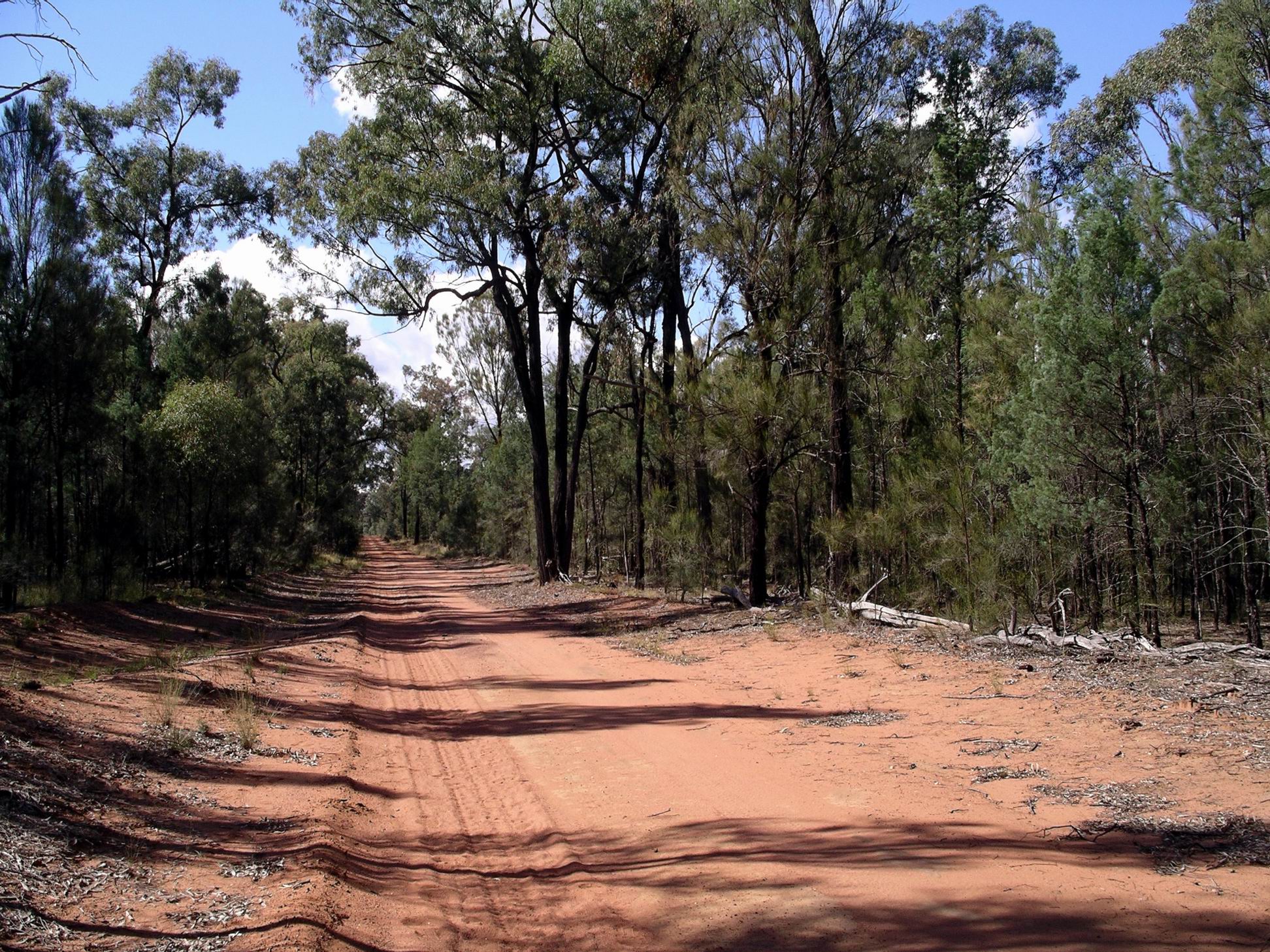
Track in the Pilliga Scrub

It was a stop-start drive, as we went for short wanders, looking for birds. Did not see as many as we’d hoped – it was so dry – but did spot a “new” honeyeater, the yellow tufted honeyeater, which is a variant of the helmeted honeyeater, a special local bird of our area at home.

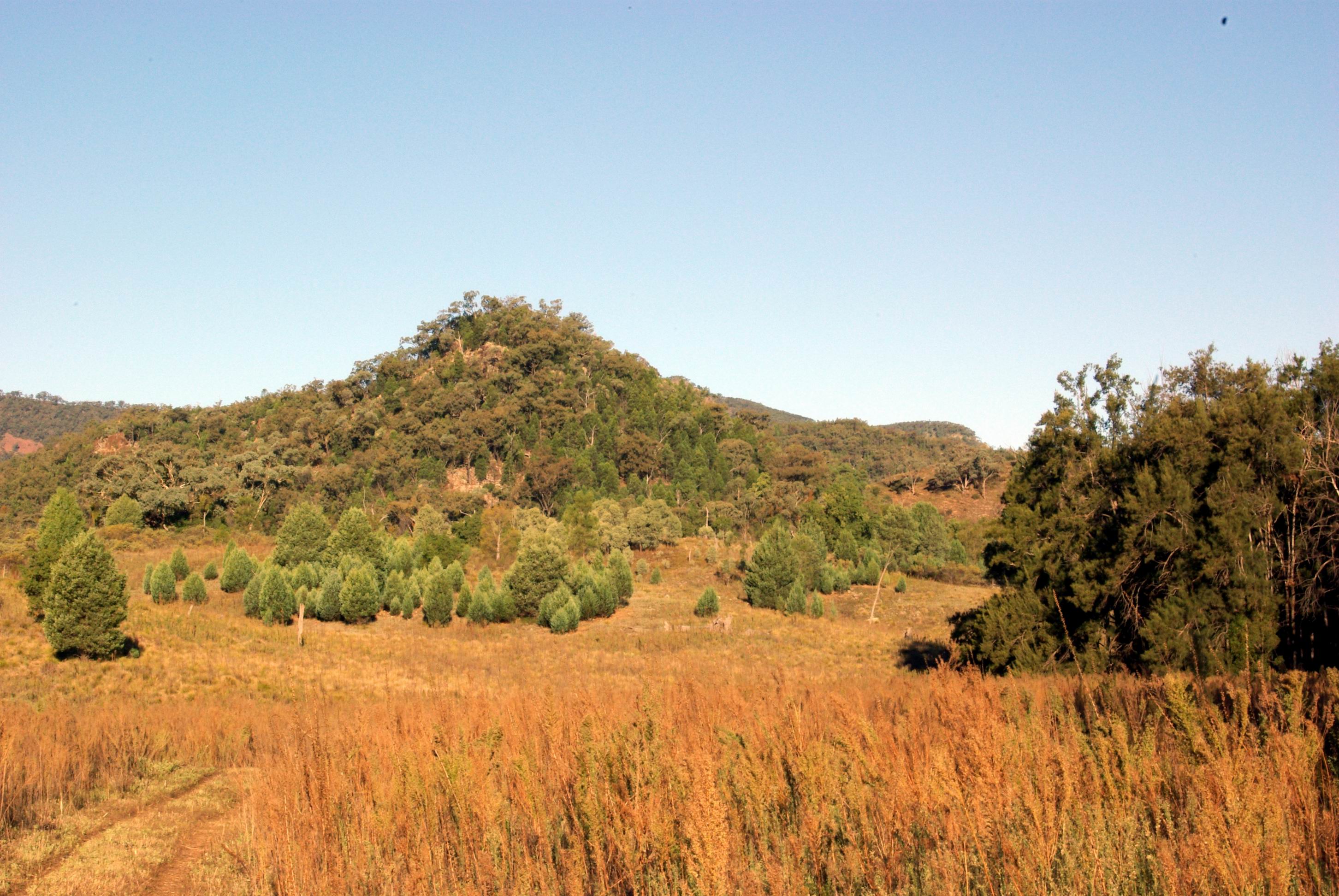
Although light on birds, the forest itself was interesting, with black and white cypress pines, different eucalypts. It would be wonderful to see after a decent rain spell, and in spring.

We had lunch by a small creek, partway round the circuit. It was a very pleasant few hours in the bush, during which we saw no other vehicles.

Back onto the bitumen and to Baradine, to look at their new Forest Information Centre. This was an impressive structure, featuring interior pole uprights of the local timber, and with interesting displays. We were the only ones there, and we spent over an hour browsing.

From Baradine, took the unsealed No 1 Break Track, due east, to the Newell Highway 51kms north of Coonabarabran, and thence back to town. That took us through more of the Pilliga Scrub country, as well as through farmland closer to Baradine.

Then we did a sizeable shop, not being sure of the shopping facilities where we were going, but certain that goods would be more expensive there.

I phoned and booked us into the camping ground at Lorne Station, Lightning Ridge, for a week from tomorrow. This would be a totally new area for us to explore and I assumed we would need at least that long there. From perusal of tourist information, and snippets  previously stored away in my mind from articles and online material, I thought Lorne sounded more interesting and perhaps a slightly higher standard than the available options in town, at that time.
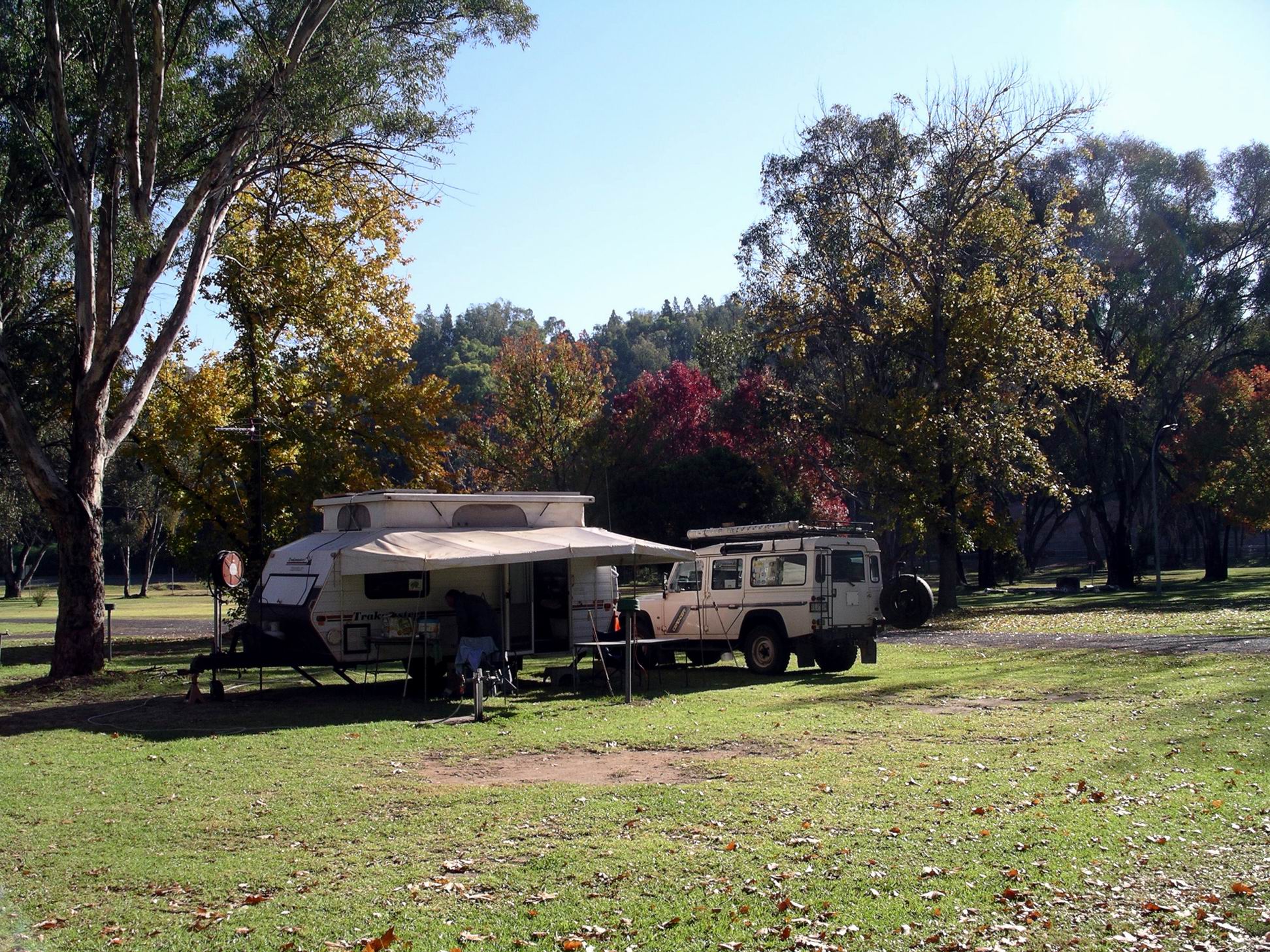
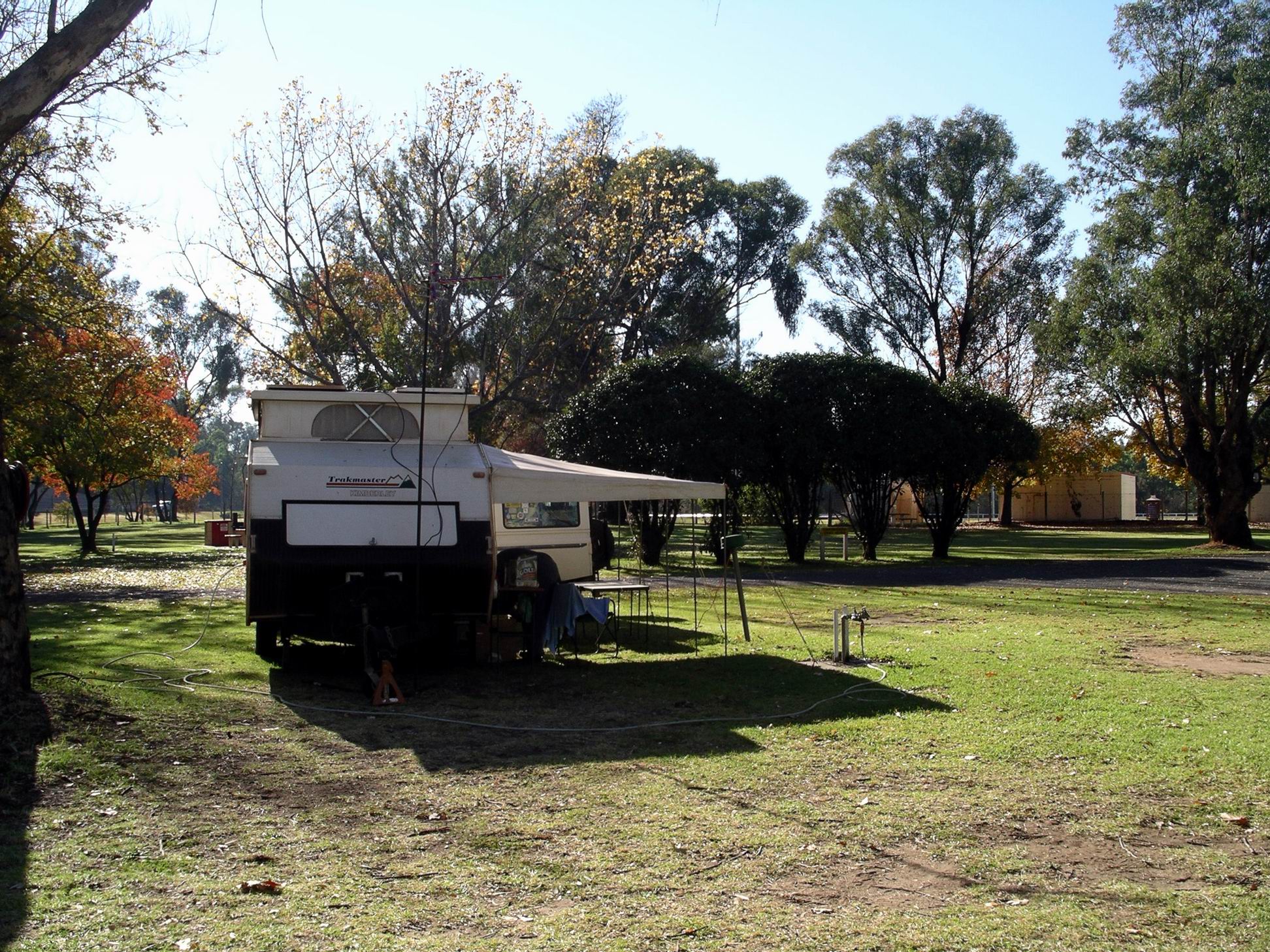
Not exactly crowded out by neighbours, here…..

Bought fish and chips for tea, not planning to be near a take away tomorrow night. The flake was the worst I had ever had – wafer thin, yet really tough, soggy batter.

While we were occupied on our laptops, after tea, there was a really loud bang, from outside, but close. We thought a bird or bat might have flown into the van, but a quick look around, in the dark, didn’t show any distressed critter. Things do go thump in the night, sometimes.
Leave a comment

2009 Travels May 6

WEDNESDAY 6 MAY     COONABARABRAN

Today there was no reason to get up early, so of course I was wide awake at 8am.

What was needed today was to tackle the overflowing washing basket. I did three loads in the park’s machines, including the van bedding – after John vacated same. My black track pants came out all white streaked and I had to hand rinse them. For God’s sake, we can land a man on the moon, so why on earth are we incapable of inventing an industrial washing machine that works properly?

I did some more patchwork piece sewing, in between loads.

Lovely day in Coonabarabran

As I sat outside the van, sewing, watched a van come into the park, towed behind a tow truck. It brought back memories of when we arrived that way, in Broome in 2000. There was a new looking 4WD on the tilt tray. Later, in chatting with the couple from the van, found out the car’s computer had shut down their engine – on the big hill near the Siding Spring turn off. That could have been really nasty. Their new car warranty did not cover a tow to the nearest dealer – in Dubbo – and they had to pay for the transport of the necessary parts to the NRMA mechanic here. I reckon that was a very rough deal. They were not happy travellers. I crossed that brand off my list of potential new vehicles for us.

After lunch, went for a walk through town, to the Visitor Centre, where I got a leaflet on birds of the Pilliga. We bought a new fan heater – only $25 – and, back at camp, gave the old one a ceremonial farewell before we binned it.

John found today’s walking difficult. My suggestion that yesterday’s bowls may have had something to do with that, was not well received.

The route of the new inland railway – if it ever gets built – had just been announced: via Parkes and Dubbo, then east of here, to Moree and thence into Qld. It would be so beneficial if the railway is actually built between Melbourne and Brisbane, and rail freight replaces a lot of trucked freight. How wonderful would the Newell Highway be, without many of the trucks that now travel it?

The night was cold – again – and the new heater was much appreciated, after the “new” smell had dissipated. It was much quieter than the old one.


Leave a comment

2009 Travels May 5

TUESDAY 5 MAY     CAMP BLACKMAN TO COONABARABRAN   40kms

After we had packed up camp and hitched up the van, John jacked it up, first one side, then the other, so he could adjust the brakes. He later felt that it hadn’t made much difference, but at least he’d tried. The van brakes did not seem as effective, since a new brake controller unit was put in, last year.

The drive back to Coonabarabran was really pretty, with some lovely autumn coloured trees.

Again, there was quite a lot of gear work involved, on the narrow hilly road.

Booked into the John Oxley Caravan Park, on the northern edge of the town. It was still within the 50kmh town speed limit, so the noise from trucks in the night was not too great. It was a large, park-like place. $22 a night.

We cruised around and chose a site. Unhitched – and then realized there was no water tap on our site, or within reach. So we hitched back up again and moved to another – which was the site I’d preferred anyway!

John telephoned the local club and managed to get himself into a bowls game, this afternoon. He dropped me off in the centre of town, on his way. I got some supplies for tea, found a shop that sold heaters and had a browse. The walk back to camp, in the sunny afternoon, was uplifting. Just about all was well with the world.

John enjoyed his bowls and some beers with “the boys” after.

Tea was pork in plum sauce, with rice.

I heard on the news that it was one degree here last night, and I expected it would be similar tonight.


Leave a comment

2009 Travels April 30

THURSDAY 30 APRIL     GILGANDRA TO CAMP BLACKMAN   135kms

I woke early, to another chilly morning.

Took my coffee, radio and diary writing materials over to the camp kitchen, where I could sit in the sun and listen to the ABC news without disturbing anyone.

We left the park about 10am, and  drove back over the Castlereagh River bridge, into the town, to stock up on some supplies, given last night’s change of plans. Then, back across the river and northwards again.

The Newell Highway north of Gilgandra, had narrower road lanes, fewer passing lanes, and was hillier than further south. This meant greater potential for us to be having a tail back of trucks and other travellers – never pleasant. However, it was not too bad, and John did manage to pull right over in a couple of places, to let others through.

It was a very scenic section, almost park-like in places, with distant hills.

We had one coffee stop, at the Spire View Rest Area. With a name like that, I was expecting a great outlook, but it was not a stand out.

At the very helpful Visitor Centre in Coonabarabran, I bought a walks guide for the Warrumbungles, a map of the National Park, and postcards – of course.

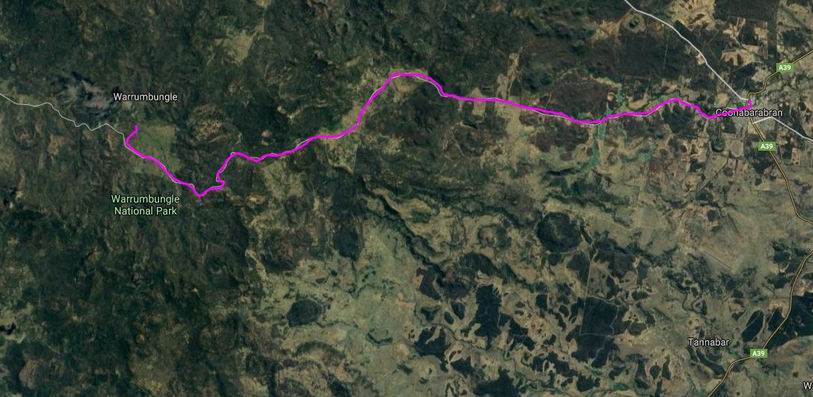
The Timor Road into the Warrumbungles was sealed, but narrow, winding, hilly. One steep uphill section had us down to first gear, and a downhill run saw us in low range. We had not travelled this road before – on our previous visit, we had used the “back” route, through Tooraweenah. It was more demanding for the driver than we had anticipated. But it was really lovely – farmland for much of the way, but always with the rugged, often conical mountains  looming around every turn.

Passed the turn off to the Siding Spring – one of the world’s significant astronomical observatories. It was set up here after Canberra’s development caused there to be a lot of light in the sky at night. Out here, the skies are clear for much of the year and there is no light pollution.

Managed to find a place to pull off the road a bit, in order to collect some firewood before we reached the National Park. Having a roof rack with a mesh base made wood collection easy – just had to throw it up there and it would stay put. We did not need a great deal of wood as we tend to have small fires for some cooking and atmosphere, rather than the great, wasteful bonfires that some campers seem to need.

First stop in the Park was the Visitor Centre. It was modern and featured some interesting displays, but the staff member on duty came across as disinterested and unhelpful, fortunately not our usual experience in National Parks! She was an aberration.

This was not a cheap park, we found. We were pleasantly surprised to find there were powered sites to be had, but these cost $20 a night, plus a $7 a day park use fee – $27 a night in all. For that, apart from a place to park, and power, there was a central ablutions block that provided hot showers and flushing toilets. So, the fee was probably not too excessive.

As we drove into Camp Blackman, the camp area did not seem familiar. There had obviously been major changes since 1997. Initially, we came to a newly developed area for caravans: power posts, neatly laid out gravelled bays – quite close together, dividing beds with plantings that would, one day, provide some screening between sites. Not quite what we were seeking, in a National Park. Fortunately, John did not settle for that, and drove on further, before committing ourselves. We crossed a creek and came to an older section that was much more to our liking. Two large areas, amongst trees, along the creek, had two or three power posts each.

We set up in the further clearing, at some distance from the only other rig there, by a power pole and fireplace/BBQ. Some distance up a hill was a rota-loo toilet, clean and not very smelly, and closer than the main ablution block near the groomed area.

Set up at Camp Blackman; Mopra Creek in background

From our site, there were some views of the main peaks of the Park. It was very pleasant, we thought, and much nicer than the new area we’d first come to. A real bonus was the discovery that there were four bars on the mobile phone – therefore, we had internet too.

The Grand High Tops from Camp Blackman

Set the rig up fully for a several day stay. Had a late lunch, then went walking out onto the nearby cleared flats, following a rough track. Apart from exercise, we were looking for photo chances and bird life. We did find numbers of kangaroos and emus but not as many birds as I would have expected.

The Warrumbungles are the remains of a major centre of volcanic activity, dating back more than 13 million years ago, caused by the tectonic plate containing eastern Australia passing over a “hot spot” deep below. The slow drift of this plate over the hot spot caused a chain of related volcanic areas, from what is now Cape Hillsborough (the oldest one) south to Mt Macedon, the youngest – although there are younger remnants beneath Bass Strait. Subsequent erosion has left the resistant volcanic plugs that solidified in the old lava outlets, standing stark above the surrounding landscape – the main features of the Warrumbungles. And that’s the geography teacher in me, talking!

This Camp Blackman area was, in pre-National Park days, the site of the Blackman family’s homestead and farm buildings, and the open flats had been crop land on their “Belougerie”  property, which became part of the Park in 1969.

Going walking…

Further out along the flats walk, some white observatory domes at Siding Springs could be seen up along the ridge line.

White dome at Siding Spring Observatory – on the back ridge line

Today was a sunny day, but tonight would be cold. We’d been told there was frost in Coonabarabran last night. I heard on the radio that Melbourne had its coldest April night for fifty years and that it was minus 15 degrees at Charlotte’s Pass in the Snowy Mountains. I was glad that we did not, after all, visit the Canberra part of the family – we’d have been there now. Brrrr.

By dusk there were some more vans in our clearing, and a camper trailer, but all at a good distance from each other. That could be the drawback to this older area – no delineated sites.

We joined some neighbours round a campfire, for happy hour. Both couples were on short breaks, from homes near Sydney. The imminent retirement plans of one set had been put on hold, due to decline in the value of their superannuation – an increasingly common story these days. The other – younger – couple were preparing for an indefinite trip and were very interested in finding out about work opportunities for travellers, and the jobs we’d done.

It was a pleasant evening in a great spot. The night sky was brilliant with stars. It was wonderful to be back in the “bush”, even if it did come with bells, whistles and a price to match.