This Adventurous Age

Adventures travelling and working around Australia.


Leave a comment

2015 Travels August 3

OUR PATHS CROSS AGAIN      August 3

Whilst John was browsing the main stall in the inside building at Opal Fest, he spied two familiar faces at one stall. He waited until they had no customers, then approached and asked if they were still mining at Opalton and if they remembered him – from about five years back? They said he seemed familiar, and they chatted for a while.

John’s sense of time passing is not the greatest. It was actually fifteen years ago that we had encountered these two. Guess time flies when you are living an interesting life!

Back in 2000, when we were still travelling full time, heading NW in Qld, we fetched up in Winton. On an exploring drive, came across Opalton, some 120kms of dirt road to the south. About a hundred years before, it had been the humming centre of a big opal rush. When interest in opal waned, in the twentieth century, Opalton became almost a ghost settlement. What buildings there had been crumbled away.
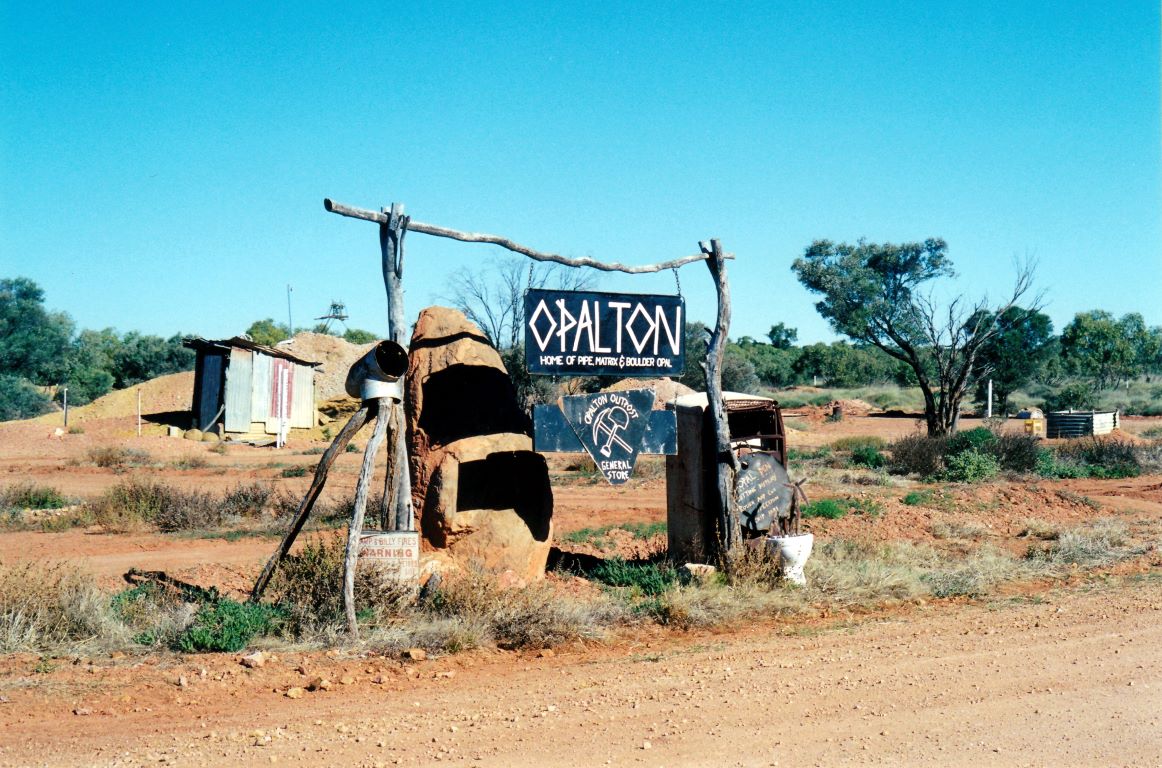
Opalton historic area

But in recent times, there had been a resurgence of interest in mining the distinctive boulder opal that is found in the area. The section of the old diggings where there were lots of mullock heaps, was declared a fossicking area – only to be explored with hand tools. The old shafts in there had filled with water.

When we came across Opalton, there was a store of sorts, called The Outpost, a telephone box, and a rough camping area by the mullock heaps, being caretaken by an elderly pair of fossickers. We loved the area and the atmosphere of the camp and so decided to move the van out there for a week or two.

Opalton Bush Camp

In preparation, John, who had seen a dam and creek in the area, was in the Winton butchers. When he asked if the butcher had any scraps he could use for yabby bait, another customer – a rather glamorous lady – asked where he was going yabbying. He replied “Opalton”. She told him that she and her partner had a claim out that way, at Debbil Debbil. John arranged with her to visit them at the claim while they were camped out there, and that visit duly happened.
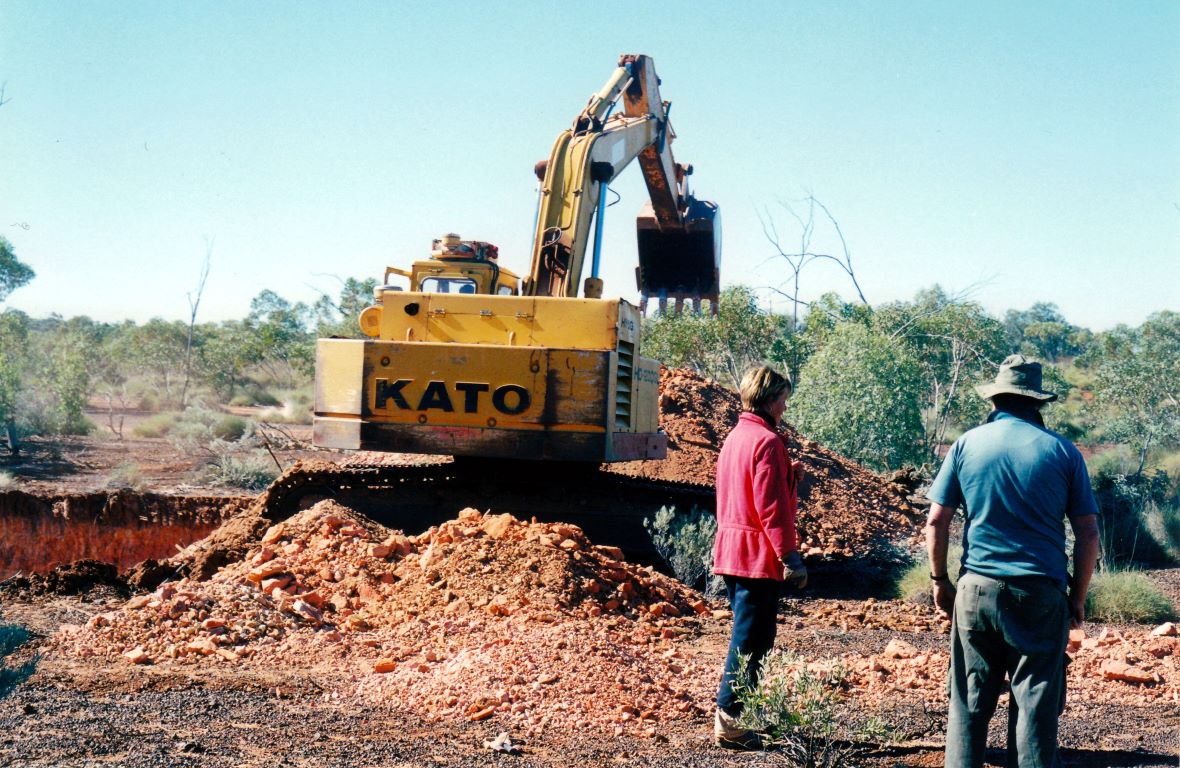
Open cut opal mining at Debbil Debbil

We spent a great afternoon with L and J, at their camp and claim. Watched how they were open cut mining, and learned to use a wire to divine for fault lines in the rock, with which opal was often associated. At their camp, saw a huge piece of boulder opal that the miner who shared their camp had found that afternoon – worth upwards of $35,000, he thought.
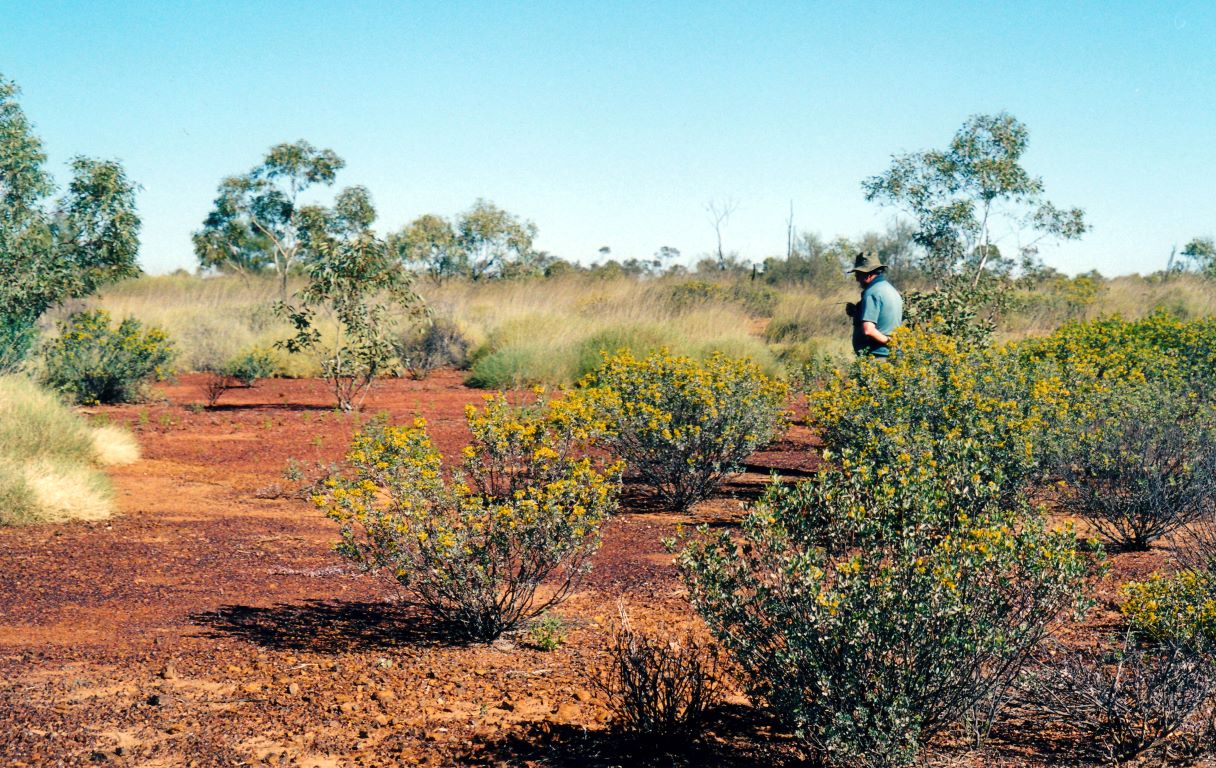
Divining for faults

That was only the second season on the claim for L and J. They hadn’t done any mining to speak of, before coming out here. The season extended over the cooler months. In summer, it was too hot and water was too limited so they retreated back to their home on the coast.

To date, they had not found any opal, but were hopeful still, We thought it was damned hard work for no return.

A year or two later, we heard that they were still digging at Debbil Debbil, but still had not found opal. Occasionally after that, we wondered what had become of them.

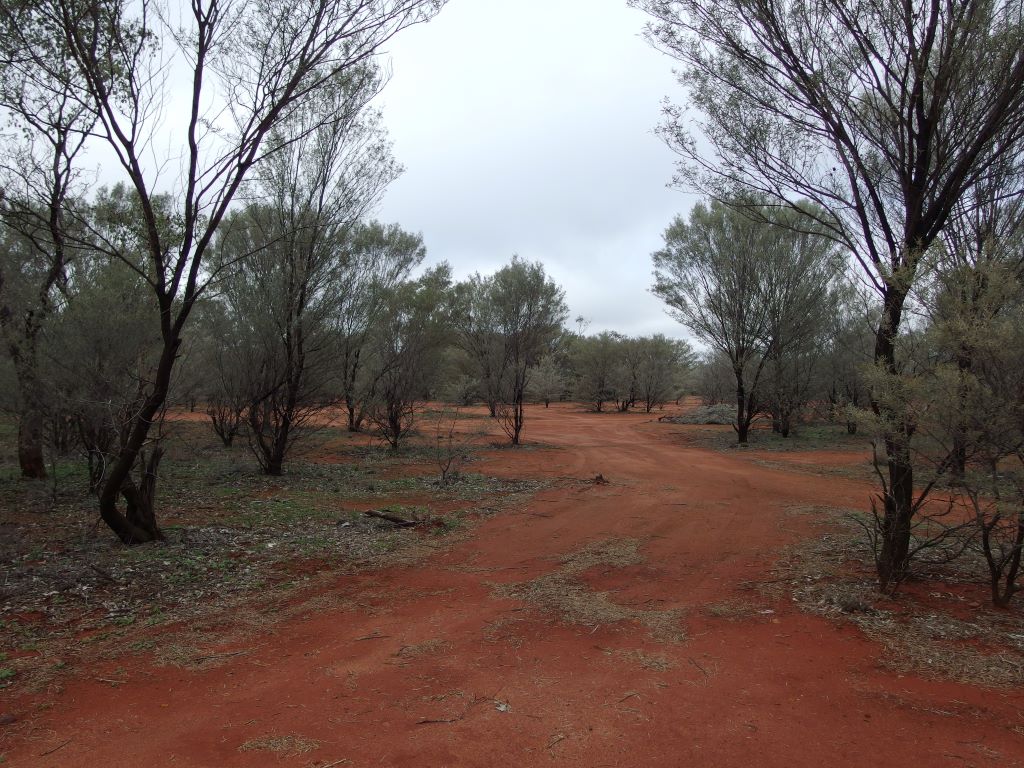
The semi-arid country around Opalton

Here they were! With a great stall, selling Queensland boulder opal, much of which they had mined themselves. There was also some very nice jewellery featuring same, which they designed and had made up for them. As with the best opal jewellery in Lightning Ridge, the stone was cut to bring out its best, then the setting designed for just that stone.

They told us that they still had some claims in the Opalton area, which they would dig at some future date, but were currently mining some 100kms west of Winton, off the Boulia road. They still spent only the winter months at their claims, then took their finds back to their Gold Coast base, where they cut and rubbed them and did the jewellery design, plus attending markets all over the place.

The boulder opal stall of our friends. Unusual boulder opal occurrence in rock

They were set up at a caravan park in town that had seemed convenient for the Fest, but were not happy there. They did not like it that some locals – non-campers – kept coming in, wandering around, using the amenities, leaving a mess, then begging users of the laundry for money to wash their clothes.

After they had packed up, on the Sunday afternoon, they came out to visit us at our park, and then immediately booked themselves into a site here for next year’s Opal Fest time.

We spent several hours over afternoon tea that turned into Happy Hour, over drinks and nibbles. L and J relaxed after the long hours spent at the stall. They were happy with the event, obviously, since they planned to return in 2016. It was a brief respite for them as they had to leave early the next morning to go back to the Gold Coast for a big opal Expo there.

The Queensland boulder opal is quite different from the classic opal of places like Lightning Ridge and Coober Pedy. Here, the best opal is found in seams that are thick enough for solid opal to be cut and shaped. The Queensland boulder opal colour occurs in ironstone and can’t really be separated from it. The best boulder opal stones have the opal surface on top of the sandstone base, but other stones just have the opal flashes in the ironstone – small flashes of absolutely brilliant colour, in amongst the brown of the parent rock. There can be wonderful variety of colours, too, in boulder opal. In many ways, I prefer it to the usual opal.
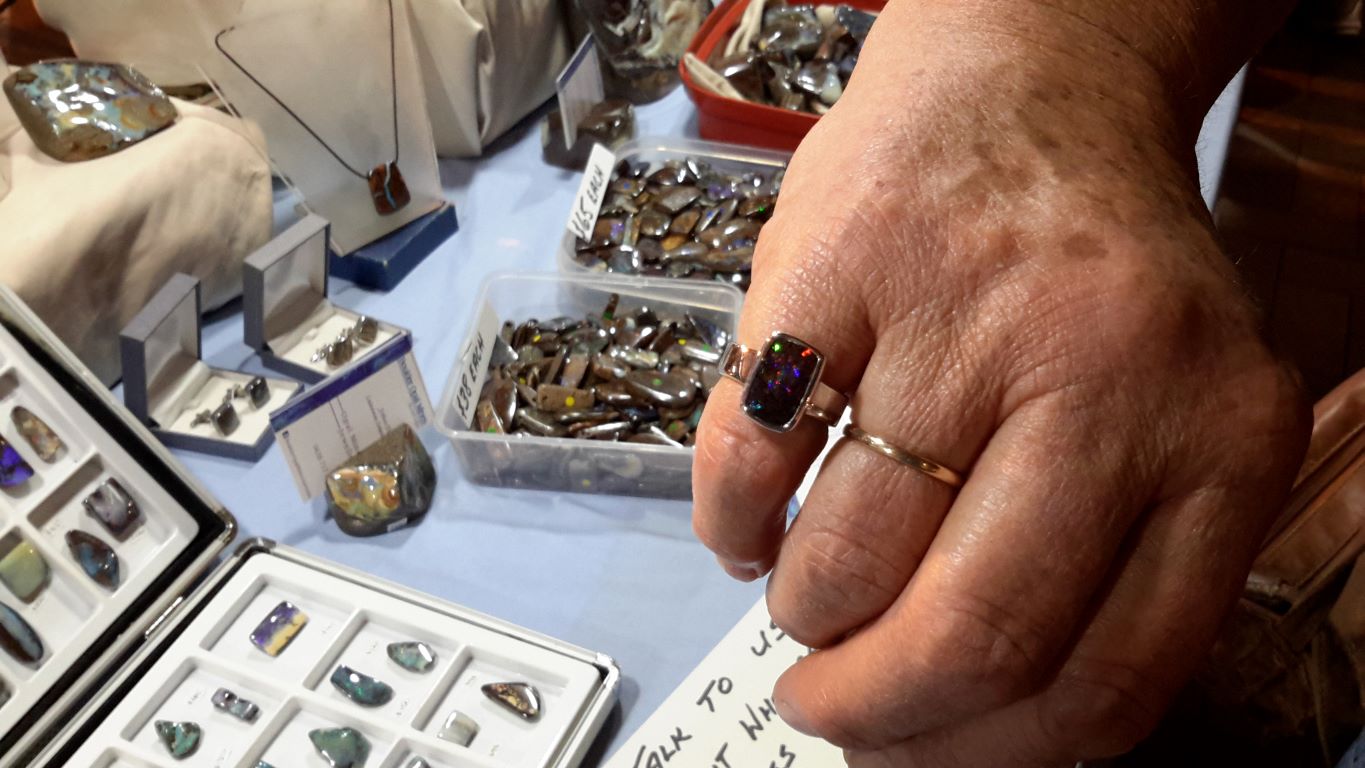
Boulder opal ring

L and J have a website that features their boulder opals at: boulderopalsaustralia.com  This tells their story, gives information about opal, and features some of their product.

It was great to see these two again – and to know that their efforts and patience finally were rewarded.

Leave a comment

2015 Travels July 31

OPAL FEST     JULY 31

Opal Fest is held in Lightning Ridge every year. Every second year this is combined with the International Opal Jewellery Design Awards and it becomes a really big event. There is always a gala Ball held featuring that year’s Opal Queen.

To quote from the promotional material: “Jewellers, buyers, wholesalers, miners, rock hounds, lapidary enthusiasts and tourists are invited to experience the best Lightning Ridge has to offer with this culmination of information, spectacular jewellery, collectibles, great deals and fantastic networking opportunities.

The LR Opal Festival boasts over 150 stalls with a huge range of products including gemstones, tools, lapidary supplies and lifestyle products.”

Caravan park still a bit damp

The setting up for this year’s event began on Wednesday 29 July. Exhibitors and stallholders dismantled their wares on the afternoon of Sunday 31 July.

There were three sections of stall holders/exhibitors. Upstairs in the Bowling Club building was the exhibition section associated with the Design Awards. A $5 entry fee was charged to go look at these exhibitions, which included an opal with a price tag of $500,000. Yes, a cool half million dollars.

Downstairs is the large, undercover, beer garden section of the Club. There were over a hundred stalls set up here, selling opal, jewellery, specimen pieces, tools associated with opal cutting and jewellery making. There were also stalls with things like preserves and fudges.

Outside, along the wall by the beer garden entry were more opal sellers and food stalls.

Across the road in a large yard area was a section that was more the style of the Sunday markets, with a variety of stalls, perhaps best described as the lower end of the price scale.

After the set up on Wednesday, the whole shebang opened on Thursday. This was the day when the big buyers, mostly from overseas, swooped and did their buying. We were told that there is increased Chinese interest in opal, now.

Friday night saw the Design Awards Gala Dinner – $100 per person, dress formal. Not quite our scene! We were told later that a special feature of this year’s dinner was the presentation to Len Cram of the OAM he had been awarded for services to the opal industry.

Saturday night the Opal Queen Ball was held. $25 a ticket. Dress – black tie. Again – not of interest to us. The prizes for the lady chosen as the 2015 Opal Queen were certainly worthwhile and in keeping with her role as an ambassador for the opal industry at events like the Australian Opal Exhibition on the Gold Coast, and the Black Opal Racing Carnival in Canberra.

We went to the Bowls Club area on Wednesday, to have a look at the setting up and browse the stalls already in place in the outdoor market area. John spent some time at a large stall of tools. Not opal related, just general tools. He bought a tyre fitting that he thought would make it easier to access the inner Bus wheels to check air pressure and inflate them. I was surprised at the extent of stalls of clothing and the like. It is obviously worth their while to come a considerable distance, as many of these were not local. Must be more money in that sort of thing than I thought. Maybe the locals stock up at this annual event?

Bruno’s Pizza – a local café – had a van set up, selling woodfired pizzas. Another van was selling curly chips – something new to me.

John went to Opal Fest on Thursday for several hours. He came back quite awed by the upstairs, quality, exhibits in particular. He had seen the half million dollar opal – displayed by my favourite opal gallery in town, which sells only opals the family dig up themselves.

I found out that the single lady in the caravan on the next site to us was here assisting her sister – in the caravan beyond that – who had a stall at the Fest. Sister made and was selling dichroic glass jewellery. Over the four days they did quite well, it seemed.

John went back for another look around on the Friday and had a very pleasant surprise encounter, which I will explain in a later entry.

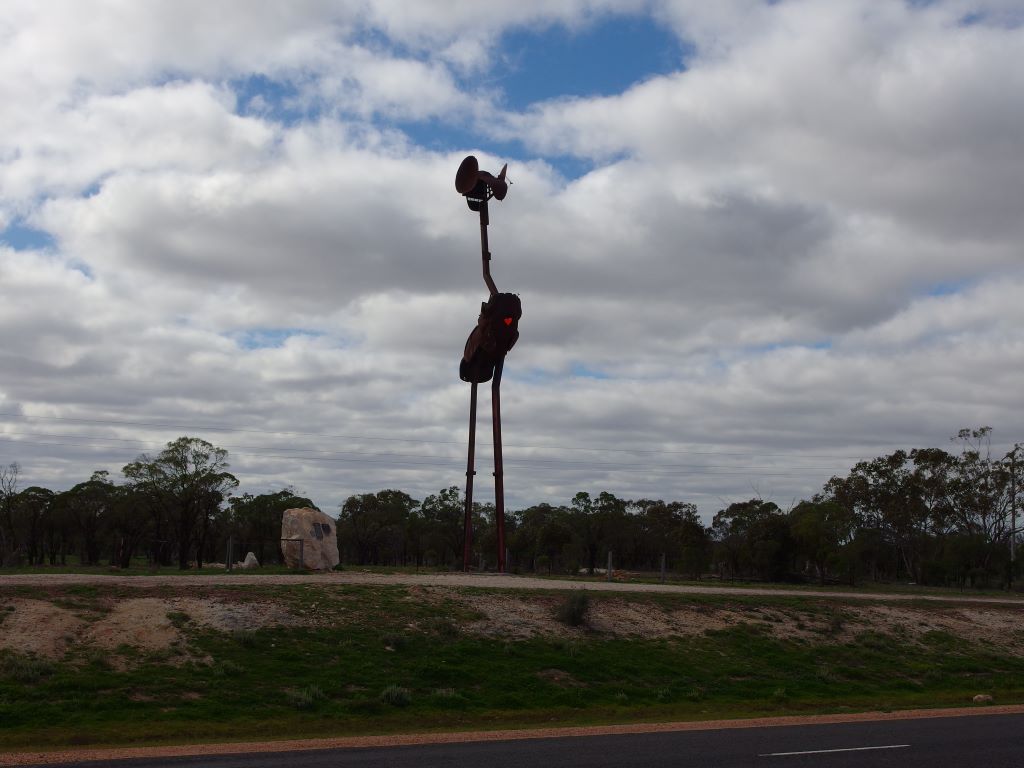
Stanley the Emu welcomes visitors to Lightning Ridge

By the weekend, the park was totally packed. All normal sites were full as was the unpowered dirt and gravel section. There were lots of campers set up in the “bush” section. The performers at Happy Hour – in a grassed area by the camp kitchen – were really attracting a good crowd. The place was humming and the atmosphere in general was a festive one.

John persuaded me to go back to Opal Fest on Saturday for a final look around. The local “football” match was at home so there were crowds of locals at the sports ground adjacent to the Bowls Club. This made parking even more chaotic than usual.

As we wandered the stalls in the undercover area, I noticed that the Aracic family had a stall featuring the books written by Steve Aracic about opals in Australia and opal mining. We had a couple of his excellent books at home.

A stall that caught my attention was that of Mudgeeraba Chutneys. A long way from their Gold Coast base…They had an extensive range of Indian style chutneys and a tasting set up. I succumbed, and after tasting some, bought three bottles of different chutneys. I received a recipe leaflet for an eggplant dip, that they served up in a pappadum crisp with a dollop of their chutney on top. Was really yummy and would make a great “nibbly” to pass around with drinks. I love eggplant, though John does not share that taste.

From what we heard about the place, the 2015 Opal Fest was a great success. We certainly found it interesting. It is a good time for tourists to visit the Ridge – providing they have booked their accommodation in advance … well in advance.

Self-explanatory


Leave a comment

2015 Travels July 30

THURSDAY JULY 30       THE BORE BATHS

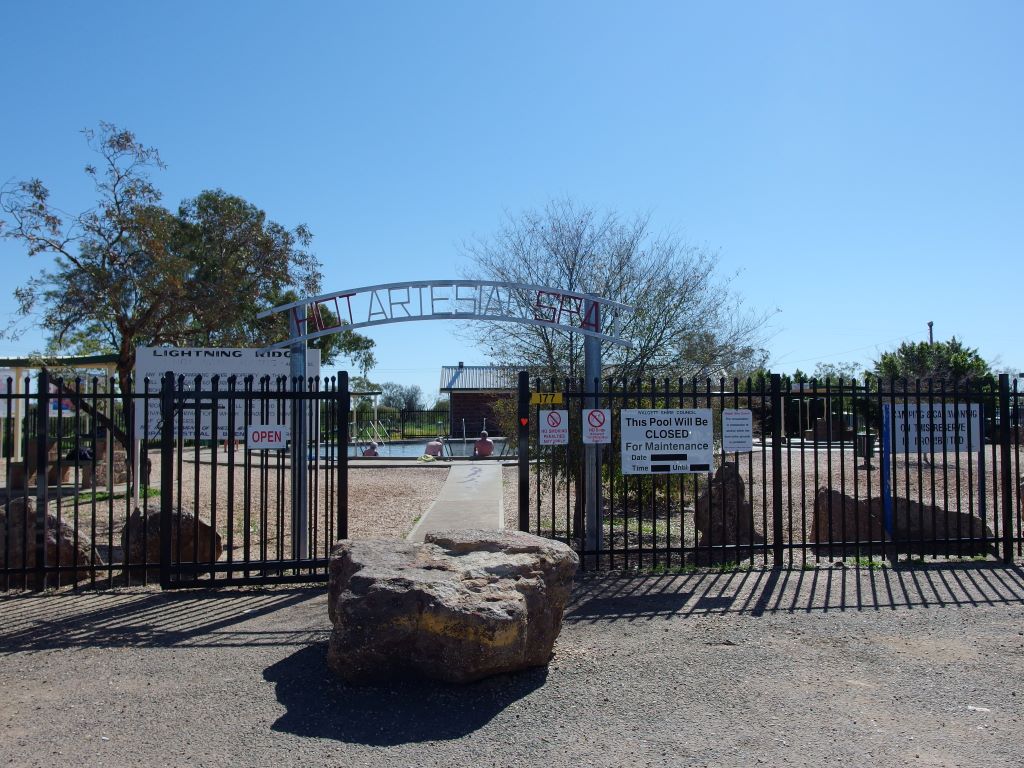
About two hundred metres from the caravan park are the Lightning Ridge Bore Baths.

Many of the park’s guests walked to the Baths, sometimes wearing their bathers, sometimes wearing clothes that hid more of the ravages of time. The ageing body is not a pretty sight in bathers – I am the first to admit it!

Lightning Ridge Bore Baths – Hot Artesian Spa

There is a string of several such bore baths across northern NSW. They are a real feature at Moree, where they are incorporated into at least one caravan park. Some travellers move from one lot to the next, especially where there is free or cheap camping nearby that enables them to stay for an extended period.

The basis of this popularity is the belief that such bore baths have beneficial or healing properties. The water is warm to hot and, coming from underground as it does, must contain a variety of minerals.

Mid-winter bathers

The artesian water of the bore baths is at least two million years old, in that it is that long since it fell as rain on the intake beds of the eastern highlands, and was absorbed to become groundwater.

The formation and movement of artesian water

In that time, it has moved through the various porous rock beds to places way beyond where it fell as rain. These vast areas of underground water make up the Great Artesian Basin.

Pioneering settlers discovered some places where this water came to the surface naturally – a clue as to what lay below. The mound springs found along the Oodnadatta Track come to mind here.

Map at the Baths showing extent of the Great Artesian Basin

In other places, the pioneers drilled bores down to the artesian waters of the Basin, and up the water came – in vast quantities. And – in some places – at extremely high temperatures, such as we found when we visited Purni Bore on the western edge of the Simpson Desert, in 1999.

The artesian bores watered stock. In some places the water was potable enough to supply drinking water for farms and even towns.

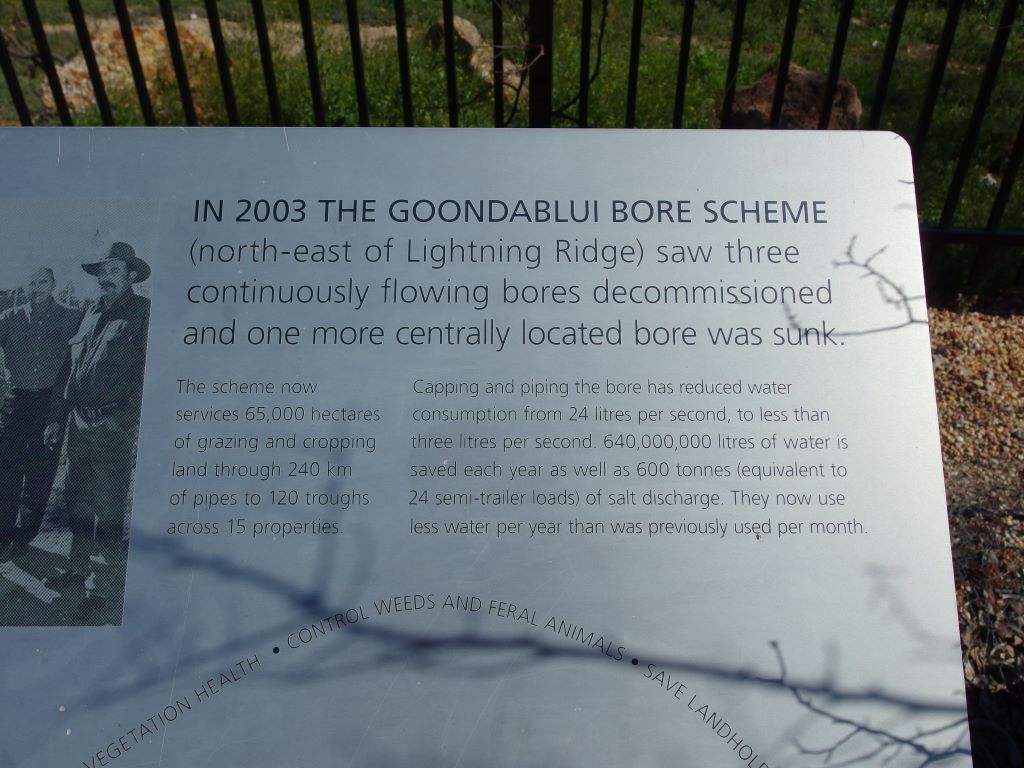
But much of the water that flowed from the thousands of bores that tapped into the Artesian Basin flowed away unused. It is now known that the stores of underground water have been significantly depleted and so bores are being capped, so their flow can be controlled or stopped. Environmentally, this helps conserve the stocks of underground water. However, in places the outflows from bores had created large wetland areas, attracting birds and other wildlife. The capping of some bores has eliminated those.

Sign at the Bore Baths

At Lightning Ridge in the early 1960’s, a group of local graziers sunk the bore and constructed the Bore Baths. The water in the baths is in the 37-41 degree range. Use of the Baths is free and they are open 24 hours a day, except for a couple of hours in the mornings when they are cleaned.

There are signs at the Bore Baths saying No camping. For obvious reasons, dogs are not allowed into the baths area.

For many of the opal miners on the fields around the town, this would have been their means of getting clean. It is only more recent that the facility has become an attraction for tourists.

As we were parked near the road to the Baths, I did notice that there was the occasional traffic to the baths, through the night.

The flow of this bore is now controlled, so the flow quantity is reduced, but there is still sufficient through flow to keep the waters hot and clean. By the caravan park fence that is closest to the Baths, there is a large dam, which I thought contained some of the outflow water from the Baths. This was directed off for use by miners in the dirt washing process that was part of opal mining.

Schematic showing effects of bore capping program

We did not partake of the waters. A sign at the entrance warned that people with heart conditions should not venture into water that hot. John eliminated! Even if the two open wounds on my leg did not preclude me, I didn’t find the idea of the baths all that attractive. This was quite illogical, because the through flow probably ensured they were cleaner than the local swimming pool where I used to do water aerobics. I had, in the past, dunked myself in well used watery places like Coward Springs on the Oodnadatta track, and Mataranka. Maybe, next visit, I would venture in?


Leave a comment

2015 Travels July 26

SUNDAY JULY 26     THE SUNDAY MARKETS

Every Sunday morning the markets are held in an area beside the Visitor Information Centre.

By the time the stalls have set up, along both sides of an old paved road area, there is not much parking space left for customers, so cars tend to park alongside both sides of the main road, fairly haphazardly. If an event like this was held at home, there would have to be traffic control units and marshals wearing high-vis gear. It is quite refreshing in a funny sort of way, to have to just fend for oneself, without the intrusions of the nanny state.

Sunday Markets in full swing

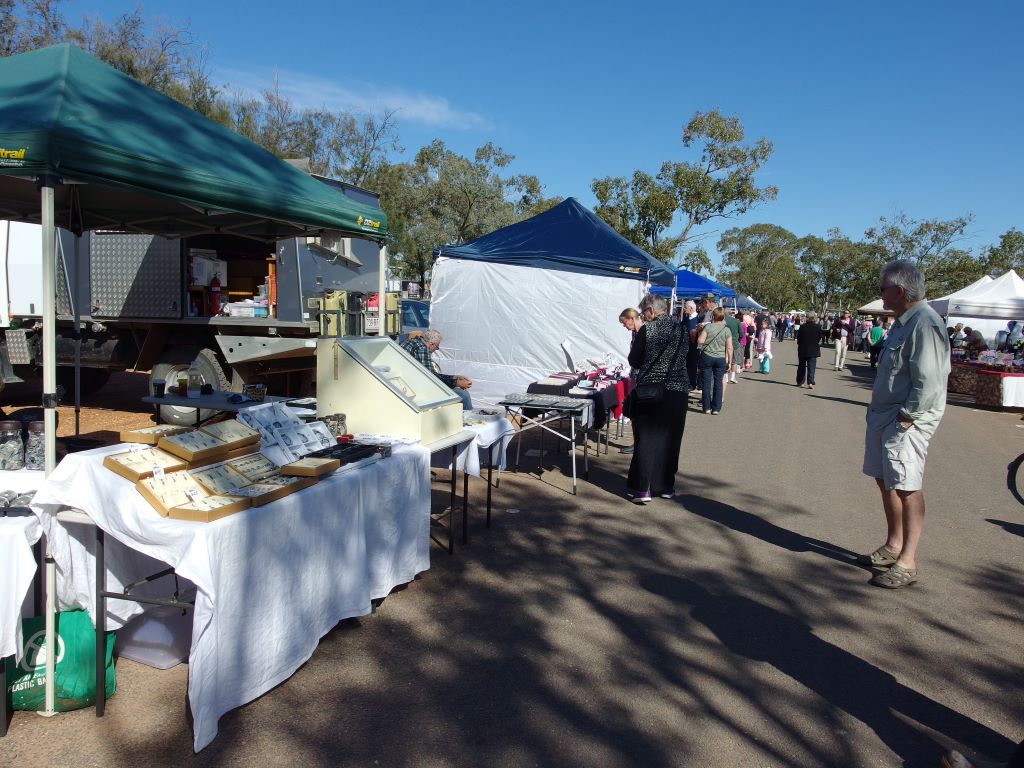
The main focus of the stalls is, of course, opal. Some of the stall holders are miners who offer material they have found themselves, usually in the rough as found, or as “rubs”, where just enough potch and surrounding material has been taken off to give some idea of the opal colour within. Some material is as loose pieces – usually the better quality stuff. Some is filled into bottles and jars and sold as bulk. This latter can be quite tempting, because there may be a couple of really attractive looking bits, in amongst a whole lot of not so good pieces.

Other opal stalls are maintained by those who are middle men – they buy from miners who can’t be bothered selling what they mine, or who are desperate for a cash flow. Some have a mix of their own and others’ material. Generally, there has been a sort of natural filtering effect here, in that these middle men have purchased only stones they think they can profit from, so their offerings are fair quality. But one usually pays more for this, too.

Typical stalls

Then, there are some opal jewellery stalls. Given the general nature of such markets, with cheap overheads, the product here tends to be opal cut to be fitted into pre-cast settings. Often it is doublet or triplet (not solid opal) which is cheap enough to appeal to market patrons – tourists who think they are getting a bargain, and those who do not know that not all “opal” is the same. Some of these stalls do not show on their labelling what is doublet, triplet or solid, and if you do not know to ask, or check for yourself, will not tell you. By comparison, most of the gallery shops in town have signs in their display cases saying what is contained within, or in some cases, state that they sell solid opal only.

Solid opal is, an indicated, a piece of solid stone with opal flashing colour within. There is a grading system for the base or background colour of opal, ranging from the really dark “black” of the best Lightning Ridge opal, through a whole gradation, to the milky white background colour of Coober Pedy opal. The Lightning Ridge black opal is regarded as the best opal and is the most valuable.

A doublet opal is where a thin piece of opal is mounted on top of an uncoloured piece of potch/stone. A triplet contains an even thinner shaving of opal, sandwiched between a dark stone background and a clear cover – quartz or plastic. These are layman’s definitions, not technical ones. As these contain less opal, they are less valuable. A rule of thumb we were told, this trip, was that a doublet stone is about ten percent of the value of a solid of similar size and colour; a triplet about four per cent.

Down there is my favourite cake stall…

Unlike gemstones such as diamonds, sapphires etc, which are uniform enough within themselves to be faceted to a geometric shape, each piece of opal is different. Its best presentation is where the stone is shaped to bring out the colour show. Where opal is cut to fit the cheaper, pre-cast settings, the true colour may not be best brought out. So, often, it is not the best opal that is used for such jewellery. As with most things, one pays a premium for quality – of both stone and setting.

Most of the opal galleries in the town are not represented at the markets.

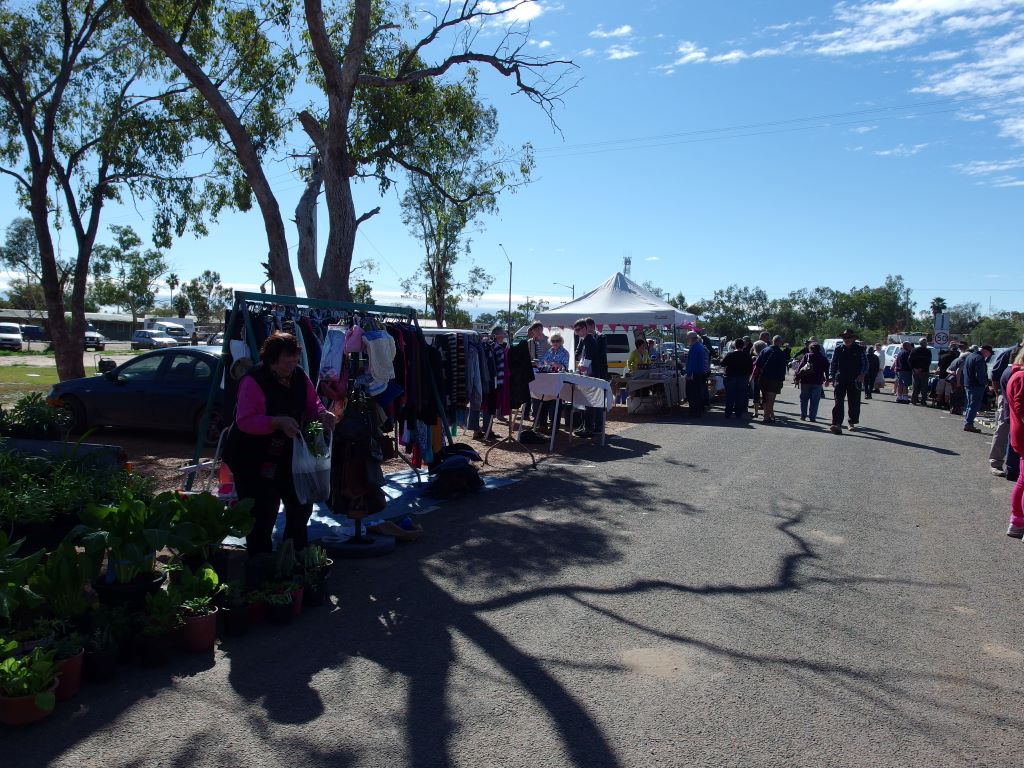
In amongst the opal stalls are a variety of others. There was a good second-hand book stall, where the books were arranged by author, rather than at random. A few stalls sell an array of used goods – everything from second-hand solar panels to rusty metal of indeterminate purpose. There are the usual market type stalls selling sarong style clothing, knotted scarves, baby booties and the like. One extensive stall sold fresh fruit and vegies – both good quality and good value, I thought. There were a couple of preserves stalls – jams, sauces and chutneys. I saw a plant seller too.

Market stalls with main road across to the left

My favourite stall was that of a lady who sold cakes, slices and the best boiled fruit cake – by the half or whole cake. We gladly parted with $6.50 for a half cake that was so yummy.

On our first Sunday in town, we went to the markets. I wanted to buy cake, John wanted to be tempted by bottles of opal. We came home with cake, some very nice truss tomatoes and other assorted vegetable matter – about which John could not get excited. There was a small jar of chutney to flavour that night’s pork loin roast dinner. It was a good morning’s work, because our loot consisted of what was needed, not multiple impulse purchases of local stone.


Leave a comment

2015 Travels July 25 to August 20

SATURDAY JULY 25 TO THURSDAY AUGUST 20     LIGHTNING RIDGE

We ended up staying at Lightning Ridge for four weeks.

Our original booking was for two weeks – to cover the period around Opal Fest and give us time for any other activities we wanted to do in the area. Then, we had planned, to make our way across to the northern NSW coast, for a “beach fix”.

As our first two weeks were nearing an end, I realized that the state of my leg, still with two open ulcerated areas, would prevent any beach walking and paddling. Hadn’t really thought about how I would deal with sand in wounds before then. Dumb. So John decided we might as well stay put at the Ridge. The weather was beach-like anyway, and we were enjoying the town and this caravan park. And being lazy! The decision was made enough in advance for us to be able to remain on the same site.

Very comfortable on this site

A lot of our days here were uneventful and much the same, so not interesting enough to write up individually. Some special events and aspects will get their own entries, later…

In the meantime, this is how we passed most days…

Each morning, I would wake up about 8am and would take Couey for a walk right around the “settled” area of the park, which was quite extensive and took about 20 minutes, unless we stopped to socialize.

There was always much of interest along this route for Couey to sniff, so it could be a stop-start walk at times. I found plenty of bird life to watch while she worked out who had passed since she was last that way.

Grey crowned babbler

Because the park’s powered section, of 98 sites, was full every night, and because there were those non-booked arrivals in absolute need of a powered site, who would fit in anywhere they could be placed, it was interesting each morning to see these different arrangements. Someone who was having to wait days for repairs and parts was parked up in front of one of the big work sheds, where a long power lead was fed out to the rig. They had a less than inspiring view of the car wash bay and the dump point – but, hopefully, considered themselves fortunate to have a spot at all.

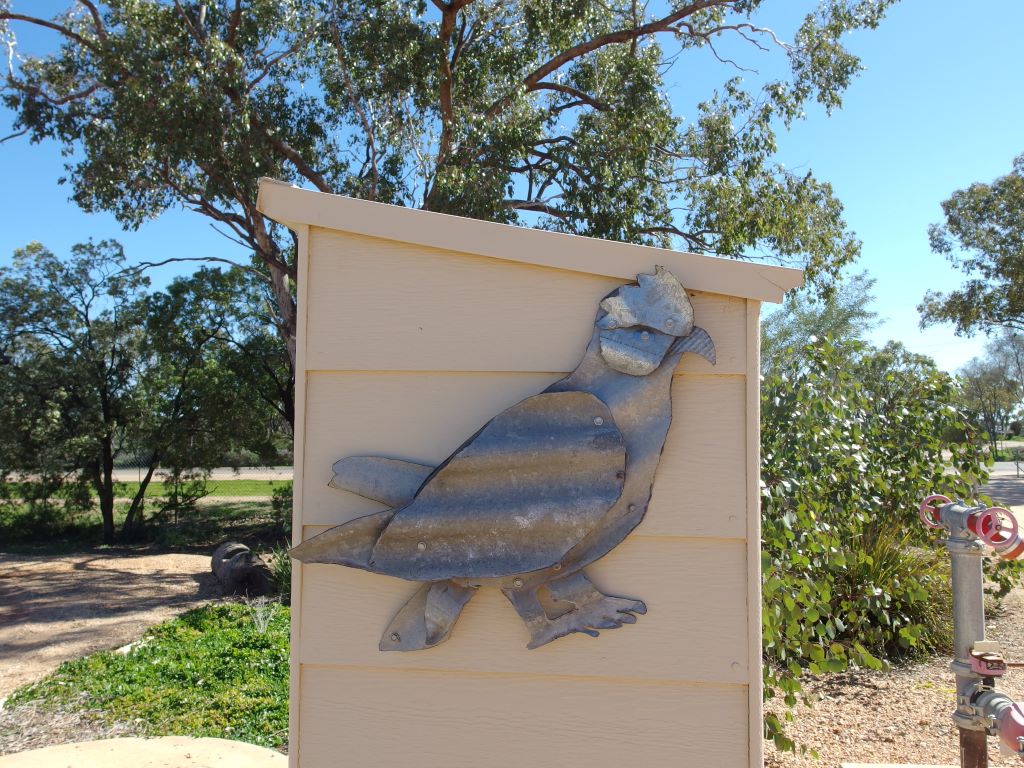
Metal art by the entrance

There were places on the perimeter road around the powered sections, where there were holding or pumping tanks for the sullage lines, buried to ground level. These had an electric power inlet to make them work. A couple of these had an extra power point and sometimes travellers occupied the adjacent, wide, roadway, like a site. As with the shed, these were provided to help out travellers in real need. However, I was not sure that the man who did the daily rounds emptying the rubbish bins appreciated when these people spread themselves right out across the roadway, blocking it and causing him to have to go bush to get around them. Not just him, either – we walkers were blocked too!

Lots of the park’s native plantings were in flower

Also of interest on my morning perambulations with the dog, was the unpowered section – an extensive area. Around the period of Opal Fest, it was totally full too. No real marked sites here, so it was a bit random and Rafferty’s Rules. Towards the end of our stay, there were fewer rigs there. The majority of those parked there were waiting for a powered site to become available.

Once the ground – that was very boggy when we arrived – dried out, there was usually two or three camps set up in the “bush” section, where people could really space themselves well apart.

Part of the large unpowered section of the park

Once our morning walk was done, it was dog breakfast time. I was having to keep morning and evening blood pressure readings for my doctor, who was still tweaking the combination and dosage of pills to keep that in order. Once that was taken, I could take said pills – and then had to wait at least half an hour before eating or drinking. Then, mostly, by that time I couldn’t be bothered with breakfast, so just had two mugs of plunger coffee, which I really savoured.

John would continue to sleep through all of this. Dog would usually have “asked” to go back in Bus, where she could guard him – and sneak up on my bed to do so. I had learned to cover my bed well, immediately after getting up, with a large old sheet.

Gotta be here to do the guarding properly….

To fill the mornings, I read, wrote up my diary, wrote postcards, embroidered or knitted, most days. Would sit outside under the awning if the weather was dry and warm enough.

Eventually, John would surface and breakfast – late.

I might need to head off to the fairly well stocked IGA for a hunting and gathering session before lunch. The small size of Bus fridge meant that this happened a bit more frequently than I liked. Our diet was heavy in salad and vegetable matter – “added bulk” did not only apply to the dietary label! John also drank quite a lot of milk and I could only accommodate 1 litre bottles of this, so regular replenishment needed. Of course, I am “difficult” or “fussy” – his terms vary – because I cannot stand full cream milk in my coffee. So my bottle of light milk also took up space on the fridge door, that could otherwise be filled by his cans of beer. I was never sure why I was the unreasonably choosy one, when he couldn’t stand light milk? We managed…

Afternoons might be more of the same, punctuated by a couple of dog exercise walks, or we might go off on a little sightseeing jaunt, or a browse of some opal shops.

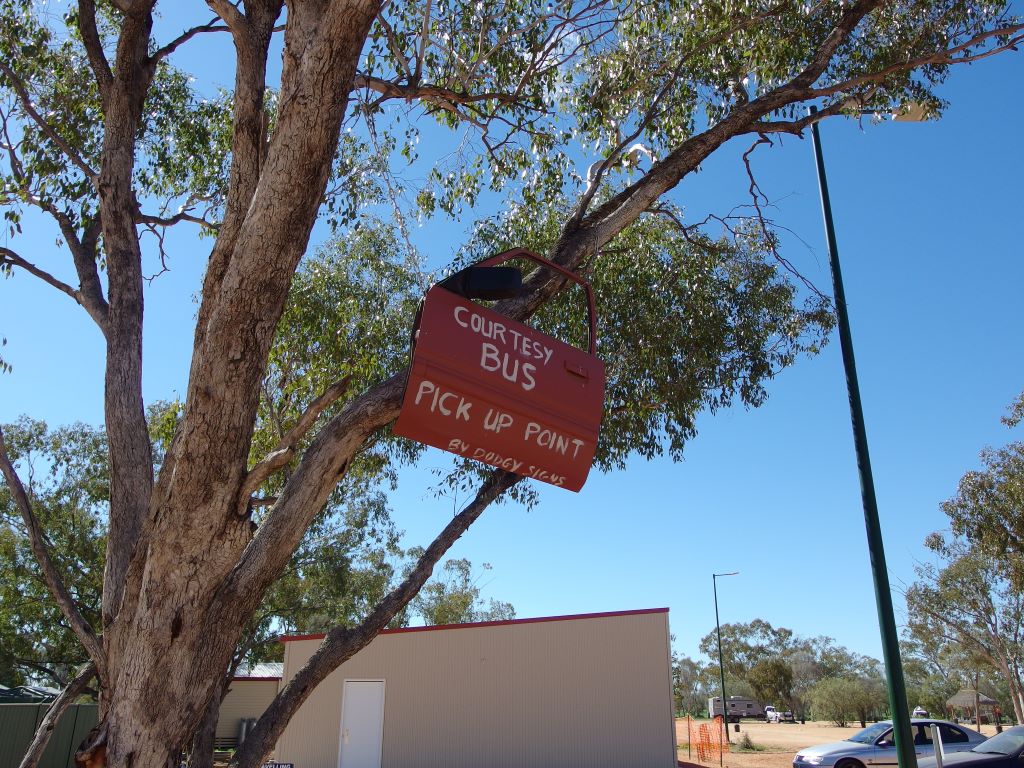
Tour bus collection ….. by Dodgy Signs

Occasionally, the man went off and played bowls.

Couey always got an afternoon walk session where we went over to the bush area, past any campers there, and then she was let off the lead. We walked the length of the perimeter fence and some of the little tracks through the low scrub. She would range ahead, maybe thirty metres or so, then come back and check on me, then range out again. That’s the cattle dog instinct at work.

Great park for the dog

There were plenty of fallen trees and branches in the bush area and we’d taught Couey to hurdle some of these. Such fun that she would seek out things to jump. She always looked longingly at the very big dam on the other side of the fence, that was the outflow from the Bore Baths, we thought. She would just love to go swimming in that – but the fence was very sturdy chain wire mesh, thankfully.

During the early part of our stay, the many large, muddy puddles along the way caused us angst – and her much enjoyment. As the days passed, the puddles shrank and became more muddy and less watery – and we discovered that the car wash bay was good for more than cars… The ensuing hose downs never deterred her from mud wallows, though.

Sometimes in the late afternoon, we would have a happy hour outside before tea – if the weather was particularly nice. If we had sociable neighbours, with them too. I bought a small cask of Sauv Blanc for such occasions, which I preferred to beer.

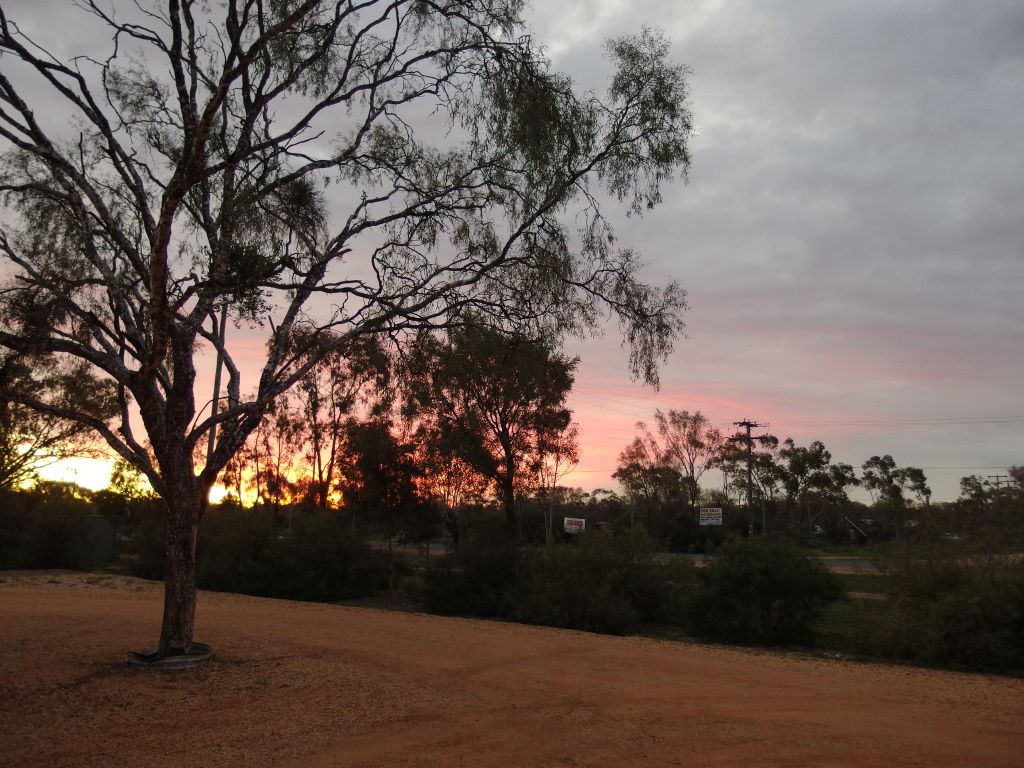
Some brilliant sunsets

Such were our days. Very relaxing, but with some regular gentle exercise.

Every three days I would have to change the dressings on my leg. Back in May/June, this used to take about an hour, as soaking was involved. Now that healing was – finally – well advanced, it was much quicker, taking about half an hour, by the time all the needed stuff was set up. The hard part was peeling off the really tight knee-high stocking – and getting it back on again without dislodging the new dressings. Always a chore I did not look forward to.


Leave a comment

2015 Travels July 24

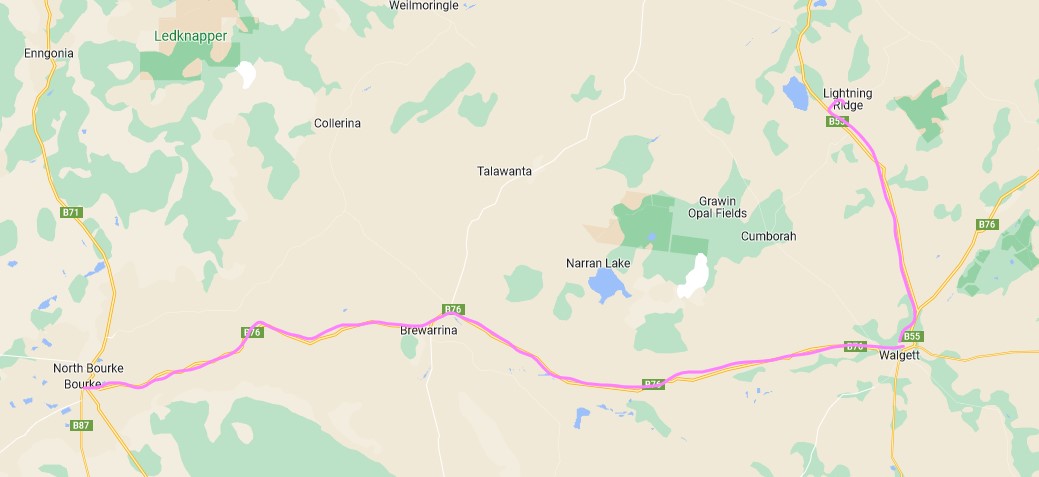
FRIDAY JULY 24     BOURKE TO LIGHTNING RIDGE     334kms

Left the park at 9.20am.

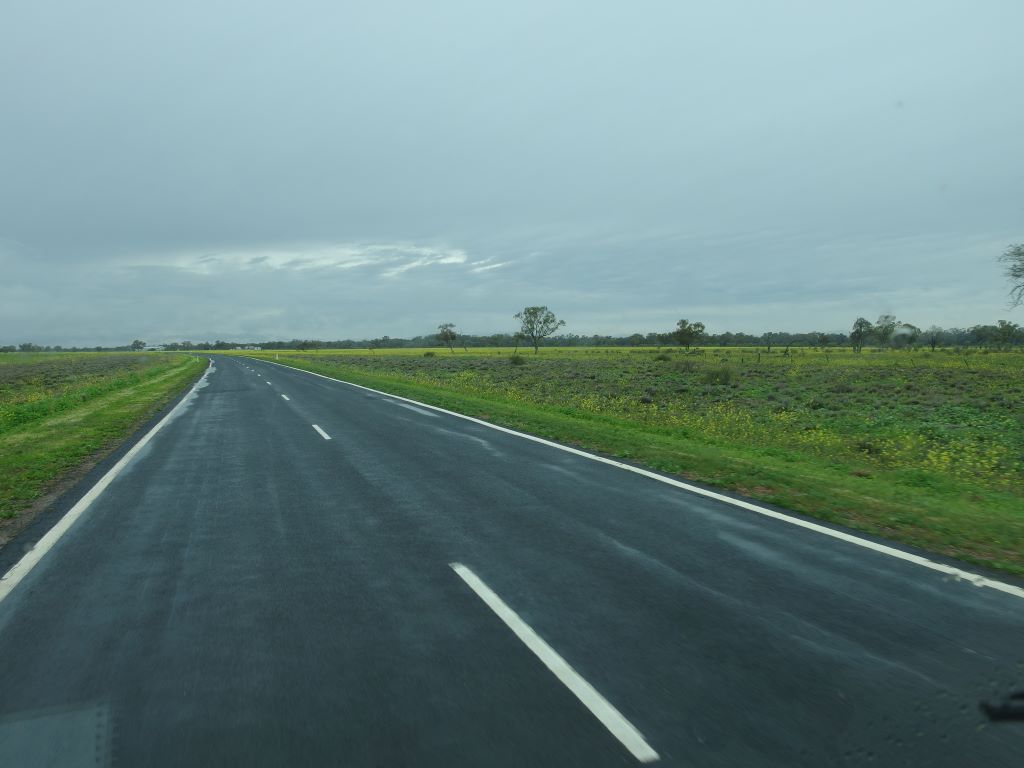
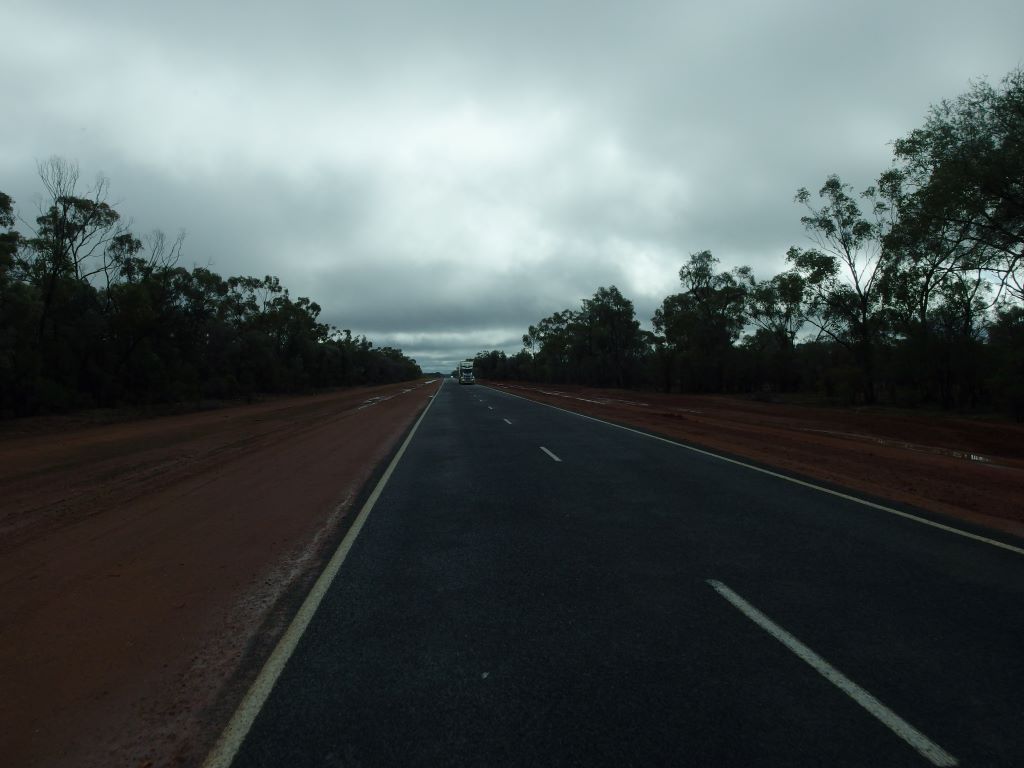
There was some early morning rain, but after that it was mostly fine for us, but with a looming, threatening sky for much of the day.

Skies looking promising, just out of Bourke

We had not ever driven the Kamilaroi Highway between Bourke and Walgett before. Any new route is inherently interesting.

We had debated, before yesterday, whether to stay last night at Brewarrina and I had tried to find out what conditions might be like in the town caravan park. The reports of other travellers had varied so much as to be of little help. Then, whilst we were at Warrawong, I was talking to a local official whose patch covered Brewarrina and he advised us to stay in Bourke. The free camp area at the Four Mile, out of Brewarrina, would not have been a viable alternative with the rain, so we had opted for the known park in Bourke.

Maybe not so promising

There was much of interest along the highway. Saw some large cotton farms just out of Bourke. Passed one farm with a huge quantity and variety of machinery parked up and a very large walled up dam, presumably for irrigation.

I am ambivalent about cotton growing in Australia. On the one hand, can see the value of agricultural diversification. But how much of the cotton growing profits benefit local farmers and businesses, and how much adds to the offshore wealth of overseas based companies? The diversion of waters from the upper reaches of the Darling River system really alarms me. I don’t think our fragile Murray Darling River system and associated environments can withstand such enormous water diversions.

Mt Oxley stood out in the distance – a peak in otherwise pretty flat country.

Good grazing country

Another large farm entrance had a sign by the gate with an arrow directing to “goat yard”.

The highway parallels the Darling River floodplains, which means good soil and water for some irrigation. We could tell where the river was by the line of taller trees. We were actually close to where the Darling officially starts – where the Culgoa and Barwon Rivers join, near Brewarrina.

Distant line of trees marks a river

“Beemery” seemed as we passed to be a huge property. I later Googles it and found it described as 100,000 acres. That is one very long fenceline.

The Brewarrina township looked a lot nicer than I had expected. Pre-conceived notions shot down! There were viable shops and a fair variety of them, decent housing, and the town appeared clean. Not sure why, but I was rather expecting a sad place like Wilcannia. It was bigger than I’d thought, too. We side tracked slightly to drive past the caravan park, which looked fine to me. But it was empty.
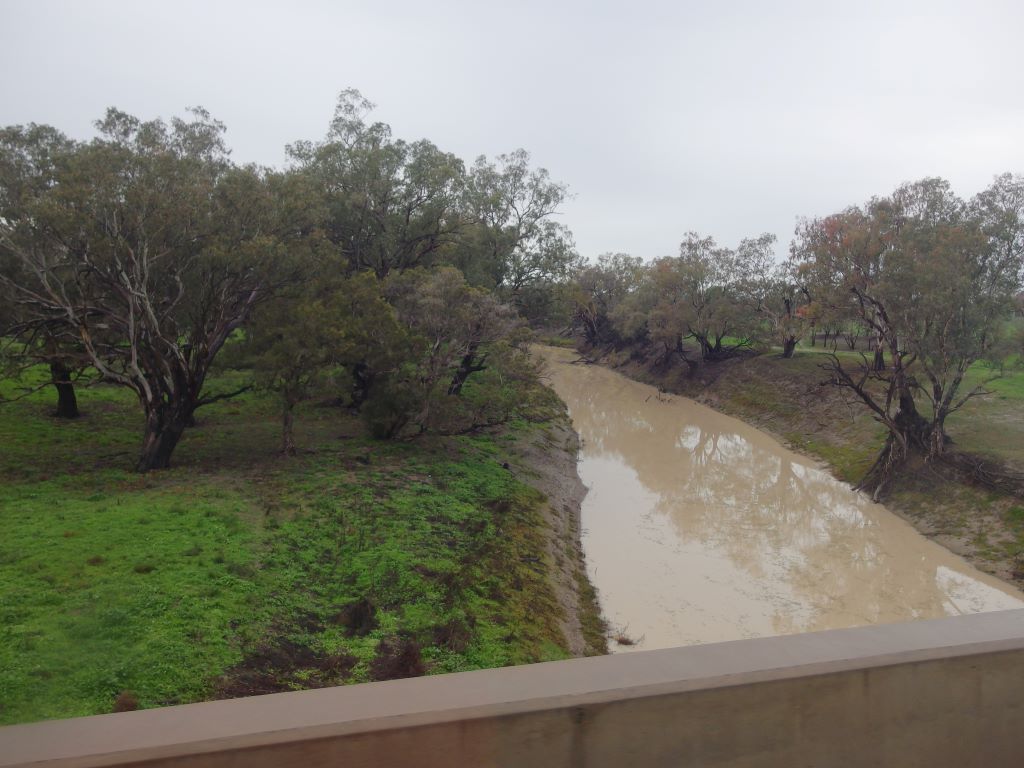
Crossed the Barwon River on a modern bridge, with the old one next to it.

The Barwon River at Brewarrina

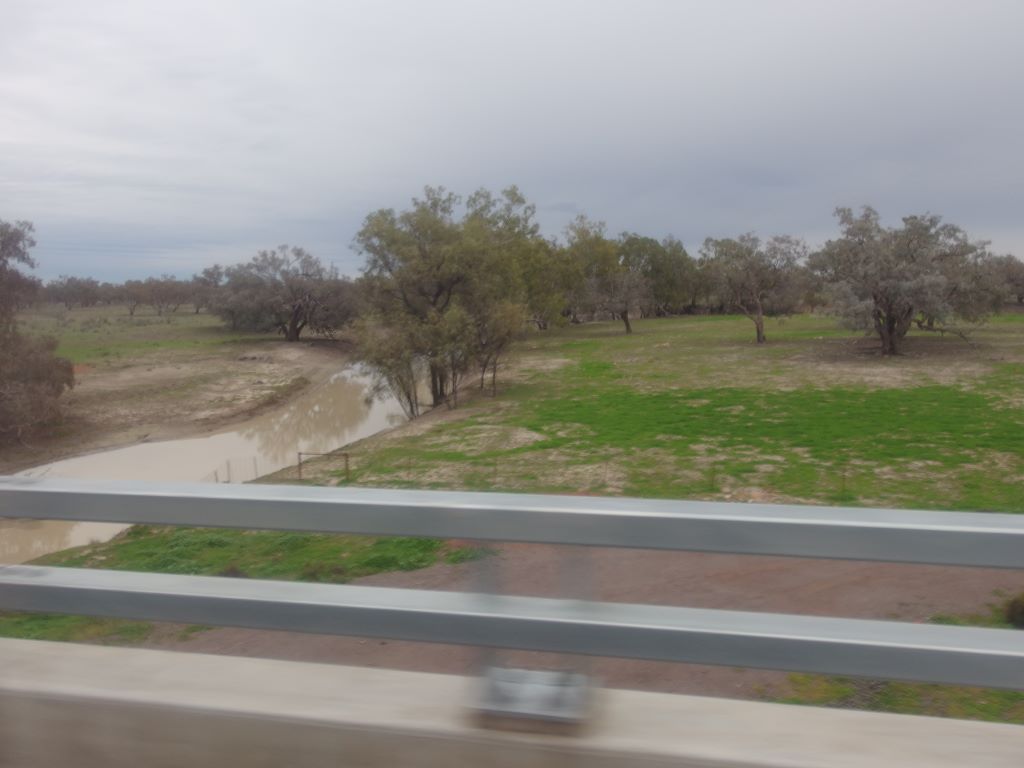
There began to be more surface water pooled near the road. Must have been really heavy rain here.

Flood plains near Walgett

On the approach into Walgett, on the floodplains where the Namoi and Barwon Rivers join, one crosses stream beds with names like Big Warrambool – which is a local dialect word for watercourse.

A Warrambool…

We had a brief stop at the large rest area at Walgett.

Rest area at Walgett

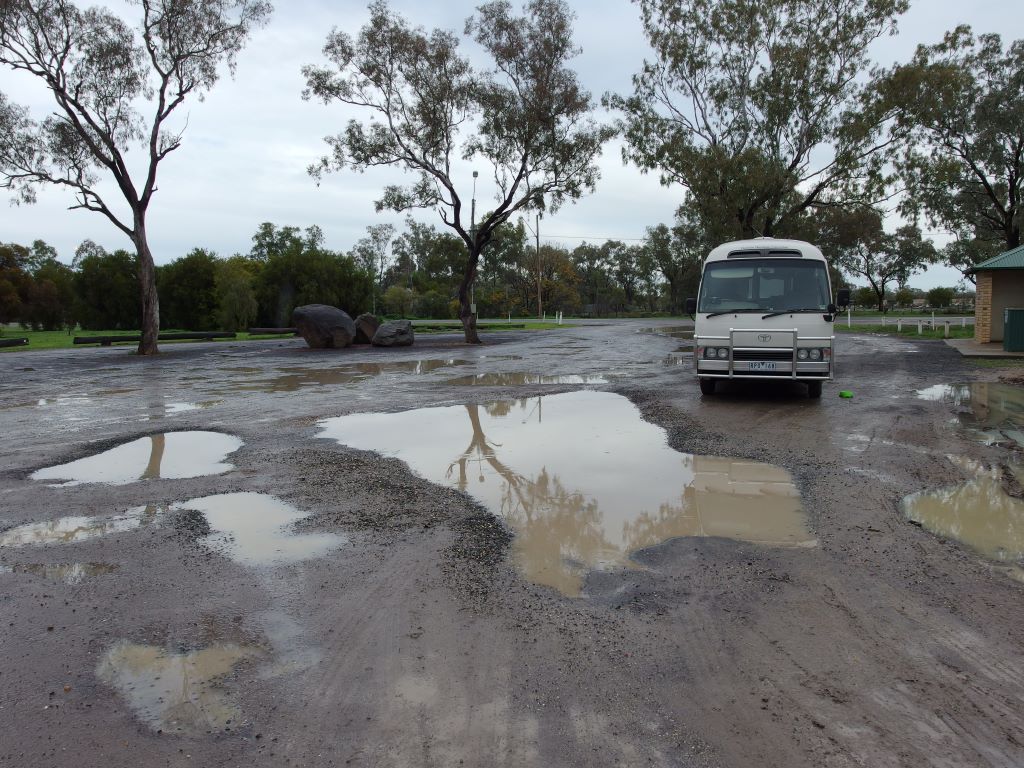
It looked very different from our last trip, now with lots of mud and puddles.

Not suitable for free camping right now!

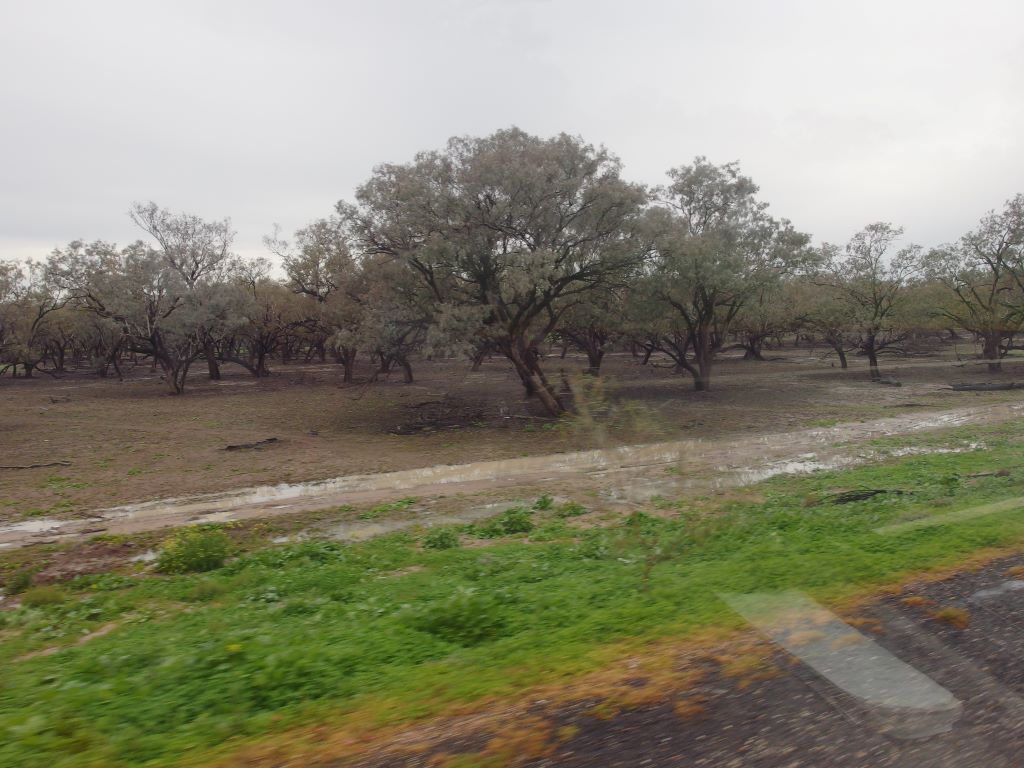
From Walgett up to Lightning Ridge there was much surface water in the areas beside the road. By the time we turned for the last few kms into the town, it was raining again and there was water right up to the road edges.

Roadside water on the way to Lightning Ridge

Reached town at 1.30pm. Drove straight to the Opal Tourist Park, where we were booked in for two weeks.

At the queueing area for Reception, there were a few vans in front of us. We joined the queue and waited patiently until some of the front ones had been sorted out and moved on and we were closer. No point in clogging up the office area standing around waiting for too long. Just as we moved forward, with only a couple of vans in front of us now, a camper trailer rig zipped around us, pulled up right in front of the vans, and man jumped out and actually ran to get into the office ahead of me! Clearly, he had left his manners at home. It was busy inside with the vanners ahead of me, so I waited my turn, while Mr Pushy got told there were no powered sites left, unless he had a prior booking. I smiled secretly to myself. The second receptionist became free to serve me and while Mr Pushy dithered over whether to take an unpowered site, I took great pleasure in saying my name and loudly stating that I had a booking. Petty, perhaps, but it felt good. Meanwhile, the man from the front van, who had already been processed came back in, complaining about the camper trailer that was parked across the front of his rig blocking him from moving off.

The park was very wet. Lots of red mud and puddles of water.The actual sites themselves were not too bad, because of the pebble stone surface covering.

We paid $40.50 a night, after discount, for our en suite site – the same one we were on for our last trip, which was what we’d wanted.

Set up for the long stay. Put the rubber awning matting down outside, on top of the pebbles. It would be a bit softer underfoot and also help to keep Bus cleaner inside.

I took the car and drove to the IGA supermarket in town. Needed a fair stock up.

In between showers, we took Couey for a walk across towards the undeveloped part of the park. It involved dodging mud and puddles. She, of course, really wanted to wallow in every puddle, so was kept on the lead. Occasionally she managed to make a lunge for one. She was so strong. The stock of old towels I brought with us came in really handy as dog wipes.

I made fish cakes for tea, with salad.

Football was on TV – John’s favourite team, Carlton, was playing. After a while of a very inept performance by them, John got really disgusted and wouldn’t watch more.

I had read, in the Sydney Morning Herald newspaper that it is sometimes joked that Lightning Ridge has about 10 taxpayers, 15 rate payers, 30 on the State Electoral Roll, 50 on the Commonwealth Electoral Roll. The Primary School has 600 students, the Bowling Club 8000 members. The population was “probably” about 7000. I found that an interesting commentary on the nature of this place.


1 Comment

2015 Travels July 23

THURSDAY JULY 23     COBAR TO BOURKE     177kms

The rain continued, off and on, through the night.

Before John got going, I was able to walk Couey around the park and across the grass area at the back, without getting my feet too wet.

Left the park just before 10am and immediately went to refuel at the servo on the opposite corner. It was a major truck stop and refuelling area – we had heard truck noises from here, throughout last night. Diesel cost $1.439 cpl.

It was a grey, misty, damp day.

There had been a big exodus from the park this morning. I think it is much more an overnight destination than a longer stay place.

We had first travelled the Kidman Way some fifteen years ago, not long after it was made into a sealed route. Then, there were not many trucks on it. Now there are heaps.

Trucks on the Kidman Way

At one point, we had occasional glimpses of patches of blue sky, but mostly it was just ominous looking grey clouds.

A cheerful note was seeing a small group of greeny coloured parrots having a bath in a big roadside puddle. Rain is great for wildlife in these usually dry parts.

Ephemeral bird bath

We passed a broken down rig. A 4WD was parked behind a van, with hazard lights going. There appeared to be a problem with the van – there was something strange under its front – maybe holding it up? No one was visible, or waving us down, so we kept going. They were parked on a rare area of hard shoulder at the road’s edge – lucky they were able to find a firm area as these would be rather rare today.

We had a brief stop at a large rest area and gave Couey a walk and a drink.

Rest area with hard surface

This was obviously a normally popular free camp area, with lots of tracks and parking spots off in the mulga. But there was no one here now – too muddy and wet. There were little piles of hay on the sealed surface of the rest area – must have been a stock transport stopped there recently.

Free camping areas in dry weather

Arrived at Bourke at 12,30. Drove out the highway to the north for a short way and topped up the fuel. $1.459 cpl. Then drove to the IGA supermarket, where John parked Bus in the street, and I went in to get milk and bread. The place was very busy, so I suspected it was pension day. There was a security person on duty. This is a supermarket where, in the alcohol section, all the stock is on shelves that are behind heavy wire mesh walls. You can see what they have but can’t touch. Customers have to ask for what they want at a small window in the wire.

Went to the Mitchell Caravan Park. Our en-suite site cost $35 for the night. The bathroom was a good one and very clean.

Bourke site

There seemed to be new, young owners/managers, from when we were last here a couple of years ago. They were very pleasant people who seemed much more dog empathetic than the previous ones. They said we could walk Couey, on her lead, along the back area of the park – a notable change from last time, where the only place we were welcome to walk was out of the establishment.

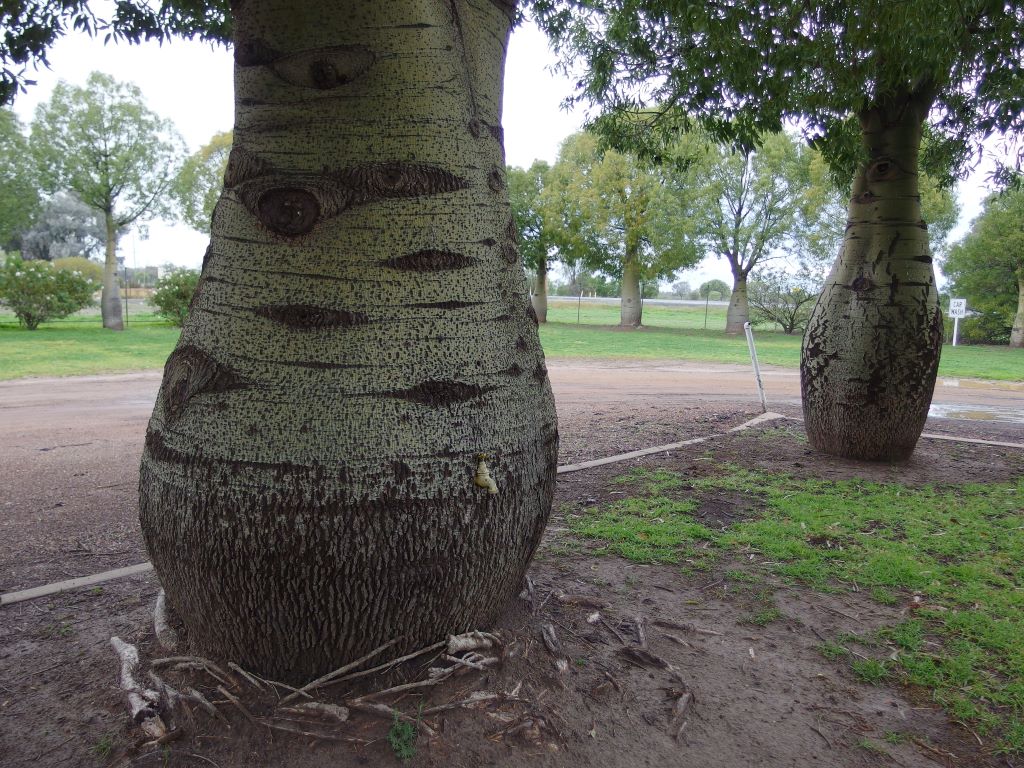
Very little set up was needed. In a break in the weather, we walked dog around the park. There was a very nice central grass and garden area, with a row of bottle trees across its end. One of these had a tap in it!

Don’t know if it works…

I was pleased I’d made an advance booking. This park was effectively full also, apart from a couple of sites that were partly under water.

Place for happy hour in better weather

We chatted travel for a while with a man from a Trakmaster van, fairly similar to the one we’d had, but newer.

Bottle trees

Tea was steak, potato fries and egg.

Watched MasterChef – now down to three finalists. Then had an early night.


Leave a comment

2015 Travels July 22

WEDNESDAY JULY 22     WILCANNIA TO COBAR     277kms

Rain set in through last night, but there were only a couple of light showers when we were packing up.

Couey didn’t get a morning walk because the tracks were muddy and I didn’t want her tracking that into Bus.

The rain made it easier, after all yesterday’s angst, to leave here today.

Realized, as we were almost ready to leave, that scones, jam and cream were being served at the camp kitchen, so we joined some of the remaining campers there, and partook. Very nice they were too.

Left Warrawong at 10.20am. Had to drive back into Wilcannia to get fuel, at the cheaper outlet down a side street. As John got out and went to do the fuelling, Couey did her usual jumping around and barking, inside Bus, thinking she might be going to be let out. The servo man asked what breed she was – and then said he was about to go to Qld and get himself a stumpy, because he thinks they are great dogs. We know!

Old buildings in Wilcannia dating from its glory days as a river port

Fuel was $1.435cpl.

Some Wilcannia buildings are in a sorry state

The rain showers continued as we drove east, through the McCullogh Range and mulga country. The rain made the colour contrasts greater – blackened the mulga trunks and turned the red dirt darker. I found it really pretty.

Red, green and black contrasts

Saw many little groups of goats.

About half way to Cobar, the rain became steady.

Bleak outlook

Stopped at Emadale Roadhouse, where the forecourt was mostly under water. The stop was for a short rest for John and he went in and bought some mints. We did not let dog out. She would have had a lovely time wallowing in all the water.

There seemed to be so many trucks on this highway today.

As we drove along again, spotted a kangaroo beside the road ahead. It began to cross, then turned and bounded off the other way, whilst we were still quite some distance away. We wondered if it was the effect of the Shu-Roo gadgets that John put on the front of Bus. We had these same things on the front of the Landrover too, and they did seem to warn animals of our approach.

Birds of prey circling

Drove past the usually popular Meadow Glen Rest Area – a free camping place – and there was no one there. The country around there appeared very green, but the many more secluded parking areas off in the bush would have been red mud.

There were sheets of water on the sheep paddocks and some very miserable looking sheep.

The unsealed road to the Mt Grenfell Historic Area had a road closed sign up.

There had, clearly, already been substantial rain around Cobar.

We went into the Cobar Caravan Park. I hadn’t thought it necessary to pre-book for this large park, but now thought we were lucky to get in. They put us onto a cemented bus bay area, between the camp kitchen and the amenity block. Actually, a good location! Because it was meant for tour buses, it was a drive through site, so easy for us to park on without having to unhitch the car. The powered site cost $32.50.

Cobar site

The park was, by late afternoon, full – at least on all the formal, hard surfaced sites – and there are a lot of those. They were not using the grassy unpowered area, due to the wetness of the ground. We had stayed here before, and never seen the place this full. I suspected that some people who would usually be bush camping had abandoned the muddy bush and come to firmer ground.

Because of the full state of Cobar, I decided to play it safe and phoned the caravan park in Bourke to book us in for tomorrow night.

In between showers, walked Couey around the park.

Tea was baked beans on toast – John’s choice.

The night was foggy and damp, with a really heavy dew. The cloud stopped it from being really cold.

Damp camps are not fun!


Leave a comment

2015 Travels July 21

TUESDAY JULY 21     WILCANNIA

A sunny day initially, that clouded over later.

We did not go far on Couey’s morning walk, because I spotted kangaroos on both the possible tracks. They were quite big but she did not appear to see them. She is not interested in critters bigger than she is, or for that matter, quite a few that are smaller. But no point in tempting her – after all, once she was averse to water, too.

A beautiful outlook…

I did a load of washing that cost $4. Had to pay at the office – it was not a commercial one, but just a nice big, new, standard washing machine.

In the afternoon, we walked around the billabong, with Couey.

The track around the billabong

Looking down the billabong from the far end

It was a fair distance. She had some swims, and  of course had to roll in the dust whilst still

wet.

Gotta find a stick…

Pelicans on the Darling River

It’s a long time since this went anywhere

We saw some sheep in a nearby paddock but she resolutely ignored them.

Some red sand rises edge part of the billabong

The track took us past the area that we had been told, last time here, would be developed for private secluded camp sites and perhaps even cabins. No development there yet.

Destined to be a place for a cabin?

I went to have a shower, after our walk, but was told by another camper that the water had been cold, this morning. We both tested it and it still ran only cold. She went and told the managers. They checked it out. Apparently there were filters or something that should have been changed or cleaned last week. Something else the backpackers had not done properly. It was rectified and half an hour later I could go and have a lovely hot shower in the very spacious shower stall.

Went to happy hour again by the campfire. There were more campers in tonight, so it was a bigger group. It was one of the nights when dinner was available to buy – a beef curry. It seemed to be good value and people certainly enjoyed it, but we did not partake – we still had pork rashers to eat. I made them into sticky pork strips, with rice.

It was so pleasant here. We would really have liked to stay longer, but were booked to reach Lightning Ridge on Friday. Next time, we must allow enough flexibility to be able to stay a week or so.


Leave a comment

2015 Travels July 20

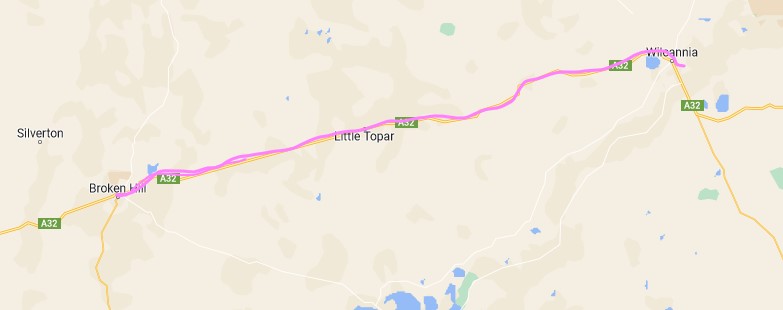
MONDAY JULY 20     BROKEN HILL TO WILCANNIA     215kms

Left the park about 10.20.

Went to the Plaza shops (yet again) where there was plenty of room for our rig in a far section of the car parks. Got John’s scripts filled, and a new battery for his blood sugar monitor.

Fuelled up at the Woolworths servo there – not really well set up for anything longer than a car, but we managed. $1.377cpl.

It was 11.40 when we left Broken Hill. A degree of directional confusion ensued – not sure whether that was due to us or GPS, but we ended up unnecessarily going right down the main street and through the busier centre of town.

Duty done – now the holiday can begin!

We soon started seeing lots of emus, and goats, along the road sides.

Noted that when (if) we are next in Broken Hill, we must do a day drive out along the Wilcannia road. There were some photogenic looking old buildings, eroded stream gullies, and country that would be interesting to wander about in with a camera. All only a few kms from town.

Blue sky and sunshine today. It was quite warm travelling with the sun coming in on me through the Bus window – nice.

Some low hills began to appear in a line coming up from the south – like a dune line – beginning to be visible about 50kms from Broken Hill. I think it was the Scropes Range. It ran parallel with the road for some way, then segued into the Spring Hills, which were very photogenic, with rocky outcrops and sparse, arid lands scrub. Out here, hills are a novelty.

Scropes Range

We stopped at the Spring Hills Rest Area – quite a pleasant one with toilets, a kid’s playground, a shelter area, and some trees.

Scropes Range Rest Area

A young man driving a standard car pulled in just after us: he was driving from Perth to Byron Bay for a music festival…wow!

Well set up rest area

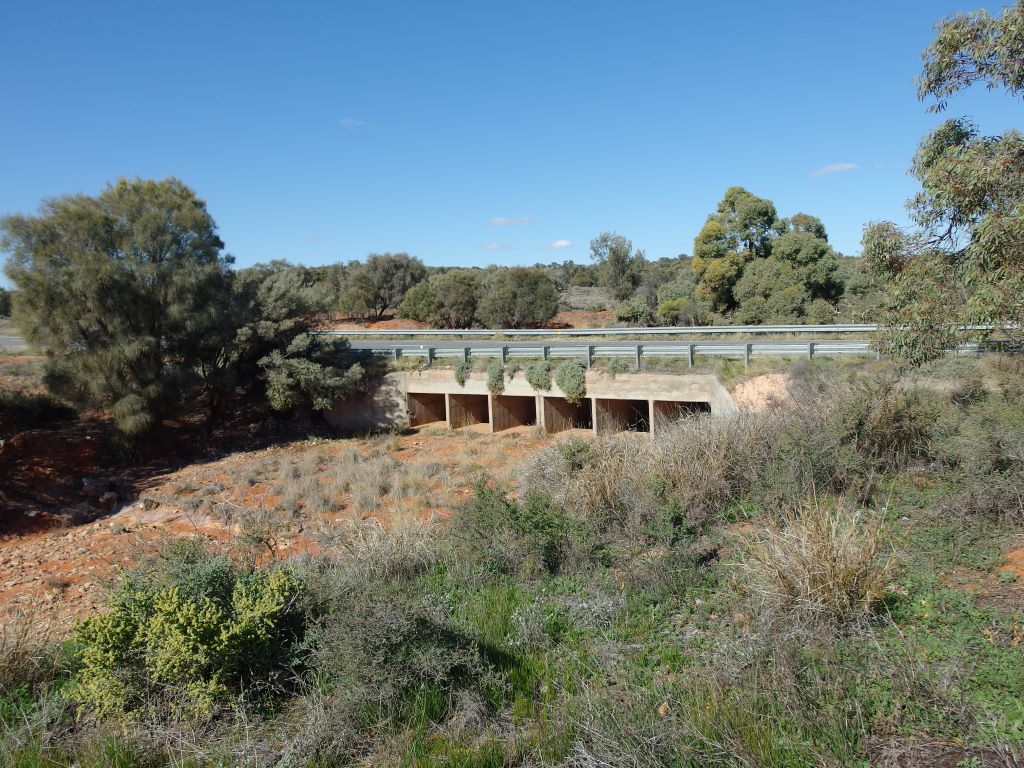
There was a big dry creek gully next to the rest area, with big culverts under the highway – an indication of what can happen when it rains in these parts.

Flood contingency

We kept going through more hills and with cypress pines appearing. Passed the Dolo Hills Rest Area, which had great views over the flat plains to the east, which we then drove down onto. Dolo Creek was several metres wide, but shallow, with a bed of red sand.

Down onto the flat country

The GPS suddenly decided we should turn left – onto an unpaved station driveway. No idea why, but we didn’t do it. The gadget seemed to have these sudden brain fades. Nothing like this to make us start looking around frantically, wondering what she knows that we don’t.

Saw a huge feral cat crossing the road in front of us.

Drove straight through Wilcannia, which did not look any better kept than last time we were here.

Arrived at Warrawong on Darling at 2.15pm. The lady who greeted us was definitely not a backpacker. She was very pleasant and efficient and told us that she and her husband had been here for nine months as managers. But they only returned this morning from a week away, during which time the Sydney based owner of the place had arranged for a couple of backpackers to look after the place. So I was right! I gathered that their efforts had been less than satisfactory in tasks like cleaning! The grey nomads work ethic is better, just about every time…

The powered site cost us $37.50 a night, cash only – unusual these days. We were able to choose our own site, as only about four of the row along the bank were occupied. We chose Site 5, liking it both for its outlook and because there was only unpowered space on one side – which was not occupied during the time we were there.

Clear space between us and camp kitchen

There were changes from when we were here two years ago – as one would expect in a newly developing place. The area back from the “waterfront” sites was now grassed and well set up as powered sites, some quite close to the amenities. There was now a row of accommodation rooms, with a wide veranda across the front, and a big gas BBQ provided for every two units. They cost $120 a night.

Our view…

We set up, then took Couey for a run down along the billabong track.

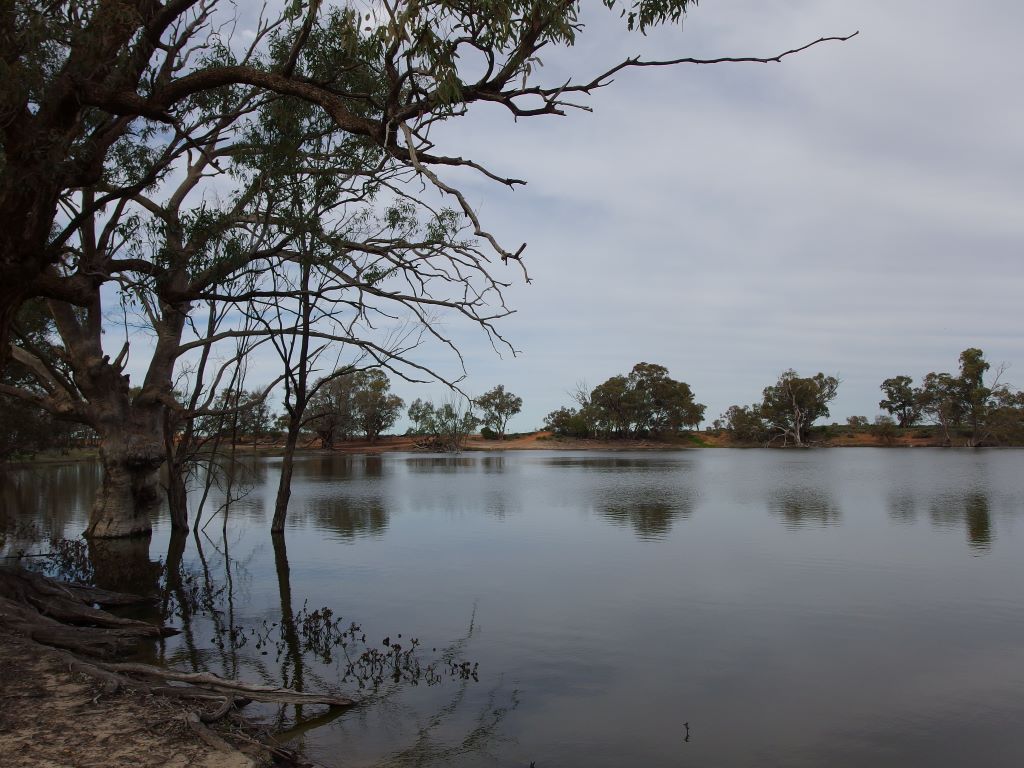
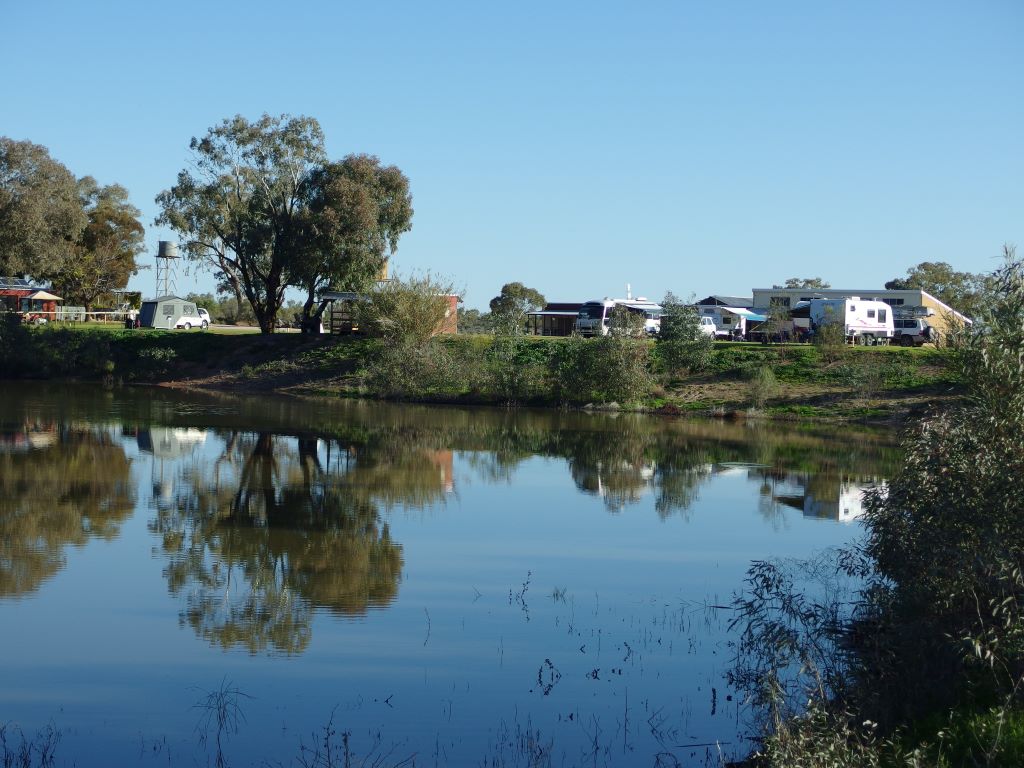
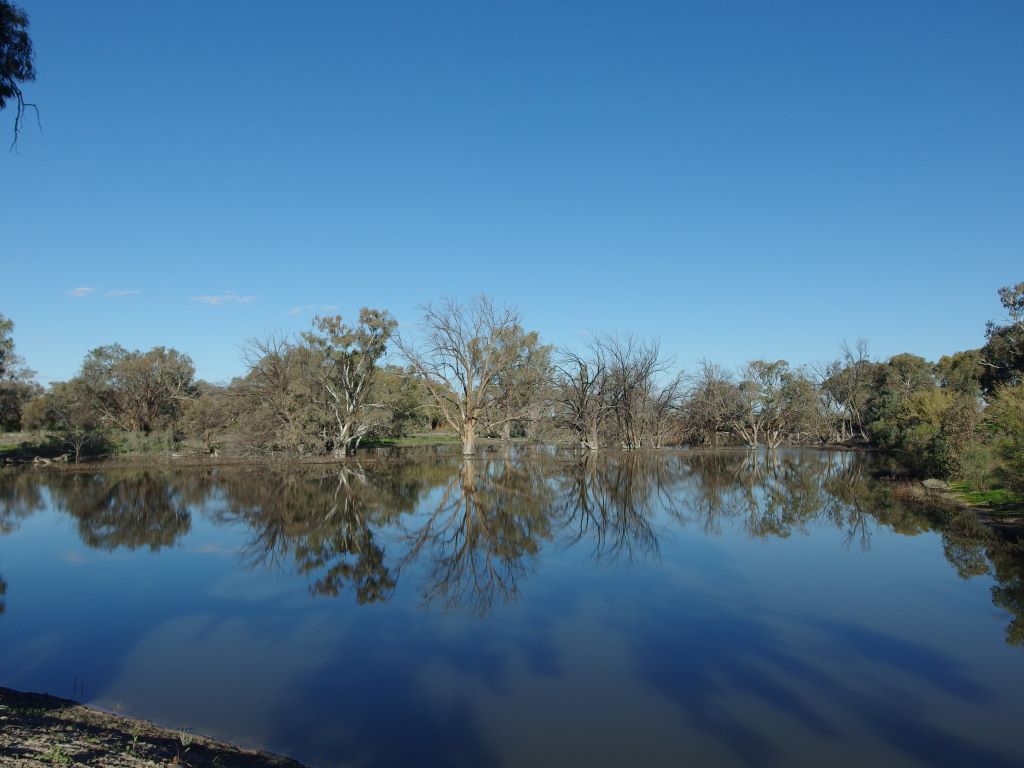
The billabong at Warrawong on Darling

There were now some well defined tracks to bush camp areas on the banks of the Darling – very nice.

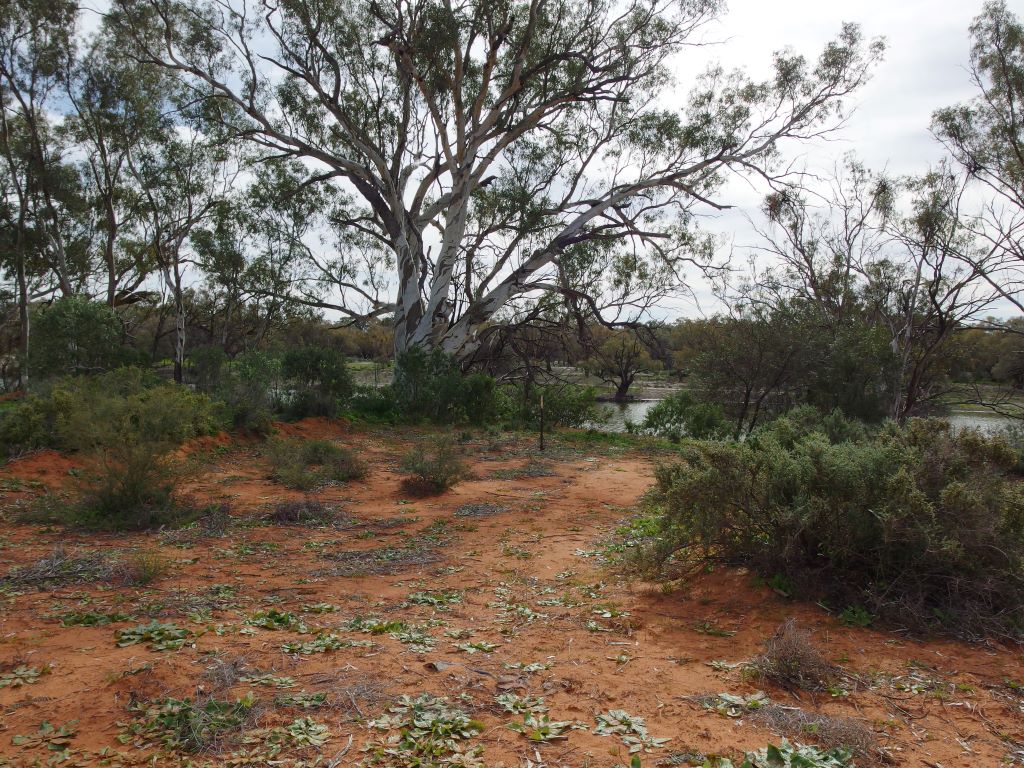
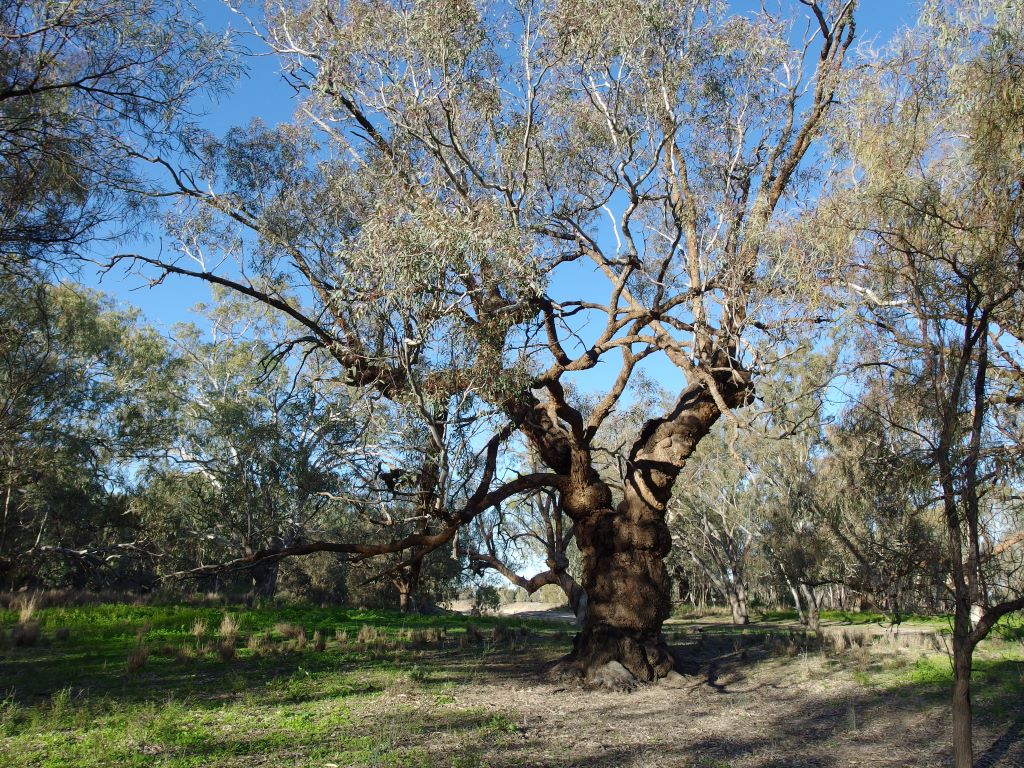
Ancient river red gum in the bush camping area

There were some sections on the black soils of the tracks where vehicles had really churned up deep holes.

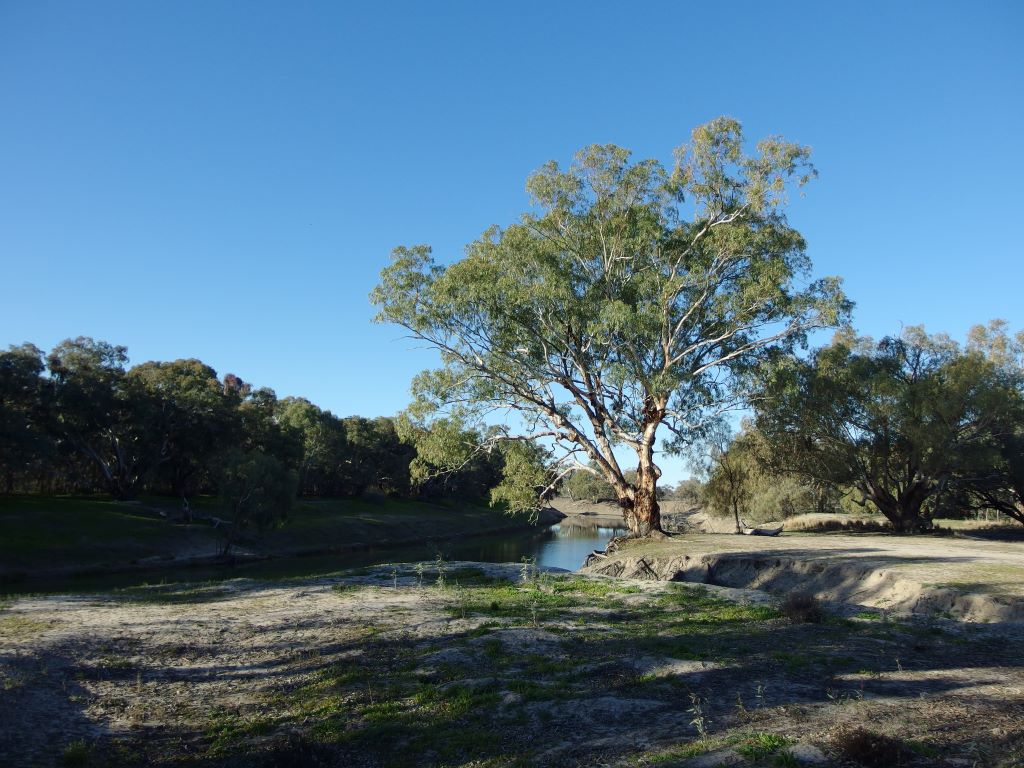
Bush camps by the Darling River

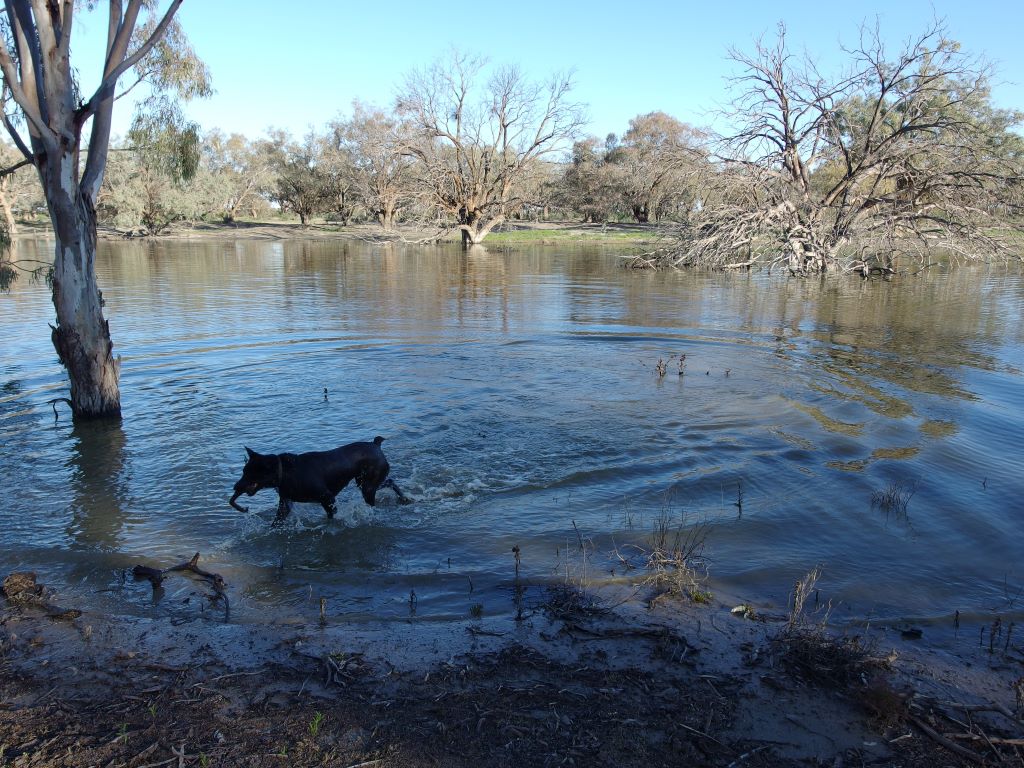
Couey had a wonderful time going in and out of the billabong after thrown sticks. Finally, a romp in water! Her attitude towards going into the water had completely swung around since last time here. Now, try keeping her out! I think we had created a monster. Now, she smelled like a swamp.

There’s a dog in there…

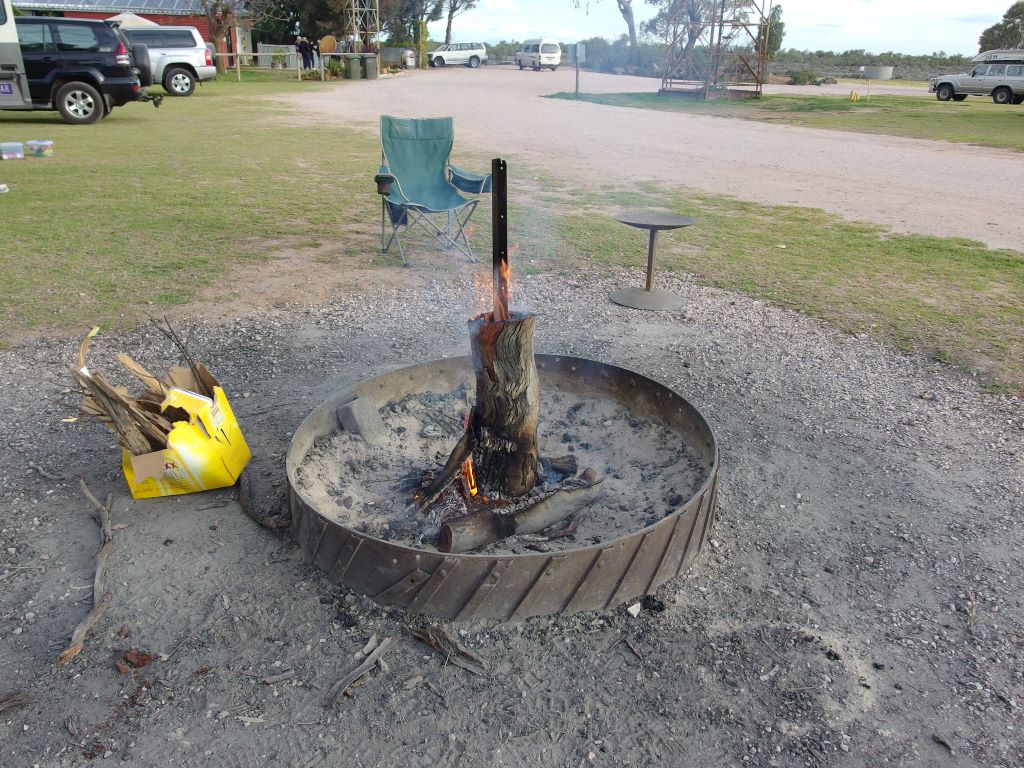
John had a sleep. I went to happy hour at the fire pit and communal gathering area by the camp kitchen. Saw something I’d not seen before, in all our years of bush wanderings. They had put a steel dropper post in the middle of the fire pit. When building the fire, they drop a hollow log over it. When the fire gets going, the smoke is funnelled up the hollow log and does not bother those sitting around the fire. Brilliant! Someone said it was an old aboriginal method….but they didn’t exactly have steel posts?

Fire pit chimney

It was a very enjoyable happy hour – or two. Most campers came. The managers served up some savouries – cheese, biscuits, sausage sliced.

John eventually appeared. Around 6.30 I left to go cook rice and pork rashers for tea. It was dark by now. Couey had waited patiently, tethered to the front of Bus, while we socialized.

Watched Master Chef again – the TV signal here was fine, as was the internet and mobile.

Another cold night.