This Adventurous Age

Adventures travelling and working around Australia.


Leave a comment

1998 Travels July 14

TUESDAY 14 JULY     COEN

It was another hot day. We decided last night to stay an extra day here, because John wants to visit a local attraction.

Our breakfast entertainment was watching the mob next door try to get the machinery going. It took them a couple of hours, due to all the flat batteries. I wonder how many times a week this charade is repeated? Surely whatever authority gave funding for this venture could also have funded some training?

I did a load of washing – there is a machine provided at the back of the shop/office. It cost $2.50! But we have clean clothes again – they dried well in this heat.

We walked a bit around the town, but were not game to go far. There is a CDEP program of sorts it seems – saw some locals doing some cleaning up work.

We sat in camp and watched the kids come out of the nearby school for lunch – a number walked through the campground – all aboriginal. Some were very tardy going back, and seemed to have had a lolly lunch.

After lunch, we drove out to Charlie’s Mine and bottle house – which is what John wanted to see. Charlie is a Maltese migrant, a game little battler. He has been battling the Shire and the government for years, over whether he can mine his lease for gold. He is developing a tourist attraction and campground in an attempt to get round the regulations. Officialdom says his mining operations release natural arsenic into the water supply of Coen. Charlie says the town dam is naturally contaminated. He showed us round his place, took us into his house constructed largely of bottles – which is quite well done, in parts. He pressed coffee upon us. The mugs were a very long way from clean – and I decided it was definitely advisable to drink it black! He now insists he is excavating a dam for his water and recreational needs – not mining! We were at his place for a couple of hours.

Charlie said the local shopkeepers exploit and live off the aborigines and that they oppose things that might affect their wealth e.g. a bakery being set up. They can get away with charging $5 for a loaf of bread in the Wet season. There are no public toilets – the publican vehemently opposed the building of same – because then people will use the ones in the pub, and feel obliged to buy beer. I suspect some people are not Charlie’s friends!

The camp ground had filled up by the time we got back and we now have neighbours on both sides. I spoke to some people heading south. They had gotten bogged on the Iron Range track yesterday – there has been much rain there in the past few days.

I also heard another traveller, who was in the repairs queue at the garage, talking of how he’d lost control of his vehicle and camper in a big dip and was lucky not to roll the lot. He had bent some bits and broken others, so needed repairs. He admitted he was going “a bit fast” (well, that was obvious!); there was traffic coming the other way and he did not want to stop and wait for them to negotiate the dip, so speeded up. Brains in action!

Looking at the repair line, it seems to me that most of the vehicles are awfully heavily loaded – full of gear, boat on roof, several people, towing campers. It is not surprising they break things in these conditions – and we haven’t even gotten to the hard parts yet.

John was browsing in Moon’s guide and found a place he really wants to go – the bush camp at Silver Plains, to the SE of here. I am not really keen on the idea – it seems very fishing oriented – but I guess it is good that John is getting involved in trip decision making. He phoned and booked us in.

I felt queasy for much of the afternoon – the effect of being around Charlie’s ultra strong cigarettes? Town water? Charlie’s mug? I bought some tonic and soda water from the pub – that did make me feel better.

When I was getting tea ready, a nearby camper came over, and asked what I thought of the Chescold fridge – which was in the open in plain view, of course. I said it was great. He’d bought a second hand one for this trip and it did not work properly, so he’d spent money having it “fixed” in Cairns, and again in Cooktown. It still was not working and he’d just thrown out $36 worth of “off” meat. He was not happy. It turned out he did not know that it had to be level to work well. We helped him level it up, using the tiny spirit level we carry with the fridge; (next morning his fridge was super cold and he was even more annoyed about the “repairs” he hadn’t needed at all).

Tea was fried rice.

I tried to phone K – got the answering machine; left a message for him about our Silver Plains destination. Whilst I was waiting in the queue of tourists for the single phone, got chatting to a man from Melbourne who is in the home tutor relief scheme. They pay his fuel to get to where he is helping out, and keep is provided by the users. He’d been six weeks at the guesthouse across the road. It is the lady’s busy season, so she uses the scheme for her kid. He said the local school was no good for white kids’ education, so they do School of the Air, or go south to school. It was a return visit for him – essentially the scheme pays for his winter holiday in the north.


Leave a comment

1998 Travels July 13

MONDAY 13 JULY   HANN CROSSING TO COEN   210kms

Today was quite hot.

We did a calm pack up and left Hann Crossing at about 10am. At the main Lakefield Track, we turned right. The track was reasonable – some corrugated sections.

Not far from camp, we crossed the actual Hann River – Hann Crossing where we were is a bit of a misnomer. There were a series of stream channels to cross – mostly dry, but dips that had to be taken slowly. The Morehead River had a little water in it.

We drove over the Nifold Plain, which we think must be black soil country – grass, few trees, lots of termite mounds, flat. It was actually quite surreal and rather monotone.

07-13-1998 01 Nifold Plains vista.jpg

Lots and lots of termite mounds

07-13-1998 02 nifold plain.jpg

The main road north through Lakefield National Park

The track swung to the west and then south west, as we drew nearer to the coast of Princess Charlotte Bay.

We took a side track to the south that led to the Low Lake and explored some tracks around its edges. It is a lovely, large, swamp, probably the prettiest we have seen, to date.

07-13-1998-03-low-lake-lilies

Low Lake was quite extensive

07-13-1998-04-low-lake

Beautiful Low Lake – but dangerous critters probably lurk in there!

Back on the main track ,we stopped briefly at Saltwater Creek crossing, where there were sizeable waterholes each side of the crossing. John saw fish jumping there and wanted to try his luck. He lost his silver wobbler lure on a snag on his first cast! I saw a croc, floating, downstream from the crossing. We did not stay long!

A few kms from Saltwater Creek, after a long, sandy, dusty stretch of road, a squealing noise suddenly started coming from the front of Truck. Our initial reaction was that it was a tyre going flat. We stopped – the tyres were ok. John experimented with going forwards and then backwards a few times, and decided it might be a stone in the brakes, because the noise only happened going forward. After a few more reverses, it stopped altogether.

At the western edge of the Lakefield National Park, we passed Lotus Bird Lodge. Had this place offered camping, we’d have stayed there, because with the number of swamps and little lakes around it, the bird watching would have been great.

The Lakefield track rejoined the main Peninsula Development Road at Musgrave Roadhouse, where we had a break. The roadhouse building was a telegraph station on the Overland Telegraph Line, and was built in the 1880’s.

07-13-1998 05 musgrave roadhouse.jpg

Refuelling Truck at the historic Musgrave Roadhouse

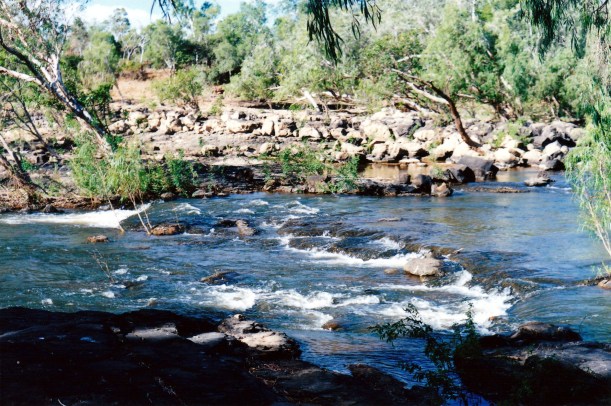
Bought diesel – 86cpl. Treated ourselves to a cold can of beer each – cost $3.10 each! We went to the creek at Musgrave and ate our lunch – enjoyed the beers no end. I cooled my feet in the little creek rapids.

07-29-1998-micky-washing-her-feet-dulhunty

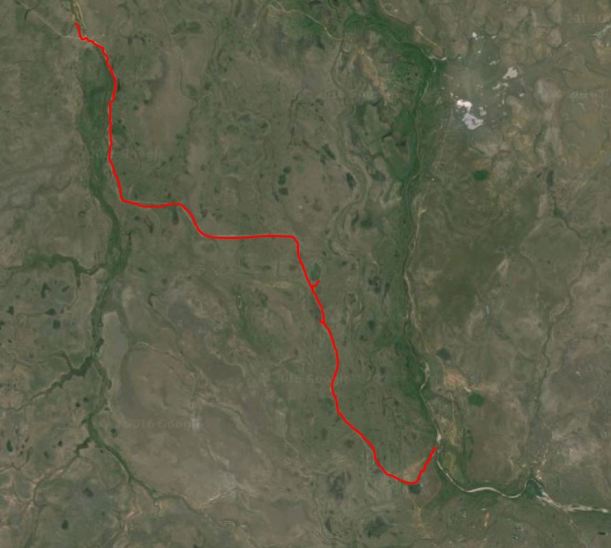
07-13-1998-hann-crossing-to-musgrave

Our route from Hann River Crossing through to Musgrave Roadhouse

Pushed on towards Coen.

The road began to have some really deep (like 20 foot) dips, into creek crossings, often with a big bump in the bottom. They went down and up again quite steeply, and the creek at the bottom was often only a trickle. Some were dry, or just a puddle – which meant you could not see what was in there! They were – mostly – signposted “DIP”. Around the first one we encountered there was a lot of scattered ex-vehicle rubbish, like battery brackets, and assorted pieces of metal. This debris was less at the second big dip and reduced considerably after that, though there had obviously been some really slow learners using this road!

In one dip there was a 4WD with a camper trailer – he had jack knifed the trailer around into the side of the vehicle and done some damage. It was fairly easy to see that he had hit the bottom way too fast. The man did not give any indication that he wanted us to stop, as we edged by – so we didn’t.

There were some dusty and rough patches. Saw a broken battery by one of these.

There were a couple of areas of low ranges and Coen has hills around it.

Mostly, we could do 70-90kmh and hence avoid the worst of the corrugation impacts, whilst being constantly alert for a lurking, non-signposted dip.

07-13-1998-musgrave-to-coen

From Musgrave Roadhouse, north up the Cape to Coen

Coen is a small, dusty, mostly aboriginal settlement. There are a few basic businesses: hotel, guest house, store, servo – and a welder with clients queued up!

The Coen campground was behind the store and Post Office. We got a powered site in the small and rather grotty establishment – for $11 a night. John needed to charge some batteries on power and we were looking forward to a proper shower.

There were a few more permanent guests in the campground – government workers. Later in the day we got chatting to one – a contracted DPI fruit inspector, who was really interesting. He had been in the police and military police and been all over. He said the local aborigines regard Coen as theirs and whites must watch where they go and what they do. We told him how we’d been inspected for fruit at the Laura River. He said that it was all rather a futile effort because some of the aboriginal communities and camps won’t let the inspectors near their fruit trees – like out at Port Stewart – so the fruit fly gets a real hold anyway.

We set up the small tent and John set about charging his torch battery.

The campground was not too full. It smelled – of drains, and swampy. The amenities were not real flash; there were two rooms in the Ladies, with a shower, toilet and basin in each. The Men’s was an Atco portable donga room. John reported it as rather wet and messy. We soon realized that the toilets were used by the local aborigines who walk freely through the campground. There are no public toilets in Coen, apparently.

We bought some frozen mince at the store, and half a dozen cans of beer at the hotel.

After driving for much of the day, we needed some exercise, so went for a walk and a look around the township – as one does. Walked along the main street to the end of the shops and houses, to where we could see down into the dry Coen River bed. Started to walk down to look more closely at the river – then saw that there were huge heaps of wine casks under the trees. Modern day middens? Some locals sitting under a tree gave us nasty looks, then a group walking down the bank came close and started muttering amongst themselves. We felt threatened and retreated back to the campground. I wasn’t game to try to take a photo of the wine cask midden.

Next to the campground is a big council type machinery depot. As we sat by our tent in the late afternoon, watched the aboriginal workers bring back grader, tractor, front end loader. We also noted, after dark, that the lights had been left on, on some of the vehicles!

The fruit inspector man told us that the local aboriginals were given the contract to maintain the roads around here, and funding bought nice new machinery for this. Obviously, the white companies that used to do the work upped sticks and left, so there is no one now to train the locals or to properly maintain the plant. Thus, there is a downward spiral of deterioration. The road upkeep has suffered as a result. We were to see, further north, much evidence of this.

It was good to shower and feel clean again! Even though the shower water did not drain away and the tide rose! I just hoped that the inches of water I was standing in were from my shower only. Yuk! There is a major drainage problem somewhere around here – hence the smell.

Tea was hamburgers made from the mince I bought, on the last of the pita breads.


Leave a comment

1998 Travels July 12

SUNDAY 12 JULY     HANN CROSSING CAMP

It was still cloudy in the morning, but with some lighter patches indicating it may fine up.

There are a lot of small, sticky, bush flies – due to yesterday’s showers, presumably. It feels a bit more humid.

Overnight, something stole the fish carcass that John was saving for his yabby net, plastic bag and all. From footprints about the place, a feral cat, we think.

This morning, there was a loud territorial dispute in the trees across the river, amongst a group of blue-wing kookaburras. They make an interesting and raucous variety of noises – very hard to describe, but sounds more like a malfunctioning motor mower than a bird!

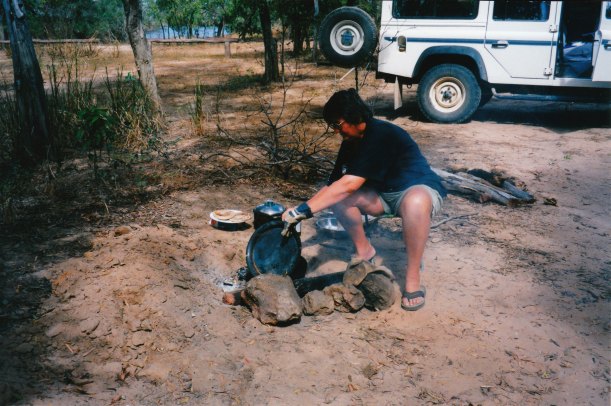
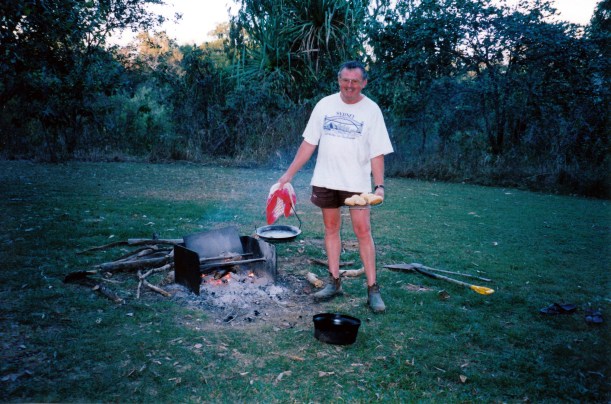
I made pita breads, which were good to eat, but it took ages to cook 12 of them, in the camp oven! I need to allow at least an hour for that, in the future.

07-12-1998 03 Hann camp cooking pitta breads.jpg

Cooking pita breads – some cooked ones on plate at back

Our neighbours had left this morning, but later, people came to look at Camp 11 – they had not booked. As they were departing, they spotted a brown tree snake in a nearby tree (naturally!). It was moving around, fairly slowly, hunting.

07-12-1998 02 tree snake.jpg

Tree snake in there

Later in the day, a couple came and occupied Camp 11, but they stayed well away from us and our area.

07-12-1998 08  Hann Crossing camp area.jpg

Camp site 11 at Hann Crossing

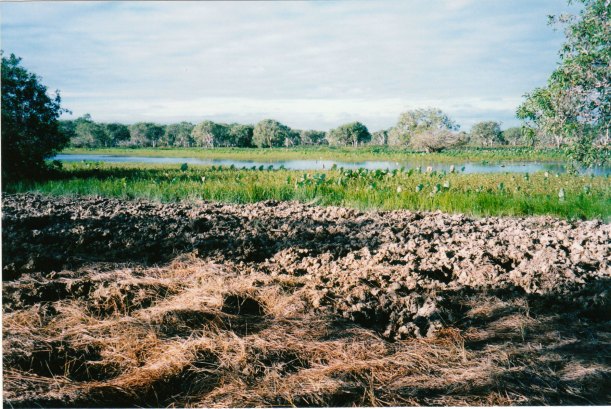
After lunch, we went driving, back across the crossing, to Bizant, Blue Lagoon and Luma Luma Waterhole. Blue Lagoon was really pretty, but spoiled by massive feral pig damage around its edges, where the ground was damp enough to be a bit soft. I think they must have been after water lily roots. It looked just like a really wide strip had been machine ploughed all round. We are coming to some understanding of the huge and serious feral pig problem in these parts. They do major environmental damage, which impacts on native species. They breed so quickly. They are a host stage for a number of nasty mosquito borne illnesses, which, given the proximity of these parts to Asia – and its endemic afflictions – is a very frightening fact. It seems they roam the Cape in enormous numbers. They are such hideous looking pigs, too – big and black.

07-12-1998-05-feral-pig-damage

Blue Lagoon. The churned up area of mud is damage done by feral pigs

07-12-1998 04 blue lagoon.jpg

Blue Lagoon

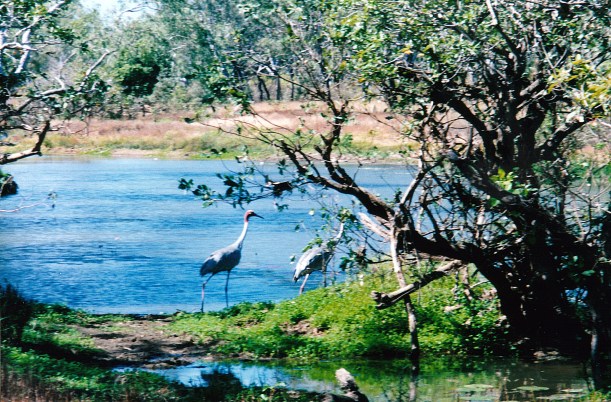
On the way to Luma Luma (which was a non-event, a very small water hole) we saw a large group, maybe 20, of Sarus Cranes and Brolgas, some dancing so gracefully, with wings extended. Then a number flew off – beautiful.

07-12-1998 06 brolgas and cranes.jpg

Brolgas or Sarus Cranes

On the way back, saw a mob of pigs – mean looking!

We drove on past our site 12 and explored the riverside track as far as Camp 17. There are a number of rather rough and sandy crossings up that way and the far sites are gloomy and very isolated. I reckon that 11, 12 and 13 are the best options, by far.

I did some 4WD driving, on the way back – I have to get in practice!

It was dark by the time we got back to camp. Darkness happens so quickly up here.

We were not very hungry, after our late lunch, so I heated up a tin of baked beans and served it with some pita breads.

After tea, we packed the storage crates and the saucepan crate back into Truck, to try to improve the morning’s packing time. We have a longer drive ahead of us tomorrow. We thought about what things would need to be readily accessible, in the back of Truck, for just an overnight stop at Coen, so we would not have to do a full unpack. We will adjust tomorrow’s packing accordingly. The tents, camp bedding and our clothes and personal gear all travel packed in the backseat area, so these are easy to get at, anyway.

John showered again.

There was a full moon visible again tonight – not enough cloud to cover it.

We wandered down to the river bank and shone the powerful torch on the water. Think we spotted a few sets of red eyes, but not totally sure. The theory is that you count the number of red eyes, divide by two – and that is the number of crocodiles that are watching you!

I have enjoyed our two camps here in Lakefield National Park, but am quite ready to move on and explore some more new country.


Leave a comment

1998 Travels July 11

SATURDAY 11 JULY     HANN CROSSING CAMP

It was cloudy today and there were some occasional showers.

I made foccacia again and we cooked it more carefully this time. It turned out fine and was yummy.

07-11-1998 03 cooking foccacia.jpg

Camp oven cookery

I soaked the breakfast dishes for a while before washing them up – and then found a frog in the water in the cereal bowl! There are frogs everywhere here. That has got to mean reptiles too, but so far………

07-11-1998 01 camp wildlife.jpg

Just hopped in for breakfast

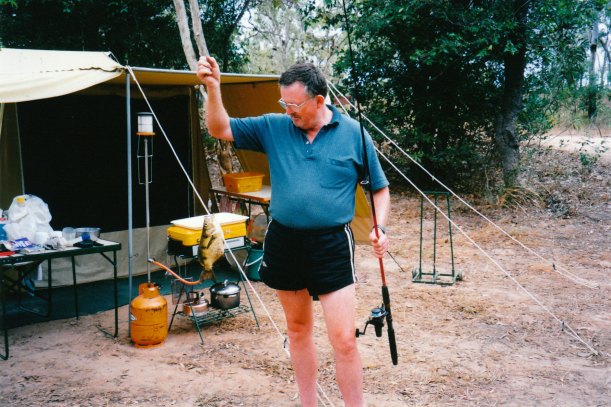
John fished again – he caught two yellowbelly on a silver wobbler lure.

07-11-1998 02 yellowbelly.jpg

Dinner!

It is truly amazing how much time is taken by just doing the basics around camp – like keeping the fire going.

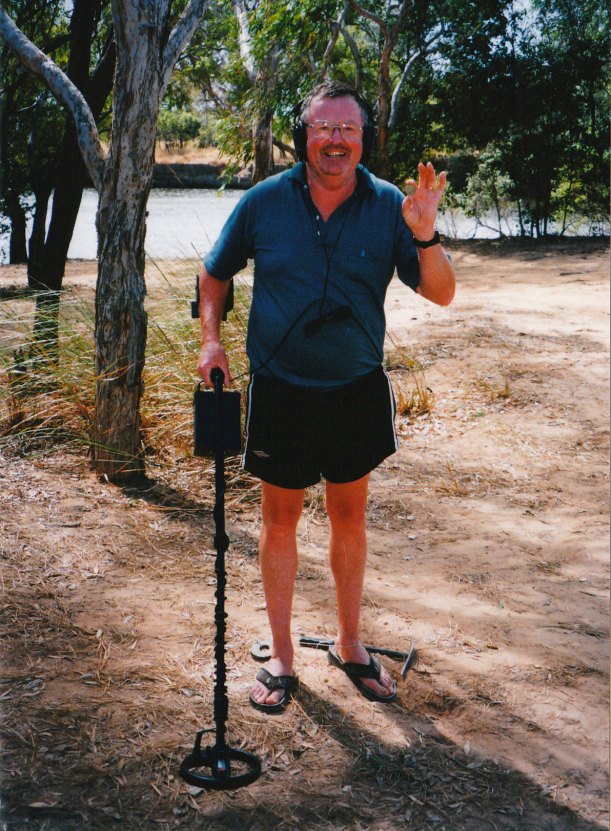
John broke out the new metal detector, assembled it and spent some time trying to figure out how it works. He then “detected” some of our camp site – finding a 20 cent coin! That proves it does work, but at that rate, it is going to take us a long time to make a fortune!

07-12-1998 01 metal detector result.jpg

It works!

Some people have moved into nearby Camp 11 today. They are not too obtrusive, but they are  there, which reduces the illusion of isolated bush camping, and also our privacy.

I cooked John’s fish for his tea, with fries. I had cold corned beef and fries.

John used the bush shower again, like last night, but with Truck as a shield between him and neighbours.


Leave a comment

1998 Travels July 10

FRIDAY 10 JULY     HANN CROSSING CAMP

Today was one of doing a lot, but a little!

I tried to make foccacia bread, but John was a bit too enthusiastic with the coals on top of the camp oven and it got very burnt outside – but the inside was edible.

John fished, with no luck. He put a yabby net in the river – on a long rope!

We drove a little way down the Musgrave track and got some more wood – we didn’t need a great deal, as we do not have bonfires, just little camp fires.

07-09-1998 hann crossing.JPG

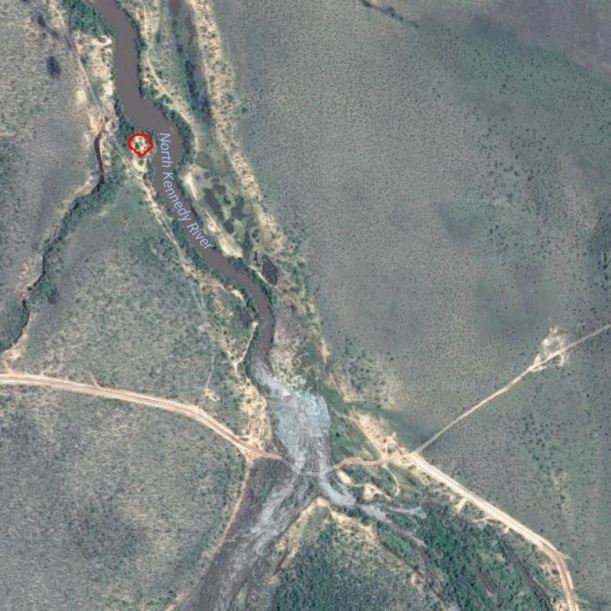
Aerial of Hann Crossing and North Kennedy River. Our camp location is circled

I wrote some letters. Did a crossword.

We saw two vintage cars drive by – not exactly what one expects to see in these parts. Thought they must be looking for wood. The rocky bar between Camps 13 and 14 must have defeated them, because they soon came back past. Saw them a little later, across the river. dragging wood behind them.

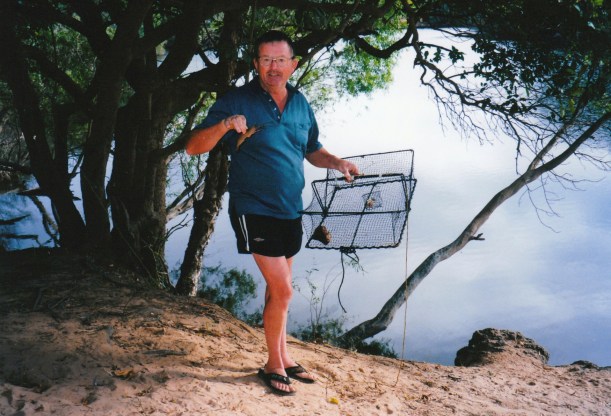
John caught a yabby in his pot. He cooked and ate it.

07-10-1998 01 first catch.jpg

John’s first yabby catch. Cloud reflections in the river make it appear that he is on a ridge top

It clouded over in the afternoon.

Tea was cold corned beef, potatoes, salad. And the pawpaw we filched from the bush at Kalpowar camp.

Rangers called in just as we were finishing dinner. Clearly, it is ok for us to be camped here. They said the croc at Seven Mile Kennedy was only 16 foot long! It sure looked bigger than that to me. The remains of the paw paw we’d nicked at Kalpowar were still in full view, as we’d just eaten it.

There are people in a camp across the other side of the river; that’s a fair distance because the river is pretty wide here.

07-09-1998-04-hann-r-at-number-12-camp

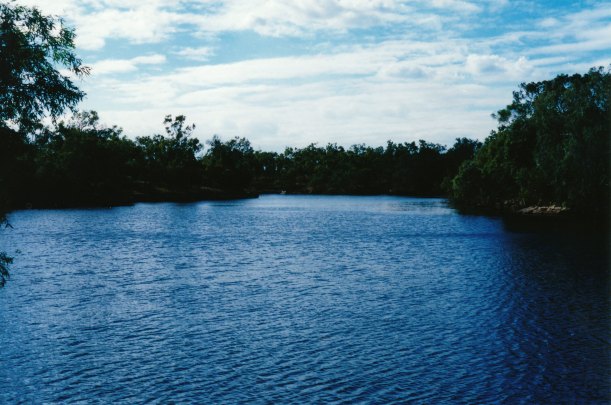
North Kennedy River at Hann Crossing Number 12 camp

After dark, John filled the black shower bag with hot water from the pot on the fire, and hung it from the roof rack of Truck. He then had an open air shower. I will settle for something a bit more modest and use a face washer and bucket – in the tent!


Leave a comment

1998 Travels July 9

THURSDAY 9 JULY   KALPOWAR CAMP TO HANN CROSSING CAMP   50kms

We were up at 8am and away at 11am. So it was not the fastest pack up! John took it easier this time, and I did more, and thus his hip survived the move much better. It was also a much shorter drive.

Took the track back to the Ranger base, then turned right onto the main – dirt – road through Lakefield.

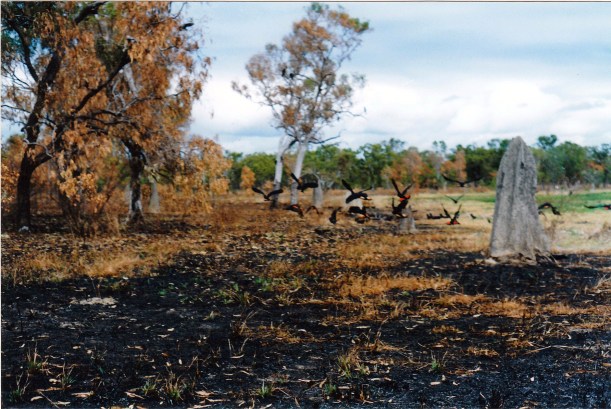
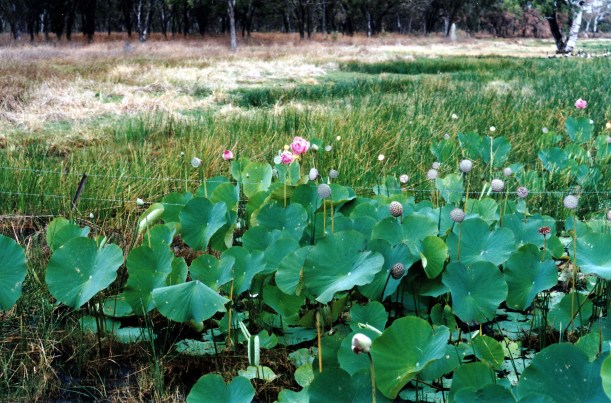
We detoured to look at Red Lily and White Lily Lagoons. There were huge pink waterlilies at Red Lily Lagoon, and a great mob of red-tailed black cockatoos, feeding on areas where the grass had been burned. They looked glorious as they took flight, with the red wing parts flashing.

07-09-1998-01-red-tail-black-cocks

Red tailed black cockatoos at Red Lily Lagoon

07-09-1998 03 red lilies.jpg

Water lilies in flower at Red Lily Lagoon

07-09-1998 02 Red Lily Lagoon.jpg

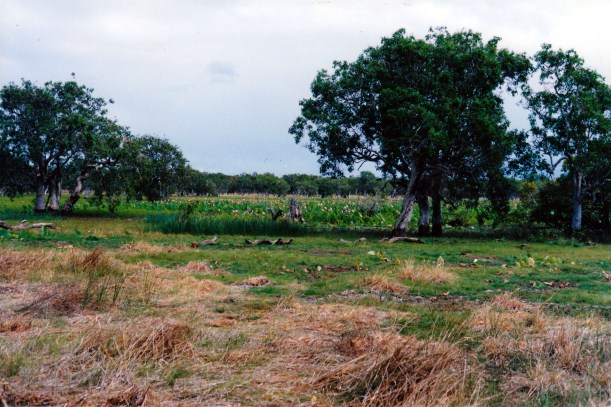
Red Lily Lagoon

It was an easy drive to Hann Crossing – hardly far! The large, sharp-edged termite mounds are very visible in some parts, especially on what we think is black soil country.

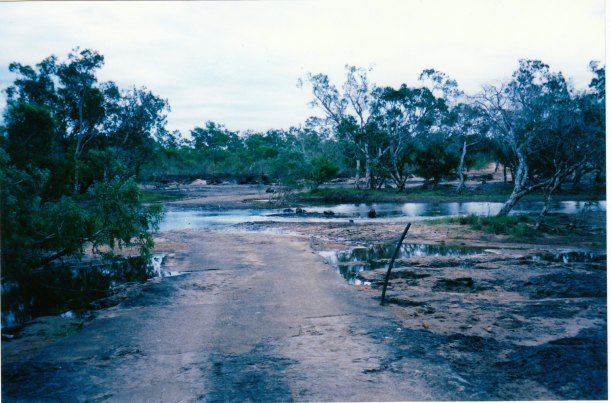
The actual Hann Crossing – of the North Kennedy River – is rocky and a bit bumpy in parts. The water was only a few inches deep. The route takes a great swing to the left on the approach to the wet part.

07-12-1998 07 hann crossing.jpg

The approach to Hann Crossing of the North Kennedy River

Just past the ford, we turned right for the camp areas along this side of the river. When we got to Number 12, which was about 700 metres from the main track, it had a sign “Commercial Operators Only”. After some argument, we drove the 6kms to the Bizant Ranger base – back across the Hann Crossing again – to see if anyone there could clarify our position. But there was no-one there. So we came back and set up. It was the site they’d allocated us, back at Lakefield – so all we could think was that they knew it would not be in use by commercial groups. We hoped, anyway!

It was a really nice site. There was a rocky bank to the river, with a drop down of about 3 metres, which we hoped would be an adequate croc barrier. There seemed to be some fishing spots from the bank here, and also next door at Number 11. There was plenty of light, dry wood around.

I think that camping here is not as popular as at Kalpowar, because there are no facilities of any kind. One digs their own toilet holes.

07-10-1998 02 camp hann 12.jpg

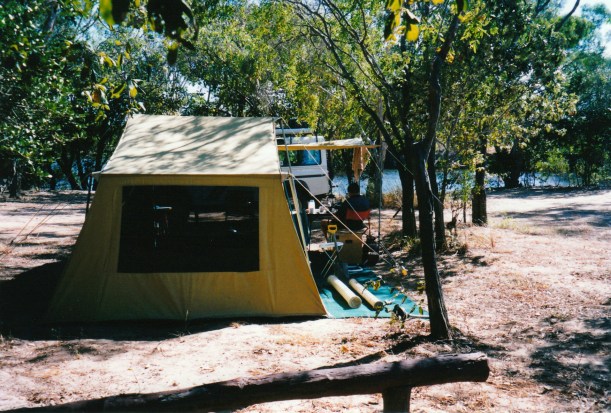
Our camp at Number 12 Hann Crossing – North Kennedy River in the background

The photo of our big tent set up shows some of the detail of how we do it. The shadecloth under the tent floor protects it from sharp stones and sticks and its extensions provide a floor for the front “veranda” and for the fridge at the side. We have two zip-on side flaps that extend the veranda awning at the front – down as a wind break or out – as in the picture – to provide more shaded area. The two lengths of poly pipe are pole carriers; they travel on the side steps of Truck.

We found a fuel funnel hanging in a tree, forgotten by someone – very good, we need one of those!

Like at Kalpowar, we’d paid $7 a night to be here.

John fished for the rest of the afternoon.

We organized an open fire and I cooked the corned beef for our dinner on it. But did the vegies on the gas stove.

After tea, we sat by the fire for a while. There was a full moon – lovely. Frogs were warbling away and we could hear fish jumping in the river.

The nearest others to us are about a kilometre down the river – could faintly hear a generator in the night.

07-09-1998-kalpowar-to-hann-crossing-2


Leave a comment

1998 Travels July 8

WEDNESDAY 8 JULY     KALPOWAR CROSSING

It was a hot day again, with no cloud at all.

Despite the other campers around, this is a blissfully peaceful place and we slept in until 8.30am!

After breakfast, drove up to the Ranger Station and left a note – it was unattended – about the large croc we’d seen at Seven Mile Kennedy Waterhole. They ask one to report any sightings.

Back at camp, we walked the 4.5km supposedly circuit track – it is really out and back. We saw a few birds and got some exercise, but it was hot and dusty.

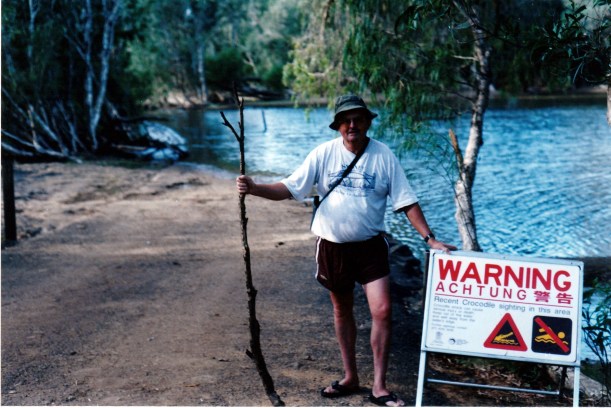
We had another look at the Kalpowar Crossing. The ford certainly does not look like anything we would want to tackle, even apart from the crocodile warning signs. Anyway, the grapevine has it that the man who owns Kalpowar Station is armed and most unfriendly towards any travellers who try to go through his place towards the coast and Cape Melville.

07-07-1998-03-kalpowar-crossing

Warning sign at Kalpowar Crossing

07-07-1998-04-kalpowar-crossing-normanby-river

The ford across the Normanby River at Kalpowar Crossing

After lunch, I did some washing, and made bread dough, which we shaped into rolls and John cooked them in the camp oven – a first, and quite successful. We will master all these new skills eventually.

07-08-1998 05 John's camp oven rolls.jpg

John with the camp oven bread rolls he cooked for me in the camp oven

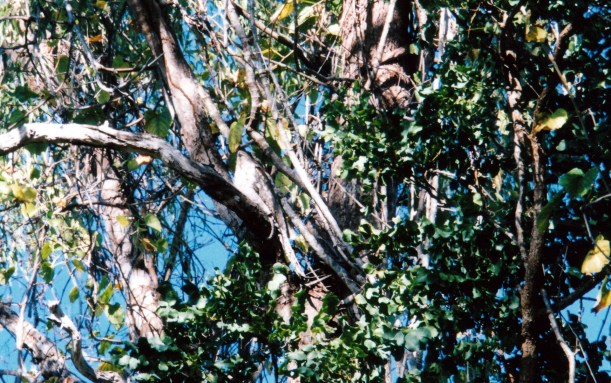
While I was kneading the bread, became aware of a close, low, dull, repetitive noise. Just in front of where I had the table, was a tangle of trees and vines – and a close look revealed an owl, which we identified as a Papuan frogmouth. It was brilliantly camouflaged, to the extent that in the photos I took, there is a plenty of vegetation, but it is really difficult to see the owls – plural, because a little later we realized there was another one! Presumably we have a pair with their home in the thicket by our tent? It was just wonderful to be able to watch them – they certainly seemed to be secure about the efficacy of their hiding!
07-08-1998-01-papuan-frogmouth-kalpowar

There is a large, well-camouflaged  Papuan Frogmouth owl in there! (just left of centre)

John did a little fishing in the river near our camp – no luck.

We managed to grab early showers, just ahead of the members of a tour group that came in – by the method of very fast walking to the amenity block, while they were still getting off their transport.

The camp area was about half full, by late afternoon.

Some Fisheries and Wildlife people came to have a look around Kalpowar – just checking up? They confirmed that Park staff were aware of the large saltie at Seven Mile Kennedy. They also said there is a 12 foot long one living in the pump dam at the Ranger’s residence! They are not moving it because another one would just move in and take its place! Obviously, Lakefield is a very “croccy” place.

Tea was sausages – in bread rolls. The rolls were yummy.


Leave a comment

1998 Travels July 7

TUESDAY 7 JULY     KALPOWAR CAMP

After breakfast, John checked over Truck. He found a loose fastener on the air hose intake, apparently not done up properly in Cairns. A black mark against the Landrover service centre, which otherwise had impressed us.

I walked around the camp ground – now empty except for one other lot. Being close to the river, it is well treed and an attractive area. The Rangers must go to some trouble to keep the grass as thick and lush as it is.

07-07-1998 05 Normanby R at Kalpowar.jpg

The Normanby River at Kalpowar – lined with paperbarks

We saw a snake near our tent – by the tap. It went into the grass nearby, as we looked. John said it had a rough back – is there a venomous snake with that characteristic? Times like this, I am so grateful that I had the foresight to get the tent maker to put velcro strips along the door base flap and the door, so that the lower part of the entry can be totally sealed!

We drove to the North Kennedy River, a little to the west. There is bush camping out here with, like Kalpowar, a series of numbered campsites – but with no facilities at all. We drove into Camp 1 at Seven Mile Kennedy Waterhole for a look around. Parked Truck, walked a little closer to the river – and there was this HUGE saltie on the opposite bank! It looked to be well over 20 foot long. A real monster. It quietly slid into the water when it saw us, floated for a while and then submerged, and we didn’t see it again. I do not find them attractive to look at, but looking at the water where I know one could be lurking is even less attractive!

07-07-1998 07 Kennedy Waterhole 7 home of huge croc.jpg

Waterhole on North Kennedy River at Camp 1 Seven Mile – home of one very large saltie

John decided to do some fishing there – which I thought was a crazy idea. He even ventured onto a low bank, at one stage, which I considered foolhardy, and told him so! This made him cross, but he didn’t stay there long. I have seen more of what crocs are capable of, due to my NT school trips, whereas John still underestimates them.

We had our picnic lunch at this place, then followed the North Kennedy along, downstream, to the north, visiting Camps 2-9 along it. We saw a couple of great swamps with magpie geese and other water birds, and lots of water lilies.

It was starting to get a bit late by then, so we stopped taking every side track we came across. We did not stop at Breeza Kennedy Waterhole – another time! In parts the tracks were a bit confusing – more than were on the map, but we found our way back to the main track. We did go through one rough crossing, with a drop off, where we bottomed something on Truck in the muddy water.

In an area not far from the North Kennedy River, where it looked like it might flood at times, there were some interesting termite mounds – really sharp edged and tall. They occurred really close together on that section of plain.

07-07-1998 06  kalpowar plains.jpg

Termite mounds near the North Kennedy River. The track is the main one through Lakefield.

It was a great day’s exploring.

When we got back to camp, there were people on the site opposite. They said that, during the afternoon, they’d had to get the Ranger to remove a snake that kept coming their way. He captured it and took it away – said it was a Slaty Grey Snake, and venomous. It sounded like our visitor from this morning.

Tea was Irish stew – I just had time to cook this, but it could have done with a bit longer. Probably not the best meal choice for a day when we were away from camp, but I needed to use up the lamb chops that had been bought in Cooktown.


Leave a comment

1998 Travels July 6

MONDAY 6 JULY     KALPOWAR CAMP

It is already evident that the days are much hotter, away from the coast.

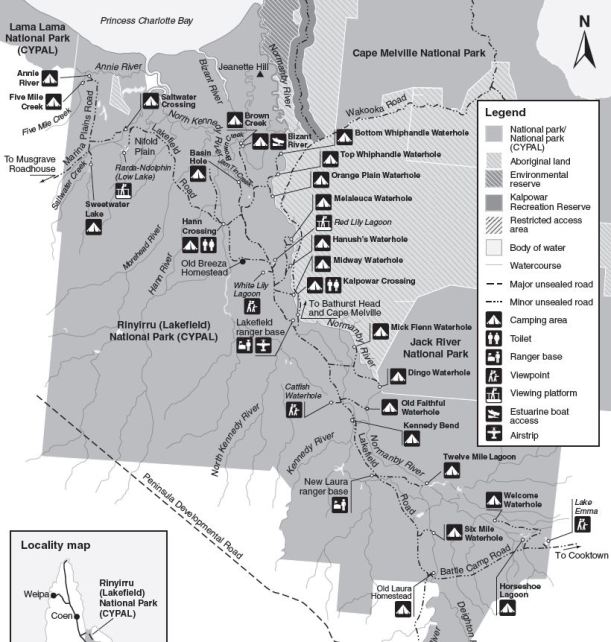
After breakfast, we went back to the Ranger Station to extend our stay here. Really like this campground, and there seems to be lots to explore in the Park. We registered for a total of four nights here and four at Hann Crossing, which is further north than here. They allocated us Site 12 there. There is a policy that tents can only stay in one place at Kalpowar for five days, so as to give the grass a chance to recover a bit. We figure that, with the time here and then at Hann Crossing, we will have enough time to explore the National Park well, and also to recover between moves.

07-08-1998 Lakefield National Park.JPG

Lakefield National Park.

We only felt like a small outing today, so drove to Mick Feinn Waterhole, on the Normanby River, upstream from Kalpowar. Spent some time here, bird watching. We found some Sarus cranes – like brolgas but with a different head marking.

07-06-1998 02 Sarus Cranes Kalpowar.jpg

Sarus cranes at Mick Feinn Waterhole

07-06-1998 04 mick finn whole tk.jpg

Crossing a small gully on the track to Mick Feinn Waterhole

07-06-1998 03 Mick Finn waterhole tk and line on trees.jpg

Typical Lakefield National Park country near Mick Feinn Waterhole.There is what appears to be a flood line mark across the trees.

Got back to camp for a late lunch.
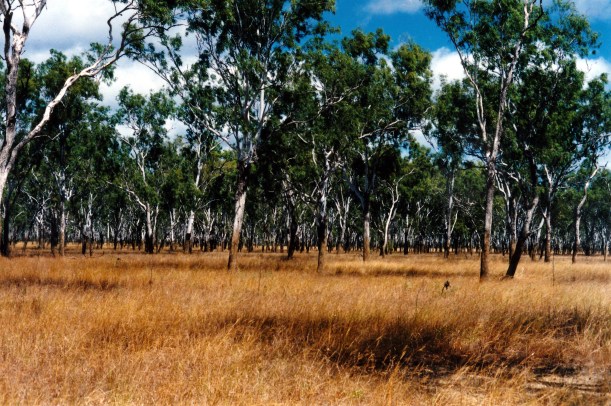
Walked around the camp area and along the river, for a while.
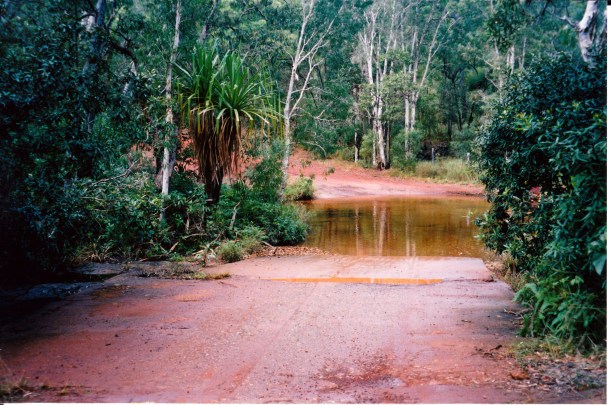
The campground has remained almost full through today.

Tea was steak, fries and salad. Now that I am using the gas camp stove, am limited to two burners, so meals have to fit that parameter.

Used the radphone to call K – he confirmed that he had received the phone message we left before we left Cooktown, that he is to send mail to Weipa, and he said he would do so. The contact faded out after a while.

Another early night – tent camping away from electricity tends to encourage this


Leave a comment

1998 Travels July 5

SUNDAY 5 JULY   COOKTOWN TO KALPOWAR CROSSING   184kms

It took us two hours to pack up the camp, this morning!

It was hard on John’s leg – he did too much of the heavy lifting and bending. He wanted to protect my back, but he is also not good at standing by while someone else does the work. He expressed some doubts about continuing on, but we decided not to change our minds at this stage. Surprisingly, his leg eased somewhat with the driving, despite a heap of gear work. He let me do more of the heavy stuff when we set up camp again in the afternoon, though.

On the way out of Cooktown, we got diesel – 79cpl. It is a while since we have paid that much, but I suspect it will only get worse, further up the Cape.

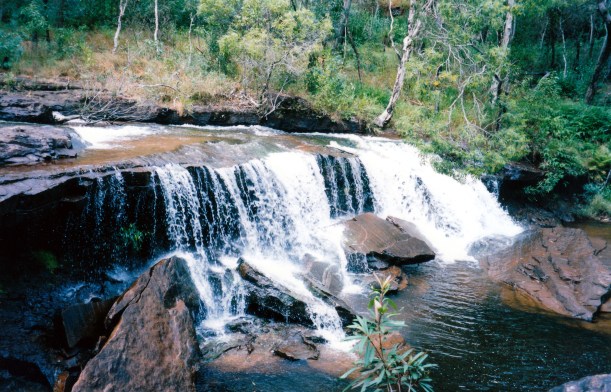
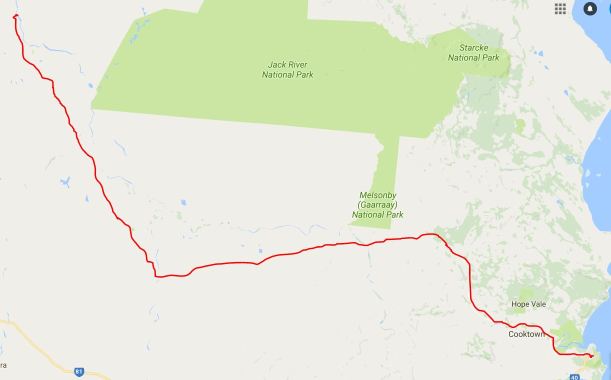
We took the road out of Cooktown that goes along the Endeavour River, crossing it on a bridge, then passing the airstrip. There was a mix of scrub and farmed country. We passed the Endeavour Falls Caravan Park, some 30kms from town. We’d moved onto dirt road, and then came to our first creek ford for this expedition – but not the last. It was by Isabella Falls – a low cascade – and we parked and went to look at these.

07-05-1998 01 Battlecamp rd first ford.jpg

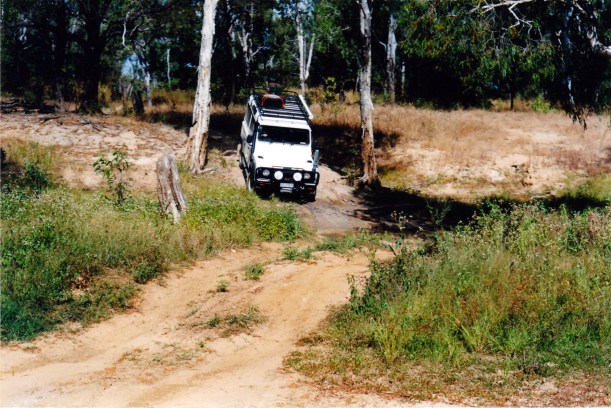
The first water crossing of the Cape trip – on the Battlecamp Road

07-05-1998 02 Isabella Falls Battlecamp Rd.jpg

Isabella Falls

Only a few kms beyond the falls we were into a patch of rainforest, and then climbing up into some range country, where the road was bendy. This lasted until the Normanby River ford, some 65kms from Cooktown.

Overall, the Battlecamp road was not too bad. There were some corrugated areas and some shallow sandy patches. There were some gates to open and close, but there were a couple of vehicles close behind us, so they got to close them!

Most of the way was through the savanna type wooded grasslands – quite tall, dry grass. For a while we ran parallel to the Battlecamp Range, which was a bit like some of the flatter parts of the Grampians, with shallow, cliff-like escarpments that seemed quite rugged. We could just glimpse parts in the distance.

The Battlecamp name comes from the 1870’s, when a group of people heading for the Palmer River goldfields were attacked by a large group of aborigines, somewhere along this route.

The Normanby River ford was shallow and easy. The Laura River was dry at the crossing, with a very wide, sandy (deep sand) bed – flattened by traffic, so it was not too hard if one followed the tracks of others. I would not want to try this crossing if there was much flow in it.

We were “ambushed” at the ford by a papaya fruit fly inspection point. We had heard there had been quarantine imposed up the Cape because of a fruit fly outbreak, but thought inspection would only be on the main road, so had not bothered to get the fruit we’d bought in Cooktown certified. So we declared our apples, pears, bananas and passionfruit. They allowed us to eat the bananas on the spot, then remove the cores of the apples and pears, and take the rest with us, plus the insides of the passionfruit. I forgot until later that we also had grapefruit, but don’t think they would have contained the problem bugs.

Ate our lunch at the checkpoint, chatting with the staff there. They recommended we camp at Kalpowar and told John to try detecting gold in the Mossman River, up from where it joins with the Laura River (but I could not later work out on the map where she meant!).

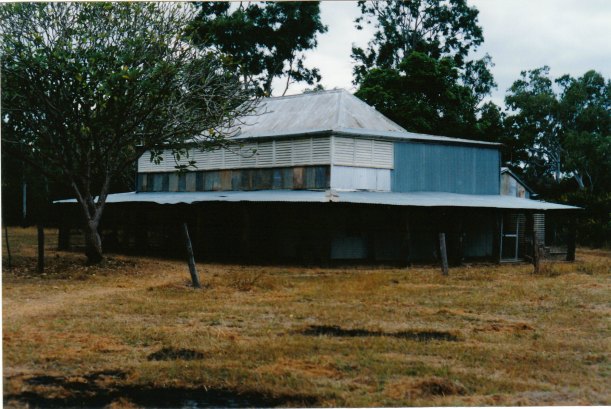
Just beyond the ford was the historic Old Laura Homestead, which we stopped to inspect. This dates from around 1900, and was built using termite resistant ironwood timber – thus it is still standing! It is a great example of the pioneer style architecture of these parts – using timber and corrugated iron, with shutters and wide verandas. As well as having to try to provide some comfort and cross ventilation for cooling, the early settlers felt they had to have their dwellings fortified against aboriginal attack.

07-05-1998 03 old laura.jpg

Old Laura Homestead – typical of Cape pioneer style

Just beyond Old Laura, the Battlecamp Road ended at the Lakefield Road, where we turned right. We intended to call in at the main Ranger Station, further on, but that was closed – being Sunday, I guess. So we continued on to the Ranger Station at the old Lakefield Homestead, crossing an increasing number of little dry creek beds.

At Lakefield, we were told that the only vacant site left was Number 10, Kalpowar, so we booked that – but for two nights only. We want to do some exploring of the Lakefield National Park, but thought Number 10 might not be a good site, and we might be able to change later. But it turned out to be lovely – a huge grassed area on which to put the tent, high on a bluff overlooking the Normanby River and the Kalpowar Crossing, where a rough track goes across the river to Kalpowar Homestead and on towards the coast.

We had a big area, even though there were neighbours on both sides. It was much better than the commercial site we’d left this morning, and only $7 a night! Behind where we put the tent there is quite a thicket of scrubby trees, vines and shrubs.

Our site has a fireplace, too, and there is a tap not far away. There is an amenities block with flushing toilets and even a shower – cold – but we were to find this refreshing, after the initial shock.

We set up camp, with the big tent, without rushing it, then relaxed over tea of cold chicken – the last of it. I had to stew the peeled apples and pears.

Found that, at night, we could hear the water rushing over little rapids in the river, quite clearly – wonderful. We are very happy!

07-05-1998 cooktown to kalpowar.JPG