This Adventurous Age

Adventures travelling and working around Australia.


2 Comments

2019 Life and Travels May (3)

MAY 2019 (3)     THE QUARTZ KING OF BENDIGO

George Lansell (1823-1906) and his two brothers were originally English tradesmen immigrants to SA, in 1853. The following year, they walked to the Bendigo goldfields, setting up as butchers, soap and candle makers.

The early alluvial gold mining of the Bendigo fields was changing to shaft mining, digging down to gold bearing reefs. For this, capital was needed and thus a multitude of small mining companies formed, mined for a time, most then failing, with their investors losing their money. But enough found gold and became profitable, to provide hope and encouragement.

George was soon persuaded to begin investing in the newly forming mining companies, from 1855. His first investments failed, he lost money, and refocused on his original businesses.

In 1865 George re-entered mining and with substantial investment was able to dictate the mining practices of his companies. His approach, of mining ever deeper than had been reached before, was so successful that he became known as the Quartz King of Bendigo. He soon became a millionaire. For a time, he may have been the richest man in the world.

In 1871 Lansell purchased the Ballerstedt mines, equipment, machinery and mansion from the now  deceased Christopher’s son, for 30,000 pounds. Although this was a large sum for the times, it demonstrated Lansell’s sound judgement: under his direction, the 180 Mine was extended down to over 3000 feet, becoming the deepest mine in the southern hemisphere at the time. By 1889, it was estimated that Ballerstadt and Lansell, over the time of the mine’s operation, had taken out at least a million pounds worth of gold from it.

By 1872, aged 49, George married, but the heirs for his growing fortune that he hoped for, did not eventuate, which was a major disappointment by the time his wife died a few years later.

George also diversified into other investments. In the 1870’s, for instance, he bought land in Melbourne, around what had been the temporary Government House (pending the building of the permanent one). He subdivided this land, in what became Toorak, naming Lansell Road and St Georges Road. He maintained a Melbourne residence in the area, though his main home was in Bendigo.

Lansell had become famous in Bendigo for encouraging and supporting the gold mining industry and its miners, but by 1880 was unhappy and disillusioned. He felt sentiment in Bendigo had turned against him as mining  fluctuated, and as a new widower, returned to England and settled in London, where he married for a second time.

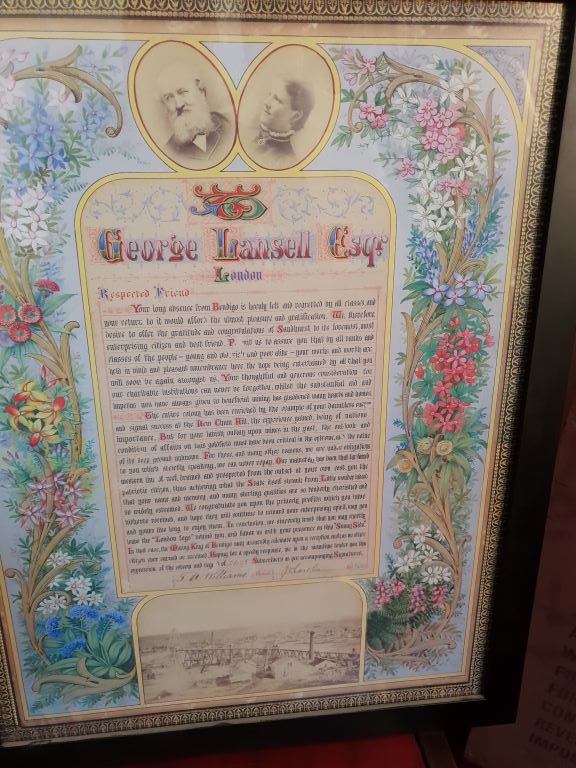
Bendigo’s fortunes had languished in the 1880’s. Many citizens came to associate this with Lansell’s departure. In 1887 a petition was prepared, in the form of an illuminated letter, asking him to return and restore the good times for the city.

Letter begging Lansell to return to Bendigo

Thus, he returned, with wife and, by now, three young children, as well as various members of his wife’s family. A further three Lansell children were born after the family returned to Bendigo.

Eventually, he was director of 38 mining companies, and was said to have links with every gold mine in Bendigo.

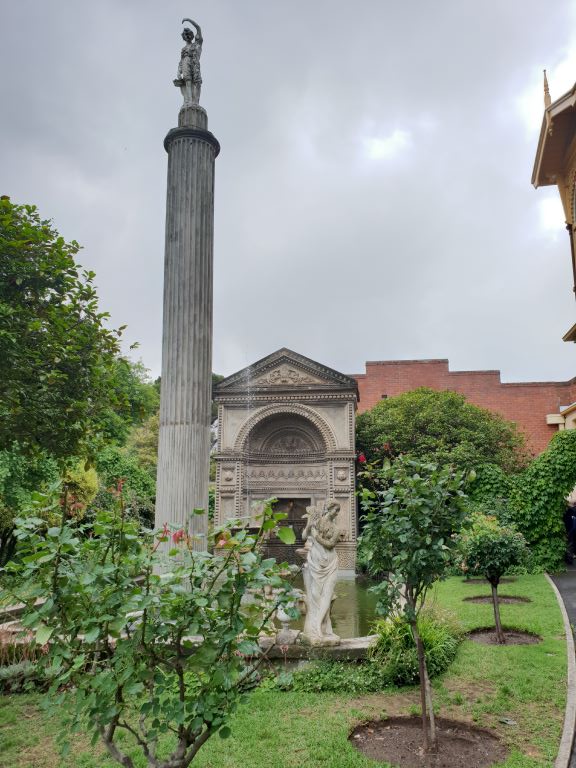
George Lansell travelled extensively, from the 1870’s, and extended his Fortuna Villa residence greatly, embellishing it as his fancy was inspired by his travels. Likewise it was filled with unusual items acquired on those travels. The surrounds did not miss out, being extensively landscaped and developed with features like ornamental lakes, a classical fountain, enclosed Roman style baths.

Tailings heaps from 180 Mine turned into landscaped gardens

During our tour of Fortuna, we were told that George bought a Rolls Royce motor car, in the early years of motoring. However, his first excursion in this terrified him so much that he never went out in it again.

Although pressured to do so, George Lansell never attempted to enter public life, such as becoming a member of Parliament, although one of his sons later did.

Statue of George Lansell in central Bendigo

George died in 1906. A statue commemorating his life and contributions to Bendigo was put up in 1908, near what is the modern day Visitor Centre in Pall Mall – the main street through the centre of the town.

Edith Lansell remained at Fortuna until her death in 1933.


3 Comments

2019 Travels and Life May 2019 (2)

MAY 2019 (2)   RETURN TO FORTUNA VILLA

Last year, for my birthday, daughter took M and me on one of the monthly tour and high tea events held at Fortuna Villa. I hadn’t previously known of this place but found both the history and the establishment fascinating. So much so, that a return visit was organized as a Mothers Day present. John was included, this time, as I thought he too would find the house, with its superb craftsmanship, of great interest. M made another visit from Melbourne for the occasion.

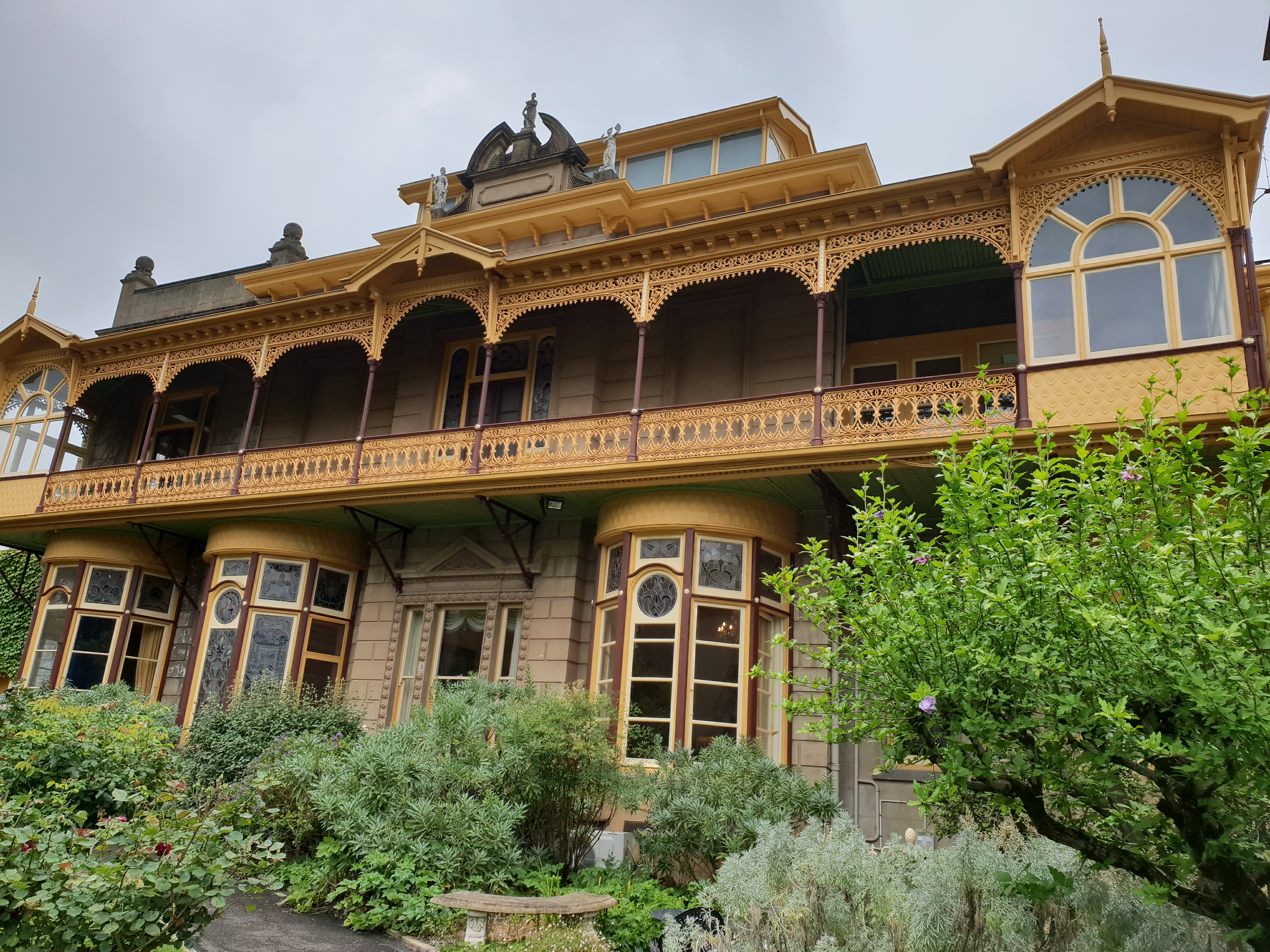
The Villa with the Roman baths style enclosed pool to right

Once again, we feasted on the lavish high morning tea: little sandwiches, scones, pastries, cakes and wine. Somewhat decadent before midday! The guided tour took us through the significant features – so many of these – of the house and surrounding grounds.

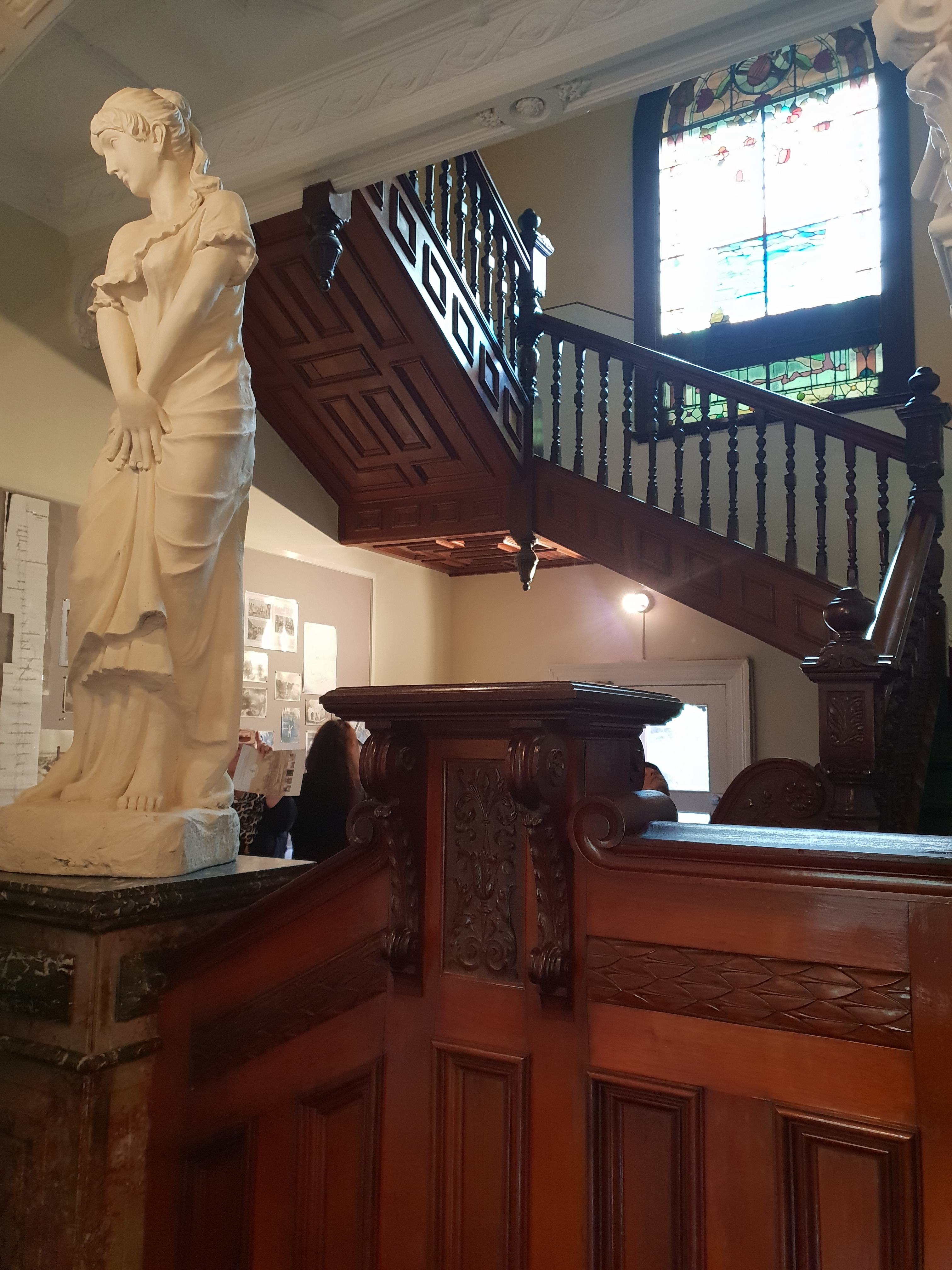
Carved wooden staircases

In parts, we were given some time to wander sections of the house. The tour was completed with more wine and snacks – and a browse of the gift shop.

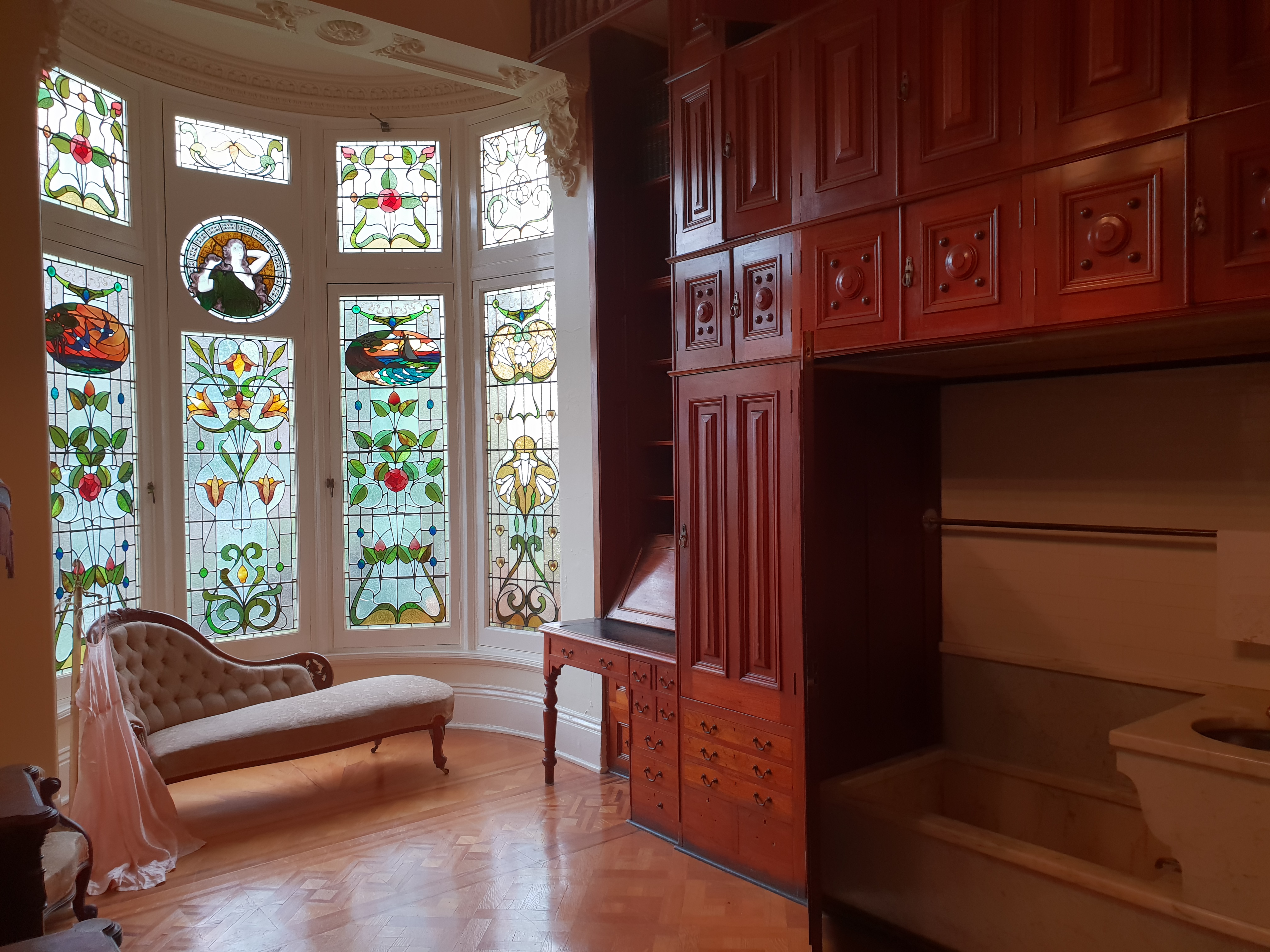
A bedroom, with bath, and brilliant stained glass windows

There is much that is quite unique about this place. It mirrors the – at times incredible – history of Bendigo.

Outlook over gardens – once an area of mines

The original, fairly modest dwelling on the site was built by successful miner Christopher Ballerstedt from about 1855 and extended as his fortunes grew. It was on the New Chum Reef, to become so important as deep lead mining replaced alluvial panning for gold.

Fortuna Villa

In the 1870’s Fortuna Villa was bought by George Lansell (worthy of a later entry in his own right). He extended the home, landscaped the gardens, adding unusual and unique features to both. At the same time, the associated rich 180 Mine continued operation near the house, with mining structures being essentially outbuildings of the residence. The tour took us through a tunnel that had been built to move gold securely through to the stables, for carriage away.

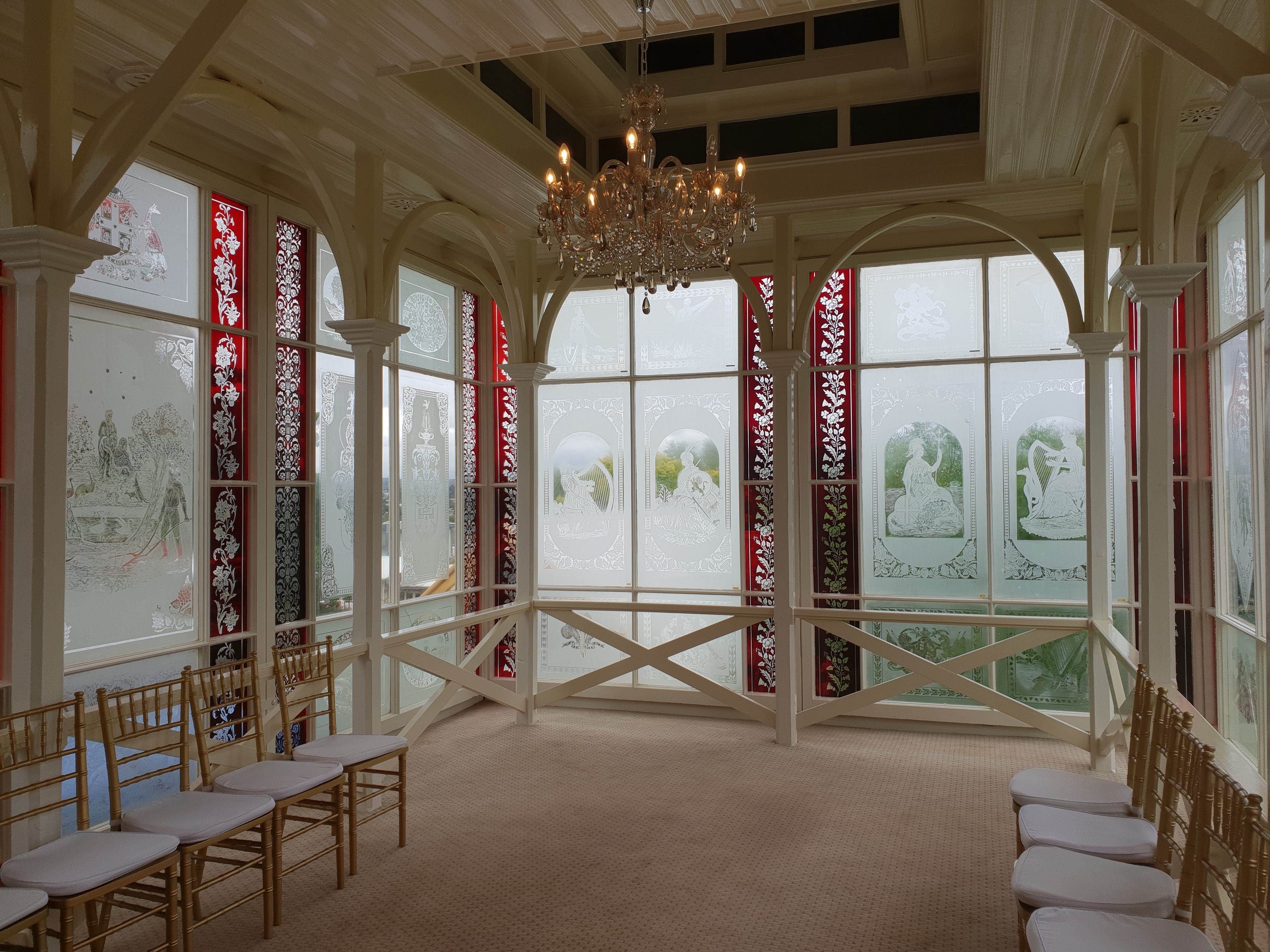
In the Conservatory… again, incredible stained glass features

After Lansell’s death in 1916, his widow remained resident until she died in 1933. In that post-Depression period, demand for ornate and lavish mansions on large grounds in a country town was non-existent and so the estate was unable to sell Fortuna.

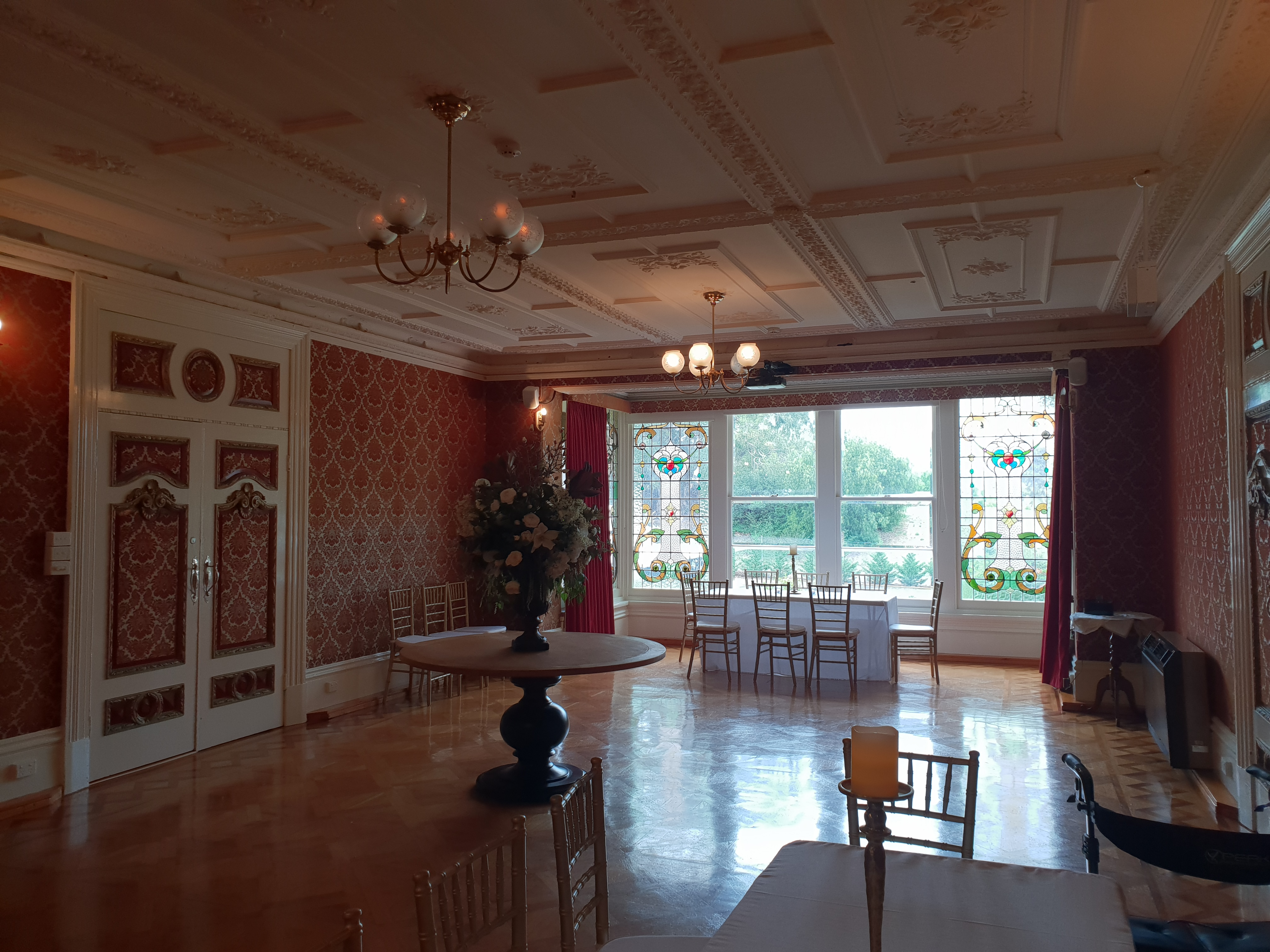
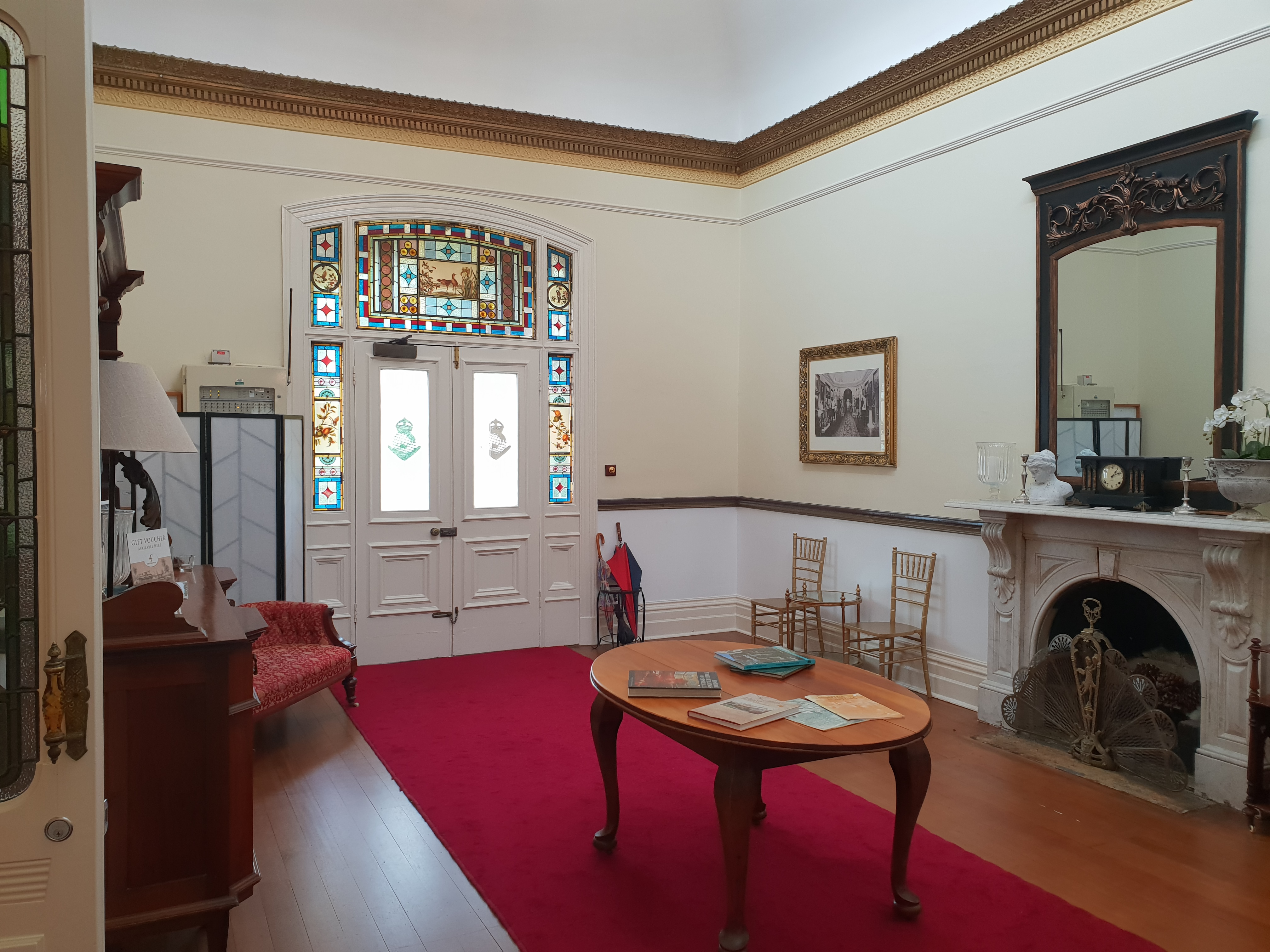
A typical ornate interior

The villa came close to being demolished, only being “saved” when bought by the Defense Department in 1942 to become the base for its Cartography unit. Thus it remained until 2008.

Reinforced floor held map printing machinery

Surplus to Defense requirements, on the market again, the Villa was bought by private owners in 2014 and they commenced its new incarnation as  private residence and function centre, with some accommodation in refurbished rooms, with plans to develop extra hotel style accommodation and function rooms on the grounds. The regular tour and high tea events began.

The new owners came up with plans to build a stylish townhouse/apartment style complex on the elevated western side of the grounds, beyond the ornamental lake. These would be sold to private purchasers. On our second tour, we viewed the plans for these – some of which would have good views from their elevated two storeys. But if the target market was an older age group, lifts would definitely be needed, I thought. It seemed the sale price for each residence would be around the million dollar mark.

Earthworks commenced on planned villa development site

Works commenced on the site designated for this development, but after initial clearing and stabilizations works, seemed to stall. No doubt, Covid played a role in that. As I write this, in mid 2024, nothing further has happened and the area sits as a visual eyesore.

Stalled works. Great views from this site.

Instead, development focus has switched to the eastern side of the grounds, to an area that was occupied by temporary Defense Department buildings. These have been demolished. It seems that this portion of land must have been sold to a development company. Some twenty single level three and four bedroom home units are to be built, for sale to the public. The plans, on paper, look very attractive. A friend of ours has bought a unit, off the plan, and expects to move in during the first part of 2025. Work is well underway.

New development works, with Fortuna Villa entrance and manor to left


1 Comment

2019 Travels and life May (1)

MAY 2019 (1)   BENDIGO GOLD

The first gold rushes of the Australian colonies began in May of 1851 with the finding of gold at Ophir in NSW. With active encouragement from government  (an early form of FOMO?) Victoria followed suit in July of that year, with gold finds at Clunes, closely followed by ones near Ballarat.

In November of 1851, the first alluvial gold was found in the Bendigo Creek. By mid-1852, there were some 20,000 miners seeking their fortunes in the area.

Although the Eureka Stockade Rebellion of 1854 ensured the focus of our gold history has been on Ballarat, Bendigo was in fact a much more significant mining area. Between 1851 and 1954, on today’s prices, the Bendigo mines yielded about $65 billion worth of gold. Given the current parlous state of the Victorian economy there must have been some pretty inept financial planning over the years…

The NW-SE alignment of reefs is evident

By 1855, the more easily found near-surface alluvial gold was petering out. Mining shifted underground, following rich quartz reefs. Of necessity, the individual alluvial miners were mostly replaced by companies that could afford the necessary outlay for the equipment needed.

The mined 37 parallel Bendigo reefs extended under an area roughly 16kms, in a NW-SE direction by 4kms across. Over 5000 shafts were sunk across that area. Bendigo came to have the largest concentration of deep shafts in the world at the time, with the deepest over 1km down.

Once were mine locations – now part of Bendigo urban area

Chinese miners were among the first rushes to the area that would become Bendigo, flocking to Dai Gum San, as they termed it – Big Gold Mountain.

By the 1880’s Bendigo was regarded as the richest city in the world, due to the amount of gold that had been found here. The grand buildings of the new city reflected this wealth.

The last major mine ceased operation in 1954 and it seemed that the golden days of the Bendigo area were done. But the gold was not exhausted. Improving mining and exploration technology and the rising price of gold led to the revival of large scale mining – the Fosterville mine to the NE of the city – from 2006.

Recently there has been a surge in exploration for gold in the area between Bendigo and the Murray valley. For decades, it had been assumed that the rich Bendigo reefs petered out to the north. Now it has been found that some of those reefs continued, but deeper and buried under the sediments of the riverine plains.

Visitors to modern Bendigo can explore plenty of remnants and relics of the historic gold mining. The Central Deborah Mine, on the edge of the modern CBD, preserves an historic mine largely as it was, both the associated surface structures as well as the mine itself. One can, if so inclined, take a tour down this mine, to a depth of more than 200 metres. It is now also a terminus for the historic tram tour of Bendigo.

Central Deborah mine today

Less formally, (and on top of the ground) there are many locations around the city and surrounding area that signal its history. One becomes accustomed to the appearance of an old poppet head glimpsed between the modern industrial buildings of today’s Deborah Triangle, or behind a row of suburban houses; to the many areas of undeveloped land scattered through the modern suburbs, where development simply jumped areas of mining or mullock heaps. The occasional large mullock hill has been sprayed a green colour that is never found in nature, to denote heavily contaminated soil.

Spot the poppet head – Deborah Triangle area

The legacy lives on, too, in place names that evoke the way the city developed. Specimen Hill. Golden Gully. Long Gully. California Gully, Sailors Gully, Golden Square, Jackass Flat.


Leave a comment

APRIL – MAY 2019

APRIL-MAY 2019     OLIVES AND EASTER…

A small rather dull looking tree tucked away in the side garden revealed itself to be an olive tree. A fruiting olive tree… By April it was carrying a surprising quantity of ripe, green and black fruit. Whilst it would not have been our choice to grow olives, it was impossible to let the bounty go to waste. We do like olives and eat same quite regularly, as part of an array of nibbles for Happy Hour drinks with the neighbours, in salads, and in meals like a favourite tuna, olive and caper sauce for pasta.

However, research showed that it was not just a matter of picking the olives and bottling them for later. Raw olives are, basically, so bitter as to be inedible without treatment, it seemed. So we embarked on a new experience…

Much Googling ensued…

The olives were duly picked, some black, some still green, for the sake of experimentation. We sat down at the table to prick each one several times with the sharp point of a knife. Tedious and time consuming.

Processing olives

Couey dog learned a valuable life lesson from the process – not all things that fall from tables are good things. She pounced on an olive that John dropped and tried to eat it. Spat it out again. Spent the next half hour pulling disgusted faces and sulking because we laughed at her.

We put the pricked fruit into bottles, filled these with cold water and over the next three weeks, drained and changed the water each day. When a sample didn’t quite set the teeth on edge, I put a brine solution into the jars and sealed them. A couple of months later, the result was actually edible olives. I was quite surprised…

In the subsequent year, I made the processing easier by not bothering to prick them at all. Put them into the largest plastic container/s I had, for the 2-3 week soaking process. It made the daily draining and changing of the water much easier than fiddling with lots of jars. They only went into these when ready to brine. I found that pouring a cm or so of olive oil on top of each jar of brine and olives prevented deterioration of the fruit at the top.

Our home grown and processed olives are every bit as good as shop-bought ones. The tree is so prolific that we now give much of the crop away – but recipients have to be prepared to do the processing themselves!

My Melbourne grandson came to stay with us for a few days before Easter. An adventure for the twelve year old was to travel by train, by himself, from Melbourne to Bendigo. His dad took him to Southern Cross, to the train, and we collected him at our end. He was so proud of himself.

John took the opportunity to get the boy doing more woodwork, as he had shown an interest in this when we lived nearby. During the shed organizing process of a few months ago, John had decided to sell his old woodworking bench and this had found its way down to the outdoor living area, in preparation for sale. To date, no interest had been shown to his ads, so the bench still sat there, being an eyesore. Now, it provided a place for grandson’s woodworking. Not what I had in mind for such a lovely area!

Concentration…

On Easter Sunday, son, wife and my grand daughter came for a day trip, to collect the boy. The Bendigo family came to a BBQ lunch at our place. The wonderful, large, patio was put to good social use yet again.

My daughter-in-law organized an Easter Egg hunt for the four kids. We decided this should be in an area of the nearby bushland, rather than have my young garden subjected to enthusiastic foraging. She supplied a very generous quantity of little eggs and the hunt lasted quite some time.

Ready, set…

Whilst we don’t see the Melbourne part of the family as regularly as we did when we lived there, that is a cost of the otherwise successful relocation. Occasions like this go some of the way towards compensating.


1 Comment

March 2019 (2)

MARCH 2019 (2)   A SEVERE TROPICAL CYCLONE…

This month we were again to witness another tropical cyclone that, indirectly, touched us.

Over the years of our adventuring, there had been occasions when the cyclones that can impact Australia between about October and April  had a greater impact on us than being just another news item.

The Adels Grove/Lawn Hill area of NW Qld, where we travelled and worked 2000-2006 is a region that is regularly impacted, either from those that come in directly over the Gulf of Carpentaria, or arrive over the Qld coast to the east, and then blow themselves out as tropical lows, bringing much rainfall to the state’s northwest. In 2000, we aborted our first planned visit to Adels Grove due to wet roads that hadn’t had a chance to dry out after such an event.

In March 2006 a tropical low pressure system – the precursor to cyclone development – hovered over the  Gulf coast for several days and dumped much rain across the northern NT. The beautiful Pungalina, where we had worked and lived for six months of the previous year, was heavily affected, when the Calvert River broke its banks and inundated the home area, machinery shed and surrounding country to a depth of more than a metre.  Much damage…

Calvert River near the home area at Pungalina. Hard to imagine this in a flood as deep as it was in 2006…

In 2006 we changed plans to work several months at Adels following a very slow start to the tourist season due to Cyclone Larry and its aftermath. Whilst travelling across the Barkly region of the NT, on the way to new jobs at Litchfield, we unwittingly got caught in the tail end of Cyclone Monica and spent an uncomfortable night bunkered down amid howling winds and torrential rain.

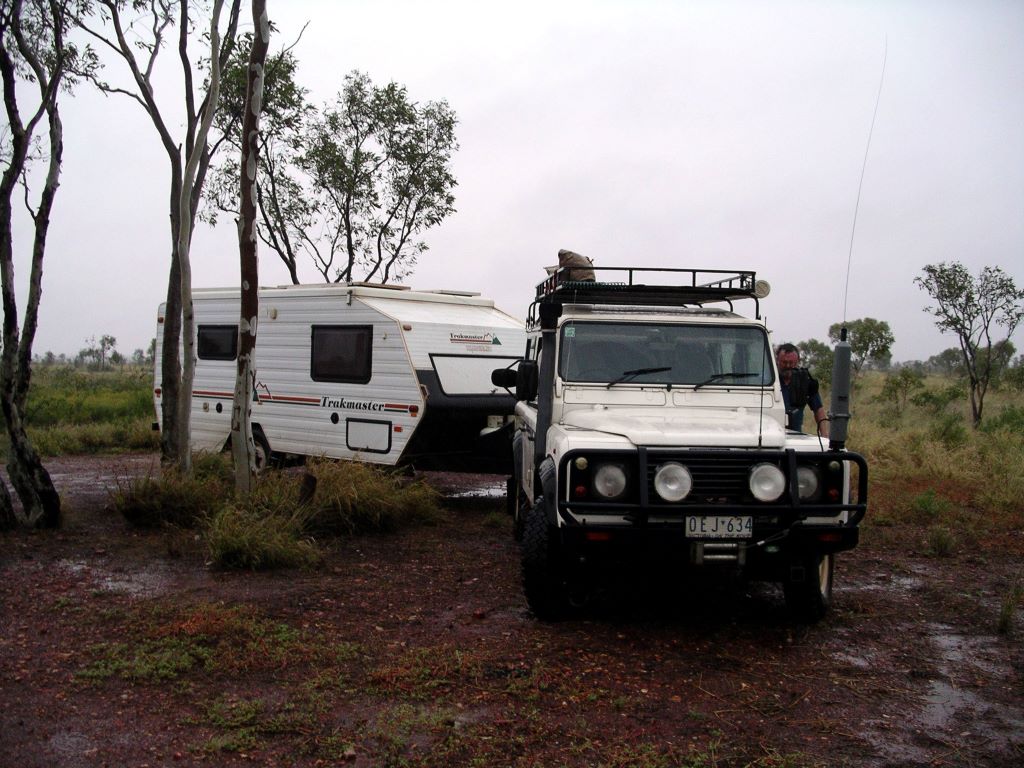
Just a tropical low…..by the Barkly Highway

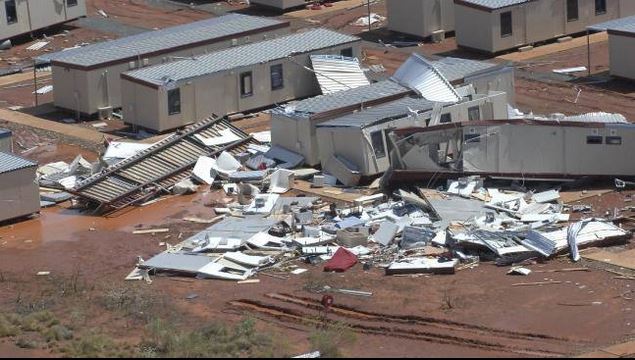
Category 5 Tropical Cyclone George that crossed the Pilbara (WA) coast in March 2007, passed over the construction camps where we’d worked from September 2006 until February 2007, causing fatalities and massive damage to Rail Village 1. We missed being there by some three weeks, for which we remain forever grateful.

Cyclone damage at Rail Village 1

February 2011 saw us back in Darwin, crossing off a couple of items from John’s Bucket List: travelling on the Ghan train, and experiencing the Wet Season. We overdid the latter somewhat, and were confined to our accommodation for a couple of windy, wild and wet days when Cyclone Carlos passed through town. This was only a Category 1 cyclone but quite big enough for us, thank you. So much rain…

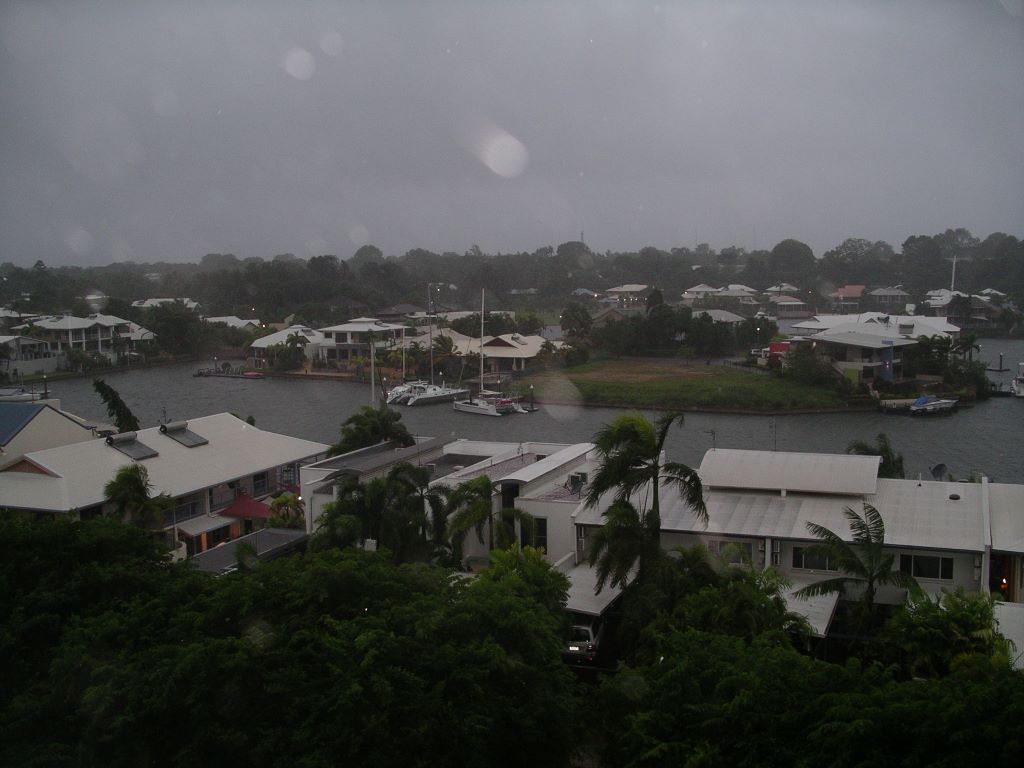
Watching the cyclone from our apartment in Darwin…

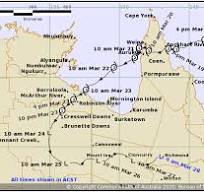
Pungalina, so dear to us, was to be hammered again, in March of 2019. This cyclone, named Trevor, really illustrated the unpredictability and sheer bloody mindedness of such systems. It formed on the 11th, way out in the Coral Sea, off PNG. After a week of meandering SW across that Sea,on 19th,  it hit Lockhart River, on Cape York, as a Category 3, bringing strong winds and much rain. By the time it reached Weipa, on the other side of the Cape, (21st) it had declined to a Category 1. Now over water again – the Gulf of Carpentaria – it began to intensify, decided to turn to the SW and made a beeline for the Pungalina area. By the time it crossed the coast there, on 23rd, it had become a Category 4. Over land, it again declined quickly in wind intensity, however bringing much rain to the Barkly region of the NT as it continued SW. But it didn’t want to just continue that way and exhaust itself over the NT interior, so on 24th, it unexpectedly swung to the east. By 26th it was bringing heavy rain to Mt Isa and Cloncurry and continued to do so over areas of north-central Qld over the next couple of days, eventually becoming just another rain bearing low pressure system.

Cyclone Trevor (BOM)

Due to uncertainty about its eventual path, some vulnerable communities around the Gulf, such as Groote Eylandt and Borroloola had largely been evacuated – some 2,500 people in all. The RAAF had been called in to assist with this.

Trevor’s wind gusts reached 250kmh. Associated storm surges in places along the Gulf coast reached almost to 2 metres.

Pungalina had in 2007, been purchased by the Australian Wildlife Conservancy, to add to its portfolio of special and unique environments, to be responsibly managed to conserve their most valuable features. AWC’s research teams had already found some new species of fauna, as well as rare and threatened ones, here.

Cyclone Trevor had obviously provided the AWC resident managers with an “interesting” couple of days. At least this system had been fast moving, so although there were gale force winds and heavy rain, there had not been floods like those of 2006, when the tropical low stalled over the area, deluging it for days.

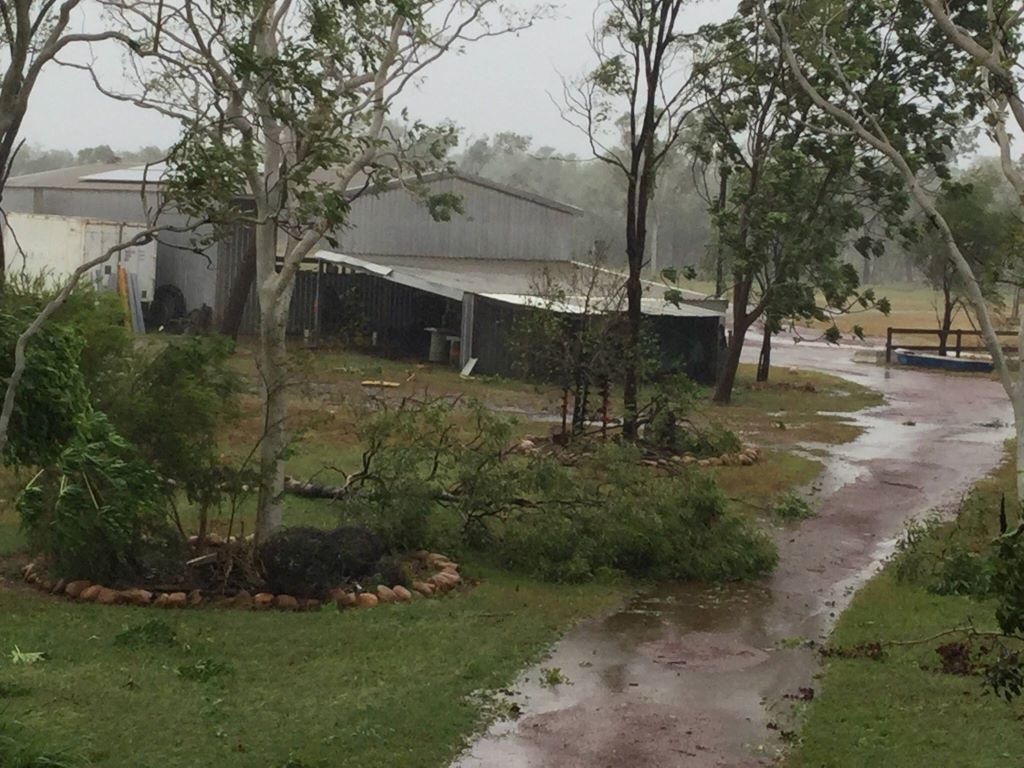
This photo was posted, taken during the cyclone…

Cyclone Trevor at Pungalina…This machinery shed and yard had been at least a metre under water in 2006.


Leave a comment

March 2019

MARCH 2019

Garden watering continued unabated. When would we get some decent rain?

However, the warm and dry summer weather had resulted in a bumper harvest for John’s first Bendigo tomato crop.

From this…

Every couple of days there was another basket full. We ate chilled tomato soup, tomato salads of various descriptions and complexity. I froze containers of tomato soup and bags of chopped tomatoes for later use. And still they came…. John does have a tendency to get carried away in front of nursery plant displays…

Back in October, there had been no obvious places in the kitchen area to put the two freezers that moved here with us: one upright, one chest. My solution then had been by a power point in the garage. By early summer it had become clear that the less insulated garage was going to be too hot a place to keep a working freezer or two. The upright was moved to the laundry.

I’d had hopes that we might dispense with the chest freezer altogether. The scale of the tomato harvest, though, saw it pressed back into use. Although I didn’t like the visual of it residing in the dining part of our big living area, couldn’t see another option. We got used to it.

The apricot tree, that was here when we moved in, presented us with a surprisingly large crop of fruit. Large, plump, totally delicious apricots. Of course, they all ripened at once, so batches of cooked apricots found their way to a freezer.

We looked forward to the crop from the peach tree – a larger tree than the surprisingly abundant apricot. But – much disappointment, and a new encounter… Fruit fly. We had not had these pests in our plum and fig trees in Melbourne. The peaches ripened, but when we started to pick them, we found that, despite a normal outward appearance, inside was rot – and maggots. Not a single untouched peach could be found. We picked the whole lot, put them in black garbage bags and left these sitting in the sun for a week, before consigning the lot to the rubbish collection.

Research was needed on how to prevent fruit fly infestation next season.

The tomatoes kept coming…

…to this


Leave a comment

2019 Life and Travels February (2)

FEBRUARY 2019   2

We continued regular sampling of local eateries, trying to choose a new place once a month, whilst still returning to those that were fast becoming favourites.

Friend M returned this month for another week long visit.

We decided to try out an hotel not visited before, but which I had read good reviews about. This venue was fairly centrally located in an older, hillier,  part of town. Alas, there was no parking area dedicated to the hotel and we found ourselves cruising the nearby streets, which seemed to go at all angles, looking for a place to squeeze in the car, that was also not too far to walk.

Judging by some of the substantial older homes lining the streets here, this had been an area favoured by the more affluent, back in the golden era. In the strange juxtaposition that one finds in Bendigo, less than a block away had been a major gold mine – the Hustlers Reef Mine. Begun in 1865 and operational until 1921, this mine was dug to a kilometre deep, and its workings  extended outwards for three kilometres under Bendigo. There are still some twenty kilometres of its tunnels down there – and this is just one of the many mines that was located along the Bendigo reefs.

Bendigo might be known as the City in the Forest, but it is also the city sitting on top of an extensive  honeycomb of tunnels and mine workings, for the most part inadequately mapped. This is not a concept that I like to examine too closely

These days, the Hustlers Reef mine site features an interesting heritage walk and is a living memorial to the many miners who died in mining accidents in the Bendigo mines – some 2000.

A few days earlier, I had phoned and made dinner bookings – more as a courtesy thought, at the time, than from expecting the place to be crowded out. How wrong was I? It was absolutely packed. The tables were closely clustered together and the noise level was high. I was amazed. The reviews had been good, but not to warrant these crowds. Then the penny dropped – it was 14 February – bloody St Valentine’s Day! Obviously an occasion strongly celebrated around here.

The food – when it eventually came – was enjoyable enough. It did seem that the kitchen was overwhelmed by the numbers, though, as it took well over an hour from when we ordered to when we got the first of our meals. They didn’t come together. John’s was the last to arrive, by which time I’d finished mine – and I’m a slow eater. I was less than impressed and doubted whether we would return.

In the gold mining period of the last part of the 1800’s, there were over 90 licensed premises in and around Bendigo. Today, about 40 remain operating. If the traveller – or new resident – thinks there are a lot of pubs in Bendigo – there are! It certainly means one is spoiled for choice for great pub counter meals.
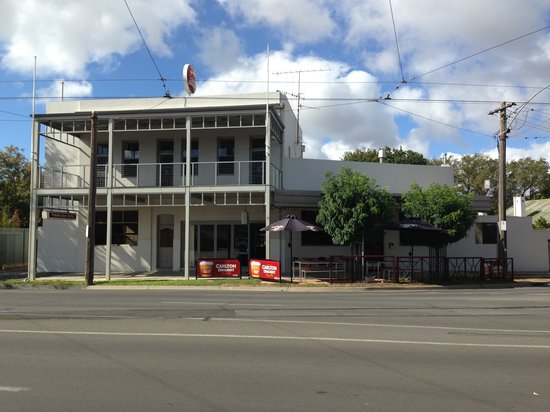
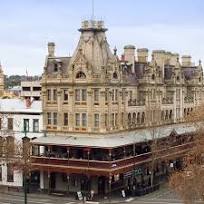
A grand old Bendigo hotel – the Shamrock

Maybe once a hotel…

One of the many hotels we have yet to try…

Note to self – never, ever, dine out on 14 Feb.


Leave a comment

2019 Life and Travels February (1)

FEBRUARY 2019  1

This month saw a momentous achievement…

When we bought our first and only caravan, back in 1997, we left almost straight away, on extended travel.

Once we started spending periods back at home again, a few years later, thoughts turned to making a better parking area for the van and an area at the front of our sloping block was levelled. The logical next step was to try to cover the van from the elements, but this proved impossible on that site. There were council regulations about the percentage of the block that could be covered, but the greatest impediment was the existence of gas and sewer pipes “somewhere just under there”. John was not prepared to experiment with digging holes for a roof support…  So, van and later Bus, remained uncovered.

At our new place, we had quickly worked out that an extension could be built to the front of the backyard shed, to house Bus. John had organized a firm to do this. They had taken care of the necessary permits – no problems. We had avoided what could have been an expensive glitch, by asking the man doing the measurements to double check that the roof pitch would accommodate the height of the Bus rooftop air con unit. Whoops….adjustments were made. That bloody aircon was more trouble than it was worth.

The extra roof area of the new structure had the added benefit that it would catch and channel more rainwater into our two backyard tanks. More “free” water for the garden.

February saw the completion of the “busport”. A grand and imposing structure for our old Coaster.

Bus was brought home from where it had been temporarily parked in the long grass at aunty’s place. I hoped it had no reptilian or rodent residents as a legacy…

Finally, Bus had a proper home.


1 Comment

2019 Life and Travels – January

2019   JANUARY

What seemed to be an excessively hot summer continued to keep us confined indoors for much of the daytime hours.

I rose early most days, in order to water the recently planted shrubs, plus the pots brought from our old home. With permanent water restrictions in place for the area, watering with sprinklers or fixed systems was confined to the hours between 6pm and 10am the next morning. Quite adequate times, I thought, and justifiable considering the city’s past water history and the fact that central Victoria, north of the Great Dividing Range is drier than the south. Bendigo’s average rainfall is 510mm, or 20 inches on the old scale, whereas in our previous outer eastern area of Melbourne averaged around 800 mm or 33 inches. Quite a marked difference.

From the 1850’s, the issue of supplying water to the goldfields’  growing population had been addressed in various ways, some of them advanced for the times. The Loddon and Campaspe Rivers, to the west and east of the growing town, were obvious water sources and pipeline systems were built. For a while, it could be argued that Bendigo was better supplied than parts of Melbourne.

As with most of the State, the Millennium Drought, from 1997-2009, severely strained the Bendigo water supply system, with the relevant water storages dropping to 4% capacity amid real fears that drinking water would run out altogether, the city had an extended period of Stage 4 water restrictions, meaning that the piped household supply could only be used for cooking, domestic cleaning and hygiene. No watering of gardens or lawns. Clearly, gardens suffered. An earlier photo of our new house, shows a row of Westringia bushes along the front garden, which no longer exist. I assume they were casualties of the big dry.

Front garden before the worst of the drought impact

Another legacy of those drought years has been the decline of grass lawns – on nature strips in the newer suburbs and in domestic gardens – and replacement with, mostly, gravel and stones. Makes much more sense in a semi-arid environment, in terms of water conservation, although it could be argued that grassed areas reduce temperatures. I’m happy to stick with the stone mulched surfaces, and plants lots of shrubbery to counter any heat sink effects.

Gravelled nature strips

John, of course, was very happy with our stone mulched surfaces – no grass to mow! In that respect, he had not really been thinking things through, before our move, and had duly included our two lawn mowers and the whipper snipper in the transferred belongings. Since then, the penny had dropped and this month he advertised and sold these totally redundant machines.

I was pleased to find out that a response to the big drought had been the completion of a water pipe line linking the Goulburn River system to the Bendigo water supply, providing greater water security for the time being.

So, no complaints from me about getting up early to ensure my watering was done.

When we inspected the new house, back in July, the various deciduous trees were, of course, bare. By the time we moved in, spring had well and truly arrived and along with it, a new crop of greenery on said trees. This included what turned out to be five moptop trees planted at the front. These were not a specimen I had encountered before, but seemed quite popular in these parts. Frankly, they are not an ornamental tree I would plant, for preference.

The moptop closest to the street seemed very tardy in putting out its new shoots. At first, not knowing anything about them, we thought this might be normal variation, but it eventually became obvious that it was deceased. We decided it should come out and be replaced – but not with a moptop.

John was confident he could manage the tree removal himself – after all, he had tackled bigger trees  at our old home, over the years. He was younger then, though! And had also been able to use the winch on the old Landrover in one lot of tree felling and root system removal. (Complete with very large European wasp nest, but that is another story. )

 John’s genius solution to loosening the dead tree was to set up a winch between the brick pillar containing the mailbox and the tree. The winch would be gradually tightened, and the tree would be pulled to one side and eventually pulled out. That was the theory… In practice, the moptop  proved the immovable object. The mailbox pillar separated from brick fence beside it and began to move. At that point, tree removal was abandoned for the time being…

Fine in theory…


1 Comment

2018 Travels December 26

DECEMBER 2018 (2)     PLAYING BIN LADY

Spring and the first part of summer, up here north of the Divide, had been hotter and drier than we were used to. I had been watering the garden daily, virtually since we arrived here. Xmas Day itself had been really hot. The family was definitely looking forward to their annual month long caravan holiday at coastal Narrawong, for which they would be leaving very early on the day after Xmas.

As just about all the extended Bendigo family of daughter’s partner made the annual pilgrimage to the coast, I had been co-opted to go around to their place every few days and water their plants in tubs and any other part of their place that looked like it needed water.

I was somewhat envious of them heading off from baking Bendigo. Had it not been for Couey, we could have taken Bus and joined them – although the area of the caravan park where they have a number of adjoining sites booked, from year to year, is unpowered, and John would not have liked being deprived of his nightly TV. But the lovely caravan park at Narrawong is not pet friendly, so not for us.

On 26/12, I had done my early morning garden water and was having a late breakfast when a phone call came from daughter. They had reached Ararat and stopped to refuel. At that point, they realized that neither of them had the envelope of saved-up cash that was to be their funds for the trip – a couple of thousand dollars. Panic ensued. They knew it hadn’t been in the customary place on the bench when they were checking last minute before departure. Each had assumed the other had it. So, there was the question of where it had gone.  I was asked to go round there and do a money hunt. Fortunately I held a spare key to the house.

So off I went. Did a visual check of the bench and table tops, in case. Nup. Next, I’d been directed to go through the laundry basket, in case it was in a pocket of clothes discarded after their final packup and hitch up of van. No envelopes in the dirty clothes…

Daughter thought the envelope might have been swept up in Xmas present wrapping paper, or in the general rubbish of the pre-Xmas preparation, so I was to check the bins, too.

So out I went, to the area beside the front driveway where the bins were stored. I tackled the recycling bin first, as perhaps the most likely – and certainly the least unpleasant. No joy.

That left the general rubbish and the green recycling bin. Given the prevailing heat wave conditions, and the fact that food remnants, including delights such as prawn shells, had been therein for a few days, less said the better! Sorting through bin contents upended onto a tarp I’d brought from home, in full view of anyone walking or driving past, did earn me some strange looks. I wondered if I actually looked desperate enough to be scavenging in bins!

In plain sight…

Had to text daughter that, despite my best efforts – for which she would owe me, big time – no envelope of cash was found. Perhaps they had packed it somewhere after all?

It remained a mystery for the duration of their holiday and for a couple of weeks after they returned home, late in January. Then partner found the missing envelope and cash – tucked away in a corner of the pantry cupboard. They could only assume it had been put there in a hurry, during the episode of the exploding soft drink, when the bench was awash.

So it all ended well – though it did take quite a while for the memory of those prawn shells to fade…