
THURSDAY 30 APRIL GILGANDRA TO CAMP BLACKMAN 135kms
I woke early, to another chilly morning.
Took my coffee, radio and diary writing materials over to the camp kitchen, where I could sit in the sun and listen to the ABC news without disturbing anyone.
We left the park about 10am, and drove back over the Castlereagh River bridge, into the town, to stock up on some supplies, given last night’s change of plans. Then, back across the river and northwards again.
The Newell Highway north of Gilgandra, had narrower road lanes, fewer passing lanes, and was hillier than further south. This meant greater potential for us to be having a tail back of trucks and other travellers – never pleasant. However, it was not too bad, and John did manage to pull right over in a couple of places, to let others through.
It was a very scenic section, almost park-like in places, with distant hills.
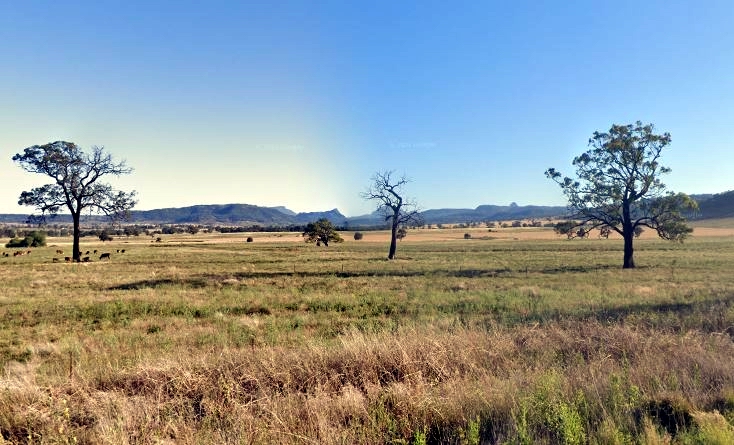
We had one coffee stop, at the Spire View Rest Area. With a name like that, I was expecting a great outlook, but it was not a stand out.
At the very helpful Visitor Centre in Coonabarabran, I bought a walks guide for the Warrumbungles, a map of the National Park, and postcards – of course.
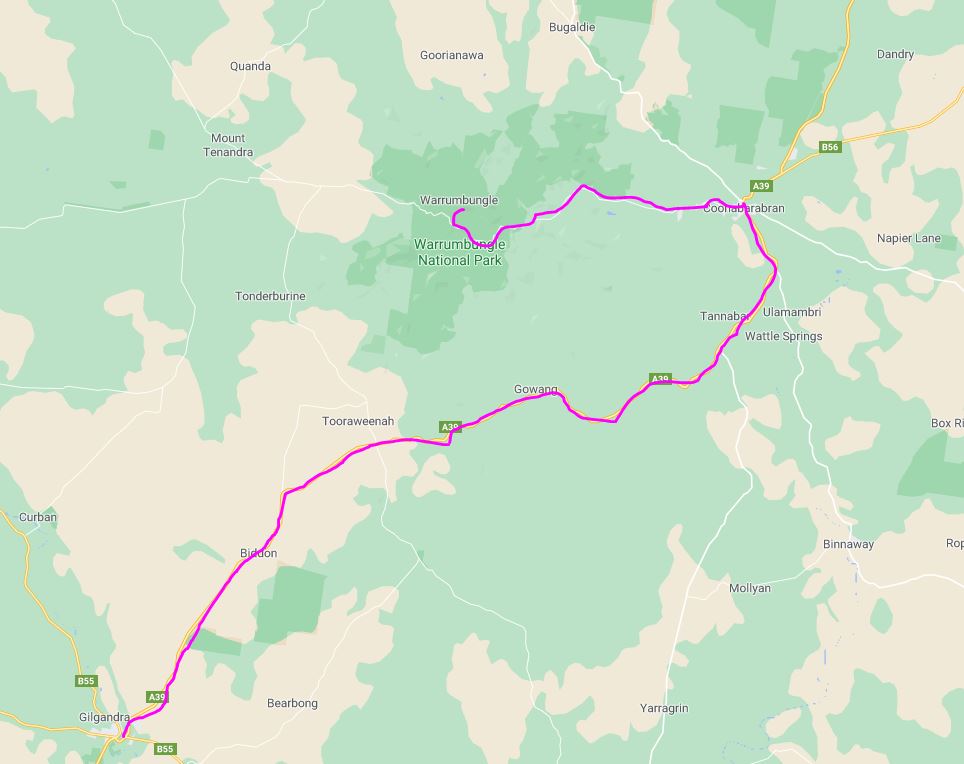
The Timor Road into the Warrumbungles was sealed, but narrow, winding, hilly. One steep uphill section had us down to first gear, and a downhill run saw us in low range. We had not travelled this road before – on our previous visit, we had used the “back” route, through Tooraweenah. It was more demanding for the driver than we had anticipated. But it was really lovely – farmland for much of the way, but always with the rugged, often conical mountains looming around every turn.
Passed the turn off to the Siding Spring – one of the world’s significant astronomical observatories. It was set up here after Canberra’s development caused there to be a lot of light in the sky at night. Out here, the skies are clear for much of the year and there is no light pollution.

Managed to find a place to pull off the road a bit, in order to collect some firewood before we reached the National Park. Having a roof rack with a mesh base made wood collection easy – just had to throw it up there and it would stay put. We did not need a great deal of wood as we tend to have small fires for some cooking and atmosphere, rather than the great, wasteful bonfires that some campers seem to need.
First stop in the Park was the Visitor Centre. It was modern and featured some interesting displays, but the staff member on duty came across as disinterested and unhelpful, fortunately not our usual experience in National Parks! She was an aberration.
This was not a cheap park, we found. We were pleasantly surprised to find there were powered sites to be had, but these cost $20 a night, plus a $7 a day park use fee – $27 a night in all. For that, apart from a place to park, and power, there was a central ablutions block that provided hot showers and flushing toilets. So, the fee was probably not too excessive.
As we drove into Camp Blackman, the camp area did not seem familiar. There had obviously been major changes since 1997. Initially, we came to a newly developed area for caravans: power posts, neatly laid out gravelled bays – quite close together, dividing beds with plantings that would, one day, provide some screening between sites. Not quite what we were seeking, in a National Park. Fortunately, John did not settle for that, and drove on further, before committing ourselves. We crossed a creek and came to an older section that was much more to our liking. Two large areas, amongst trees, along the creek, had two or three power posts each.
We set up in the further clearing, at some distance from the only other rig there, by a power pole and fireplace/BBQ. Some distance up a hill was a rota-loo toilet, clean and not very smelly, and closer than the main ablution block near the groomed area.

From our site, there were some views of the main peaks of the Park. It was very pleasant, we thought, and much nicer than the new area we’d first come to. A real bonus was the discovery that there were four bars on the mobile phone – therefore, we had internet too.
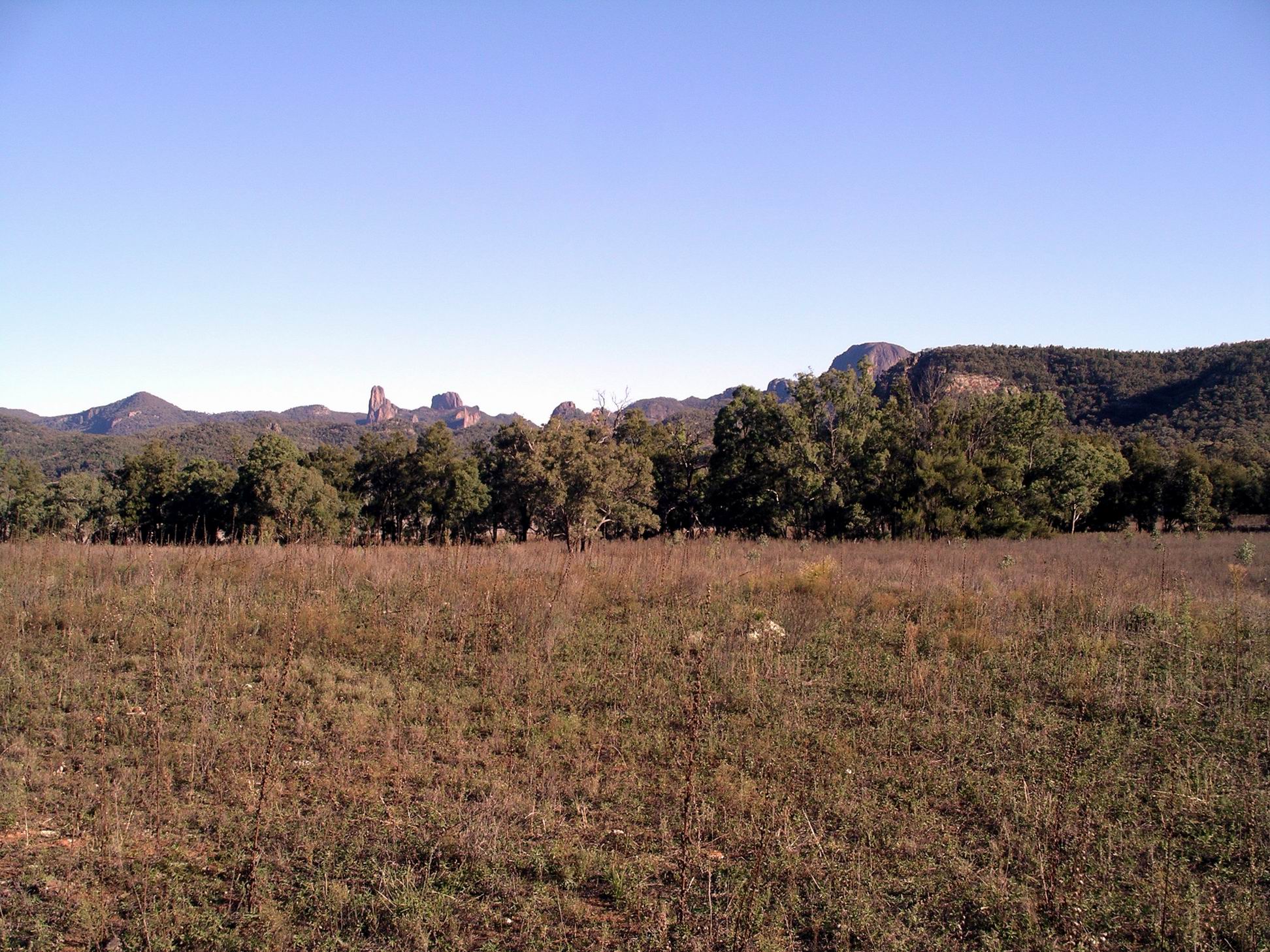
Set the rig up fully for a several day stay. Had a late lunch, then went walking out onto the nearby cleared flats, following a rough track. Apart from exercise, we were looking for photo chances and bird life. We did find numbers of kangaroos and emus but not as many birds as I would have expected.

The Warrumbungles are the remains of a major centre of volcanic activity, dating back more than 13 million years ago, caused by the tectonic plate containing eastern Australia passing over a “hot spot” deep below. The slow drift of this plate over the hot spot caused a chain of related volcanic areas, from what is now Cape Hillsborough (the oldest one) south to Mt Macedon, the youngest – although there are younger remnants beneath Bass Strait. Subsequent erosion has left the resistant volcanic plugs that solidified in the old lava outlets, standing stark above the surrounding landscape – the main features of the Warrumbungles. And that’s the geography teacher in me, talking!
This Camp Blackman area was, in pre-National Park days, the site of the Blackman family’s homestead and farm buildings, and the open flats had been crop land on their “Belougerie” property, which became part of the Park in 1969.

Further out along the flats walk, some white observatory domes at Siding Springs could be seen up along the ridge line.

Today was a sunny day, but tonight would be cold. We’d been told there was frost in Coonabarabran last night. I heard on the radio that Melbourne had its coldest April night for fifty years and that it was minus 15 degrees at Charlotte’s Pass in the Snowy Mountains. I was glad that we did not, after all, visit the Canberra part of the family – we’d have been there now. Brrrr.
By dusk there were some more vans in our clearing, and a camper trailer, but all at a good distance from each other. That could be the drawback to this older area – no delineated sites.
We joined some neighbours round a campfire, for happy hour. Both couples were on short breaks, from homes near Sydney. The imminent retirement plans of one set had been put on hold, due to decline in the value of their superannuation – an increasingly common story these days. The other – younger – couple were preparing for an indefinite trip and were very interested in finding out about work opportunities for travellers, and the jobs we’d done.
It was a pleasant evening in a great spot. The night sky was brilliant with stars. It was wonderful to be back in the “bush”, even if it did come with bells, whistles and a price to match.


 This Adventurous Age