
MONDAY 6 SEPTEMBER MT IVE STATION
Today was a pleasant one, not too hot, with some cloud and some sunshine.
We obtained a mud map of station tracks, when we booked in yesterday.
Were able to top up our fuel with 20 litres here – 86cpl.
Our first destination today was Kath’s Castle – a columnar rhyolite rock formation – which means pillar like shapes. The track was narrow, but not too rough. From its end, we walked up a small, dry, creek bed to reach the wall-like formation.

Kath’s Castle
We then climbed the hill beside Kath’s Castle, to see what the view from the top was like. The walk was longer than we’d anticipated, as the skyline was further than it looked!
Along the way, disturbed a number of wallabies and euros or kangaroos – I still can’t tell the difference, much of the time. We saw where they make circular “nests” in the spinifex that was prevalent through here.
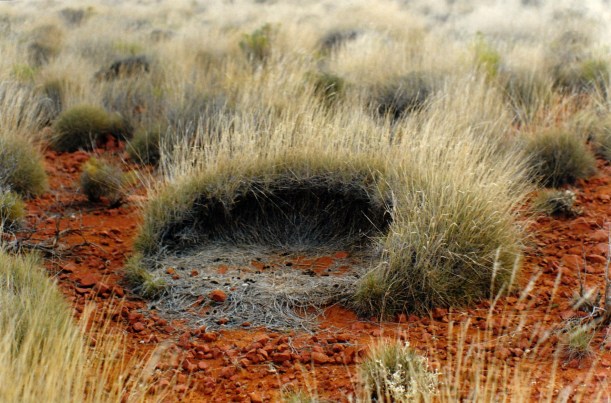
The nest of a wallaby or euro in the spinifex
The view from the ridge was worth the effort. There were good views over the distant Lake Gairdner.
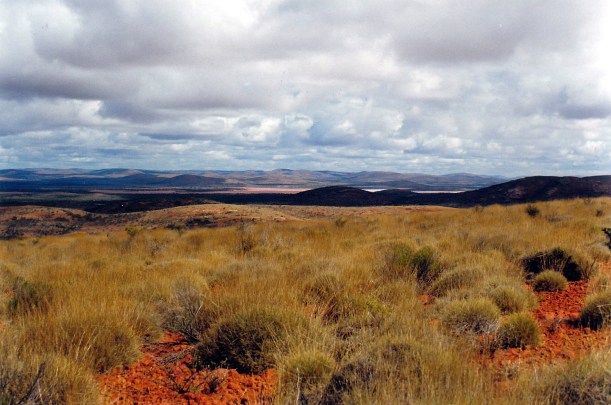
The outlook from the ridge behind Kath’s Castle
Clambered back down to Truck and drove on to Lake Gairdner. This was so surprising and so brilliant that we had some difficulty taking in what we’d come across, by a chance reading of a snippet in a magazine.
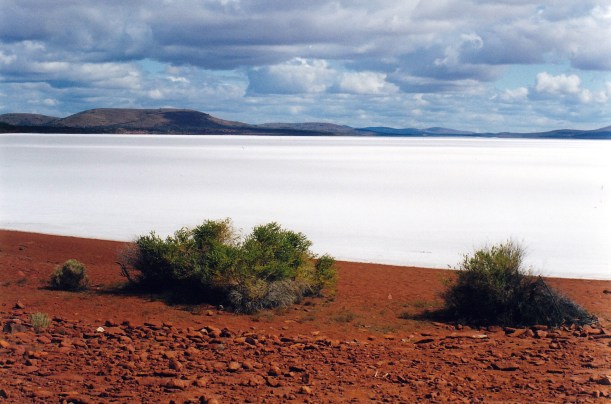
Lake Gairdner
Lake Gairdner is a huge, brilliant white, dry, salt lake. On a map, it looks nearly as big as Lake Eyre, and is, in fact, Australia’s third largest salt lake. Yet we had never before heard of it! It is really beautiful and certainly should be better known.

Looking north – Lake Gairdner receding into the distance
With its red shores, and low hills surrounding it distantly, and the really white surface, it is much more scenic than Lake Eyre.
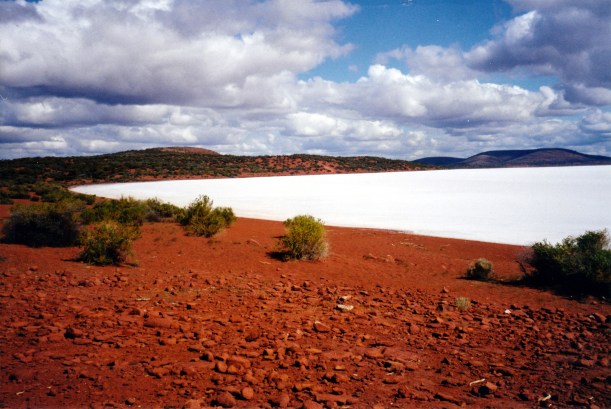
The contrasts of Lake Gairdner
We sat and ate lunch, just taking in the outlook over the Lake – in all directions.
When the sun came out from behind clouds, interesting light effects were created on the salt surface of the Lake.

Sun shining through a hole in the cloud, onto the Lake surface
We spent some time on the Lake – walking on it and taking photos. The salt crust is about a metre thick, though in places some underlying red earth outcrops through the salt in some more shallow sections.

This lake is vast….
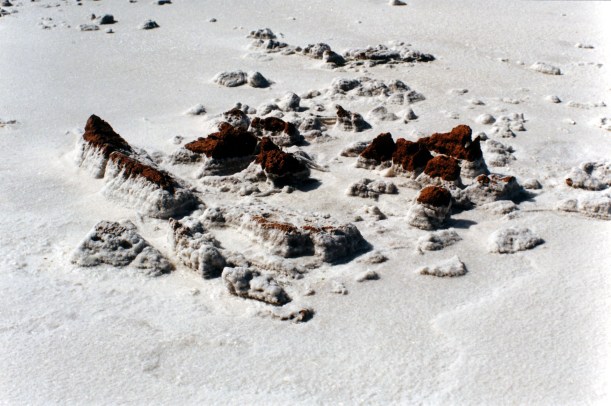
Salt grains encrusting an outcrop of red earth, on the lake
The sand grains are coarse and the patterns they make are interesting in themselves.
It was an absolutely fascinating, impressive place that will remain a highlight of our travels.
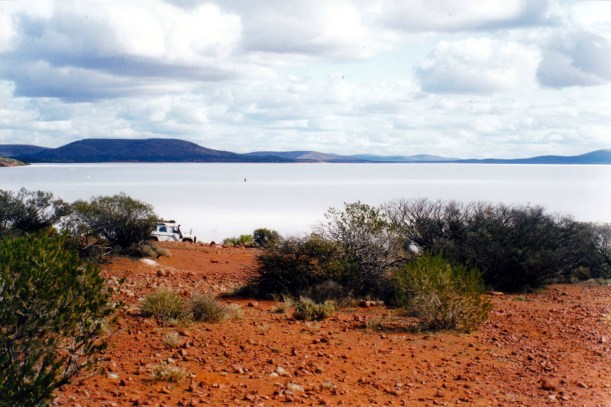
The dot out on the Lake is John walking
Our final destination for the day was an old rock wall dam, built across a little creek valley by the early pastoralists. It showed great craftsmanship in the stone wall construction, worthy of somewhere more significant than this old sheep property.
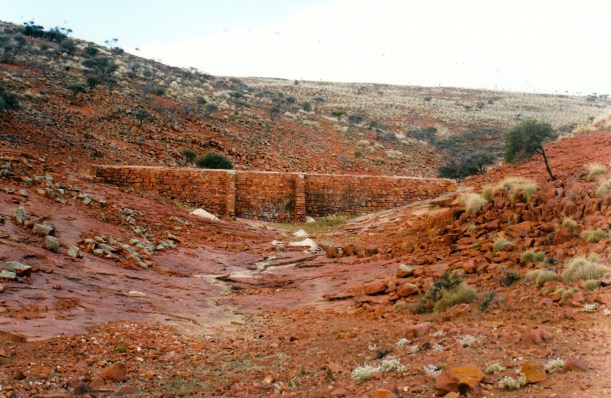
Dam wall on Mt Ive Station

John inspecting the workmanship of the dam wall
We walked up the dry creek valley for some distance and saw numbers of wallabies, euros and a small herd of goats. It was, therefore, a very smelly creek bed!
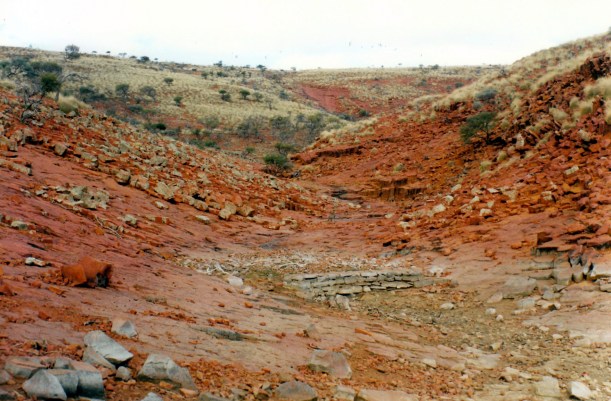
Dry valley behind the dam wall – with goats
We drove a total of 81kms today, on station tracks that were fairly slow going and sometimes rather rough and stony.
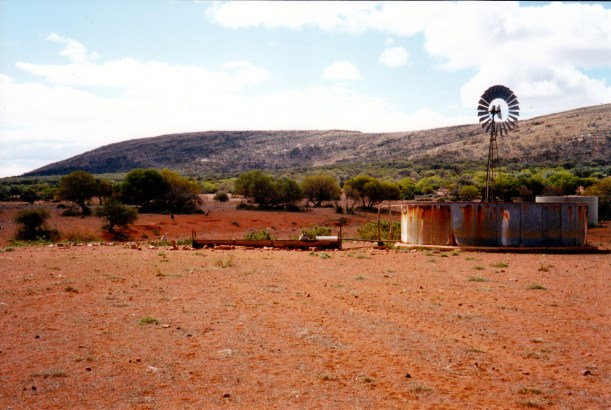
Water from underground – windmill, tanks and drinking trough, with kangaroos drinking
Tea was soup, BBQ steak, baked potatoes and vegies.
What a full day we had! What a wonderful place we stumbled upon!
 This Adventurous Age