
OUR PATHS CROSS AGAIN August 3
Whilst John was browsing the main stall in the inside building at Opal Fest, he spied two familiar faces at one stall. He waited until they had no customers, then approached and asked if they were still mining at Opalton and if they remembered him – from about five years back? They said he seemed familiar, and they chatted for a while.
John’s sense of time passing is not the greatest. It was actually fifteen years ago that we had encountered these two. Guess time flies when you are living an interesting life!
Back in 2000, when we were still travelling full time, heading NW in Qld, we fetched up in Winton. On an exploring drive, came across Opalton, some 120kms of dirt road to the south. About a hundred years before, it had been the humming centre of a big opal rush. When interest in opal waned, in the twentieth century, Opalton became almost a ghost settlement. What buildings there had been crumbled away.
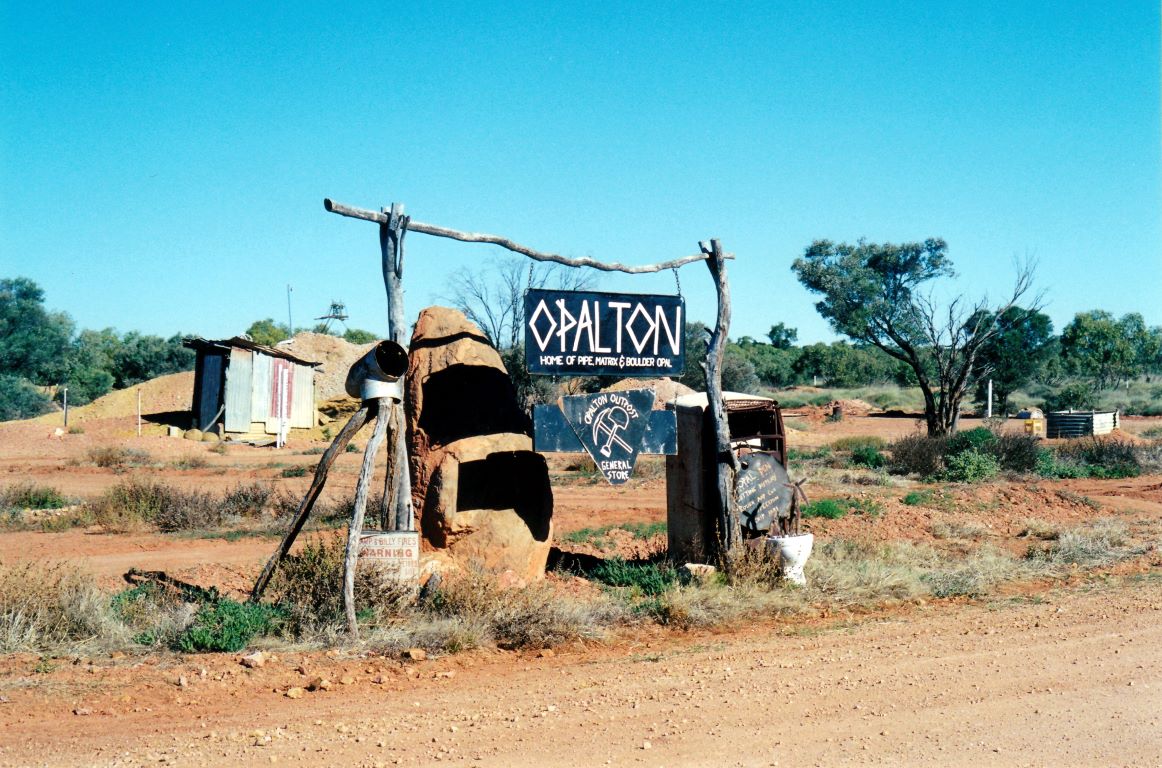
Opalton historic area
But in recent times, there had been a resurgence of interest in mining the distinctive boulder opal that is found in the area. The section of the old diggings where there were lots of mullock heaps, was declared a fossicking area – only to be explored with hand tools. The old shafts in there had filled with water.
When we came across Opalton, there was a store of sorts, called The Outpost, a telephone box, and a rough camping area by the mullock heaps, being caretaken by an elderly pair of fossickers. We loved the area and the atmosphere of the camp and so decided to move the van out there for a week or two.

Opalton Bush Camp
In preparation, John, who had seen a dam and creek in the area, was in the Winton butchers. When he asked if the butcher had any scraps he could use for yabby bait, another customer – a rather glamorous lady – asked where he was going yabbying. He replied “Opalton”. She told him that she and her partner had a claim out that way, at Debbil Debbil. John arranged with her to visit them at the claim while they were camped out there, and that visit duly happened.
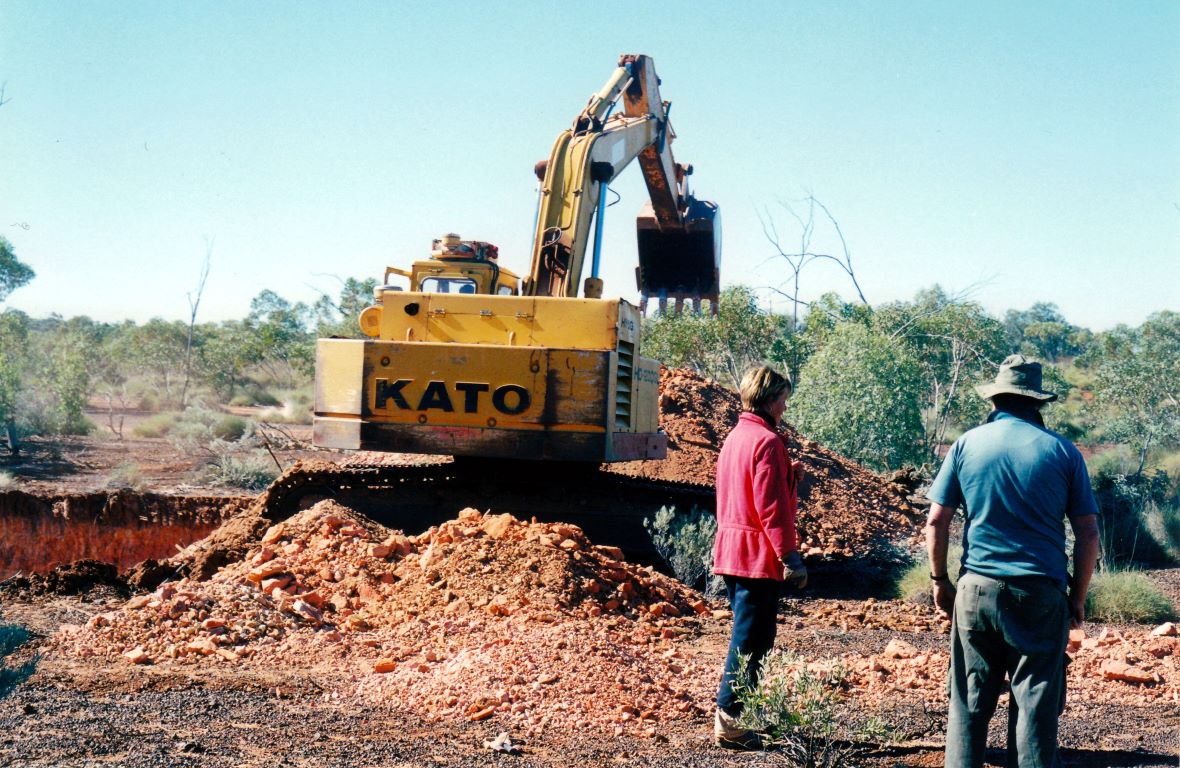
Open cut opal mining at Debbil Debbil
We spent a great afternoon with L and J, at their camp and claim. Watched how they were open cut mining, and learned to use a wire to divine for fault lines in the rock, with which opal was often associated. At their camp, saw a huge piece of boulder opal that the miner who shared their camp had found that afternoon – worth upwards of $35,000, he thought.
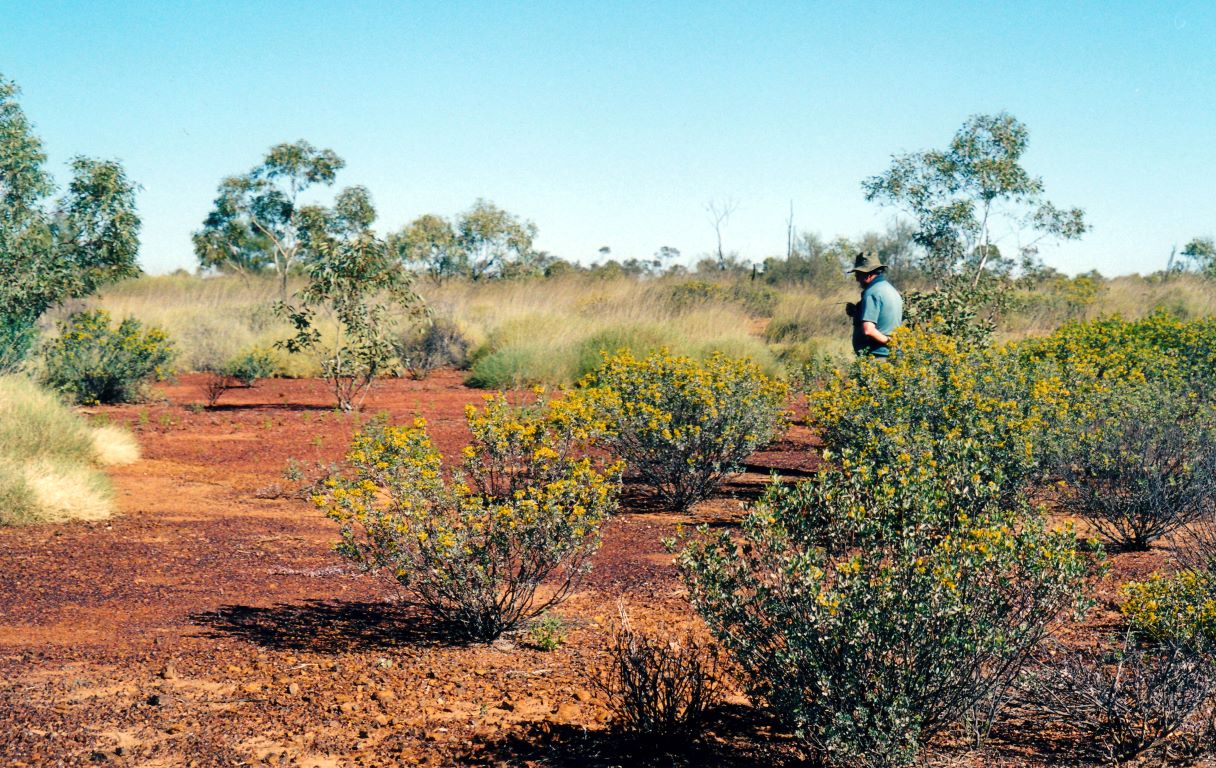
Divining for faults
That was only the second season on the claim for L and J. They hadn’t done any mining to speak of, before coming out here. The season extended over the cooler months. In summer, it was too hot and water was too limited so they retreated back to their home on the coast.
To date, they had not found any opal, but were hopeful still, We thought it was damned hard work for no return.
A year or two later, we heard that they were still digging at Debbil Debbil, but still had not found opal. Occasionally after that, we wondered what had become of them.

The semi-arid country around Opalton
Here they were! With a great stall, selling Queensland boulder opal, much of which they had mined themselves. There was also some very nice jewellery featuring same, which they designed and had made up for them. As with the best opal jewellery in Lightning Ridge, the stone was cut to bring out its best, then the setting designed for just that stone.
They told us that they still had some claims in the Opalton area, which they would dig at some future date, but were currently mining some 100kms west of Winton, off the Boulia road. They still spent only the winter months at their claims, then took their finds back to their Gold Coast base, where they cut and rubbed them and did the jewellery design, plus attending markets all over the place.

The boulder opal stall of our friends. Unusual boulder opal occurrence in rock
They were set up at a caravan park in town that had seemed convenient for the Fest, but were not happy there. They did not like it that some locals – non-campers – kept coming in, wandering around, using the amenities, leaving a mess, then begging users of the laundry for money to wash their clothes.
After they had packed up, on the Sunday afternoon, they came out to visit us at our park, and then immediately booked themselves into a site here for next year’s Opal Fest time.
We spent several hours over afternoon tea that turned into Happy Hour, over drinks and nibbles. L and J relaxed after the long hours spent at the stall. They were happy with the event, obviously, since they planned to return in 2016. It was a brief respite for them as they had to leave early the next morning to go back to the Gold Coast for a big opal Expo there.
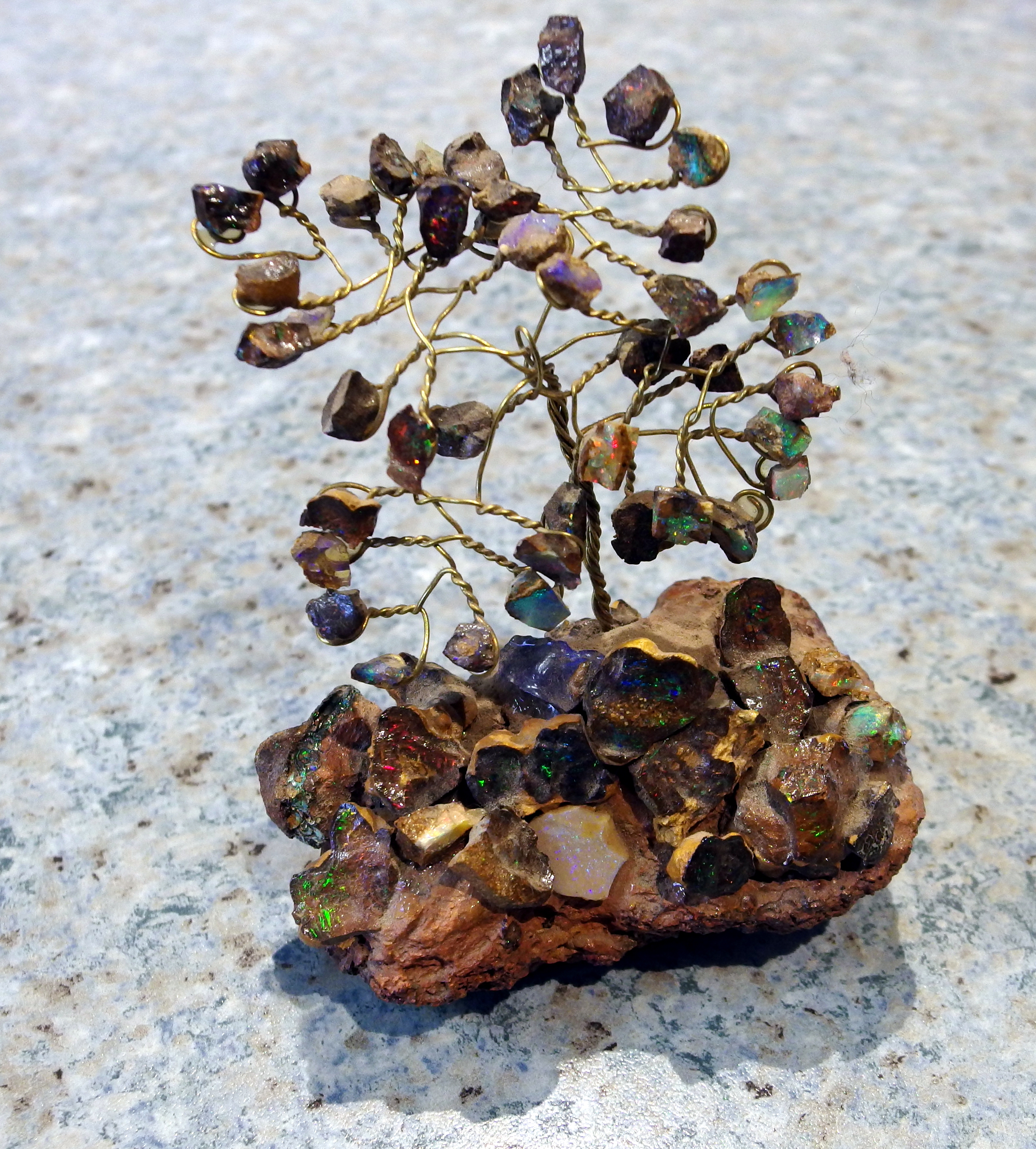
The Queensland boulder opal is quite different from the classic opal of places like Lightning Ridge and Coober Pedy. Here, the best opal is found in seams that are thick enough for solid opal to be cut and shaped. The Queensland boulder opal colour occurs in ironstone and can’t really be separated from it. The best boulder opal stones have the opal surface on top of the sandstone base, but other stones just have the opal flashes in the ironstone – small flashes of absolutely brilliant colour, in amongst the brown of the parent rock. There can be wonderful variety of colours, too, in boulder opal. In many ways, I prefer it to the usual opal.
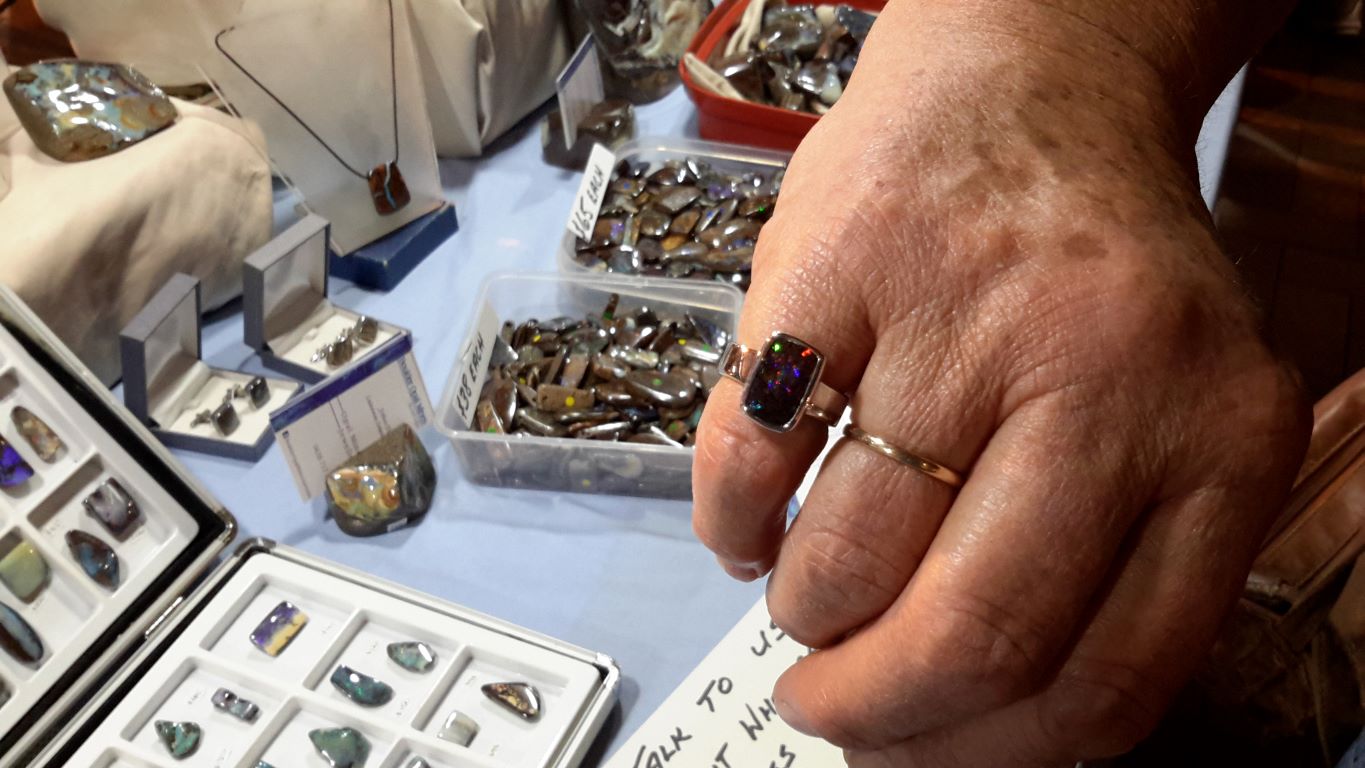
Boulder opal ring
L and J have a website that features their boulder opals at: boulderopalsaustralia.com This tells their story, gives information about opal, and features some of their product.
It was great to see these two again – and to know that their efforts and patience finally were rewarded.


 This Adventurous Age