My perception of the skies here is very different from when we lived in Melbourne. That is really quite strange, because – living in the foothills of the Dandenongs, as we did – we had quite a vista, especially to the west. Here, somehow, there just seems to be more sky around. Totally illogical, I know.
Already we have noticed an array of spectacular sunsets. Don’t know about sunrises as I am never abroad to see same.
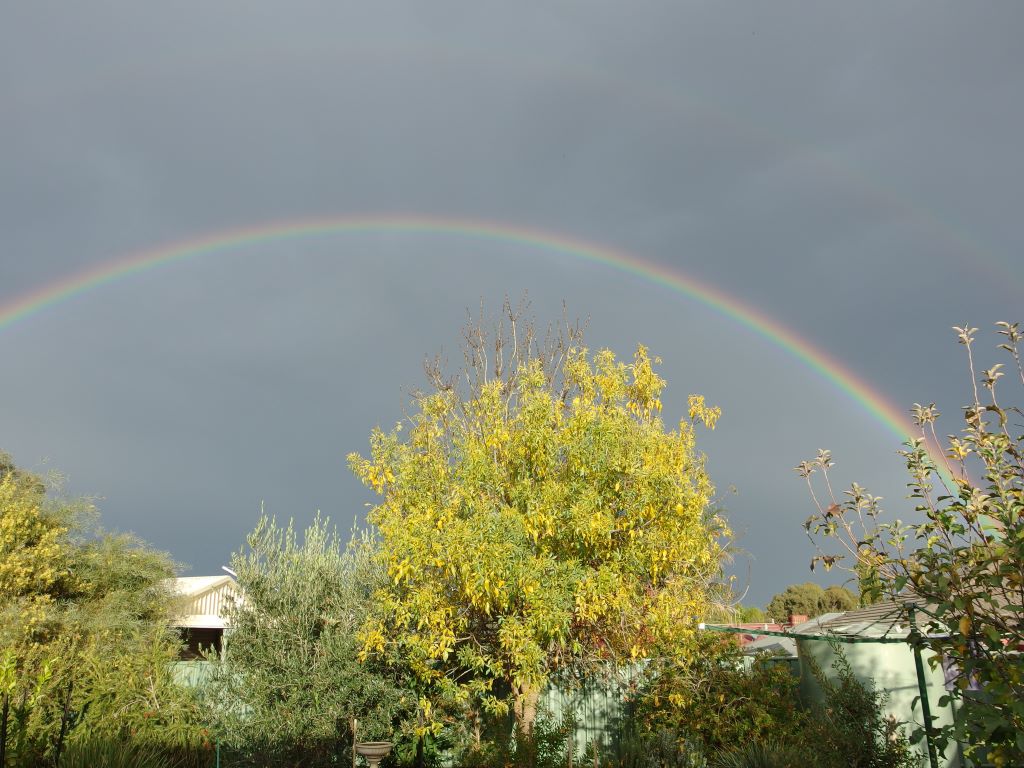
Recently, I noticed a rainbow to our west. As I admired same, it morphed gradually into a double rainbow – and I raced for the camera.
Double rainbow just starting to form
Some later research revealed that double rainbows are not particularly uncommon. I surely must have seen one or more, before, but couldn’t remember doing so.
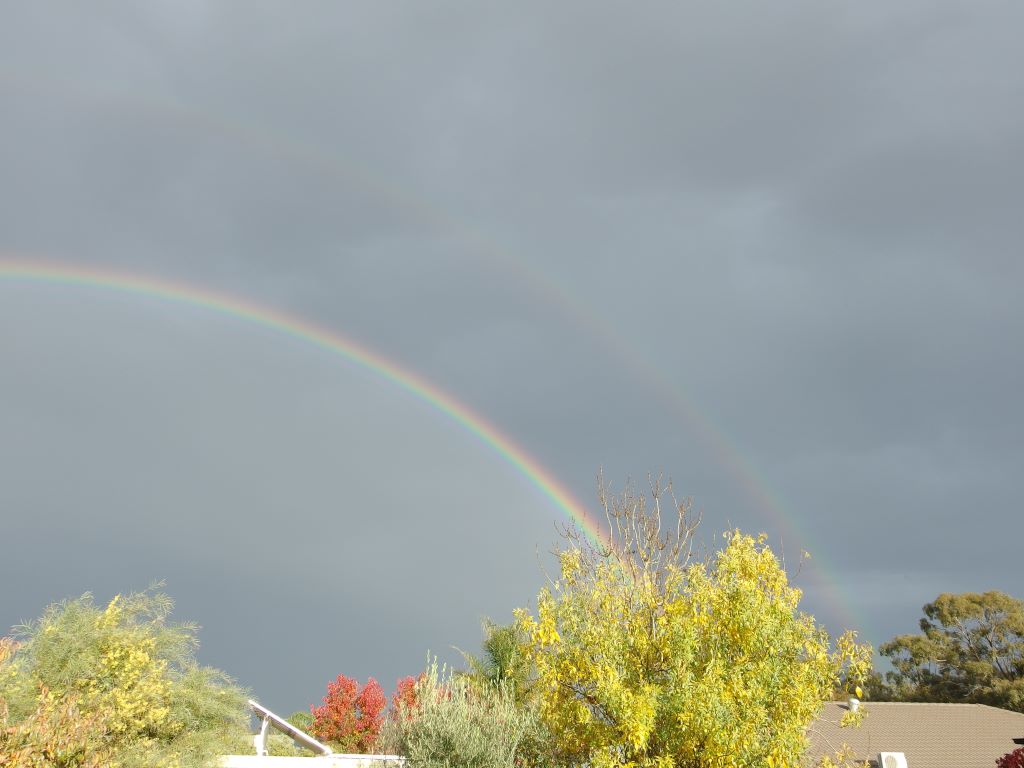
A couple of facts I found interesting: the colours are always reversed in order, like a mirror image. The space between the two rainbows always seems darker than on the outsides.
Who knew?
Double rainbow showing inverted colours and darker space between
George Lansell (1823-1906) and his two brothers were originally English tradesmen immigrants to SA, in 1853. The following year, they walked to the Bendigo goldfields, setting up as butchers, soap and candle makers.
The early alluvial gold mining of the Bendigo fields was changing to shaft mining, digging down to gold bearing reefs. For this, capital was needed and thus a multitude of small mining companies formed, mined for a time, most then failing, with their investors losing their money. But enough found gold and became profitable, to provide hope and encouragement.
George was soon persuaded to begin investing in the newly forming mining companies, from 1855. His first investments failed, he lost money, and refocused on his original businesses.
In 1865 George re-entered mining and with substantial investment was able to dictate the mining practices of his companies. His approach, of mining ever deeper than had been reached before, was so successful that he became known as the Quartz King of Bendigo. He soon became a millionaire. For a time, he may have been the richest man in the world.
In 1871 Lansell purchased the Ballerstedt mines, equipment, machinery and mansion from the now deceased Christopher’s son, for 30,000 pounds. Although this was a large sum for the times, it demonstrated Lansell’s sound judgement: under his direction, the 180 Mine was extended down to over 3000 feet, becoming the deepest mine in the southern hemisphere at the time. By 1889, it was estimated that Ballerstadt and Lansell, over the time of the mine’s operation, had taken out at least a million pounds worth of gold from it.
By 1872, aged 49, George married, but the heirs for his growing fortune that he hoped for, did not eventuate, which was a major disappointment by the time his wife died a few years later.
George also diversified into other investments. In the 1870’s, for instance, he bought land in Melbourne, around what had been the temporary Government House (pending the building of the permanent one). He subdivided this land, in what became Toorak, naming Lansell Road and St Georges Road. He maintained a Melbourne residence in the area, though his main home was in Bendigo.
Lansell had become famous in Bendigo for encouraging and supporting the gold mining industry and its miners, but by 1880 was unhappy and disillusioned. He felt sentiment in Bendigo had turned against him as mining fluctuated, and as a new widower, returned to England and settled in London, where he married for a second time.
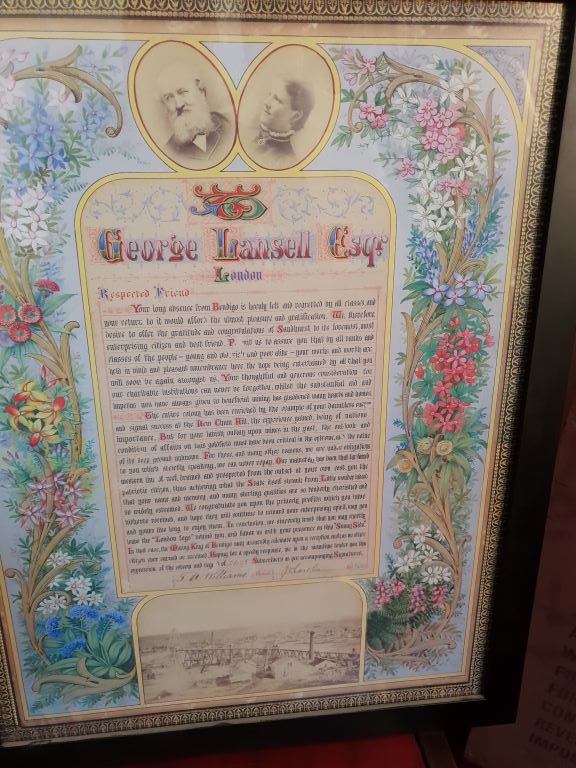
Bendigo’s fortunes had languished in the 1880’s. Many citizens came to associate this with Lansell’s departure. In 1887 a petition was prepared, in the form of an illuminated letter, asking him to return and restore the good times for the city.
Letter begging Lansell to return to Bendigo
Thus, he returned, with wife and, by now, three young children, as well as various members of his wife’s family. A further three Lansell children were born after the family returned to Bendigo.
Eventually, he was director of 38 mining companies, and was said to have links with every gold mine in Bendigo.
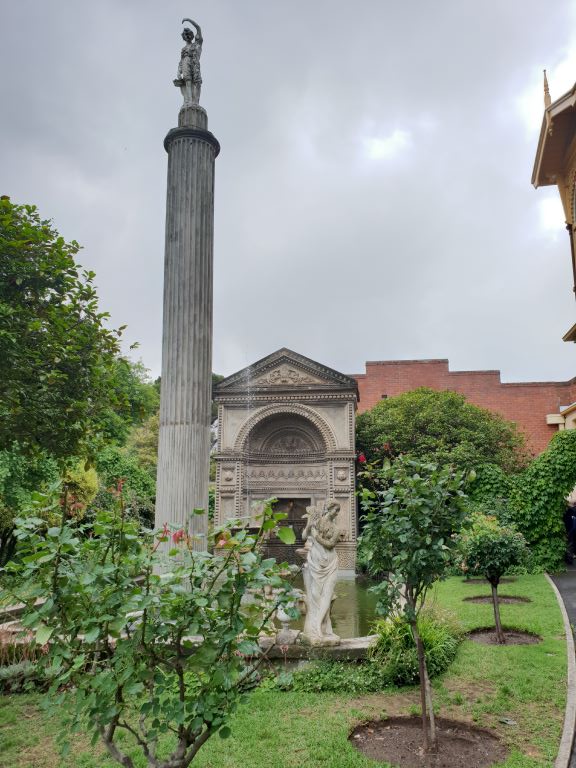
George Lansell travelled extensively, from the 1870’s, and extended his Fortuna Villa residence greatly, embellishing it as his fancy was inspired by his travels. Likewise it was filled with unusual items acquired on those travels. The surrounds did not miss out, being extensively landscaped and developed with features like ornamental lakes, a classical fountain, enclosed Roman style baths.
Tailings heaps from 180 Mine turned into landscaped gardens
During our tour of Fortuna, we were told that George bought a Rolls Royce motor car, in the early years of motoring. However, his first excursion in this terrified him so much that he never went out in it again.
Although pressured to do so, George Lansell never attempted to enter public life, such as becoming a member of Parliament, although one of his sons later did.
Statue of George Lansell in central Bendigo
George died in 1906. A statue commemorating his life and contributions to Bendigo was put up in 1908, near what is the modern day Visitor Centre in Pall Mall – the main street through the centre of the town.
Edith Lansell remained at Fortuna until her death in 1933.
Last year, for my birthday, daughter took M and me on one of the monthly tour and high tea events held at Fortuna Villa. I hadn’t previously known of this place but found both the history and the establishment fascinating. So much so, that a return visit was organized as a Mothers Day present. John was included, this time, as I thought he too would find the house, with its superb craftsmanship, of great interest. M made another visit from Melbourne for the occasion.
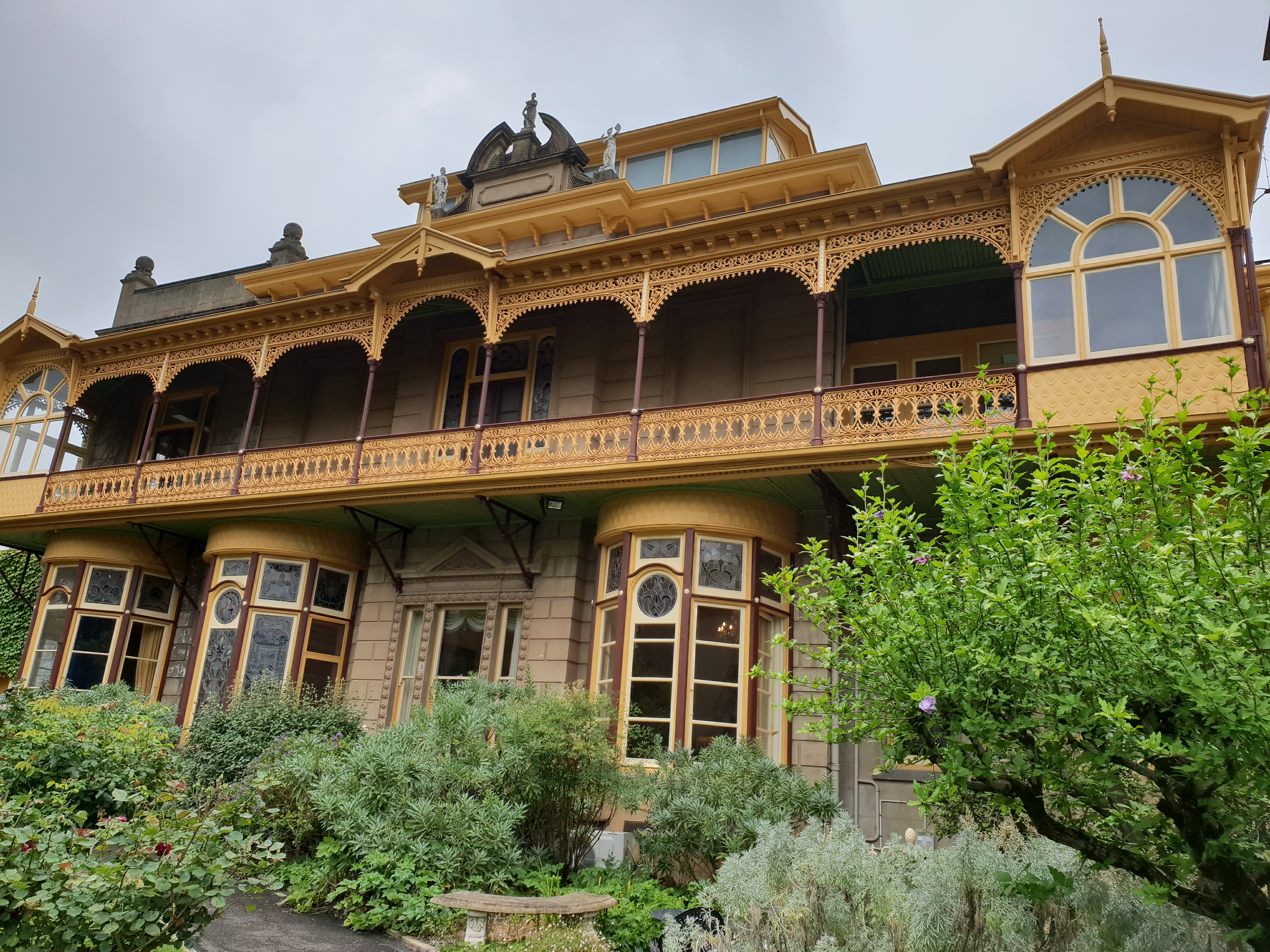
The Villa with the Roman baths style enclosed pool to right
Once again, we feasted on the lavish high morning tea: little sandwiches, scones, pastries, cakes and wine. Somewhat decadent before midday! The guided tour took us through the significant features – so many of these – of the house and surrounding grounds.
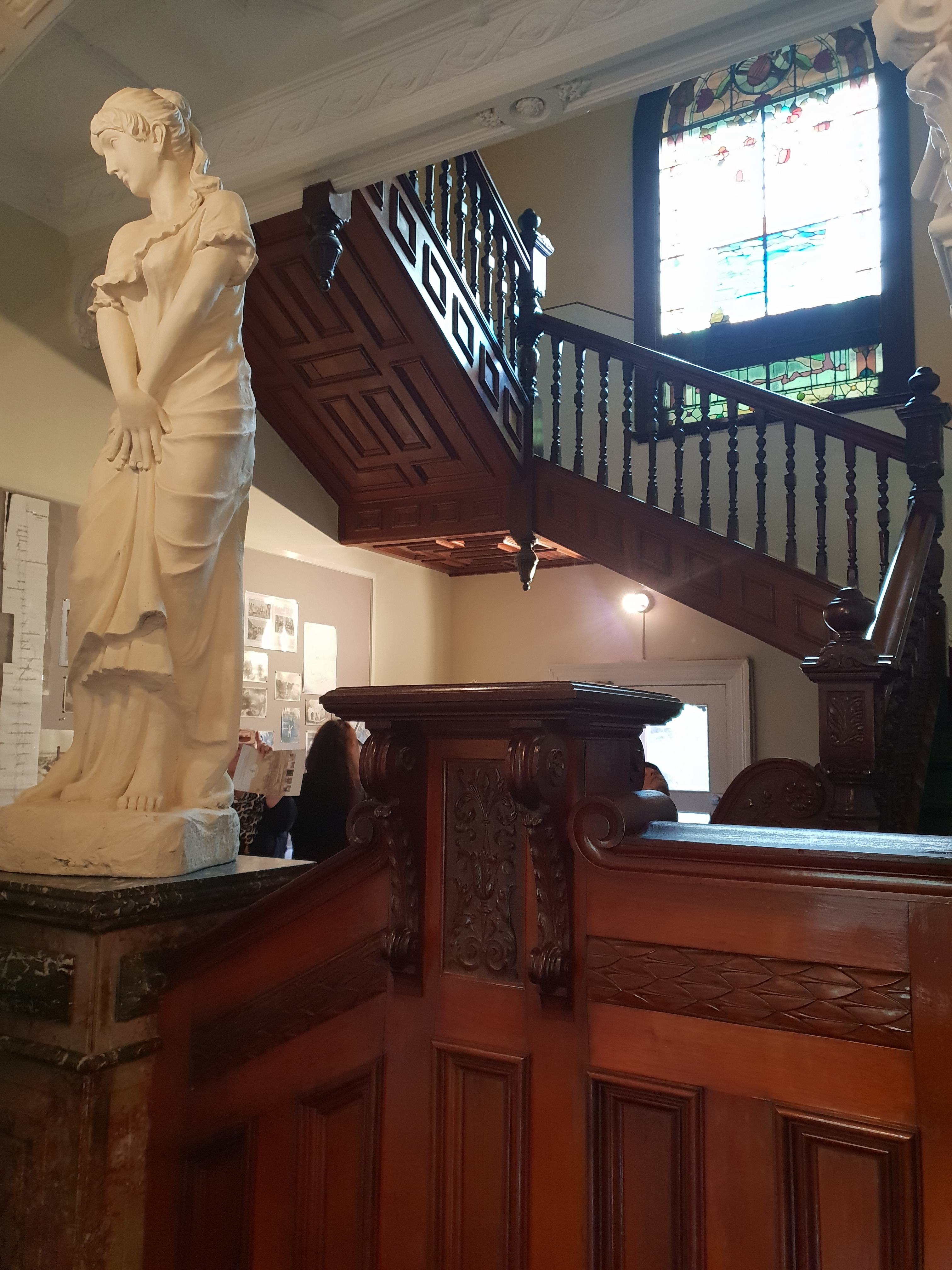
Carved wooden staircases
In parts, we were given some time to wander sections of the house. The tour was completed with more wine and snacks – and a browse of the gift shop.
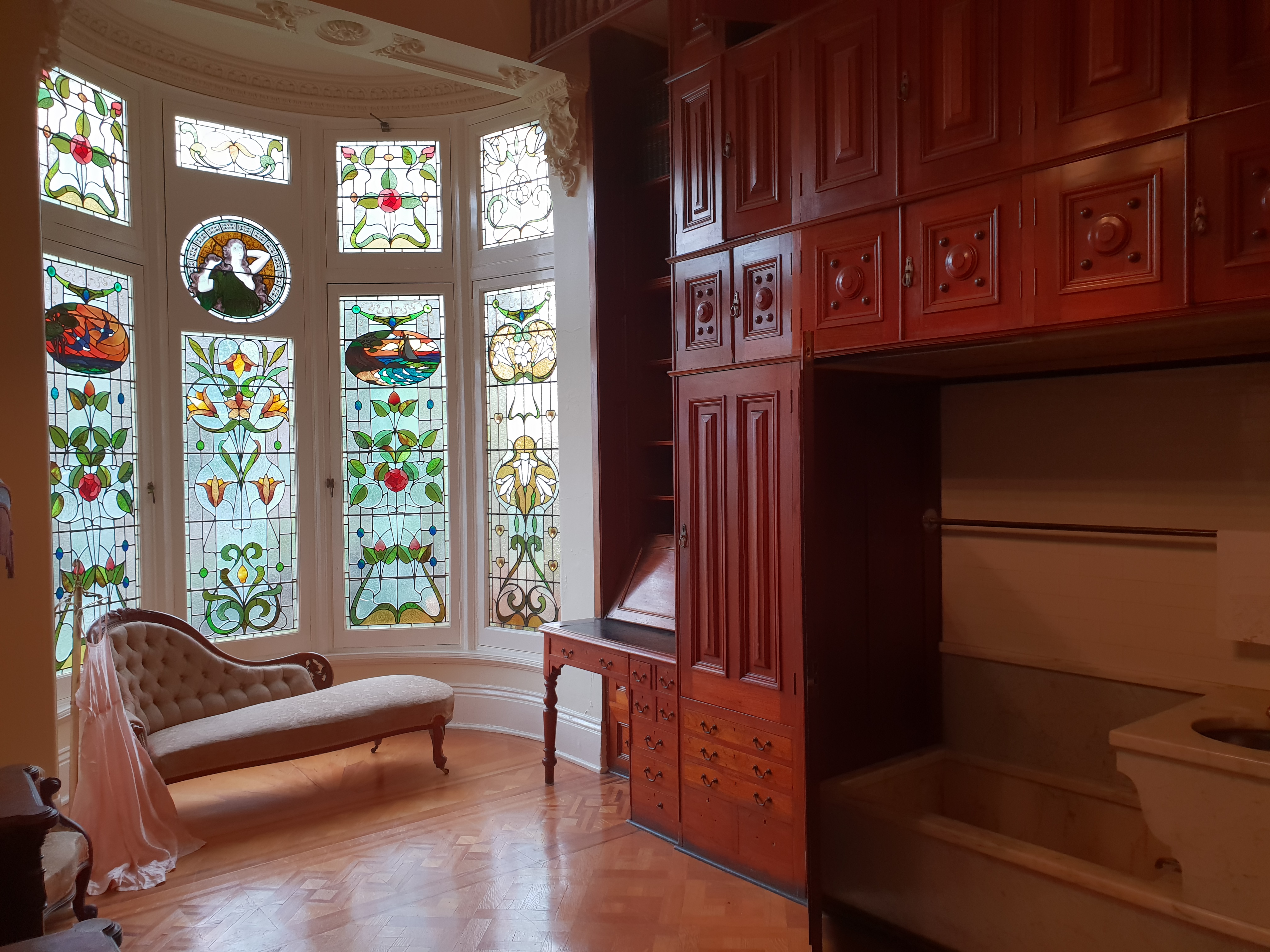
A bedroom, with bath, and brilliant stained glass windows
There is much that is quite unique about this place. It mirrors the – at times incredible – history of Bendigo.
Outlook over gardens – once an area of mines
The original, fairly modest dwelling on the site was built by successful miner Christopher Ballerstedt from about 1855 and extended as his fortunes grew. It was on the New Chum Reef, to become so important as deep lead mining replaced alluvial panning for gold.
Fortuna Villa
In the 1870’s Fortuna Villa was bought by George Lansell (worthy of a later entry in his own right). He extended the home, landscaped the gardens, adding unusual and unique features to both. At the same time, the associated rich 180 Mine continued operation near the house, with mining structures being essentially outbuildings of the residence. The tour took us through a tunnel that had been built to move gold securely through to the stables, for carriage away.
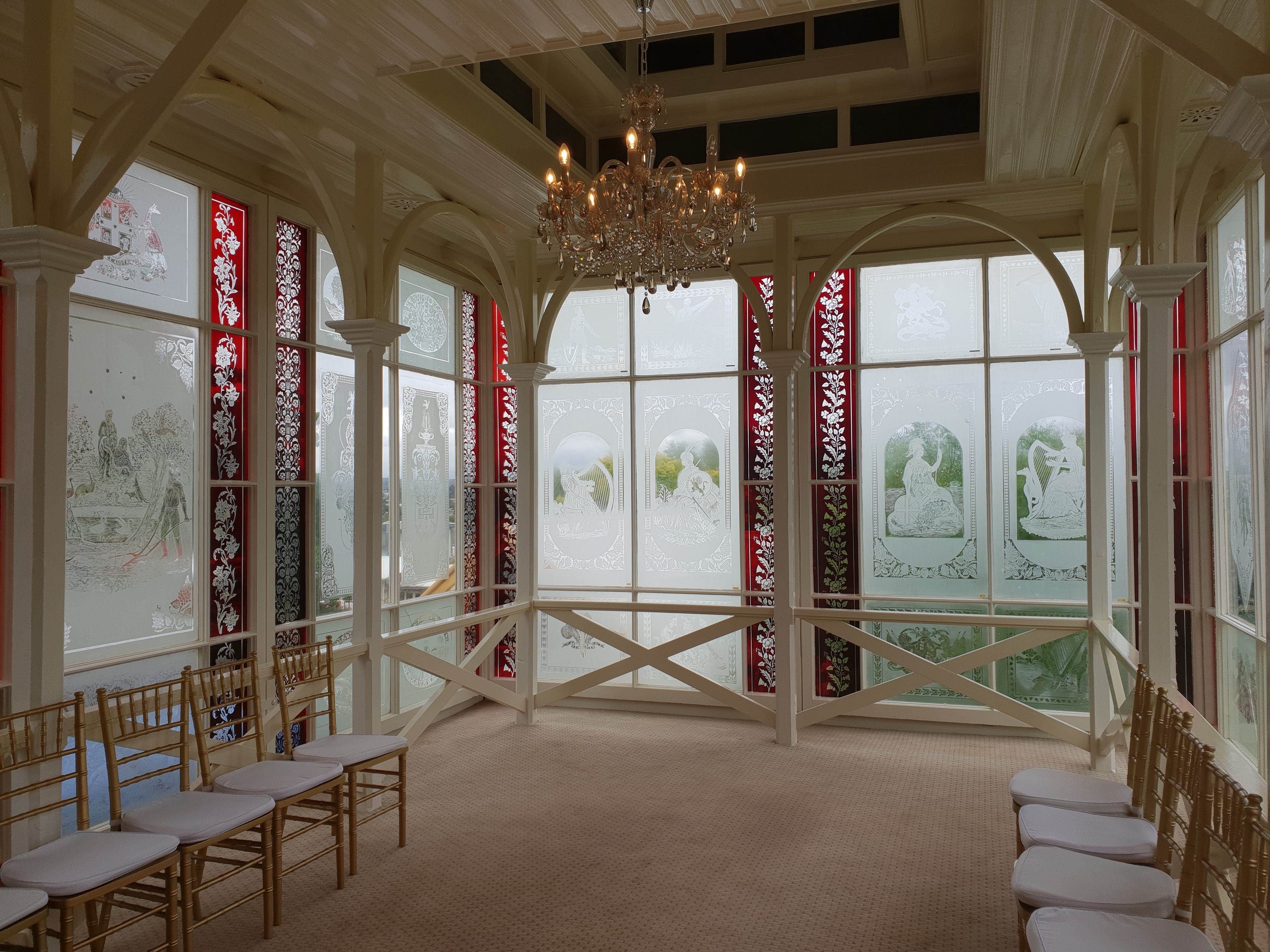
In the Conservatory… again, incredible stained glass features
After Lansell’s death in 1916, his widow remained resident until she died in 1933. In that post-Depression period, demand for ornate and lavish mansions on large grounds in a country town was non-existent and so the estate was unable to sell Fortuna.
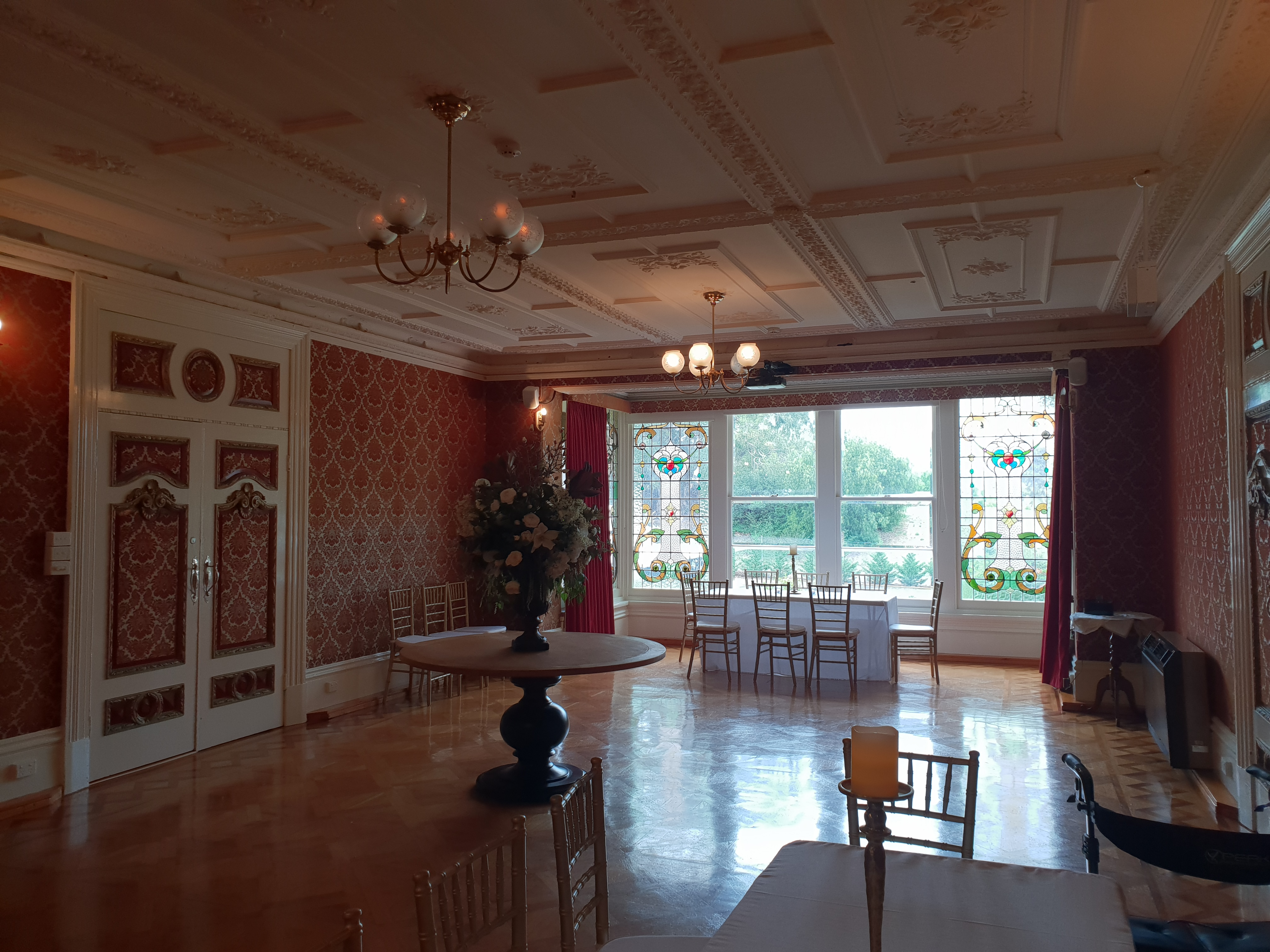
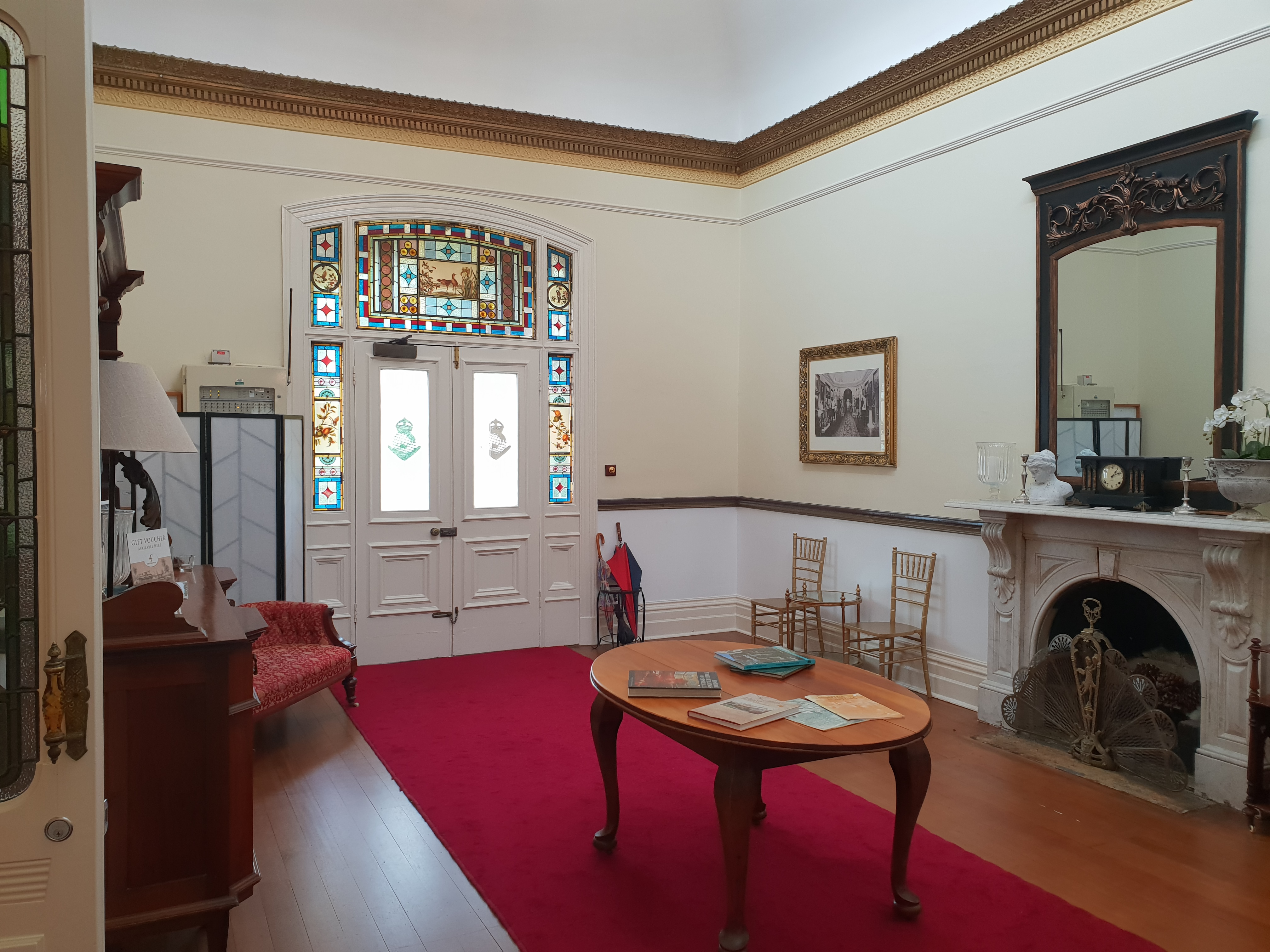
A typical ornate interior
The villa came close to being demolished, only being “saved” when bought by the Defense Department in 1942 to become the base for its Cartography unit. Thus it remained until 2008.
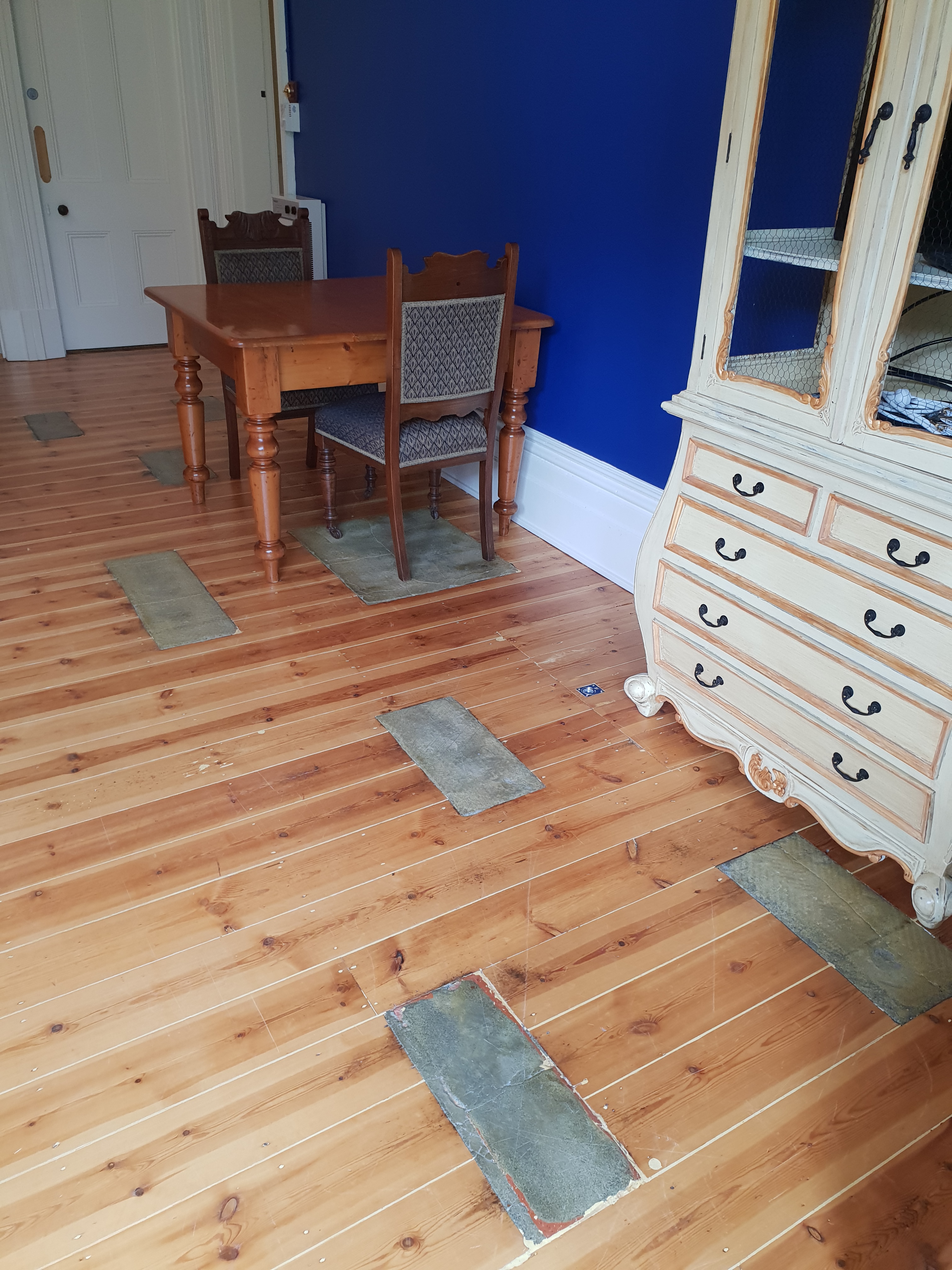
Reinforced floor held map printing machinery
Surplus to Defense requirements, on the market again, the Villa was bought by private owners in 2014 and they commenced its new incarnation as private residence and function centre, with some accommodation in refurbished rooms, with plans to develop extra hotel style accommodation and function rooms on the grounds. The regular tour and high tea events began.
The new owners came up with plans to build a stylish townhouse/apartment style complex on the elevated western side of the grounds, beyond the ornamental lake. These would be sold to private purchasers. On our second tour, we viewed the plans for these – some of which would have good views from their elevated two storeys. But if the target market was an older age group, lifts would definitely be needed, I thought. It seemed the sale price for each residence would be around the million dollar mark.
Earthworks commenced on planned villa development site
Works commenced on the site designated for this development, but after initial clearing and stabilizations works, seemed to stall. No doubt, Covid played a role in that. As I write this, in mid 2024, nothing further has happened and the area sits as a visual eyesore.
Stalled works. Great views from this site.
Instead, development focus has switched to the eastern side of the grounds, to an area that was occupied by temporary Defense Department buildings. These have been demolished. It seems that this portion of land must have been sold to a development company. Some twenty single level three and four bedroom home units are to be built, for sale to the public. The plans, on paper, look very attractive. A friend of ours has bought a unit, off the plan, and expects to move in during the first part of 2025. Work is well underway.
New development works, with Fortuna Villa entrance and manor to left






 This Adventurous Age