Today was younger grandson’s 3rd birthday. I hoped the card I’d earlier posted from here arrived in time, and that his father managed to buy him the present I’d pre-arranged, from us.
It was a lazy morning. I’d planned to do some washing, but the one machine in the laundry was in use, so I didn’t bother.
John messed about with his collection of stones. He thought one bit looked really promising. After an early lunch, he went off to bowls. I defrosted the fridge, washed the van floor – the one following logically from the other! I hand washed the cotton floor mat in a trough in the laundry. Then I rewarded myself for all that housework by doing patchwork for the rest of the afternoon.
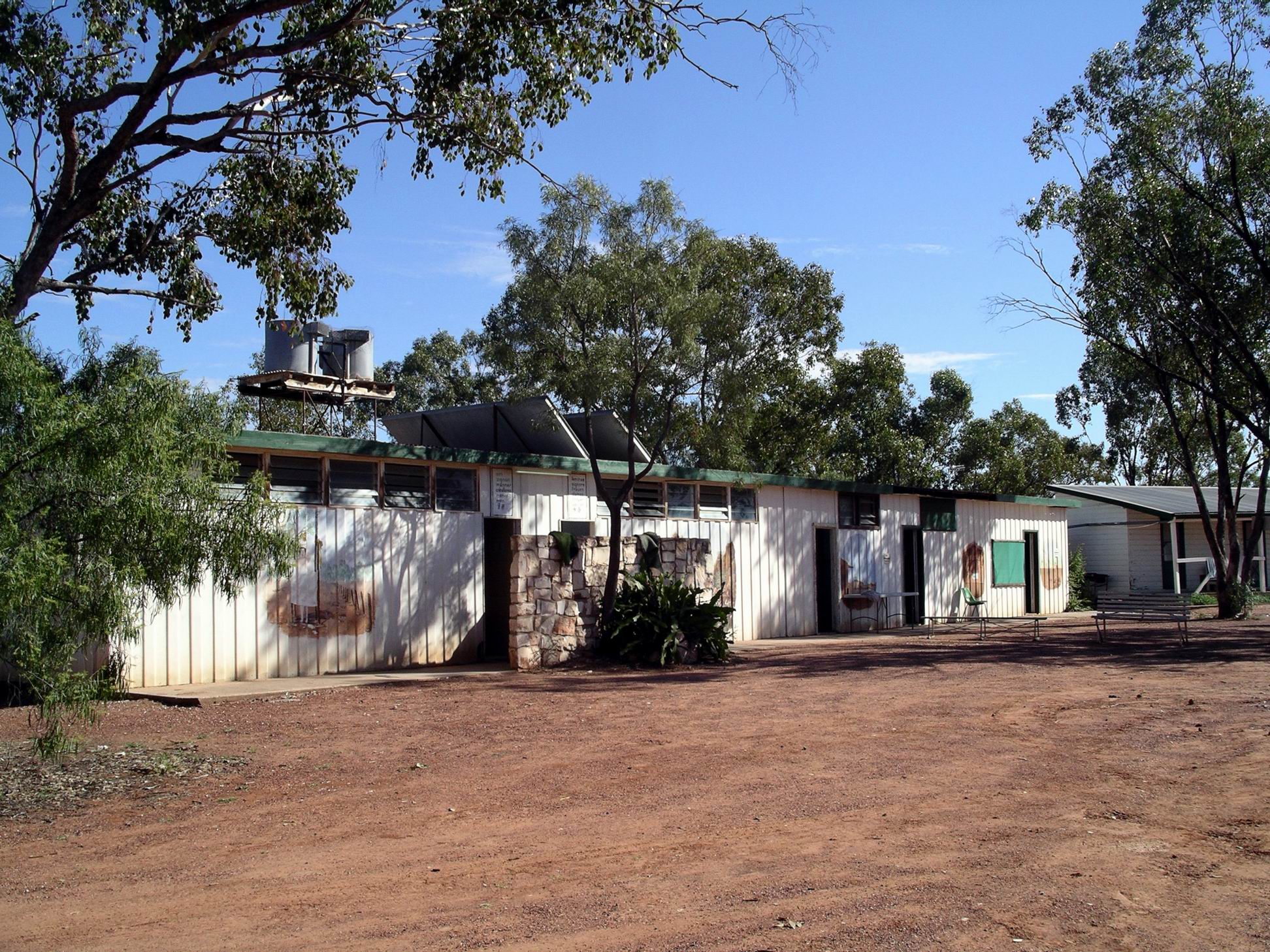
Lorne amenity block, with cabin room accommodation block at right
John came back happy. his team had won and he collected $20.
I invited D – a man who had moved into one of the nearby cabins a couple of days ago – to happy hour with us. He was a stone mason by trade, and John was interested in talking about that. He was also an opal buyer, which was why he was up here. He told us that he’d been to the Grawin a few times, but that it was too rough (dangerous?) out there for him, so he preferred to stay here, where it was more secure, and just drive out there. He had two rather nice dogs with him. While we sat round the fire and talked, I threw sticks for the dogs – and got muddy slobber all over my track pants, for my efforts.
D told John that it was cheaper to buy opal cutting equipment here, than in the cities. He lent John a business guide, to look up the sellers of same. Later, when John took his book back, D showed him a tray of cut opals that he’d bought. John came back starry eyed. NOW we were no longer leaving here tomorrow, but going back out to the Grawin instead!
It was a much cooler, cloudy day today. The night was chilly enough for me to drag the heater out from under the bed again.
In town, bought the papers. Went to the tyre place, where the tyre and its tube were patched. This was a relief, as we were envisaging the expense of a new tyre, which would probably have to be brought in from somewhere else, at even greater cost.
We went car door touring, and did the two tours on the western side of town.
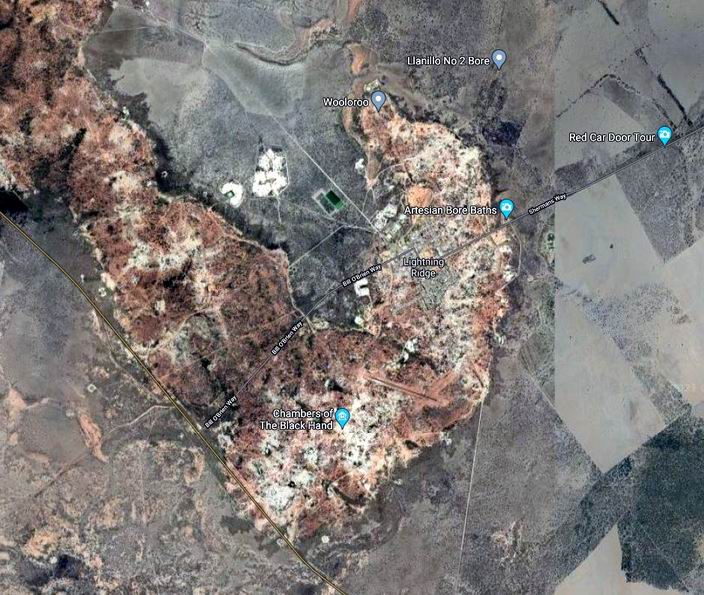
The extent of the Lightning Ridge opal diggings. First diggings were NE of town; Three Mile SW of it
The Green Tour took us to the first area that was mined, which was on an ironstone ridge that tended to attract lightning. Local lore had it that, way back, a shepherd and some of his flock were fried by a lightning strike in that area – hence the name of the town.
Original diggings
The local indigenous people clearly knew of the opal to be found in the area, as they have a Dreamtime legend that explains it as a rainbow that was trapped in the scales of a dying ancestral crocodile creature.
Random finds on the pastoral runs of the late 1800’s led to the first rush, in the early 1900’s, mostly by miners from the White Cliffs fields, attracted by this dark opal, and promoted by the man regarded as the father of opal mining in the Ridge, Charlie Nettleton.
The Green Tour went to that first mining area, and the first shaft, hand sunk by Charlie Nettleton.
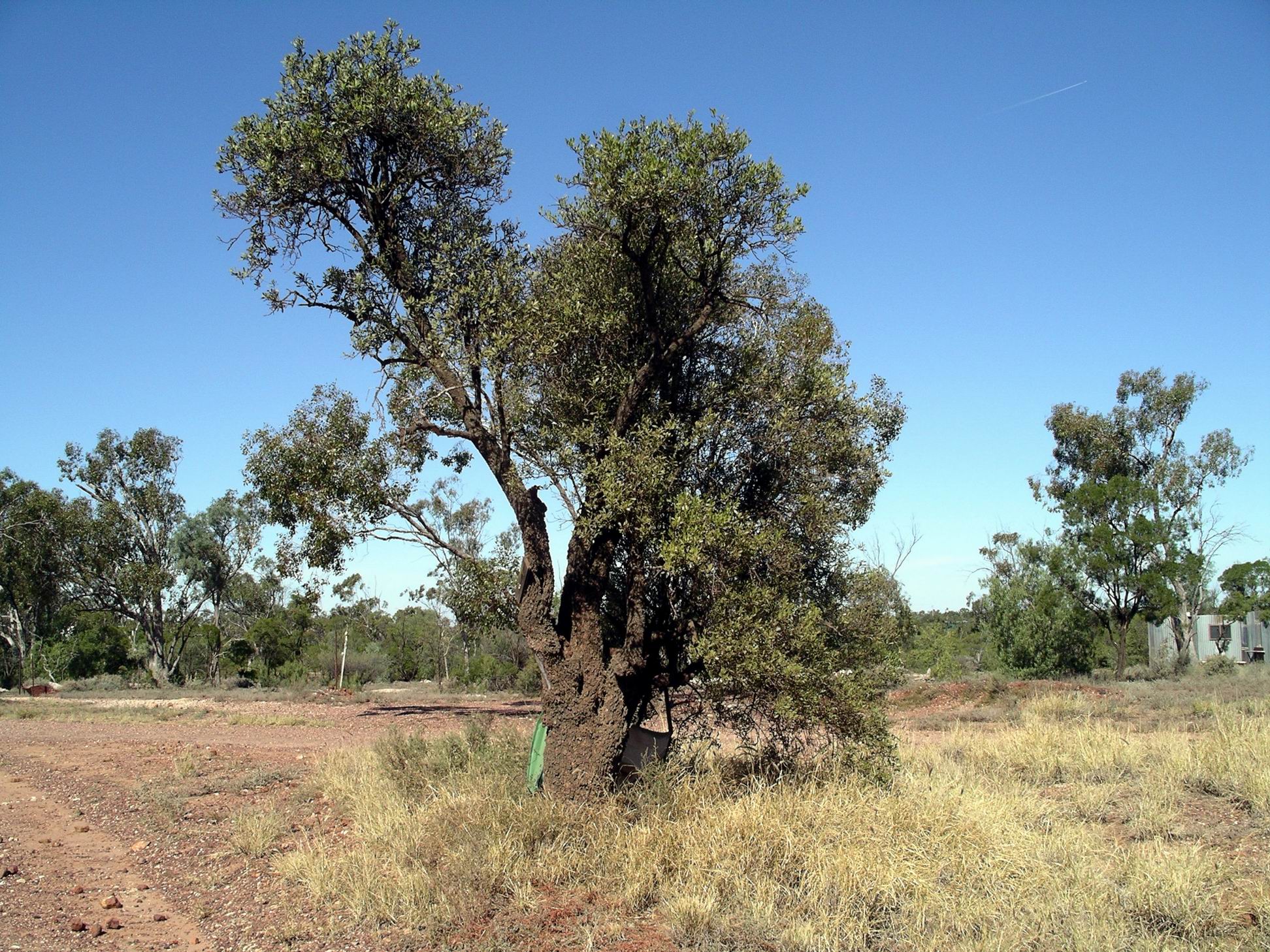
I did find it interesting that the wild orange tree is supposed to be an indicator of underlying opal. Obviously, the larger trees grow along fault lines because the roots can get down more easily to water – and opal is associated with fault lines. But there was no explanation of why the wild orange is a better indicator than other trees.
Green car door by Wild Orange tree
Out there, we also saw where some (more modern) person had begun to build a hut out of empty beer cans. It wasn’t finished; we had a bit of fun speculating why this might be so.
Did they just get sick of doing it, or…….?
There was much more of interest on the Yellow Tour. This mostly took in the larger Three Mile diggings.
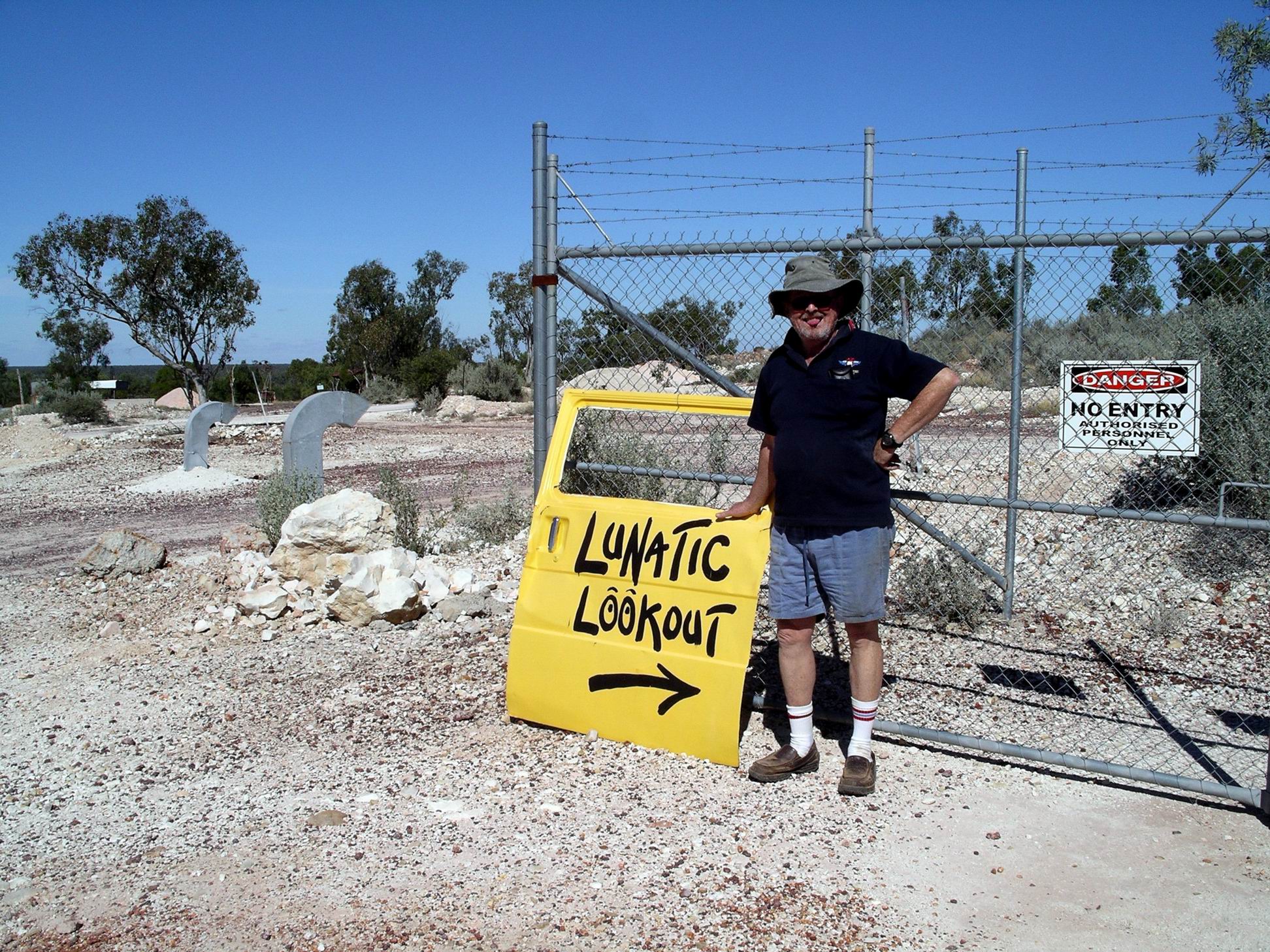
A novelty there was the Lunatic Hill open cut.
Open cuts were not normally used for opal mining here because of its unpredictable and patchy occurrence. Particularly in the earlier times, before the use of modern machinery like bulldozers, the effort involved in making an open cut was not proportionally rewarded. Two possible reasons why the Lunatic Hill cut was made was because the ground was very unstable for shafts, and the opal there rich enough to justify it.
Ventilation shafts for underground mines
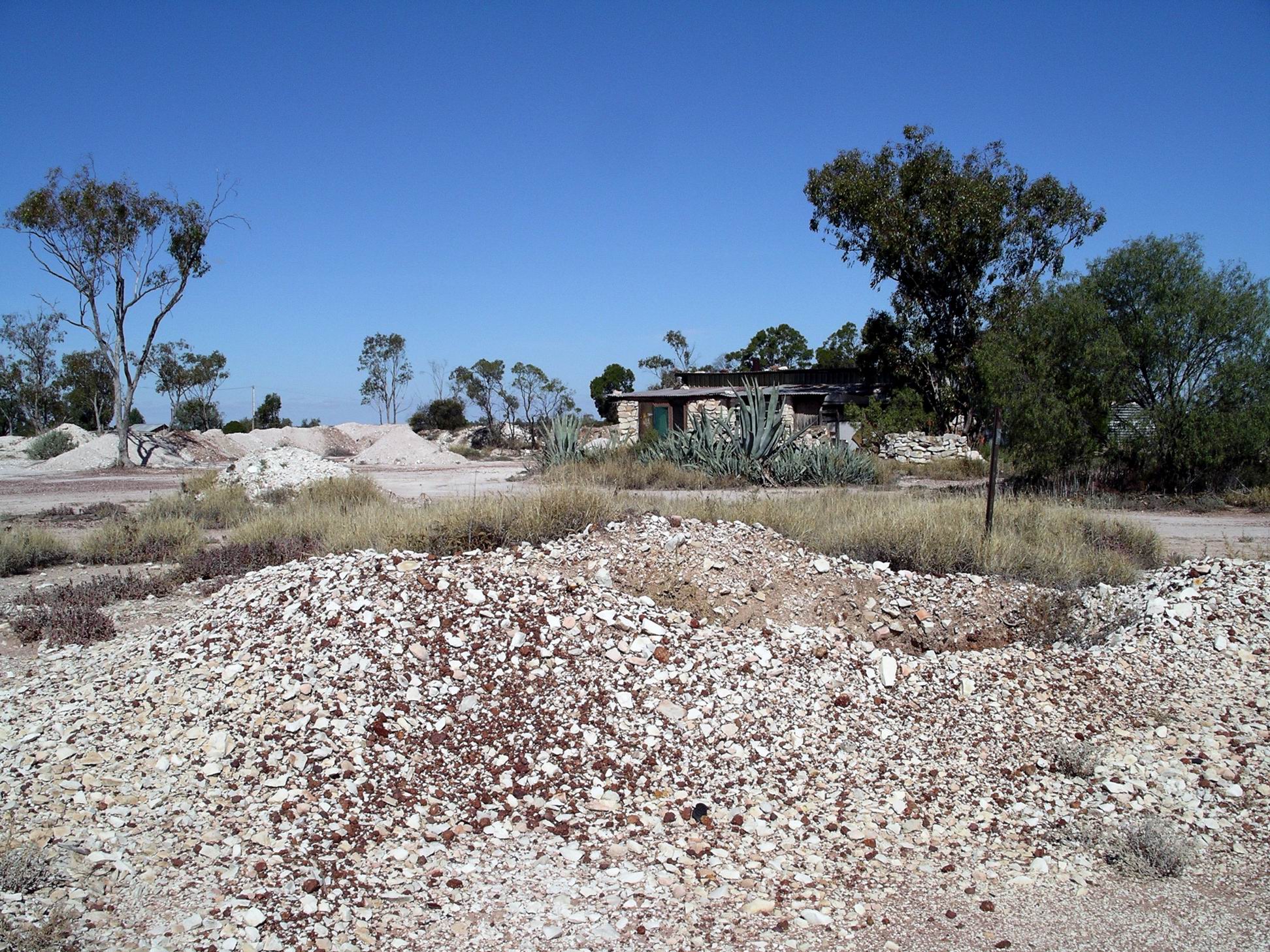
The tour route wound through the mining area, past lots of shacks – works of art and ingenuity in themselves. I particularly liked one where the roofing iron was held down by large rocks on it.
Rocks are cheaper than nails around here – and maybe easier to get in the early days….A trap for the unwary explorer….
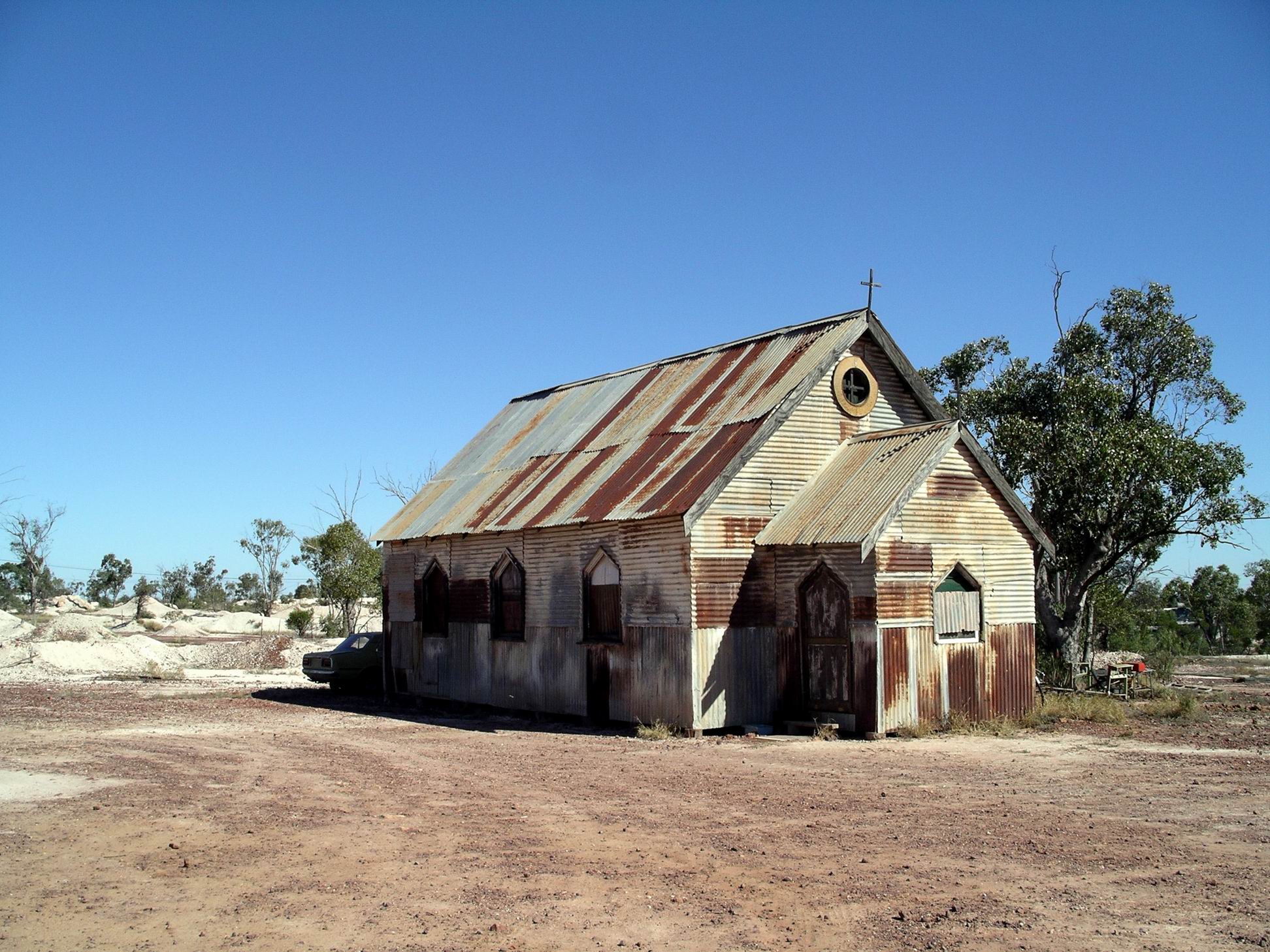
We came upon a church structure made of sheets of corrugated iron – spooky, gothic, incongruous.
But it wasn’t really a church, having been part of a set for an art house film “Goddess of 1967”. I had never heard of it, but later found out that it was made in 2000, the goddess of the title was a 1967 car, and the dark and gloomy film won some awards in overseas film festivals.
It looked realistic enough…..
It was late lunchtime by the time we finished exploring along the Yellow Tour route. Back in town, John decided to buy a cooked chook. We had to go back to camp so he could eat some of it then store the leftovers in the fridge.
Then we backtracked into town for the other two tours, which were the shorter ones to the eastern areas.
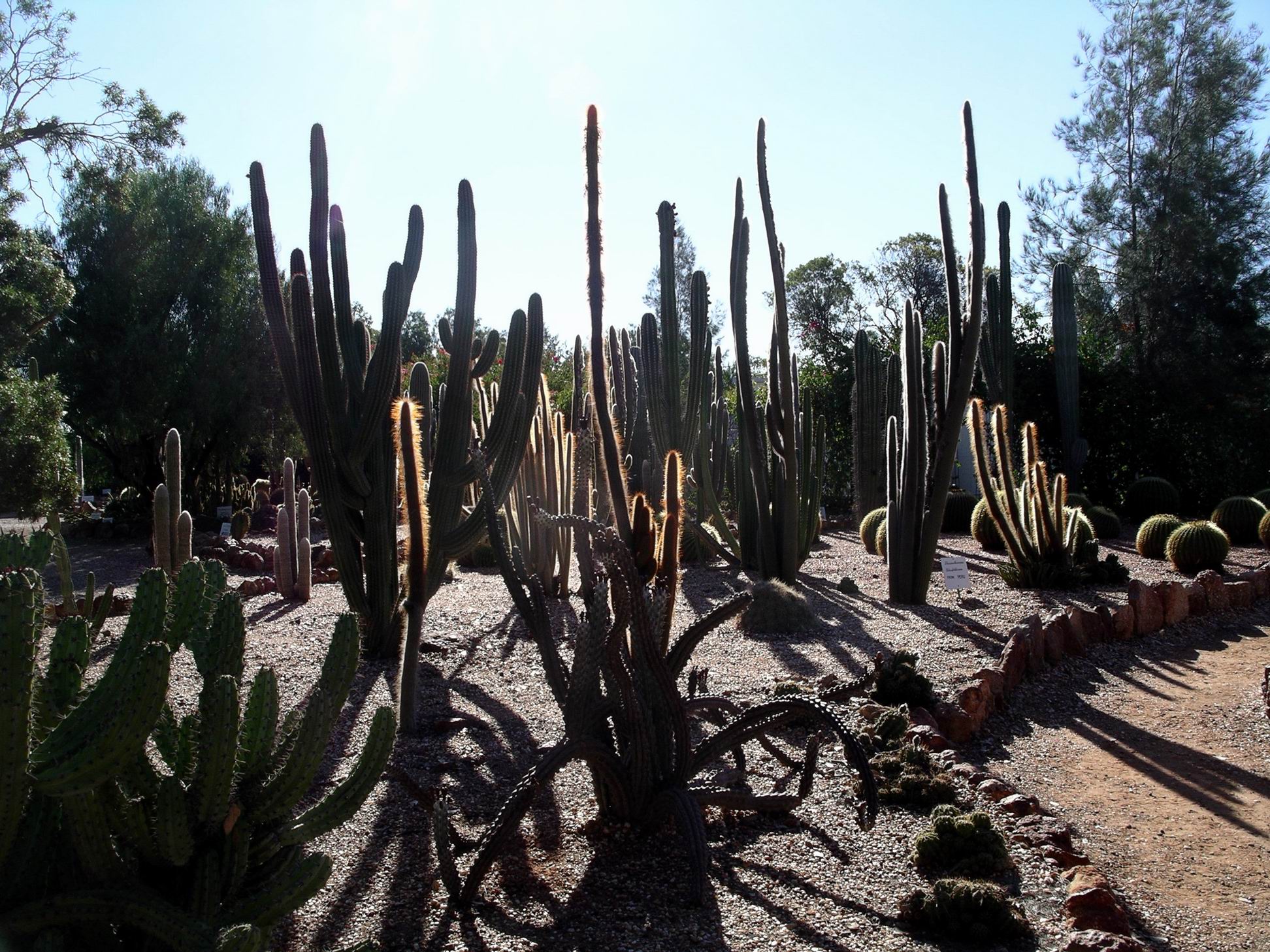
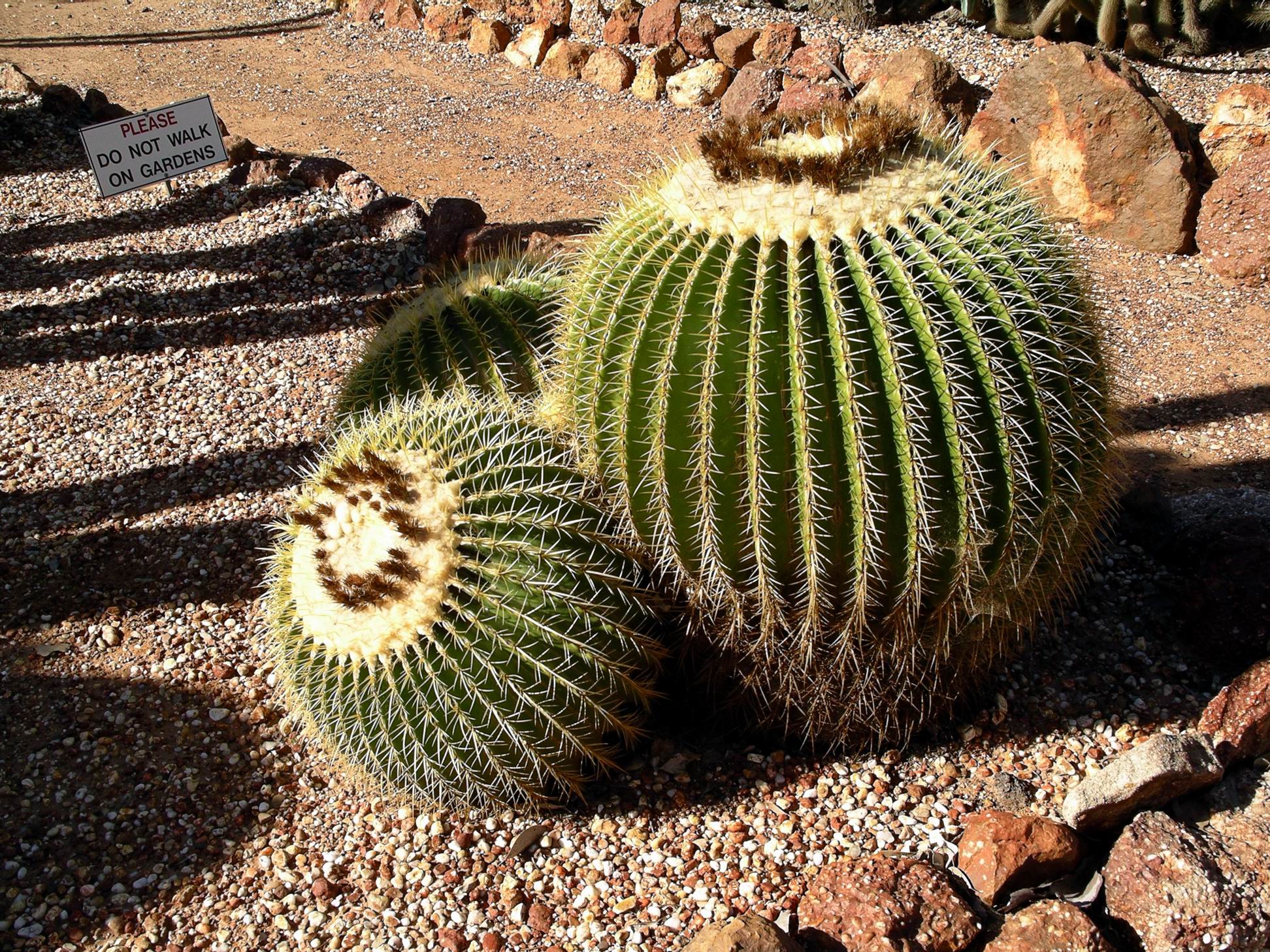
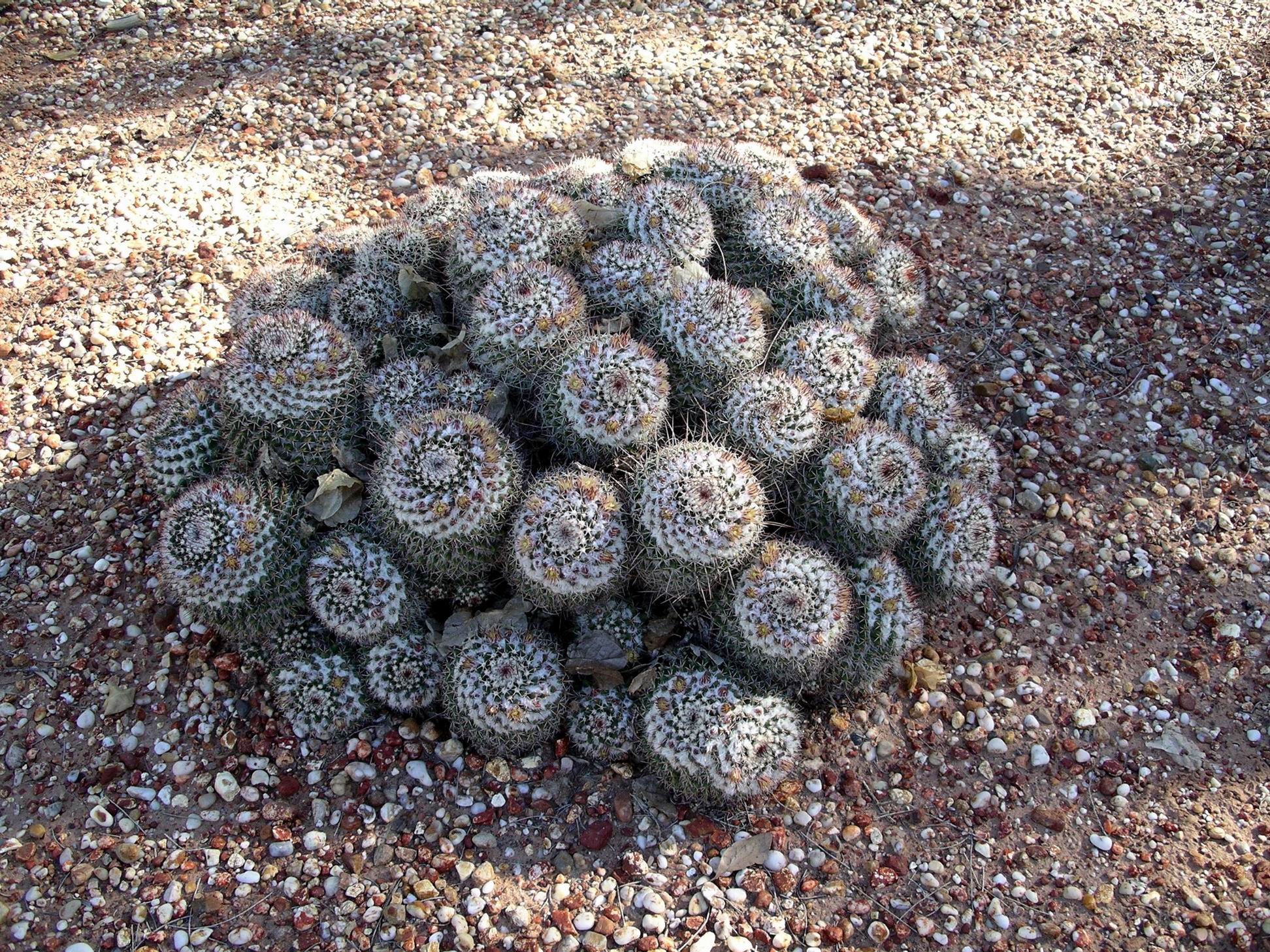
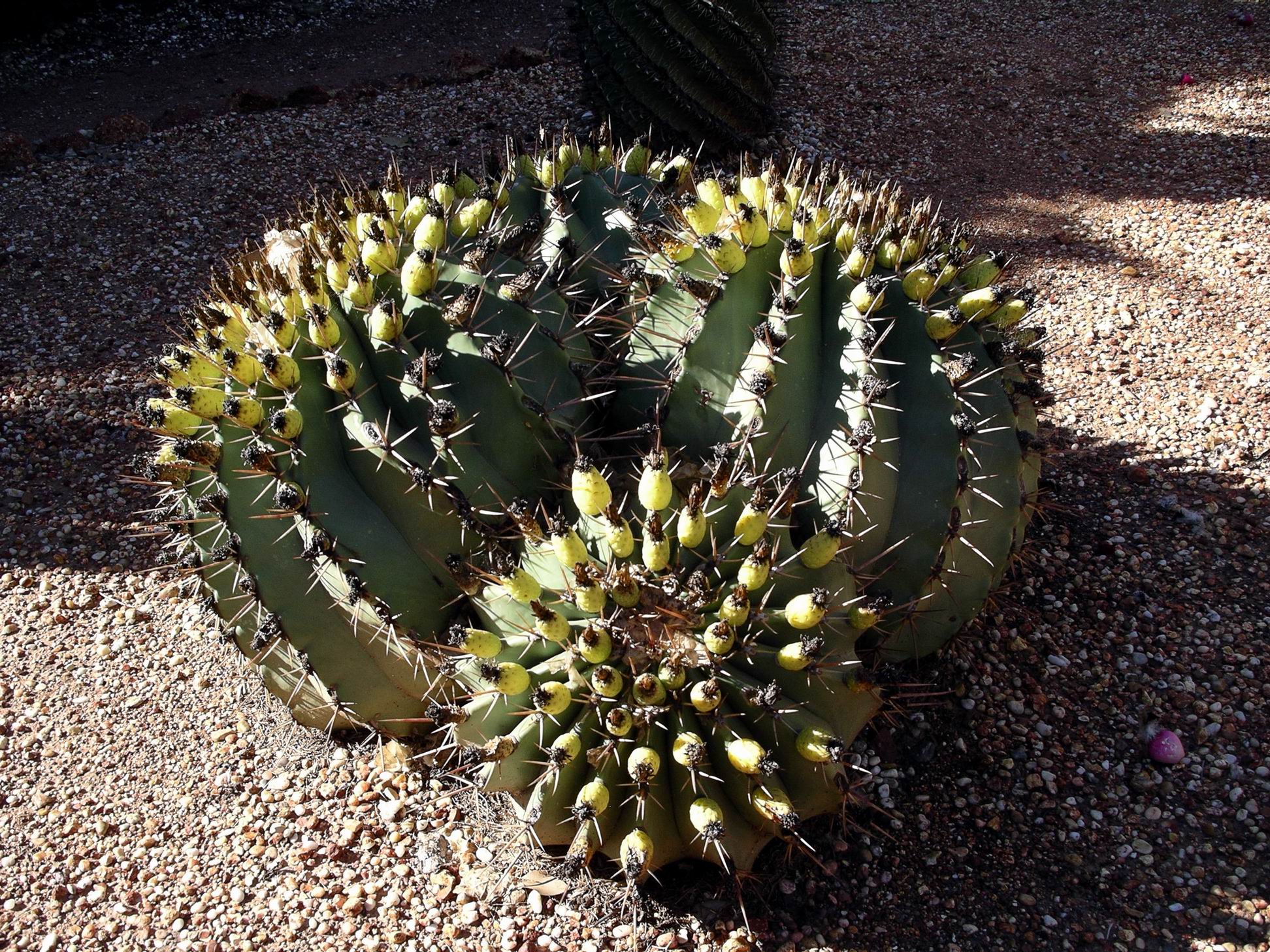
The highlight of the Blue Tour was the Cactus Garden. The entry fee here was $5 a person, but it was well worth it.
I had no idea there were so many different cacti, ranging from tall ones more than twice my height, to tiny ones.
Ever read “Day of the Triffids”?
Some had fearsome spikes, others were almost soft. Some looked like they might suddenly come alive and chase you.
The gardens were extensive and very neat, tidy, with clear explanatory notes about some of the plants. Obviously a huge amount of work had gone into establishing and maintaining the gardens. I did hope, though, that the Hudson Pear had originally not been an escapee from here!
I nearly bought a very pretty, small cactus, but then decided that it might not travel too well, there might be quarantine issues – and it wasn’t a very friendly house plant to keep in a small van, either.
On the Red Tour route, there were two unusual structures. Amigo’s Castle was built of ironstone. There were mine tunnels under it, but one could only tour it with the organized, paying, district tour. This was not for us, being herded around like cattle, straining to hear some semi-audible commentary, and cooling our heels whilst some attention seeking type asks questions no-one else is interested in the answers to.
Apparently, there was a full Plesiosaurus (?) fossil down there – that would have been interesting.
We also saw a really strange, cement, “Astronomers’ Monument” structure – a bit castle like. It was not open to look at though. I found it a shame a feature like this that could attract tourists, was closed off.
One heavily publicized local attraction was the Theatre of the Black Queen, featuring a house built from coloured bottles, lots of old lamps, and a one-woman dramatic act/presentation. This was another Ridge experience we decided to pass on – just didn’t come across as our sort of thing.
Back at camp, John had the remaining chook and some salad for tea. I had a fire-baked potato, and salad.
That was an interesting and varied day of being a tourist.
This morning, I managed to sew a complete patch before John was up and about – and there were five pieces of varying sized material in a six inch square patch, to be hand sewn together, with tiny stitches, so it wasn’t done quickly.
We left at 11am, for the Grawin. Took the back way – the gravel road from town that came out to Lorne, then continued on to meet the highway opposite the Cumborah road. It was the short way to go for us.
The drive out to the Grawin was pleasant enough for it not to matter that we were doing it so soon again. I found myself looking at the farmland – and the bush – that we passed, and wondering if there was opal to be found under there? Given the history of subsequent fresh finds in these parts, it could be possible that there were new fields yet to be unearthed? But I guess modern geological surveying methods are much more able to detect likely opal bearing areas, so probably the areas ignored were for good reason.
We parked amongst the trees by the Waste Dump. John got out and exclaimed “I’ve got a flat tyre!” The rear diver’s side was leaking – we could hear it going down. It wasn’t totally flat, yet, so it must have just happened. We had hit a couple of gutters in the track a bit hard. We changed it, finding that the air was coming from a fracture in the rubber. This created a discussion about whether the tyres should be deflated a bit on these hard, stony roads. It was not usually our practice – and “expert” opinions differed. I remember Adam Plate, of the Pink Roadhouse at Oodnadatta, telling us the first time we went up that way, not to run tyres softer than usual, except on sand.
Then we finally got up on to the heap. There were lots of other noodlers there today. I got sick of it quickly, and went back down to Truck, for lunch and to read and do some bird spotting.
Noodling on the waste dump, in fresh “biscuit” coloured heap
John came down later. for lunch, then went back. I went up later to take some photos, to find that most of the others had gone. Maybe because it was Friday, to get a head start on the night’s festivities?
John was working alongside a tourist, like ourselves, and a local. The latter was in his 30’s, had been a shearer, did some boxing around the country circuits, then had a stroke. Now, he noodled – and drank. He was doing both together, up there. When we drove away, he was just sitting on the front of his old car, all alone, drinking – a forlorn, sad, picture. I guessed there were a lot of hard luck stories to be found around here.
The tourist was out from the Ridge, for the day, like us. He was new to opals and noodling, and had left his ailing wife back at their van. He was dealing with some big problems and seemed pretty timid. He found a nice piece of opal on the heap and was soooo excited – it was nice to see him happy.
The little pile the men were working on was interesting, so I joined in for a while. I might have found a few small, good bits – I found it hard to tell if they were worthwhile.
We left at 4pm and got back to camp an hour later. The place was yet more crowded. A couple of camper trailers had set up quite close to us, and the Hacienda was still occupied.
Truck parked by the Hacienda cottageat Lorne
I had a bit of a chat with one of the camper trailer men. He was rather into the “I am the greatest travel expert” mode – one of those who had to go one better than anything anyone else said. But credit where it was due, and he had been to some interesting and out of the way places, like Old Doomadgee and Massacre Inlet. I gained some street cred by even knowing where these were, and by having also been to Massacre Inlet and Old Doom. He didn’t have it all his own way!
John had flathead and fries for tea. I only had fries, because the label had come off the fish pack in the freezebox, and when I went to cook it, there was only one piece!
We sat around the campfire after tea, for a while. It was so pleasant not to have TV!
It was a fairly usual morning, just taking it easy around camp.
An unusual occurrence was that there was an extra signal bar on our phone – and the Internet dongle was able to work. Email! John emailed our doctor at home, to get him to set up an appointment for later in the year, with the hip replacement surgeon. He had decided it was time to act on this painful hip. Having had the first one done in 1997, this time he knew the ultimate benefit of the surgery.
When I was handwashing a windcheater in the camp laundry, discovered that the gold ring I wore all the time, that had a curved shape with three stones set in it, was missing one of the little stones. It was a gift, many years ago, and I wasn’t sure if the stones were diamonds or cubic zirconia – suspected the latter. I would have to try to get a replacement stone put in at home. I didn’t know if I lost it down the laundry drainhole, or scrabbling around in the dirt yesterday. A noodler might find an unusual stone out there! Despite the levity, I was quite sad at the loss.
Into town for bowls at 2pm. I had not envisaged me doing so much bowls on this trip, but it was keeping the driver happy. I guessed I owed him some bowls credits for the Warrumbungles walks – and the ones we might be doing later, if my plans worked out. It was a good idea to build up the credits in a pleasant bowling environment, I judged.
We both played in different teams. Mine drew the game. John’s lost. No prize money for us today. After a quick afternoon tea at the club, the supermarket was next. They had scotch fillet steak on special – really good value – so I bought a couple of lots; there was a bit of room in my little freezebox.
For the past couple of nights, since the big group left, there had only been three or four other lots of campers at Lorne. But it was now filling up again, with about ten vans in tonight, including another Bushtracker. They were becoming – like Trakmasters – much more commonly seen than was the case when we first set out, eleven years ago. There was a van parked just around the corner from us, tonight, the closest neighbours we’d had, so far, here. The Hacienda cottage, next to us, was also occupied for the first time since we had been here.
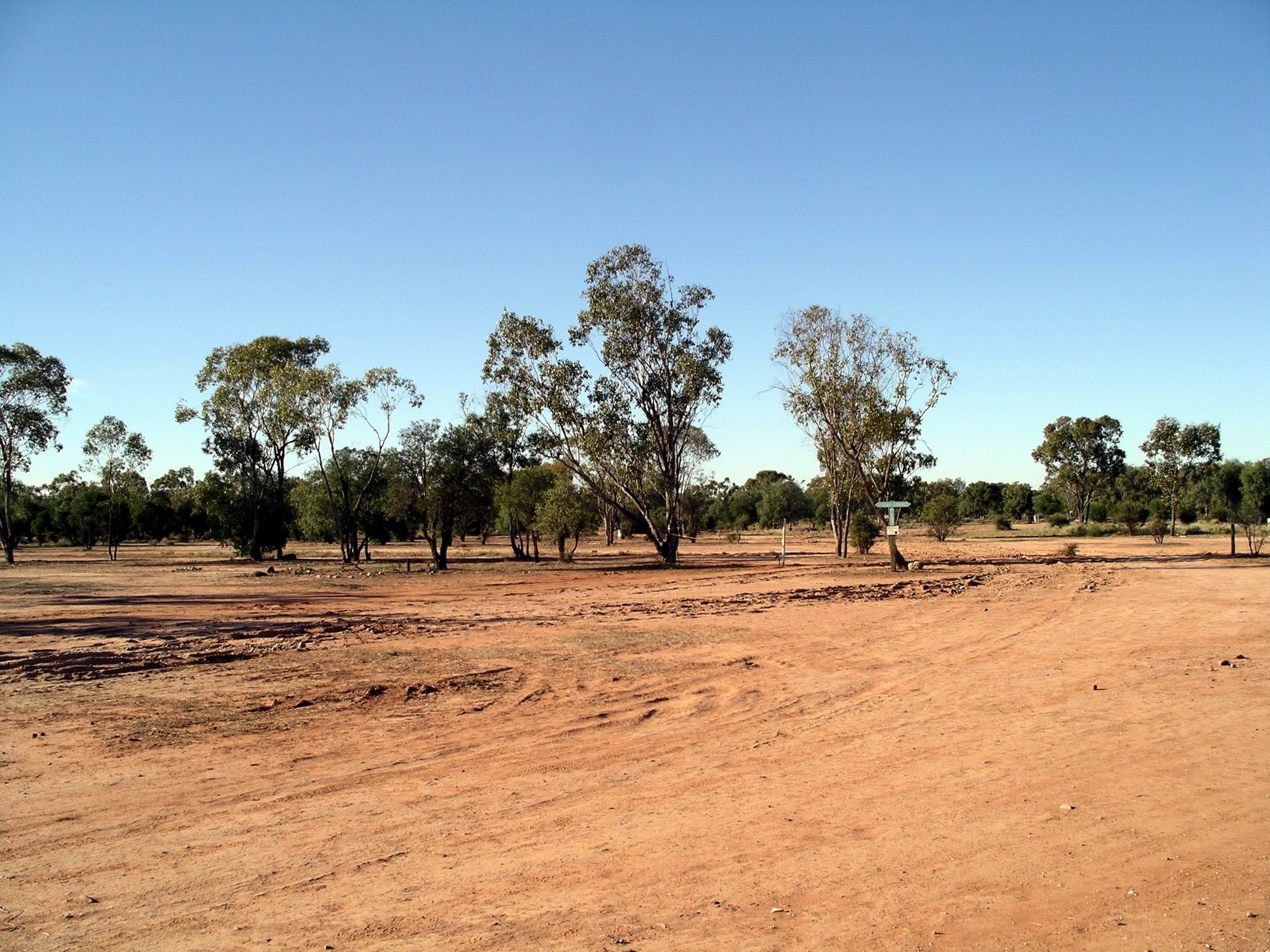
The vast unpowered camping area at Lorne
Decided that we would extend our time here by three nights and leave next Monday. That would allow a day for another trip out to the Grawin – John wanted to have another try at the noodling. I wanted a day to play tourist and do the car door tours of the area. And John wanted to play social bowls on Sunday. The timing of that would allow me enough time back at camp to cook us a roast dinner – if we could decide between chook (John’s wish) or lamb (mine).
We paid for the three more nights – $18 per night.
Tea was pasta with sauce based on tuna, capers, tomatoes.
After a few days here, I now had two gripes about this caravan park. One was that the permanent residents, of which there were several, smoked in the amenities. And, at night, there was often a sewerage smell drifting over the area.
Having plans for an outing today, we both made a reasonably early start to the day.
In town, we refuelled, and bought a newspaper, in order to see details of yesterday’s federal budget. It did not look as if we would be affected in any great way by its measures.
Whilst in town, John received a phone message, telling him that he had been elected to the Selection Committee of our local bowls club. He was pleased. So was I – maybe thinking about that would take his mind off buying a claim?
Our destination was the Grawin opal fields, some 66kms by road from Lightning Ridge.
The sealed road went to the hamlet of Cumborah, through grazing country with some lovely areas of cypress pines. Cumborah was sad, a nearly dead settlement. North of there, the road became gravel. We had no trouble finding the turnoff to the Grawin, about 10kms north from Cumborah.
The Grawin area began to be mined for opal at a similar time to Lightning Ridge – about 1900. It consists of three parts, really: Grawin to the north, Glengarry in the middle and Sheepyard Flat to the south of the mining area. The Glengarry section really got going in the 1970’s, and the Sheepyard from the mid 80’s.
The Grawin area. Big waste dumps can be seen in centre of photo
Like most Australian opal fields, the level of activity waxed and waned depending on the value of opal, and external circumstances like World Wars. Changing technology also affected the extent of mining. Today’s equipment, whilst it might seem a bit makeshift and primitive to we observers, is far advanced on the original pickaxes for digging and candles for lighting underground.
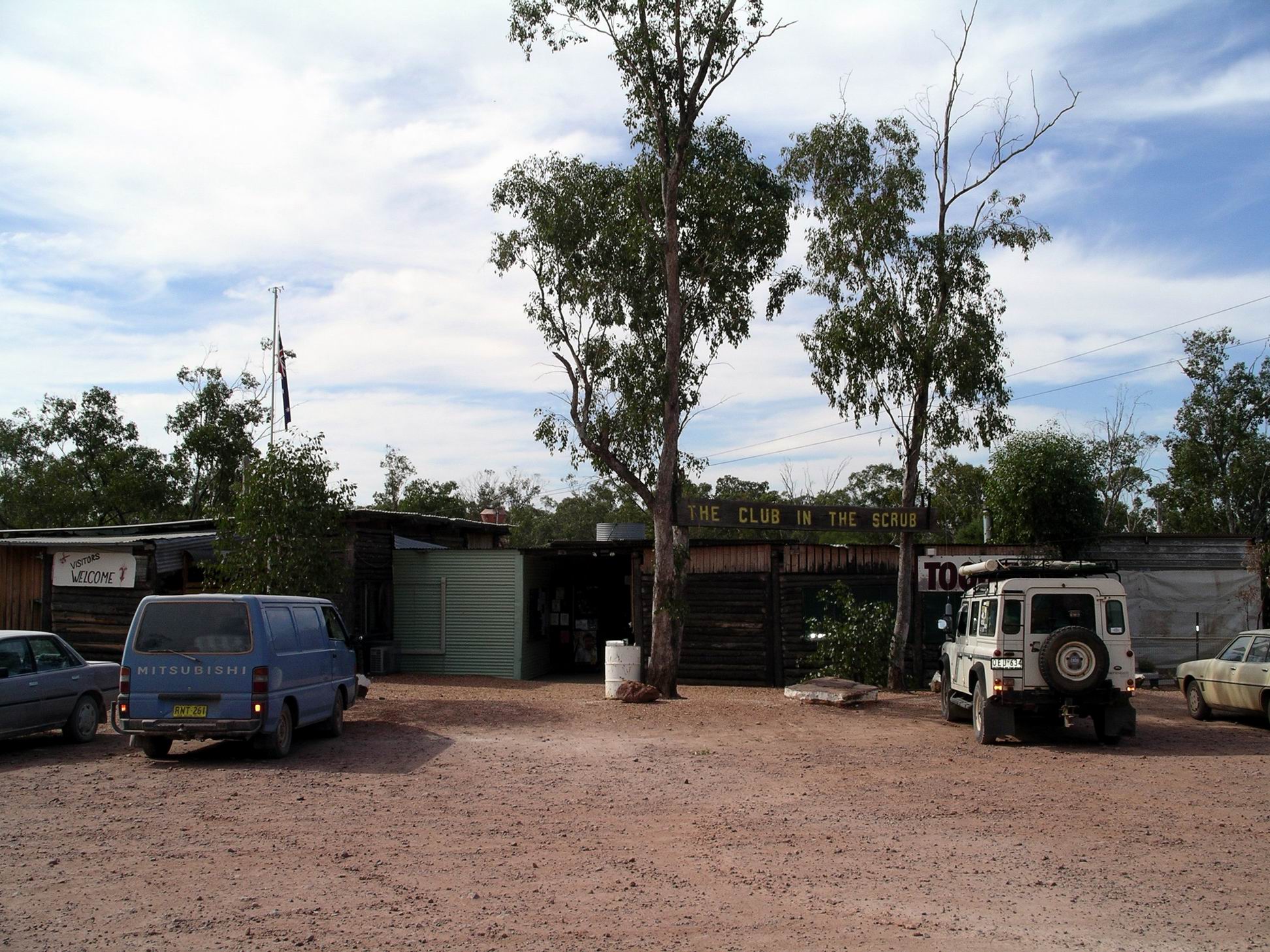
Our first stop was at the first manifestation of the fields that we came to – the “Club in the Scrub”.
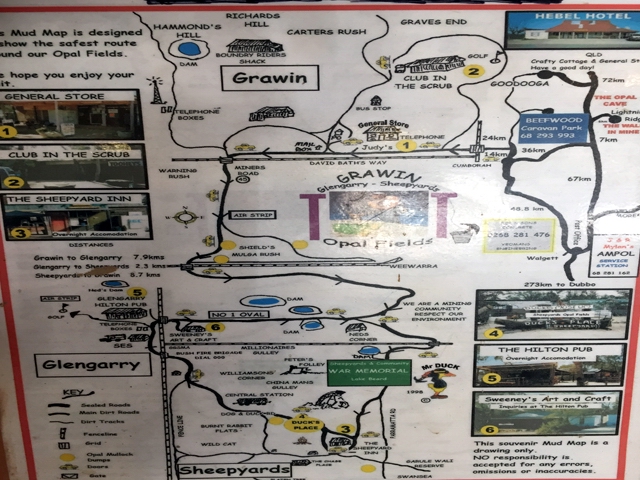
This was the clubhouse and licensed premises for a nine hole dirt “green” golf course and general watering hole. The club was very quaint and quirky. Rough logs and corrugated iron featured prominently in the construction. After a bit of a browse around, including at the displayed notices, I bought a fridge magnet and a mud map of the fields, made by a local, and laminated. For this, I donated $5 to their SES. The lady behind the bar assured me that we would still get lost!
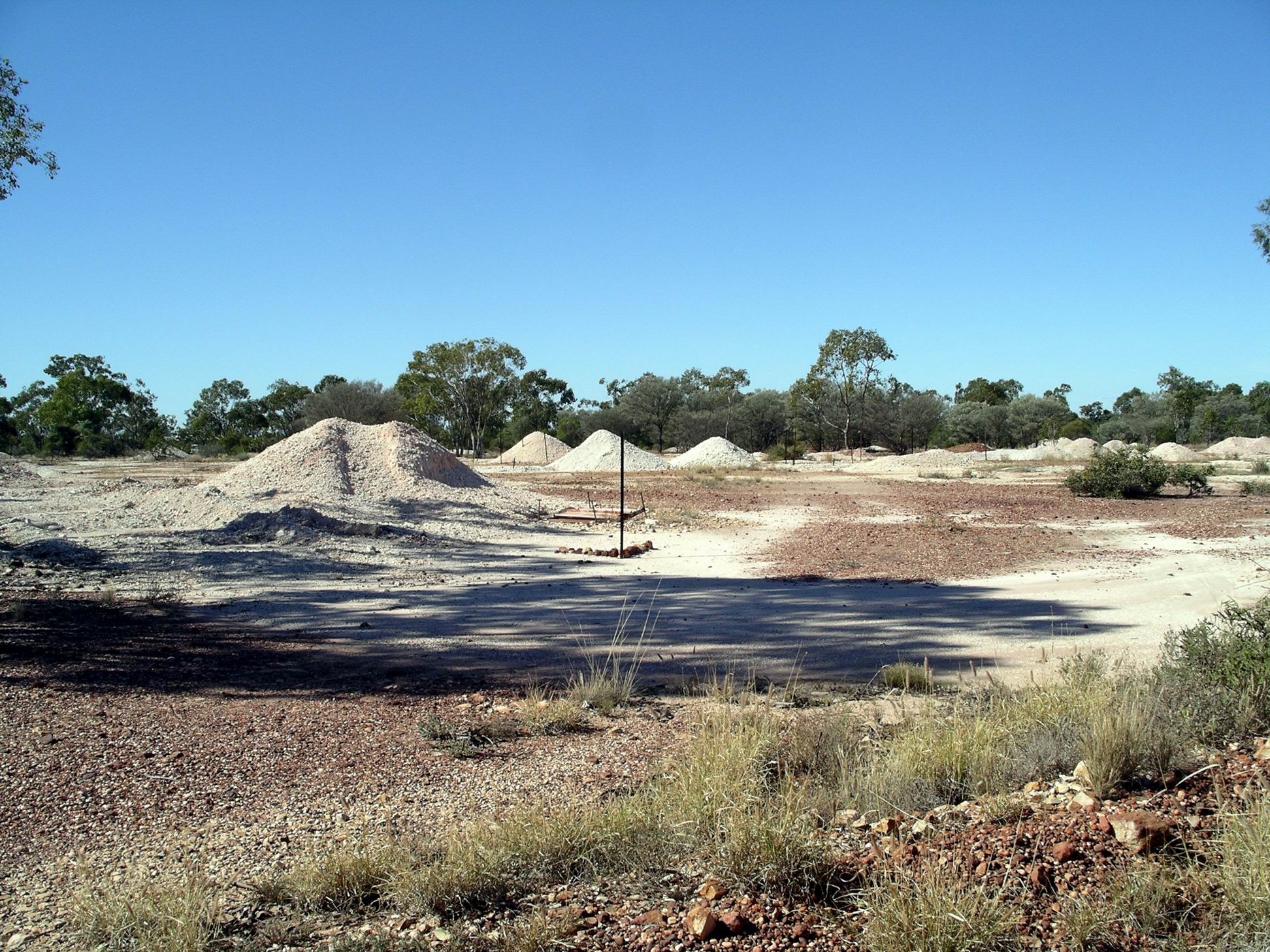
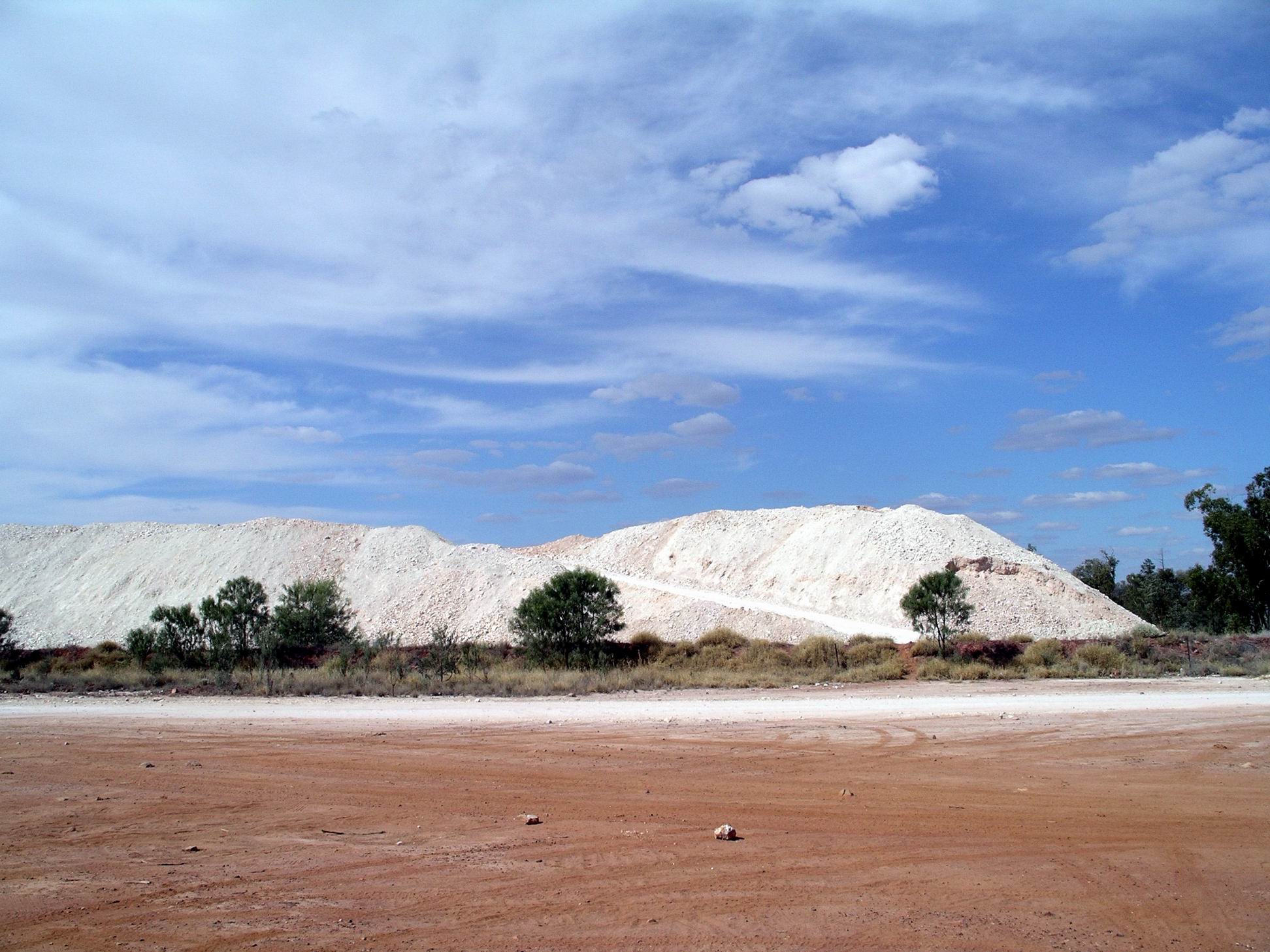
It was definitely not that easy to navigate around the diggings, even with map. We eventually got sort-of oriented, and able to guess at which was the main track amongst the myriad that went every which way. The surface was all the white claystone that typified the opal areas here.
The white dirt of the Grawin – and the main road through it
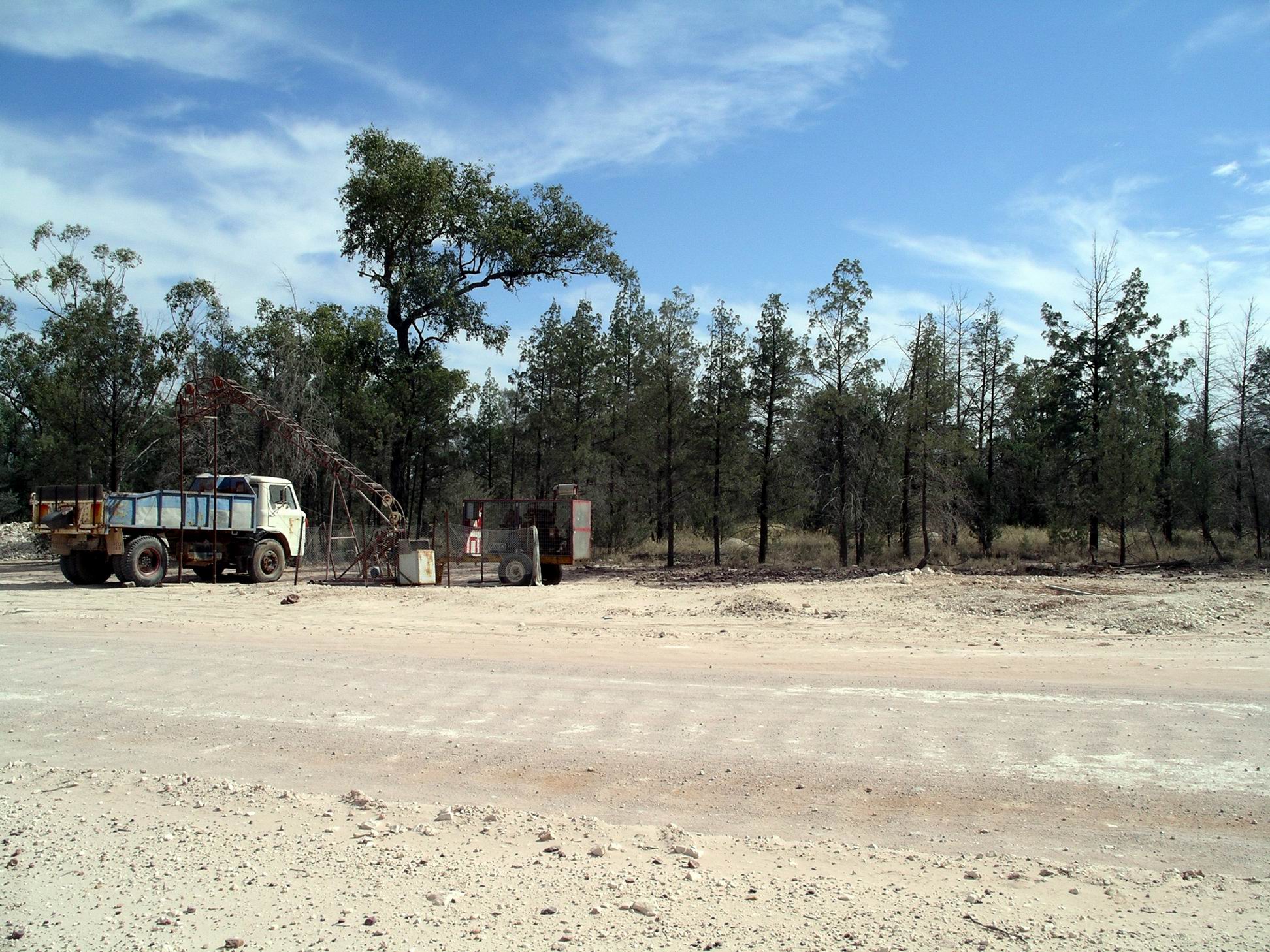
We passed lots of claims, some with structures on, some just marked by the assorted apparatus that lifts the dirt from the shafts below. Much of the gear on the claims was improvised – typical of opal fields. There was little effort to put any barriers around some of the holes – it certainly was not an area one would want to wander about on a dark night. I wondered how many diggers, staggering home after imbibing too much with their neighbours, had done a disappearing act down an unguarded shaft.
A current mine, with apparatus to raise dirt from below, to dump truck
The meandering track brought us to two huge waste dumps where it was obvious, from parked cars and people around, that there were several “noodlers” in action. Noodling is digging in waste dirt discarded by the miners, in search of opal they may have missed. In some mining areas, doing this on the waste deposited beside individual mines is likely to provoke a very unfriendly reaction from the miner, but here the big waste dumps were communal and noodling appeared to be tolerated.
One of the massive waste dumps, showing ramp that dump truck used to get to the top
After we ate our packed lunch sandwiches, sitting in Truck and watching the activity from afar, John decided to join the noodlers and walked up to the top of the pile. He was immediately offered a collection of opal pieces in a jar, by one noodler – and bought the jar! For $100. I didn’t know whether or not he was conned – there were some bits in there with flashy colours. But, on balance of probability, I reckon the guy picked him straight off as a soft touch. He reckoned there was a month;s worth of work in that jar. If that was the case, then he was hardly going to be living the high life on the proceeds.
Two trucks churned their way up the dirt ramp to the top of the heap, to dump their dirt. One was immediately set upon by the majority of the noodlers, as the waste came out of the tipper. They said it was the “right colour”, plus, I was sure, they knew whose dirt it was and that the fields’ grapevine had them “onto colour”.
On the top of the waste dump, with truck tipping a new batch of discarded dirt
I picked up more terminology out there today, than opal. When I joined John at scratching in the dirt, I did find a few pieces of potch – opaque opal-like stone without any flashing colour in it. It might be useful for John to practice on, if he ever decided to try cutting himself.
As we dug around in the heaps, not really knowing what we were doing, got talking to a young man nearby, doing the same. He told us to look for the pale white heaps (which they mostly all looked to me) or, best of all, the “biscuit” colour and structure. This was the layer down there, adjacent to the opal bearing one, and sometimes contained missed opal. He found a very nice chunk in the same heap as we were digging in, while we were there. He also told us that the newest area of diggings – a rich one – was just near this dump heap. I guessed that made it attractive to the full time noodlers.
After an unproductive couple of hours of this, we moved on around the tour route on our mud map of the fields.
At Sheepyard Flat we admired the War Memorial – very nicely done. I was to find that there were a number of Vietnam War veterans on these fields. The Sheepyard Inn was another unique place – casual the order of the day. We partook of a ginger beer each – cost $5 each, though!
Continuing on we passed, but did not stop at, the third of the licensed premises in this area, the Glengarry Hilton, so called. Three drinking places in a relatively small area – maybe there were a lot more miners living out here than was immediately evident?
In our time out there, we only saw a handful of people who appeared to be tourists like ourselves. It certainly was not over run with visitors. This might have been due to the unsealed roads, but maybe also because tourists were satisfied with their experiences at Lightning Ridge and assumed the Grawin was more of the same. We did not find this to be the case, and would tell our friends coming this way that they must make time for a day trip out to the Grawin.
We got back to camp about 4.30pm, after stopping by the roadside to collect firewood.
Tea was soup and salads, after which we sat round our campfire, mulling over the day and agreeing that it had been most interesting and enjoyable.










 This Adventurous Age