This Adventurous Age

Adventures travelling and working around Australia.


1 Comment

2007 Travels May 18

FRIDAY 18 MAY     MARREE

We’d had some discussion yesterday, about what to do next.

M and I were interested in visiting Muloorina Station and thus accessing Lake Eyre North at Level Post Bay. We had picked up a mud map when we checked in to the caravan park, yesterday. The question was whether we went and camped out there, or just did a day trip. But we were not sure of the camp ground quality, out there, nor of the road condition. Another factor was that John tended to find outback SA with all its ruins, depressing, so he was anxious to get moving further north. Part of that might have been that the Oodnadatta Track was familiar to him. In the end, it did not seem worthwhile dragging the van all that way, if John was only prepared to stay a night there. So we decided on a day trip, only.

Galah watching proceedings…..

The unsealed road out to Muloorina was reasonable quality, but the country was incredibly dry. We could have brought the van out, no problems. There were, of course, the inevitable gates to open and close – it was a pastoral property, after all.  Being in the leading vehicle, I got to be chief gate opener – and usually closer, as well…..

We checked out the campground, which was not far from the homestead. It was actually very pleasant, and would have been a great spot to stay for a couple of nights. There was a wetland area around a bore channel and Frome Creek, and plentiful bird life. There were a couple of decent toilets, a concrete table and seats, bush and informal park areas. One could swim in the waterhole – but the water was not drinkable. Charge was $2 a night! The only drawback was lots of flies!

Frome Creek at Muloorina

We chatted to a lady who was camping there, and whom we’d seen at Arkaroola. She was travelling in a Land Cruiser and had a sort of sleeping pod on the vehicle roof. It looked a bit like a blue and white Esky up there! She came from northern NSW, and was just making up her travels as she went – the best way to do it!

Muloorina wetlands

From there, we continued out to Level Post Bay on a fearsomely corrugated track.

Level Post Bay

Lake Eyre, is notable for being the largest lake in Australia – not that it fills very often. It also contains the lowest point of the Australian mainland, being some 15 metres below sea level at one place. It takes a fairly massive, prolonged rain event in SW Queensland to send water down the Warburton and Cooper Creeks, to fill water into the lake. Its base is salt, left from evaporation of previous fillings, so the water that arrives at the lake quickly becomes saline.

There are actually two parts to Lake Eyre: the northern, much larger section, and the much smaller Lake Eyre South, joined by the Goyder Channel which permits the latter to fill if the flood event is big enough.

Level Post Bay on the Madigan Gulf, was part of Lake Eyre North. The track ended here, by a small information board.

We were able to walk out on Lake Eyre North, for a few hundred metres. It was muddy, under the thick salt crust.
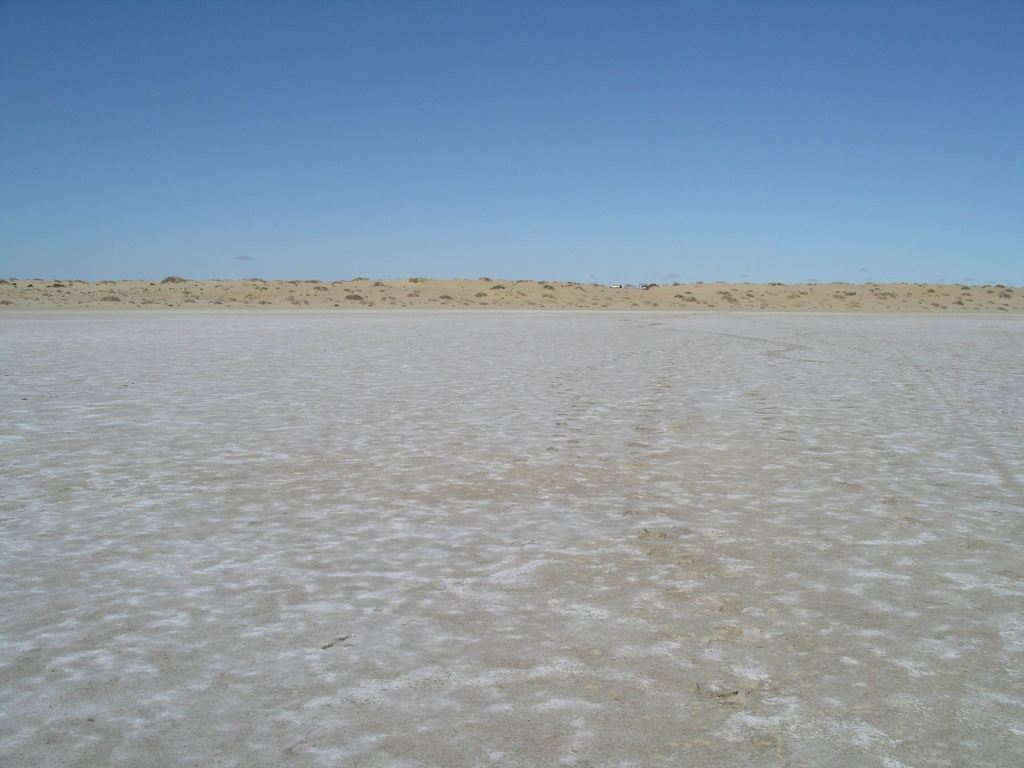
Out on Lake Eyre – looking back to our vehicles
The salt surface of the lake

It was disappointing to see tracks out on the lake surface, where vehicles had been driven out from the parking area. There was always some moron who has to do what signs explicitly instruct them not to do!
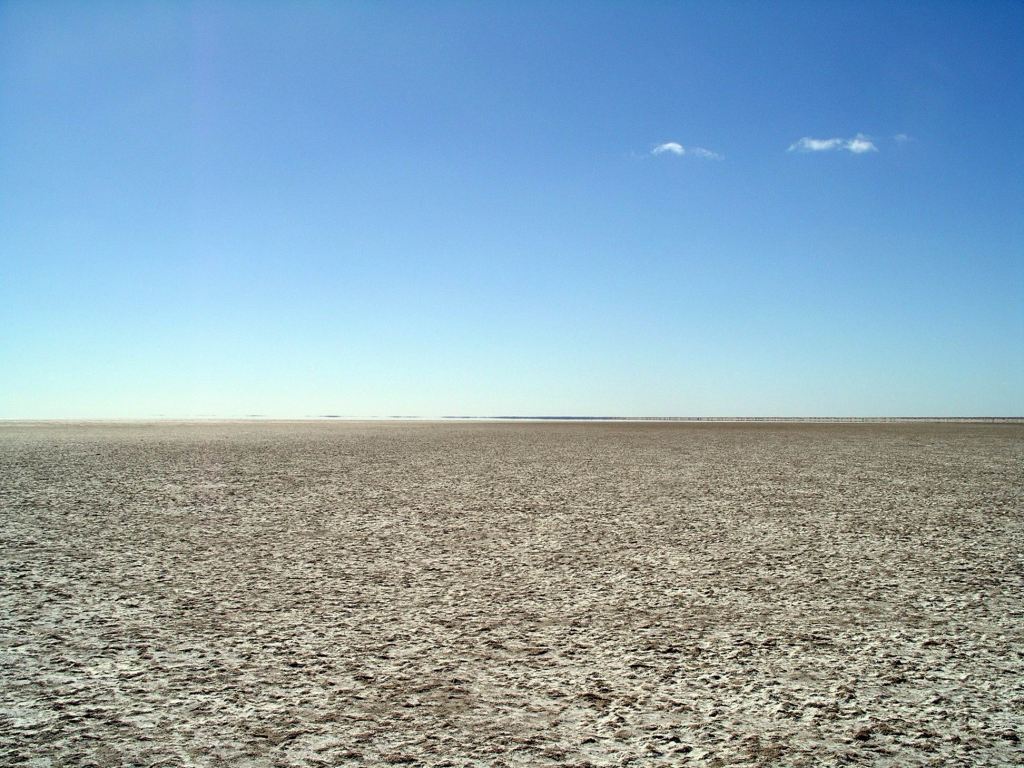
Level Post Bay and Madigan Gulf

We ate lunch out there, sitting up on the bank, looking out over the lake bed.

Drove back a short way, to the Goyder Channel that links the two parts  of the lake. Walked around, took photos.

Goyder Channel

There was a built up wide causeway across the channel here, not open for public vehicle access, but we were able to walk across on it. Presumably, it was used by the station people to access that part of the property and to move stock.

It would actually be quite something, to visit here when Lake Eyre was full enough for there to be water in Madigan Gulf and flowing through the Goyder Channel. I filed that in the mental wish list – but in the section that I recognized as fairly unlikely to happen!
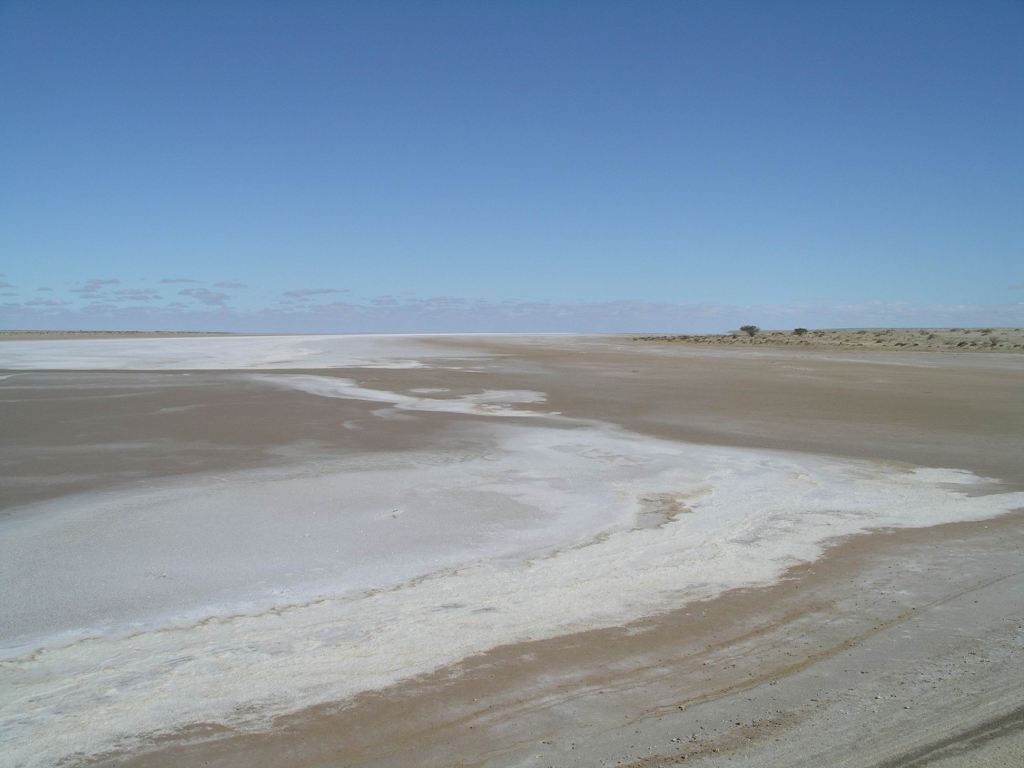
Goyder Channel – dried salt, not water….

And so, back to Marree – with a couple of us thinking wistfully of the serenity of the Muloorina campground!

Muloorina country: 1. Muloorina campground 2. Goyder Channel

All up, we travelled 200kms. John refuelled back at Marree – $1.45cpl.

There had still been some cloud about today, but we had stopped on the way back in, to tune in to the 3pm road report on our HF radio. It had the Painted Desert road access open again, but with caution at Arkaringa Creek. Good! Maybe it would be nice and dry by the time we got up there.

Today’s jaunt had certainly been worthwhile and enjoyable – and new for all of us.


Leave a comment

2007 Travels May 17

THURSDAY 17 MAY   COPLEY TO MARREE   115kms

There was not far to go today, so we took it in a very leisurely way. Took our time packing up and didn’t pressure M to hurry getting her tent and all packed up.

Only a few kms north of Copley was the open cut Leigh Creek coal mine – the reason for the existence of the Leigh Creek township.

Open cut coal mine Leigh Creek

We had a bit of a browse about, at the lookout over the open cut mine. Some of the old machinery there was of interest, if only because of its sheer scale. The old digging machine dwarfed Truck and van.  We took some photos to show the grandkids later, thinking they would be impressed by the size contrasts.

A tyre that was on display had set a world record for the time, racking up almost 300,000kms. And we think we’re doing well if we get a quarter of that on our Truck tyres!

The mine was a very massive hole in the ground. The coal mined here went by train to Port Augusta, to the power generation station there.

The village of Lyndhurst was the next point of note on our way north, really only because it is the southern end of the Strezelecki Track, to Innamincka. Signs indicated it was still closed.

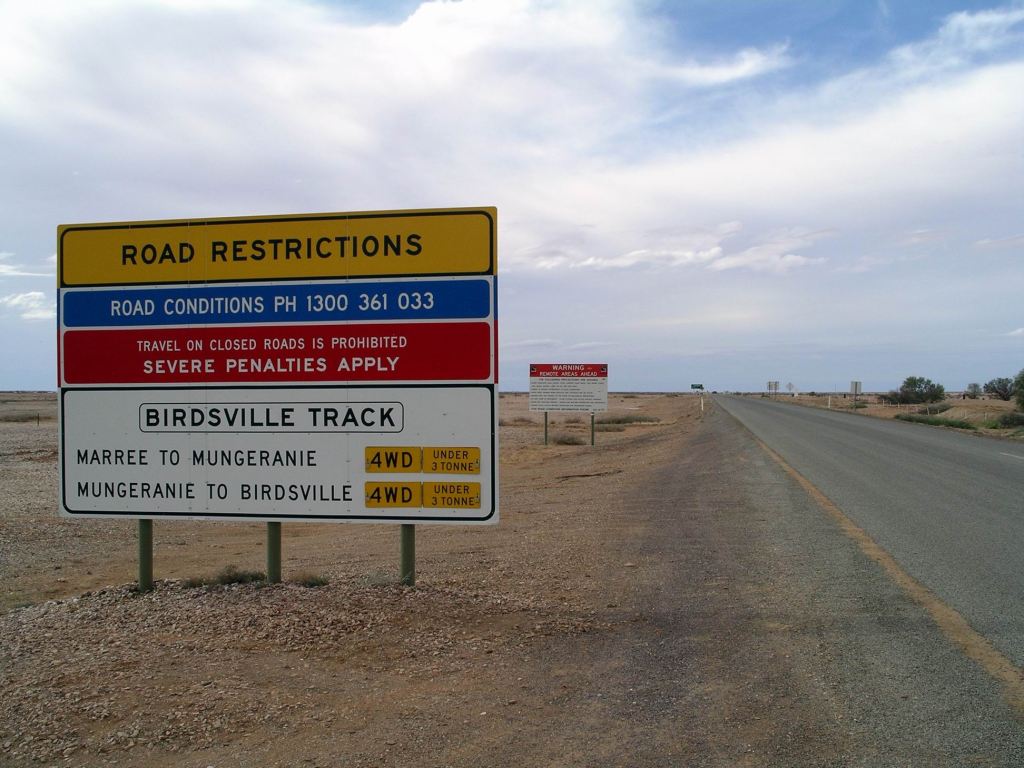
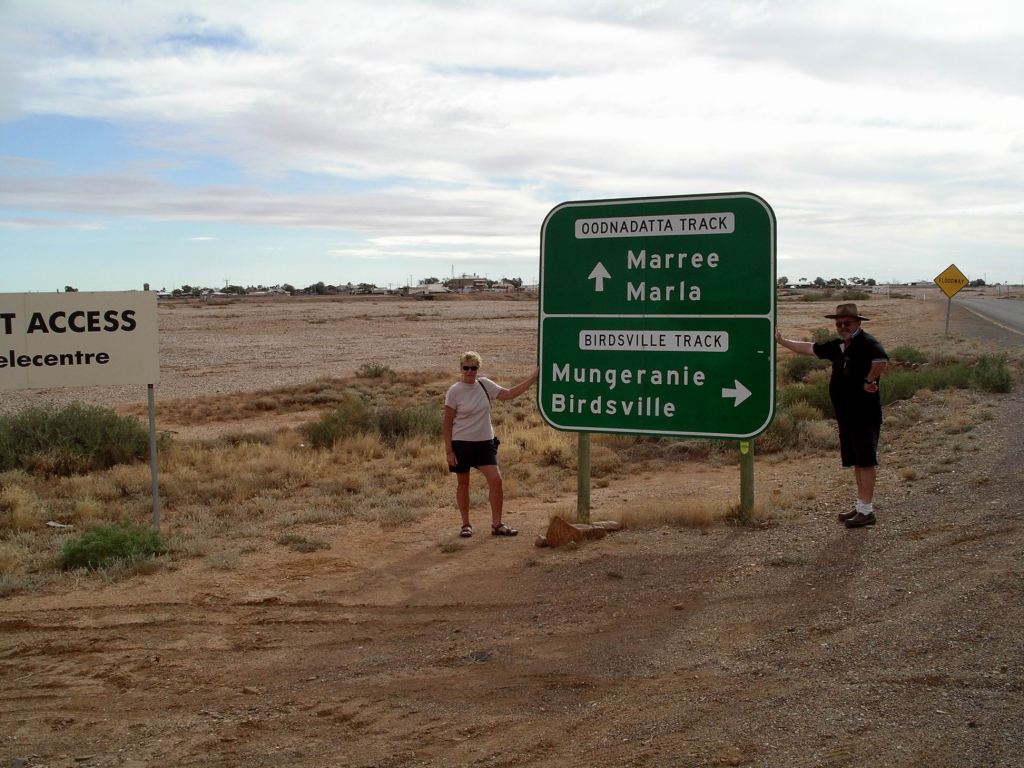
So, on to Marree, a rather desolate little township. On the outskirts, signs showed the Birdsville Track was open only to lighter 4WD vehicles, so, clearly it too had been affected by the recent rains.

We booked into the Drovers Rest Caravan Park, which had the advantage of being a good distance away from the township centre i.e. the pub and associated noise. This park was set up by the former boss drover, Eric Oldfield, who spent much of his life droving cattle on the Birdsville Track. We had stayed here before.

Marree in the background

Our powered site cost $20. We found slightly shaded sites to set up on;  gravel surface of course. The amenities were still the very basic Atco donga ones, with their strange arrangement of showers of dubious privacy. There was a sort of arrangement of shower curtains, but it was best to try for a shower when no one else was in the building!

Only needed a basic camp set up here, so that did not take long. We had a quick lunch.

Walked into the centre of the township. Marree was quite sprawling – quite a lot of space between buildings and features.

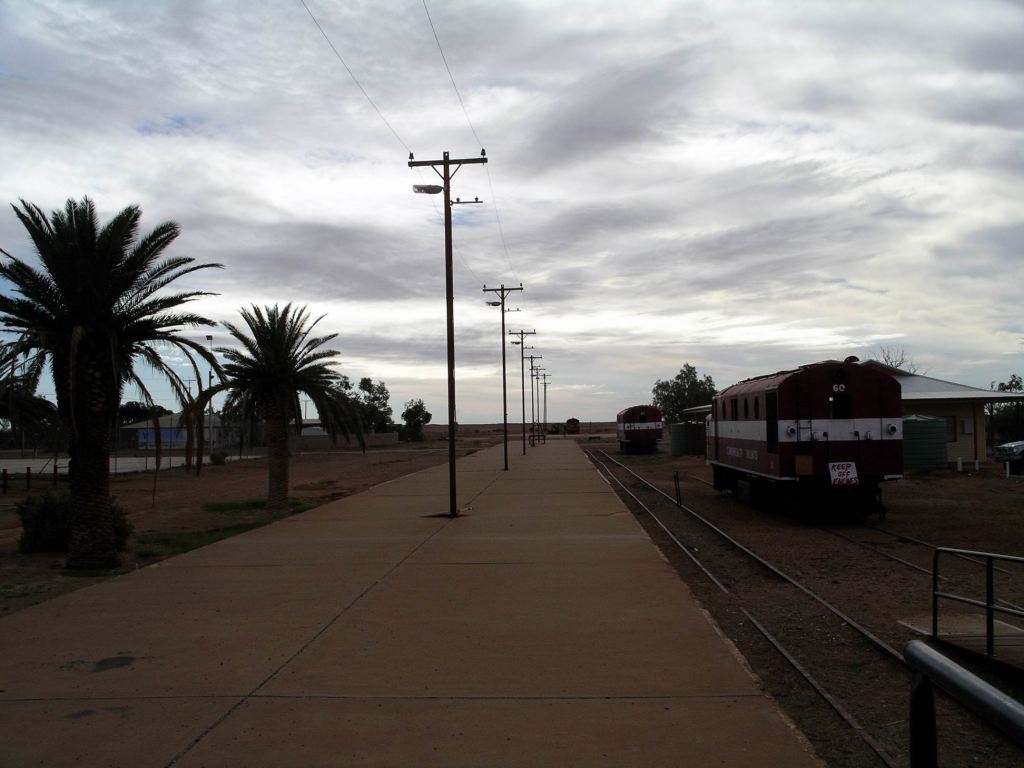
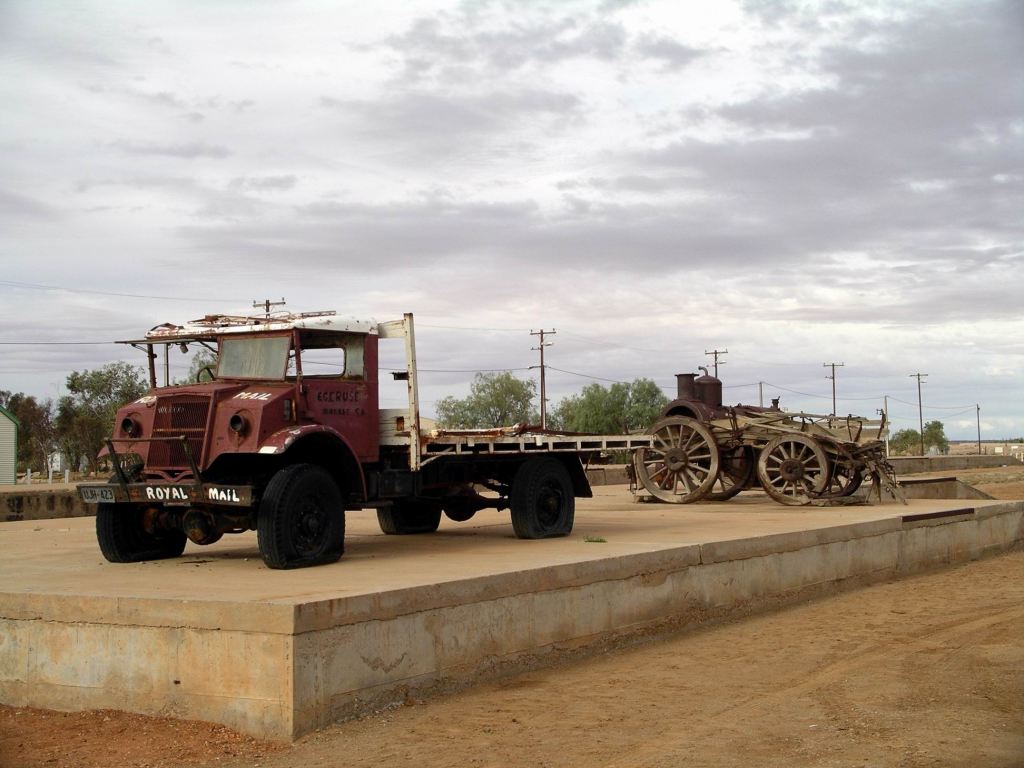
We made for the old railway station, which dated from when the original Alice Springs – Ghan – railway, passed through this town. Like Beltana, it lost out when the railway was moved west. Marree was also a railhead for the movement of cattle from the north, which were walked down the Birdsville Track. Here, they were loaded onto trains and taken to the southern markets.

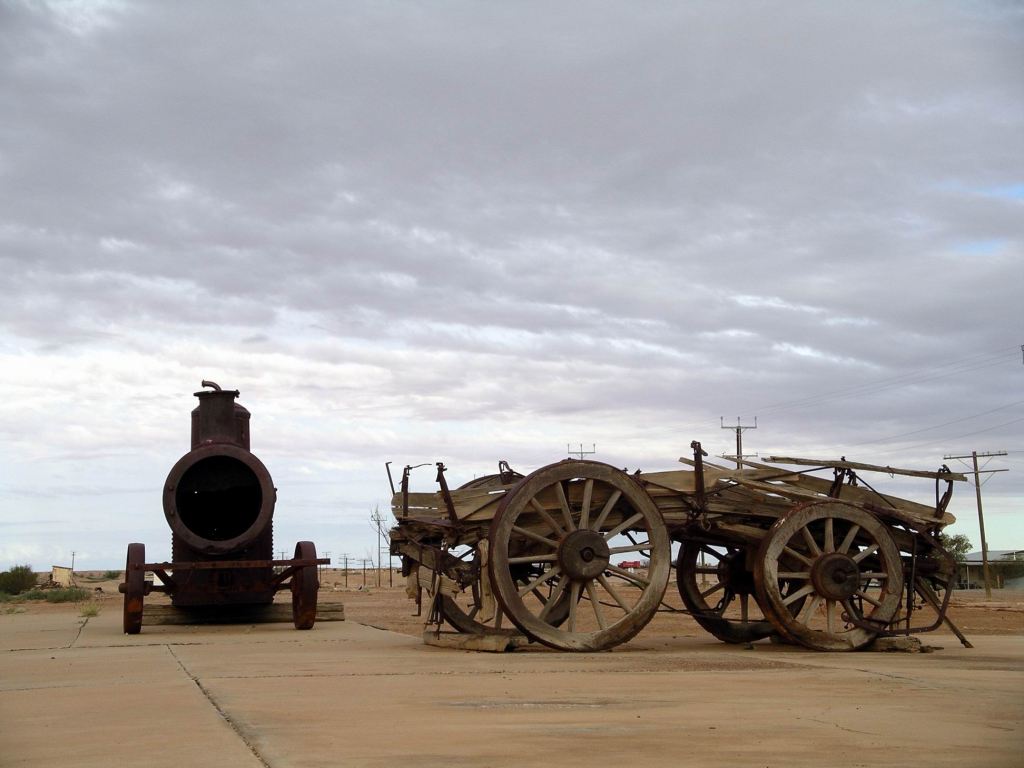
There was old railway memorabilia – you couldn’t really call it “on display”. It was just there. One could but hope that sometime soon, some effort would be made to mount a proper display. It could be really interesting.

Tom Kruse, the famous Birdsville Mailman, took mail and supplies up the Birdsville Track, from the 1930’s to the mid-60’s. Each of his mail runs took two weeks, covering really challenging terrain in often difficult conditions. He was a really important person to the isolated cattle stations along the track from here to Birdsville. One of the trucks he used was on display here.

It was a pleasant walk to the township, and back.

Road reports had the Painted Desert Road – out of Oodnadatta, which we hoped to take – still closed. Could but hope that, over the next few days, it dried out and was reopened.

Drovers Rest Caravan Park, Marree

The night was really chilly. There was still some lightning to the south east. It was definitely a night for the woolly bedsocks!

I played computer mahjong until 1am – addictive game – then slept very well.


Leave a comment

2007 Travels May 16

WEDNESDAY 16 MAY     COPLEY

It was a fine day, with some cloud about.

M and I both rose at a respectable hour. While John slumbered on, we each did a load of washing. The chores had been neglected for a while now. You know it is time to act when you have to start inspecting the used undies in said washing basket to find some that could be recycled!

Once John was up and breakfasted, and had pottered about for a bit, we went for a walk  to explore Copley, in part because we had time to fill in before going back to Leigh Creek.

It did not take long! We bought an early lunch at the bakery, which was reputed in travel write ups as a must patronize place. John had a pastie. I had a sausage roll – which turned out to be still semi-frozen in the middle! I would not be recommending the place!

Drove to Leigh Creek to stock up on the fresh produce, which came in on Wednesday mornings. There was a much better selection of fruits and vegetables now, plus fresh bread (which the bakery didn’t have).

Took our bounty back to camp, then turned around and drove to the Heritage township of Beltana, some 35kms south of Leigh Creek.

A few of the buildings here were still occupied, but others were ruins.

Beltana

The town was a thriving little one in the late 1800’s and early 1900’s. There were copper mines to the east to supply, as well as a few local pastoral operations. The TransContinental Railway to Marree and then Alice Springs, passed through it,  as did what passed for the main road.

But the copper mining declined. From the 1940’s coal was mined at Leigh Creek and a township established to service that. In 1980, the railway closed down, when the new route was established well to the west. Then the road alignment was shifted a few kms to the west – now one must detour from the main road to reach Beltana.

We wandered about Beltana for a little while, studying ruins, taking photos.

The ruins of the copper smelter and settlement at Sliding Rock, 22kms east of Beltana, was our next stop.  It was a little tricky, finding our way out of Beltana to the road we wanted – tracks everywhere and little in the way of signposts. (Last time we went out there, it was kind of by accident, so I didn’t really remember the way). We crossed the dry creek bed and headed in what looked like an easterly direction. It turned out to be the Warraweena road,  which was what we wanted. The gravel road out was in good condition.

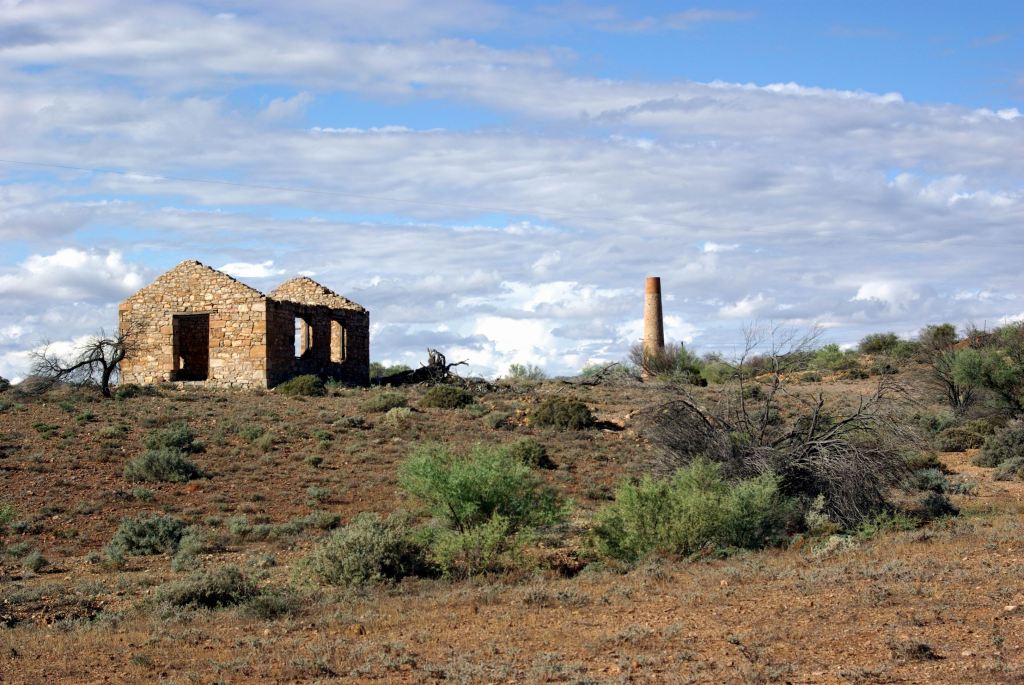
The copper mine at Sliding Rock started up in 1869. The ore was so promising that a smelter was built out there, and then a second one. A little township grew up near the mine, during the 1870’s and was gazetted as Cadnia.

Unfortunately, the early optimism proved premature – copper prices fell, the smelter machinery was prone to breakdowns, transport was difficult, underground water in the mine shafts was a major problem.  By the early 1900’s, the mine was closed and people were moving away to other places. The school house at Cadnia was moved to Beltana.

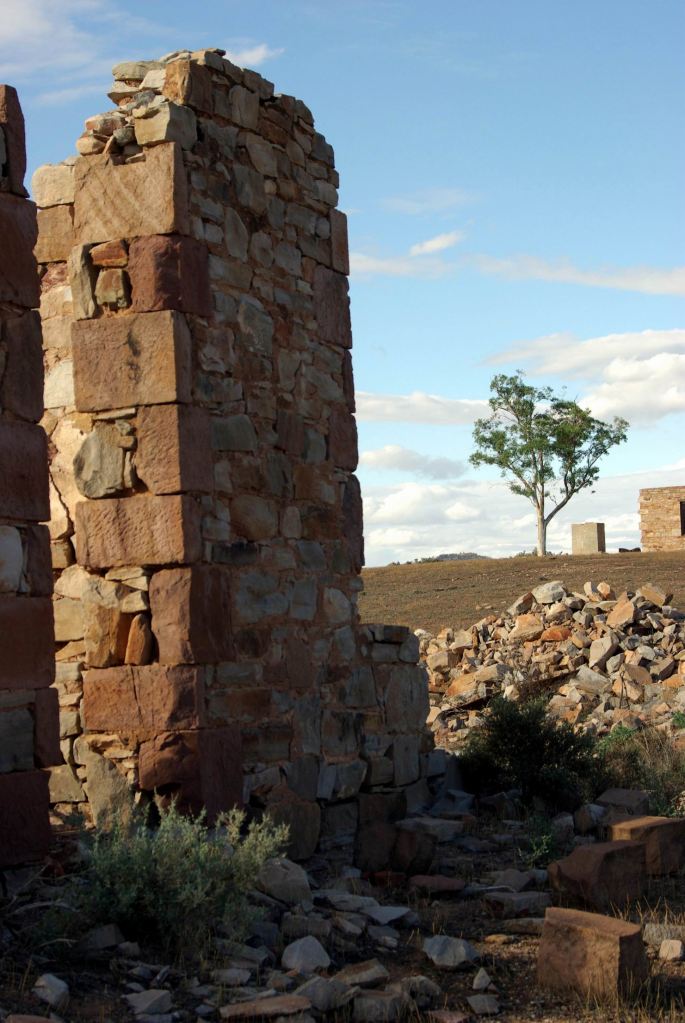
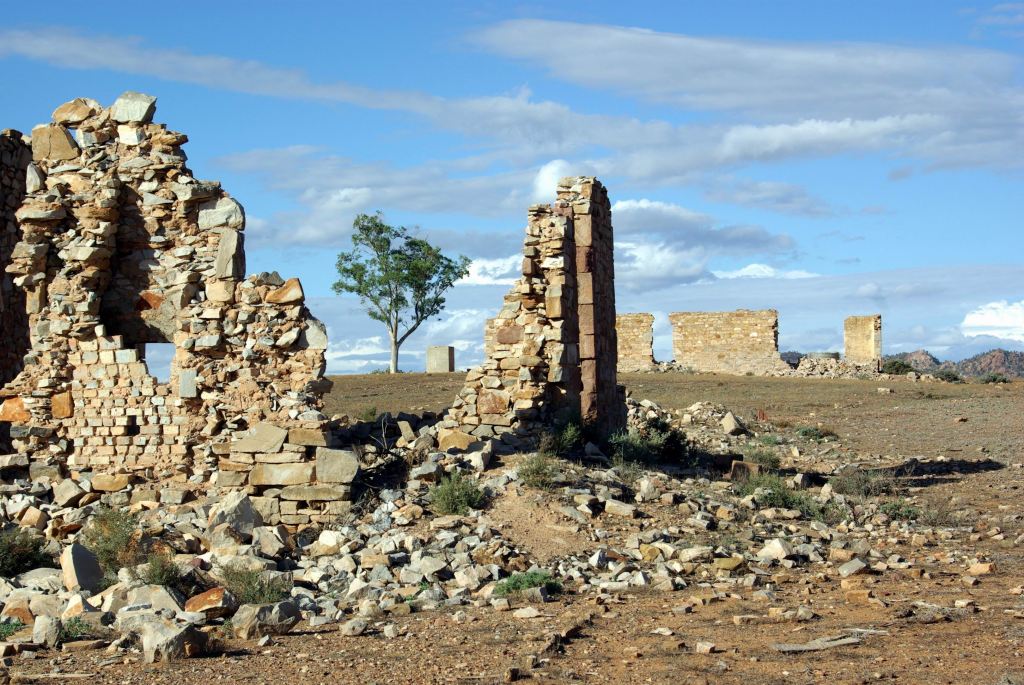
Now, it is just a collection of very picturesque ruins in a brilliant setting.

On one low hill are the remains of the smelter complex, and some distance away, on another rise, the township ruins.

We wandered around the very scenically set ruins for a couple of hours.

Sliding Rock

This place is only about 30kms in total from the main road, on good gravel roads, but it was a measure of how far off the normal tourist trail it was, that in our time out there, we saw no one else. But then, I  guess the same could be said of most of the places we went at Arkaroola. But it seemed to me that travellers going through Leigh Creek and Copley are focussed on “the Tracks” – Birdsville and Oodnadatta – and do not stop to explore en route. They miss some gems.

A few kms further along the track from Sliding Rock is the Warraweena Homestead, which we had visited on a previous trip. Sliding Rock is located on the Warraweena property,. a former pastoral lease now turned conservation  land. Next trip up this way, we thought we’d like to utilize their bush camping area and explore tracks further east of here.

Drove back to Beltana and, for something different, took a dirt road north that follows the old rail alignment through Puttapa Gap and so back to the main road. That was an interesting way to go.

John refuelled Truck at Copley – $1.43cpl.

We were back at camp in sufficient time for me to roast a chook for dinner – in the electric frypan, outside,  as I always do my roasts when travelling and on external power.

While dinner was cooking, and M and I were getting our washing off the line, John downloaded the photos that HE  had taken, to date, on the new Pentax digital SLR camera that was MY Xmas present! He was very pleased with the results, especially the ones he took out at Sliding Rock today. He named them and burnt a backup copy to a CD.

We made some phone calls. Sent emails to family and to house sitters asking for mail to be forwarded to Alice Springs.

There was an email from the construction company we had worked for, saying they were about to pay in John’s super – it had been held up for some reason, whereas mine had been fine. Almost $4000 worth – wonderful!

Through the evening, we could see much lightning flashing away in great sheets across the sky, to the east and south-east. Apparently Broken Hill, Tibooburra and Poochera all had heaps of rain – and very large hail stones. We fervently hoped that weather system did not migrate north!


Leave a comment

2007 Travels May 15

TUESDAY 15 MAY   ARKAROOLA TO COPLEY   130kms

After last night’s grand finale, it was time to depart Arkaroola!

With only 130kms to go, we could afford a leisurely pack up. There was quite a lot of wet stuff – our awning, but especially M’s living tent.

At the office, I handed in the Visitor Survey form that we had been asked to complete. I thought that, after eleven nights here, we could give a more accurate assessment than many campers! I was critical of the quality of the Reception staff who, a lot of the time, seemed totally disinterested in what they were doing and in us and our tourist experience there.  In tourism operations, front-line staff are so important….

The Road Conditions board just outside Arkaroola indicated that the Strzelecki Track was closed. Good thing we were not planning on going to Innamincka.

The many little floodways/dips between Arkaroola and Balcanoona – some of which we hadn’t even noticed in our previous drives – had received a water flow during the night, evidenced by debris on the road. Even small rocks and bushes had been moved! Some still had a little water in. The amount of run-off there had been surprised us. Maybe it shouldn’t have, given how much run off ran through our camp!
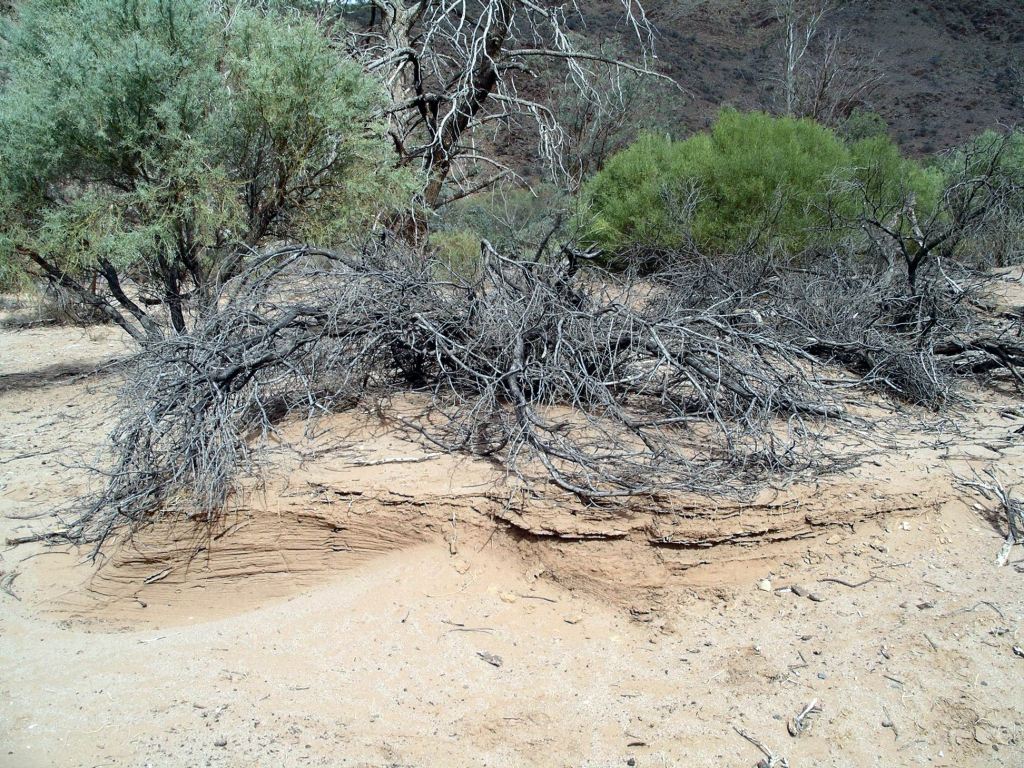
Balcanoona Creek was still flowing – good to see. The ‘roos appeared to think so, too, judging by the numbers we saw.

After Balcanoona, the way was much drier, and the road surface was pretty good.

It was a scenic run, for much of the way.

Balcanoona-Copley road

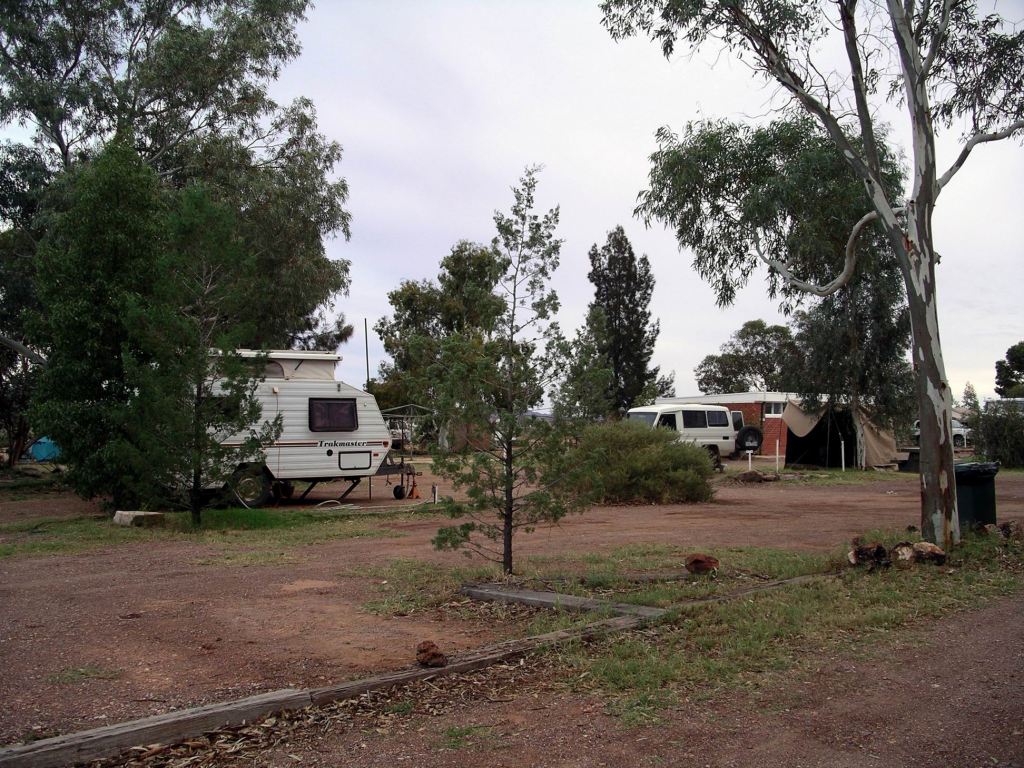
We booked into the Copley Caravan Park for two nights. Our powered site cost $22.50.

After setting up and having lunch at the van, we drove to nearby Leigh Creek, to shop for food.

Copley Caravan Park

Copley was really just a small village, with a very pleasant caravan park. There was a hotel and bakery, and a bit of a general store, but we needed to do a serious re-stock. Leigh Creek, 12kms away, was one of those soul-less purpose built mining townships, containing the supermarket we needed.

Even though the fresh produce, we found, was not due in until tomorrow, I still managed to spend $256 at the supermarket! Well, it was nearly two weeks since the last re-supply, and should be at least a week before the next. We would have to go back tomorrow for bread, fruit and vegetables.

Visited the Information Centre and picked up some brochures and maps. They were selling locally stencilled T-shirts – remainders, I thought. $5 each – can’t go too wrong at that price. They had a sort of stylized serpent on the front. I bought us one each – a nice dark green and a navy – good for not showing the dirt, which was a pre-requisite of travel clothing for us.
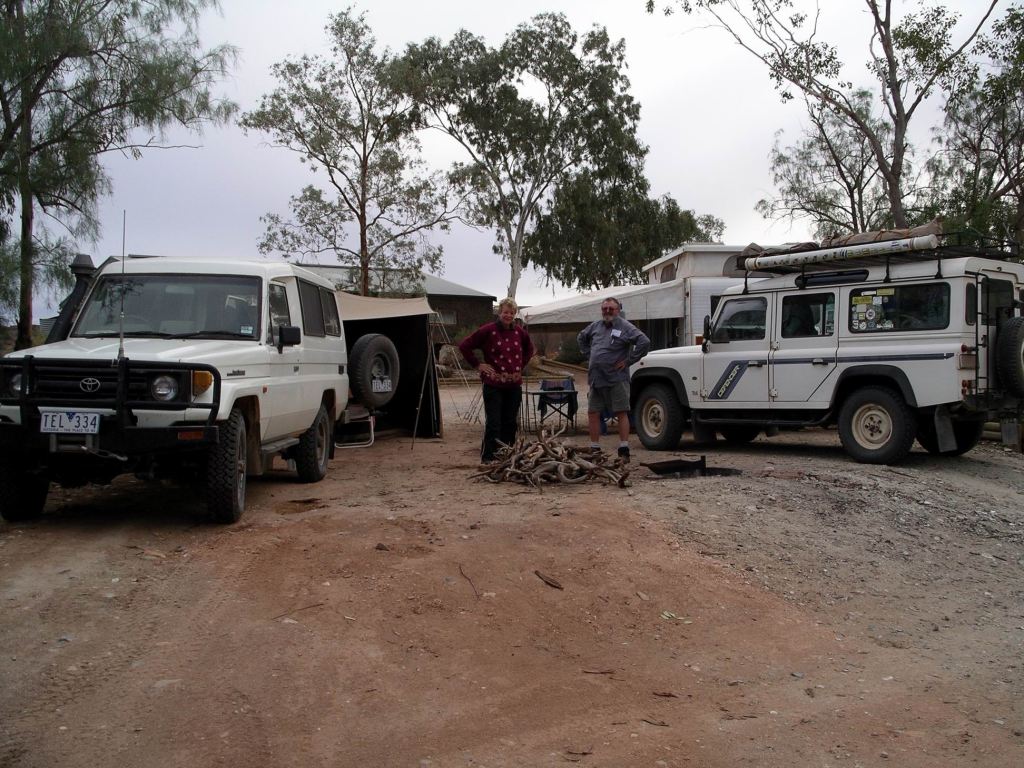
There was a group of indigines staying at the caravan park – led by the well-known Geoff Clarke, who came over to chat to us whilst M was setting up her camp. He was not as tall or big as he appeared in the media. He was taking a group of youths/young men from down Yambuk way to become acquainted with “outback” aboriginals. He did not really explain what this was supposed to achieve.
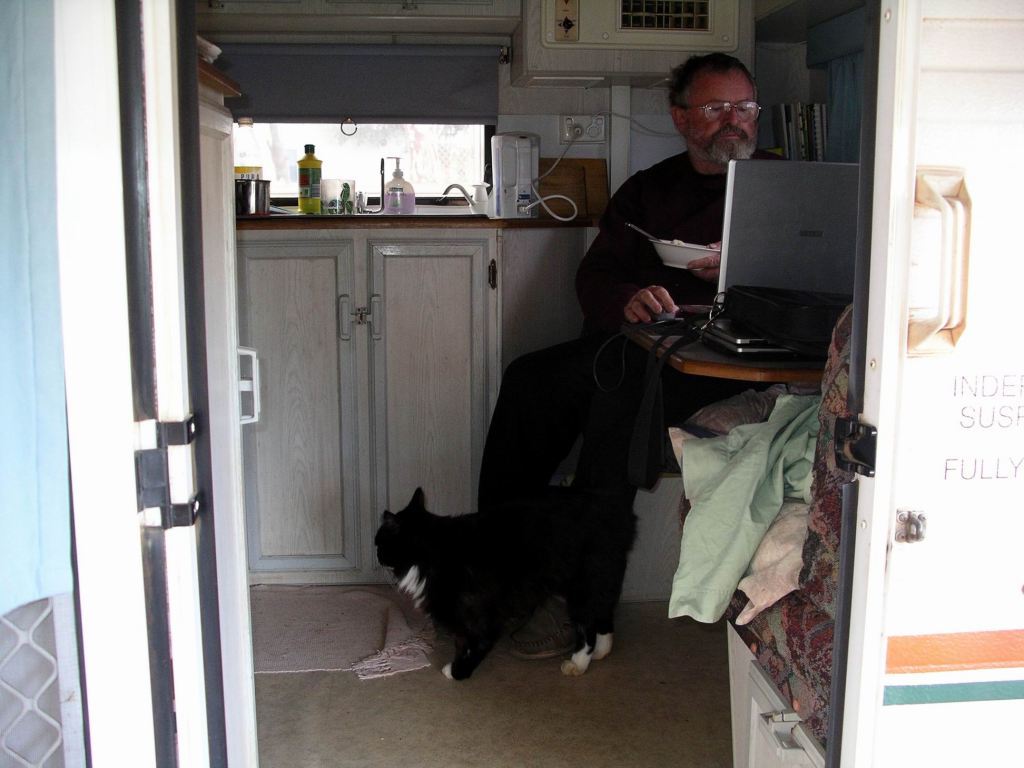
Late in the day, John was working on his laptop, in the van, with the door open. He was visited by a black cat. It just strolled in as if it was totally entitled and proceeded to make itself at home. Was this some sort of omen?

Do we want a caravan cat?

Through the evening, we could see flashes of lightning away to the south east.

Leigh Creek coal mine visible on this satellite photo


Leave a comment

2007 Travels May 14

MONDAY 14 MAY     ARKAROOLA

It was a lovely, sunny morning.

In keeping with our alternating days policy, we decided to walk to Arkaroola Waterhole, about 5kms each way from the Resort.

This route, broadly, followed the Wywhyana Creek, to its junction with Arkaroola Creek, then went upstream along the latter to the waterhole.

The first section from the Resort, was along the same road track we’d driven yesterday, on the way to the Echo Camp track. So we had driven it, but knew it would be a pleasant, scenic, walk.

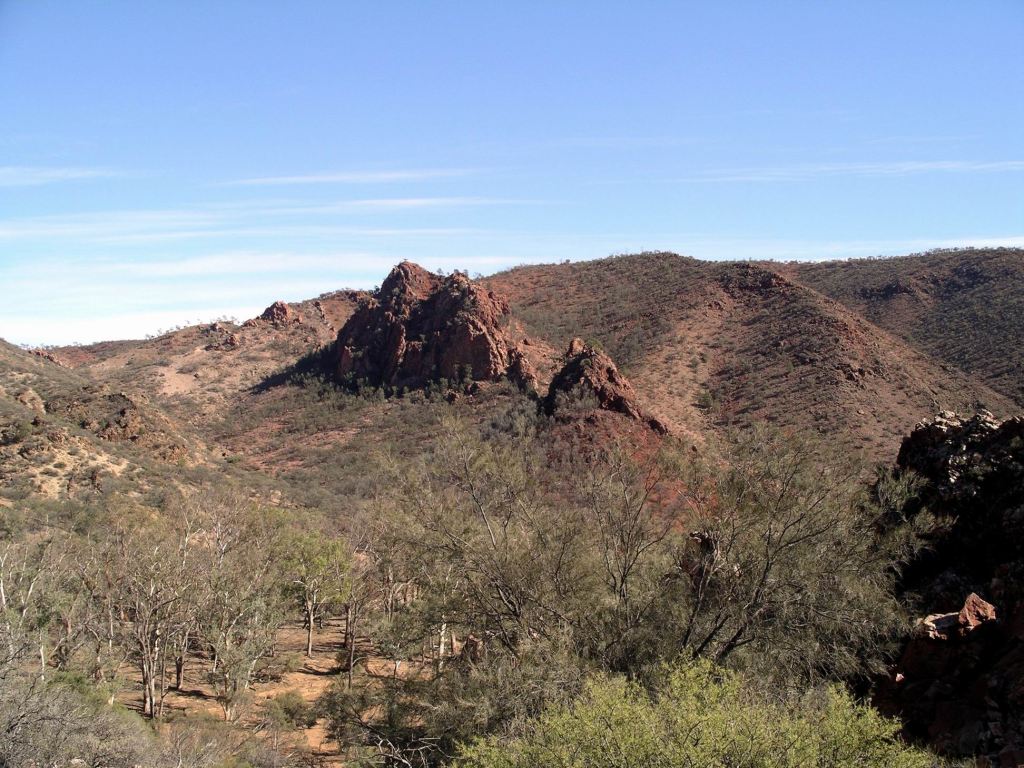
Attractive country for a walk

Yes, the walk was varied, and all on gravel roads. There was quite a bit of up and down work, parts of it quite strenuous. Funny how you don’t notice that from a vehicle!

We left camp at 10.10am, and got back at 1.40pm. Not bad. John found the last couple of kms tough, which rather surprised me, after the other, longer walks he had recently done.

Caught-up flood debris showed the extent to which Arkaroola Creek could flood….

There was still a little water in the Arkaroola Waterhole. We saw ten feral goats around it. They had made stringent efforts, here, to get rid of these pests, because of their drastically bad effect on native vegetation, and had succeeded in really reducing the numbers. But, obviously, some had still survived. They were very people shy and ran off as soon as they saw us.

Arkaroola Waterhole
Today’s “arty” photot…..

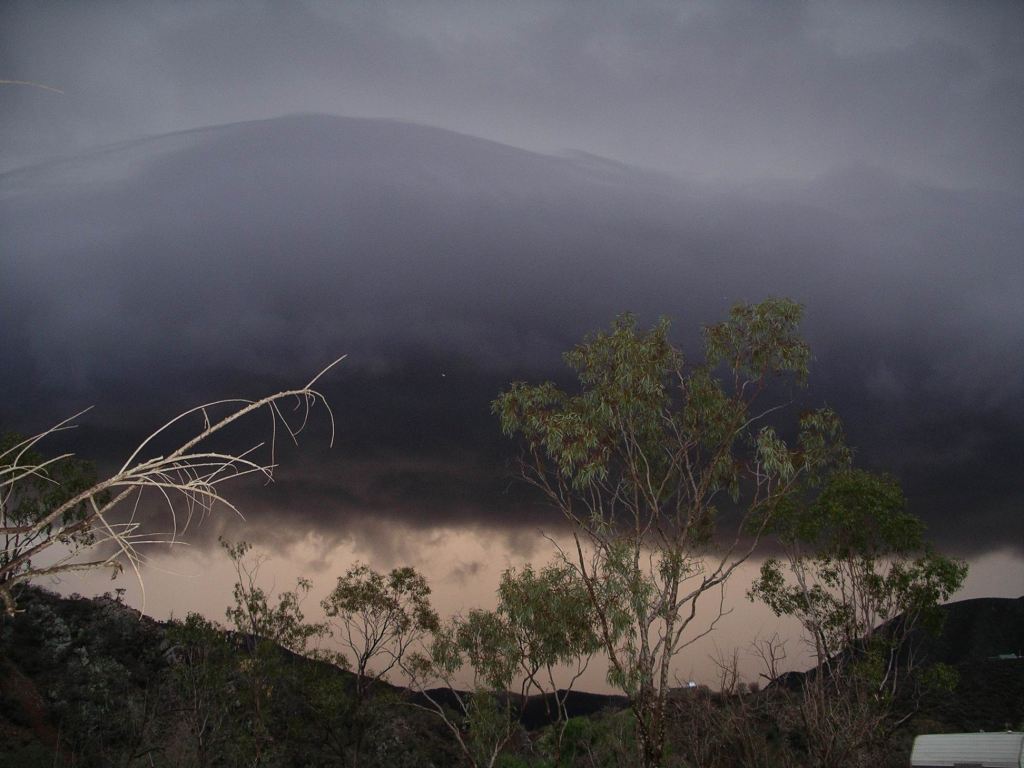
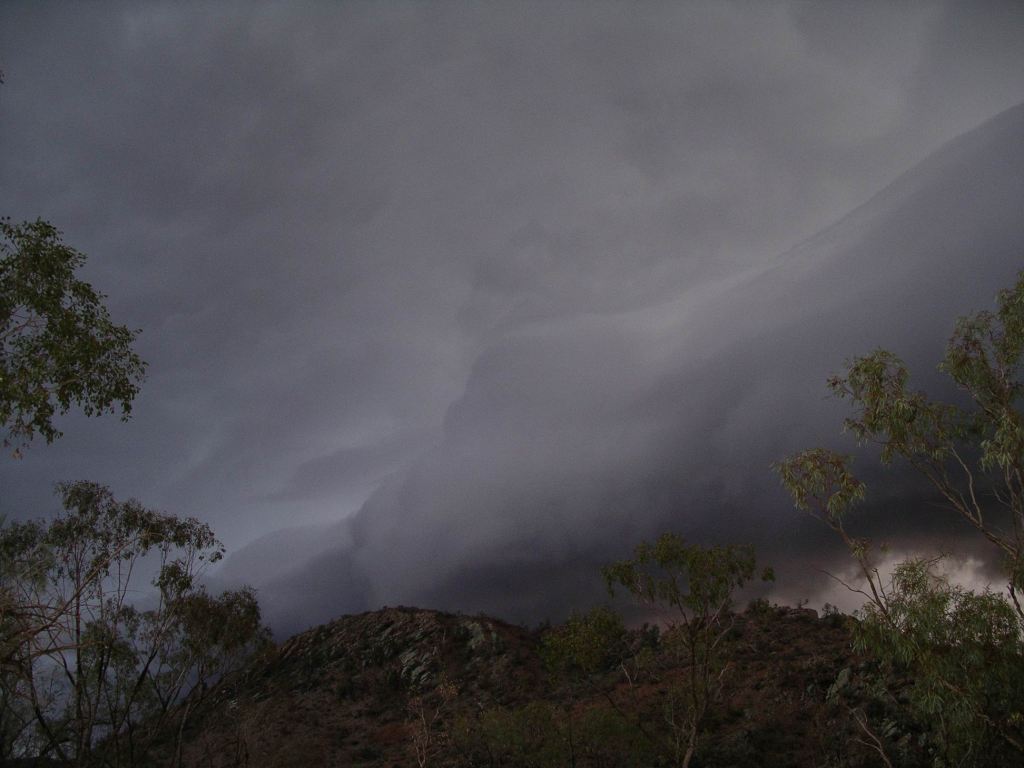
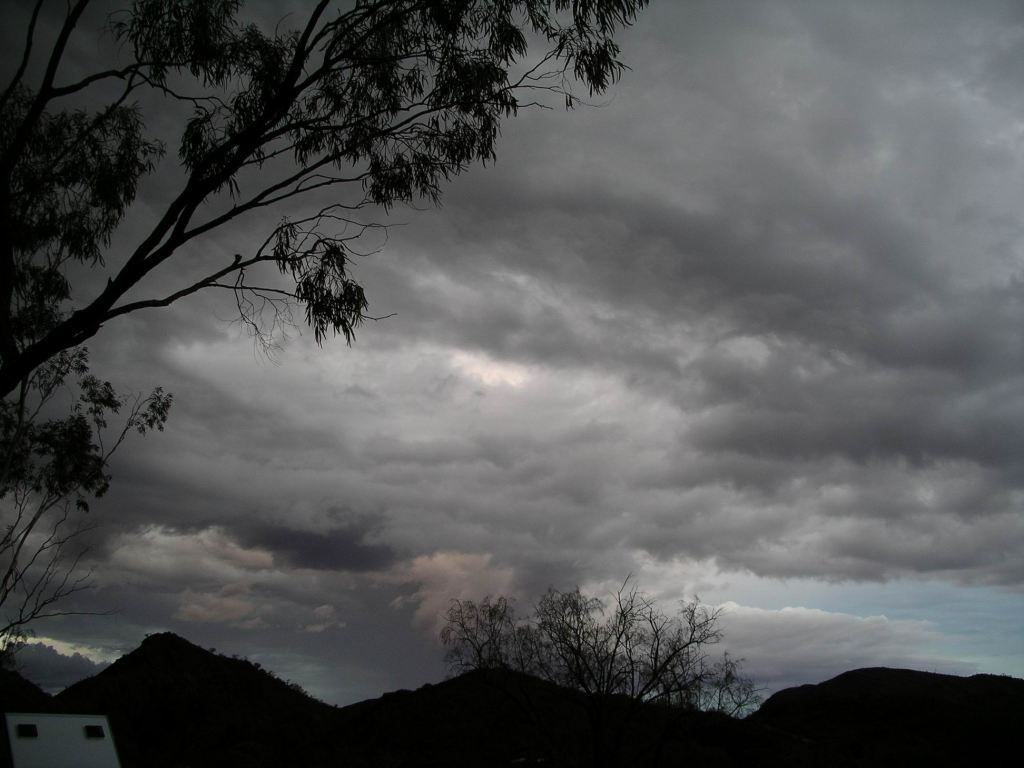
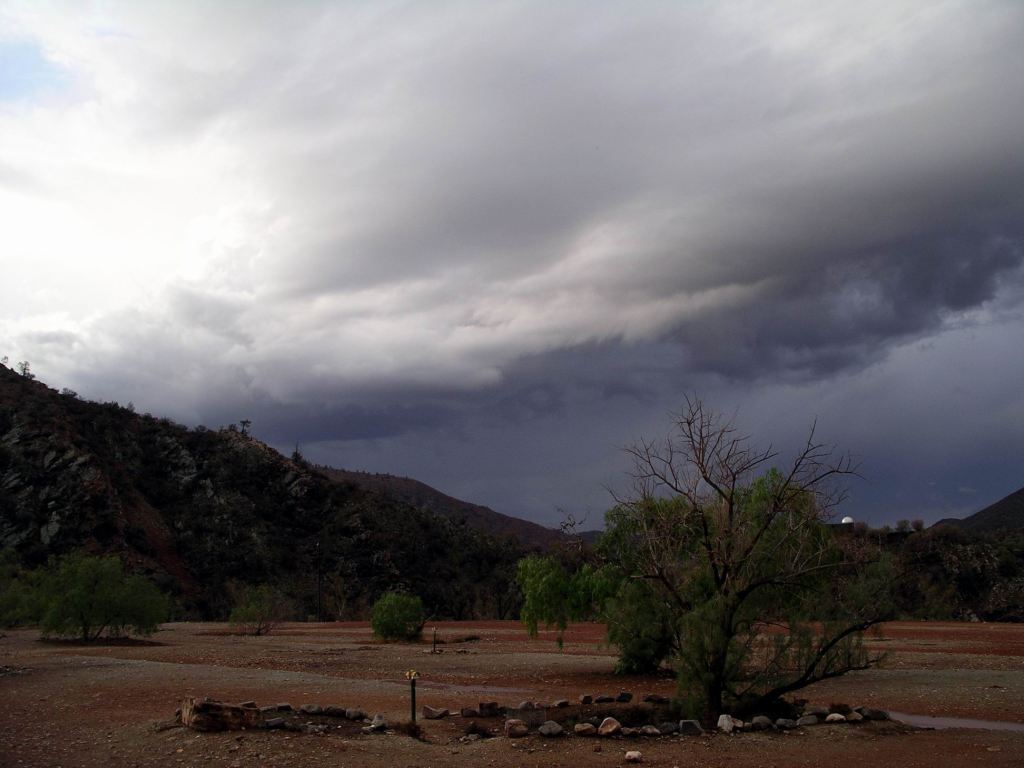
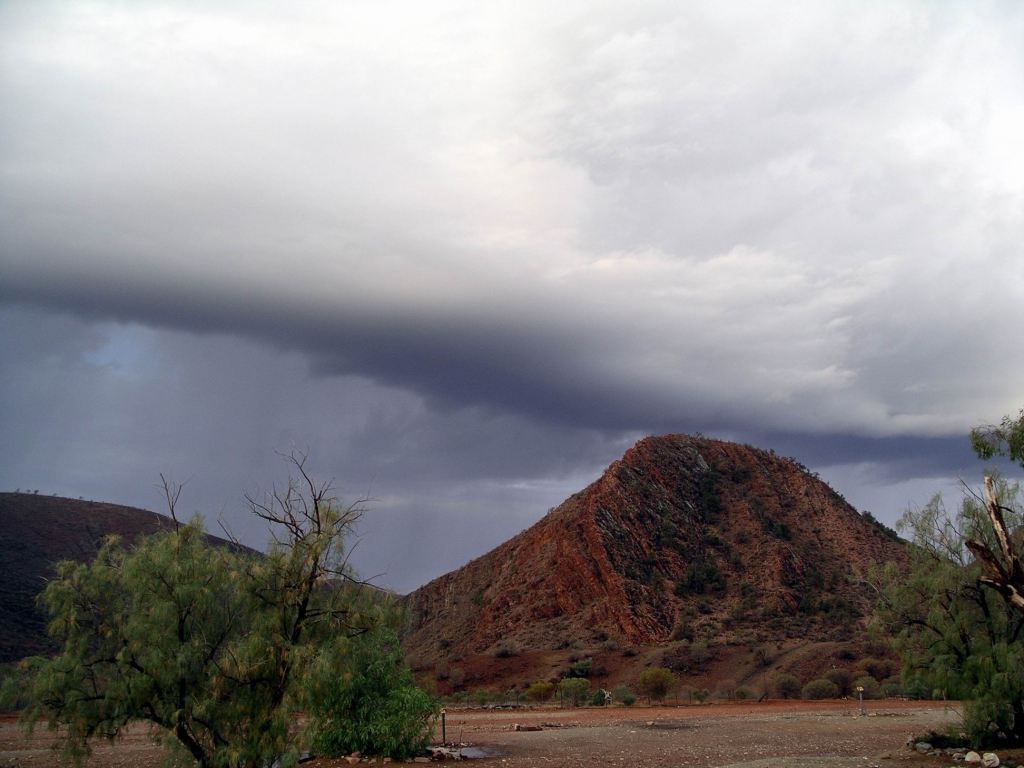
There had been a cloud build up through the morning and there were a few spits of rain, just as we got back to camp. Then the heavens opened and there was a real deluge, complete with thunder and lightning. This continued through the rest of the afternoon, and made the camp area pretty sloppy.

Threatening skies over the campground. The shining dome was one of the observatories

M had a stream running through her camp.

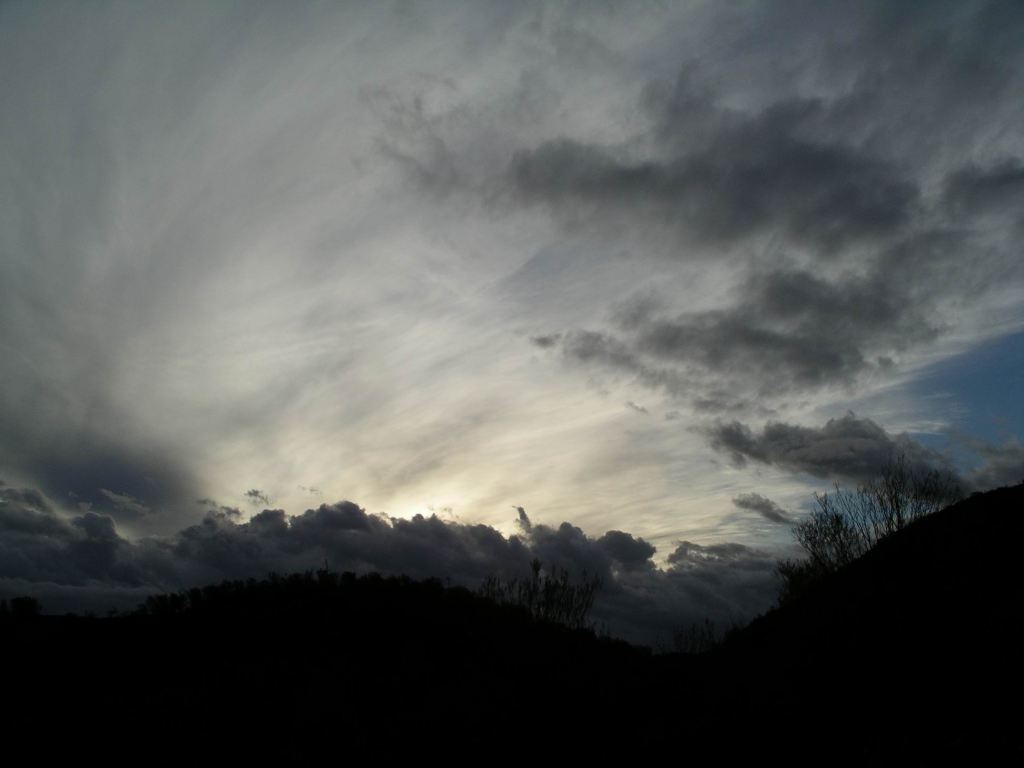
There were, at times, some very spectacular skies.

The lightning continued, in the distance, after dark.

No campfire tonight – for obvious reasons……

We watched the ABC News on TV – hadn’t done that for a while.

Retired for the night, wondering if the road would be open for us to leave tomorrow, as planned?

Found out later that there was 16mm of rain here through Monday afternoon and evening. It had felt like a lot more.


2 Comments

2007 Travels May 13

SUNDAY 13 MAY    ARKAROOLA

Today, as the weather seemed favourable (dry!), and we were running out of time, we set out to do the Echo Camp Backtrack drive. John and I had done this on a previous visit, in the old Hilux and it was certainly at the limits of vehicle, novice 4WD driver and nervous passenger at that time.  I was curious to see if it seemed as hard, this time round, with the vastly greater experience we’d had since – and with the much more capable Defender.

For M, it would be good practice at driving this type of terrain.

Mt Oliphant

Went to the Office to pay the $40 per vehicle fee to drive this locked off and private track. Signed the required indemnity form and collected the key. The payment was fair enough, as the Resort had to upkeep the track.

The guiding brochure said that the track classification was “Extreme 4WD”, requiring Advanced Driver Experience! If drivers undertaking this route did not check back in at the Resort, within what they thought was a reasonable time, they started up a search and rescue operation, and said driver had to pay any costs!

We drove out past Mt Oliphant, the same road to the north that was the access way for the Ridge Top Tour. A little way after that turn off was the start of the one-way 11km Echo Camp Backtrack, which eventually met the Paralana Springs road, and a (comparatively) easier route back to camp.

The track started off by showing that it meant business! Once through the gate we had to unlock, there was a steep climb up Dinnertime Hill. It was evident that this bit – steep, twisting, loose surface – had caught plenty of drivers unprepared and they weren’t in low range when they should have been! I wondered if any had given up at this point, turned around and gone back?

Overall, the track was much worse than we expected, and certainly seemed much harder than when we did it years ago. Much of the track deterioration, and hence problem driving conditions, was due to poor driving skills – uphill sections cut up by drivers changing gears/spinning wheels part way up, instead of selecting the appropriate gear before starting the slope.

Appeared that a lot of drivers had issues on this section!

They might say it needs Advanced Driving Skills, but they’d certainly had plenty of drivers along the track with not much driving skill at all!

We needed low range (so-called) in the Defender – actually some kind of diff lock, I think. Whatever, it always worked well. M’s Troopy – in “proper” low range – gobbled up every difficult bit – great vehicle, nearly as good as Truck! Although, we occasionally had campfire “discussions” over which was the more capable vehicle.

There were more very steep downhill sections than I remembered, too. I wondered if they had altered the route, since the 90’s?

We crawled up the very steep, chopped up  section  at the start of the track , just after the gate. Parked at the Dinnertime Hill turn out for a photo op. I walked part way back down the hill to take a photo.

Inspecting the track we had just come up…

A short way further on was the first of the very steep downhill sections. One of those where you come up the rise to the crest, with no idea of what is in front, then the vehicle kind of tips over the crest and starts down. I remembered when we first drove this track and I was changing the film in my camera at this point. I got so scared that I opened the back of the camera without rewinding the film first!

Via CB, we advised M to wait at the top, on the crest, and we would film her descending, from a point part way down.

Took a little side track, in to Echo Camp Waterhole, on Arkaroola Creek, which this route now followed for some way. We wandered about for a little while, looking at the creek and waterhole, and enjoying the bush.

Waterhole at Echo Camp – very drought depleted

A further 4kms on, over lots of ups and downs, and surrounded by brilliant scenery, we came to a track junction – the way out to the left, Barraranna Gorge straight on.

 A quick survey showed us that the start of this side track was pretty rough, so we decided to leave the vehicles and walk the 1km to the Gorge.

Track into Barraranna Gorge

That little expedition took us about an hour, by the time we explored the gorge a little bit. I was not sure it was worth the effort, but the walk was pleasant enough. It gave us a good chance to take in the scenery, something the two drivers did not get to do much, on tracks requiring real concentration.

M out in front, as usual….
Barraranna Gorge

There was still a little water in the rock pools in the gorge.

Where we parked the vehicles, to do the walk, was a set of old sheep yards – still standing because they were made of termite resistant mulga.

Old sheep yards
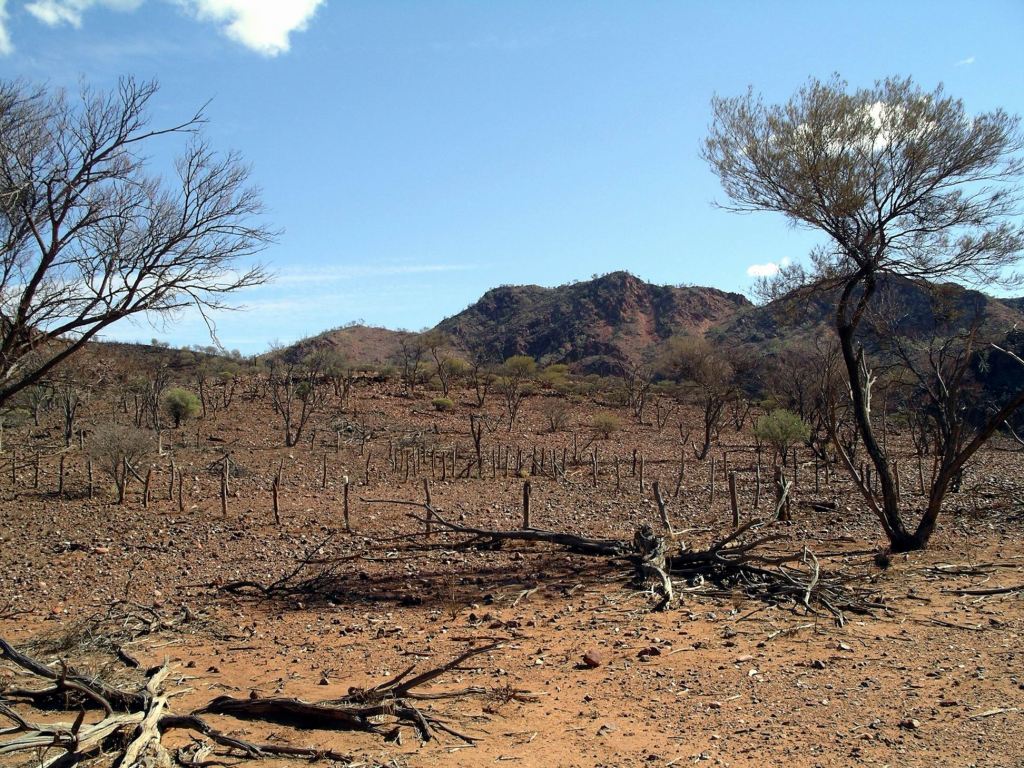
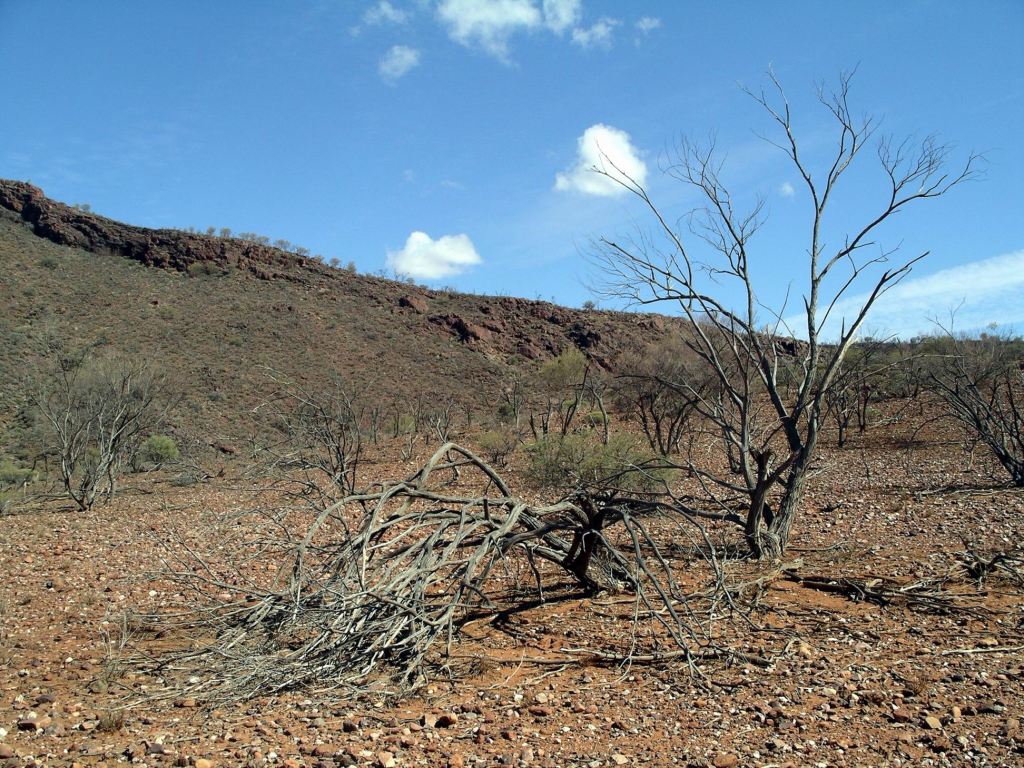
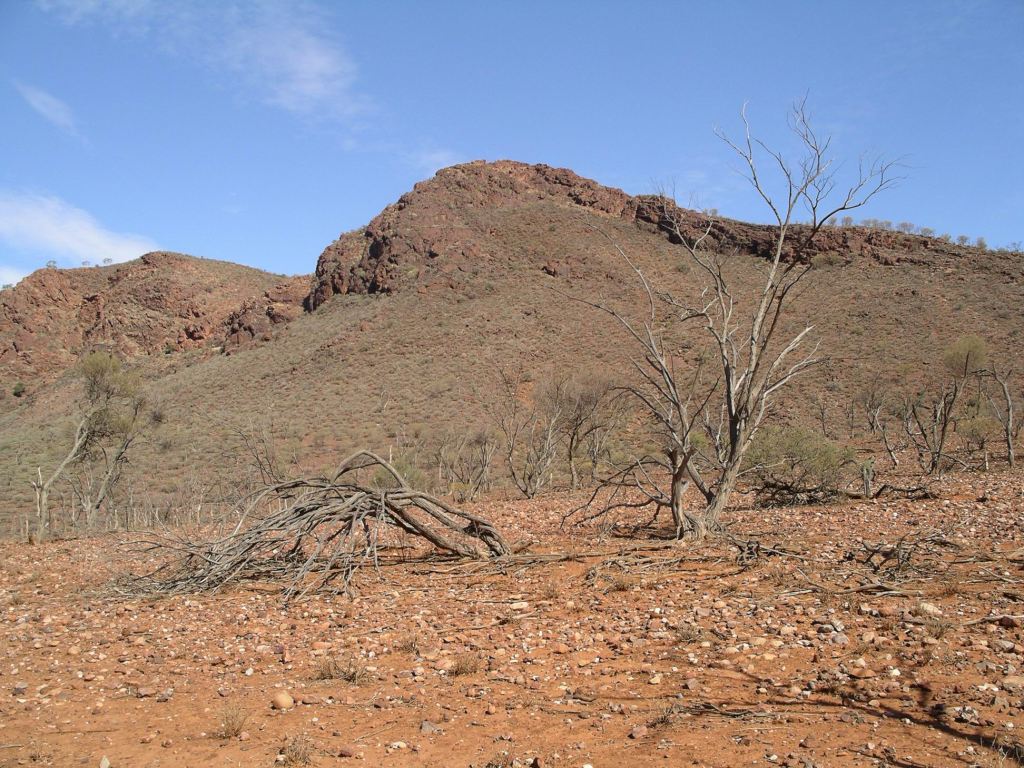
My fascination with the shapes of dead mulga was getting a workout, this trip

We continued on the one way track. This became somewhat easier after the gorge junction, but perhaps not quite as scenic.

M following along behind us…..

By the time we reached the junction with the Paralana Springs track, John and I were all gorged and 4WD-ed out! We opted to drive straight back to camp. This was a fair drive in itself – maybe 15kms, and was attractive, along through Claude’s Pass.

I had been trying to remember back and really didn’t think that the track of the 90’s came out so far from the Resort. I wondered whether it had used the route through Spotted Schist Pass, that was now washed out? But the memory can play tricks….

Route of Echo Camp Back Track. Circled are Echo Camp Waterhole & Barraranna Gorge

M was still feeling adventurous and went off on a different track to visit Tillite Gorge, which she reported later was not all that special.

We reported ourselves back in at the office. M reported when she came in.

Had our usual night time sit around the campfire.  M was really stoked about the type of driving we had done today, and how well both she and the Troopy managed it. Great boost to her confidence!

This slow, quiet socializing was a most enjoyable aspect of this trip, to date. John and I have long had a general policy of not travelling with other people – leaving us free to do exactly what we want. However, M is the one person we have made an exception for. Might have something to do with she and I knowing each other for over fifty years, and having trekked and hitch-hiked our way around parts of the country, in our adventurous late teens! A friendship forged in some interesting “adventures”…..


Leave a comment

2007 Travels May 12

SATURDAY 12 MAY     ARKAROOLA

It was a quiet camp day for John and me. John had done a lot of driving and walking since we had been here so it was time for a little rest. We tended to forget that it was only three months since shingles had really knocked him about and deprived him of any energy, for ages.

I now had a sore knee. Suspected it was from trying to favour the ankle with the sore Achilles, when walking.

It was a rather cool day, but with blue sky. Later in the day there were some interesting cumulus clouds building up.

M – ever energetic – was feeling like doing more walking. She decided to tackle the 15km Oppaminda-Nudlamutana Walk, which she thought looked interesting. It was not one that interested me, though, because the route went up and over Mt Warren Hastings – 590 metres asl. I try to avoid walks that go up and over mountains! Even up and over steep hills…..

The trail could be picked up from the campground, so she set off at 9am. She reported there were great views from the top of Mt Warren Hastings! Then the route passed Nudlamutana Hut, before arriving at the Balcanoona road, about 9kms south of the Resort.

As we’d arranged, at 12.30 I drove out the Balcanoona road, to where the end of the walk track met that road. I was expecting to have to wait for a while for M, and had taken a book to read. But she trudged up to Truck at 12.45pm. That woman can walk! She had done the walk in very good time, but was stuffed!

M’s walk

We all lazed about camp for the rest of the day.

The Road Conditions notice board on the way out of Arkaroola Village said that the Strzelecki Track was closed. Some of those dark clouds we had been seeing to the north must have dropped a heap of rain on it. From Balcanoona it was possible to get to the Strzelecki Track on a back route that went through stations like Moolawatana and met it near Mt Hopeless. On one of our school holiday trips in the early 90’s, we’d come that way after a camping trip to Innamincka, and found it quite a straight forward and pleasant drive.

Through today, there was more cloud building up in the distance.


1 Comment

2007 Travels May 11

FRIDAY 11 MAY     ARKAROOLA

We seemed to have adopted a pattern of one walking day, one driving day. Today was another driving one, but John needed to refuel Truck first at the Resort’s garage – $1.50cpl.

We headed west from Arkaroola, with the two vehicles.

Track to BollaBollana

First stop was not far, only about 5kms out, at the Bolla Bollana ruins. There had, briefly, been a copper smelter here, in the late 1870’s.

Kiln

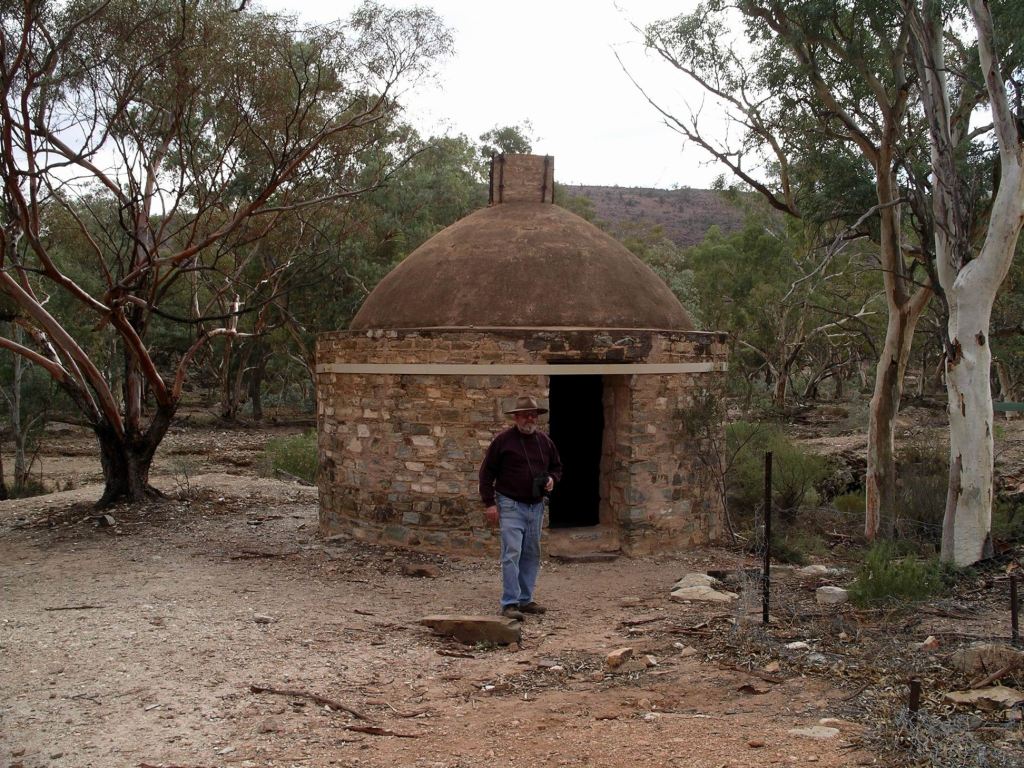
The most obvious remaining feature was a conical structure which was probably a kiln for making fire bricks for the smelter structures. It remained fairly intact. There were, in fact, lots of old bricks scattered about the ruins.

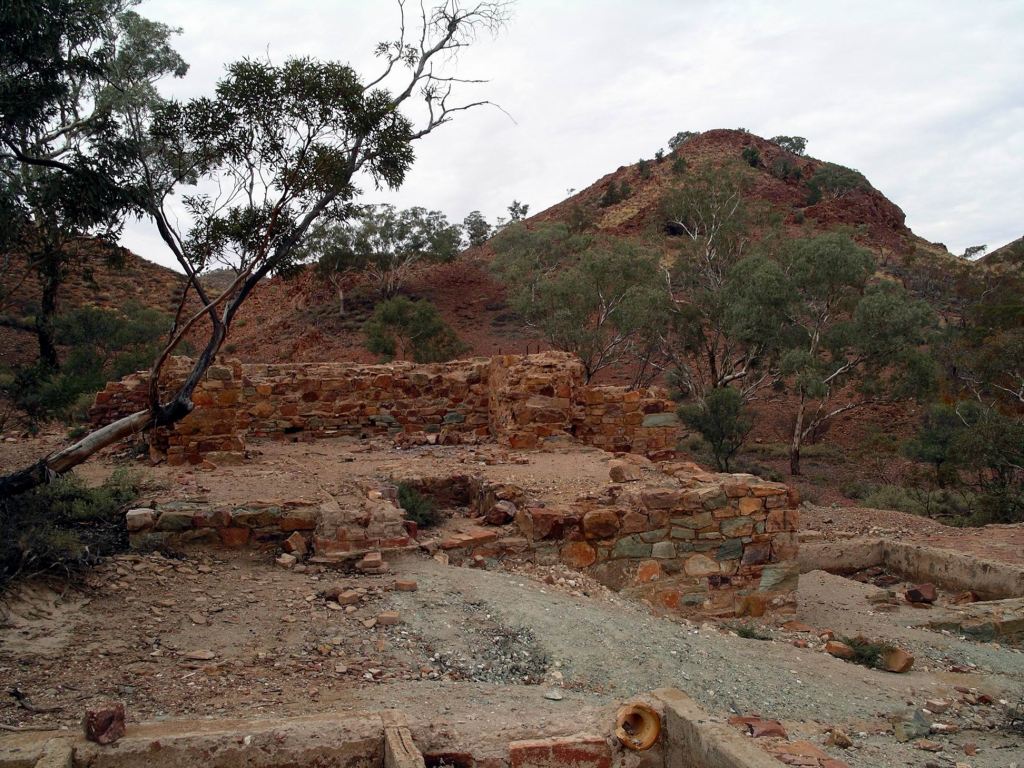
Slag heaps and scattered bricks at Bolla Bollana

A straight channel in the ground may have been some kind of underground flue, connecting the smelting furnace with the chimney that would have been there. We presumed it had collapsed in on itself.

Bolla Bollana was in a valley – at the moment  with a dry creek bed. There was a waterhole nearby. This presence of water, which was scarce near the actual copper mines further  north, plus  nearby timber, explained why the smelter location was here, rather than at the Daly and Yudnamutana mines.

Copper was mined throughout these parts, in the latter part of the 1800’s. It never ceases to amaze me that such deposits were even ever discovered in such remote and inhospitable parts, let alone mined. Mining companies were formed, came and went – often with little return and considerable loss to those who were shareholders. Places like Yudnamutana were such a huge investment, in terms of human effort and suffering, for – often – so little return.

We wandered around the smelter site for a while. Apart from the kiln and channel, there were a few piles of stones/bricks about. This was not all due to the ravages of time: parts of the structures were demolished to be used elsewhere.

The original intent was to smelt the copper from a number of small mines in the surrounding ranges  – the Freeling Heights. However, the smelter was not particularly successful, only managing to process a small quantity, and it was superseded by a new one built at Yudnamutana, after a process was developed that was not as reliant on timber (for charcoal) and water. Then the whole lot were superseded by the shutting of the mines!

The structures that remain are interesting. There would have been a small settlement, too, of workers and families, maybe some sort of store.

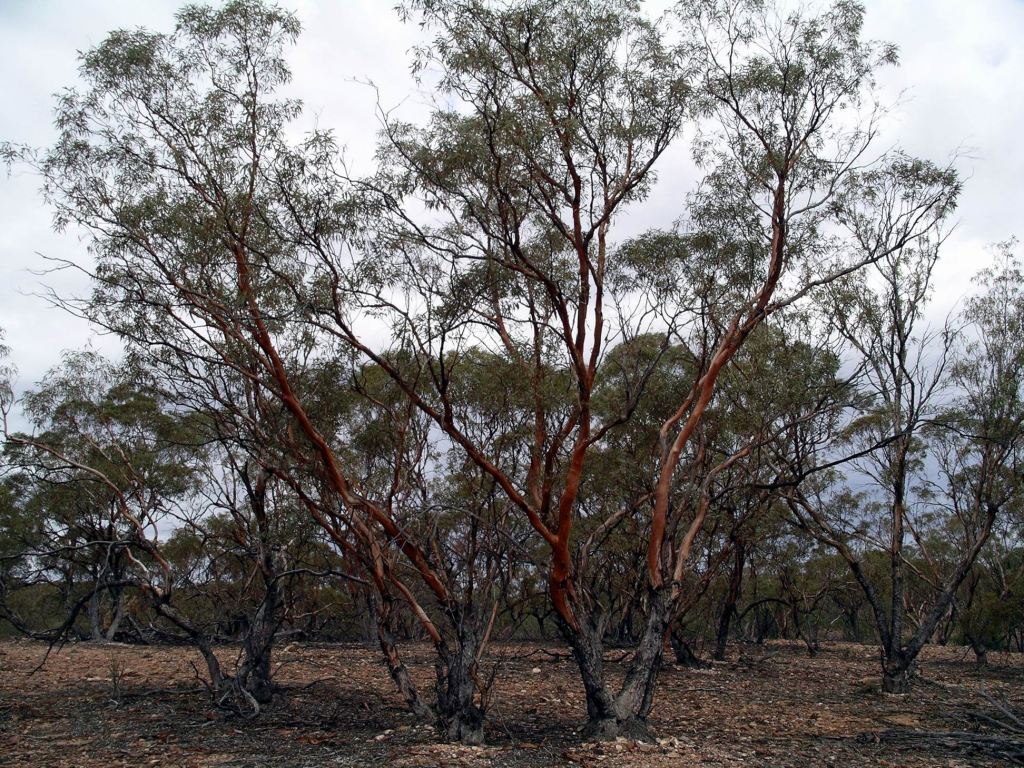
I found the scattered mallee type trees here, really interesting, with their upper coloured branches.

Next stop, another 12 or so kms further on, was at Wheal Turner – again, the remnants of a copper mining operation, this time on a hillside. There was an ore crushing plant here too. There were foundations of buildings evident.

Wheal Turner ruins

Then it was on again, seemingly further into the wilds, to the extensive ruins at Yudnamutana, at the edge of the Freeling Heights.

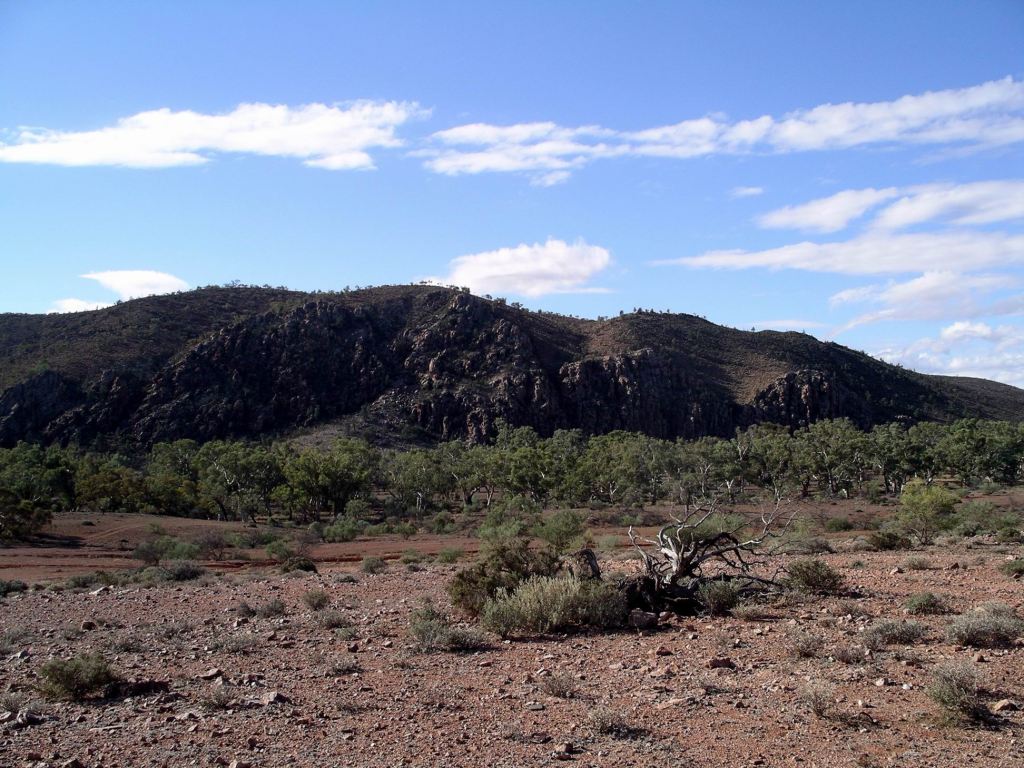
Freeling Heights
The mud map we were working from……

The drive in here was a really pretty one, the track winding through valleys, often fairly open ones, but then passing through narrow gaps where creeks had cut through ridges. Were we so inclined, and had there been the motivation of no vehicle access, this would be a great track to walk.

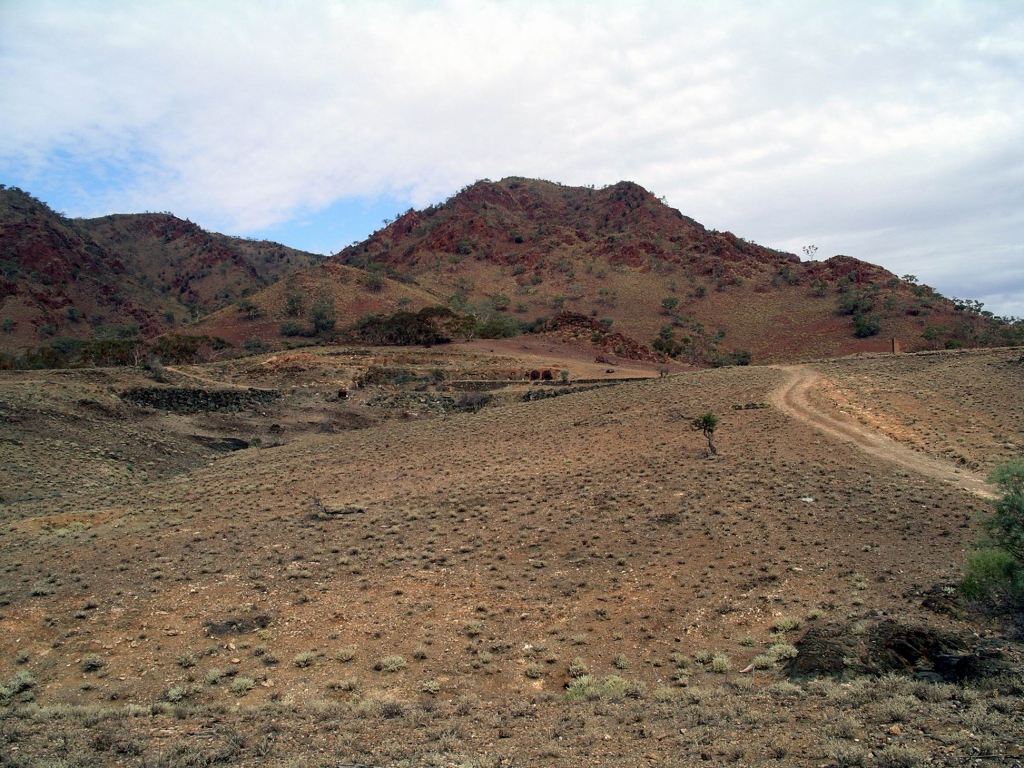
The remnants of what was a fairly intensive and spread out mining operation are spread out over several clusters here. But the main focus was the former settlement at Yudnamutana, centred around at least four old mines and a smelter.

Yudnamutana around 1900 (Wikipedia)
Yudnamutana now

A few kms further around there had been a number more mines, making the Yudnamutana smelter an obvious choice. The task of carting ore to Bolla Bollana – in the days of horse and cart, would have been really onerous.

Brick ruins and old Cornish boilers

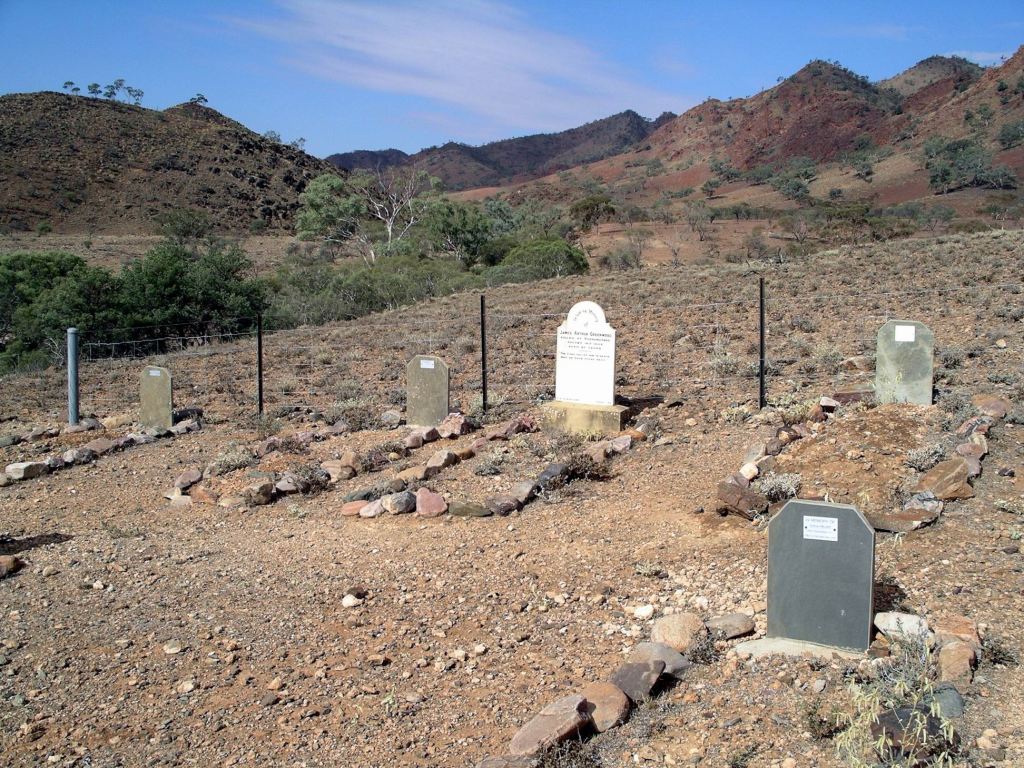
At Yudnamutana were parts of buildings, old mine boilers, and a most interesting, forlorn cemetery, where there had been some restoration work done.

The most intact  head stone there was for a James Greenwood, who died in 1903, after he broke his leg whilst down a mine shaft. He could not get out of the shaft unassisted, and so died down there. His body was found some ten days later. Another marker was that of a woman shot by her husband.

We spent several hours wandering about here, and had lunch too.

The Yudnamutana copper field was mined from the 1860’s, but was rather stop-start, due to frought and water shortages, mining companies running out of money, and the general difficulty of the remote area. In 1910, a  smelter was built here, but some sources indicate that it was never actually fired up. Mining ceased in 1912.

We noticed signs of fresh pegging in places around Yudnamutana . Looking for uranium?

On the way back to camp, detoured a short way to visit NooldooNooldoona Waterhole. Try saying that three times!

Walking into NooldooNooldoona Waterhole

This waterhole was one of several that were, essentially, deeper places in the creek beds, that held water long after the creeks had dried up. As such, they are vital to the wild life of the area.

After decent rains, this would be part of the waterhole

There was very little water in this one. It would be worth a return visit after decent rains, whenever that might be.

Yellow footed rock wallabies hang out in the rocky surrounds. I was surprised how fat the ones we’d seen in the area to date, were.
One fat yellow footed rock wallaby
Nup, don’t want to know those people…..

Another campfire night. The skies were clearer than they had been for the past couple of nights – we could see a lot of stars. It was not as cold, either, surprisingly, given the clearer skies.


Leave a comment

2007 Travels May 10

THURSDAY 10 MAY     ARKAROOLA

It was another overcast day.

We had planned for this to be another Gammon Ranges NP day – getting in before the Park was closed.

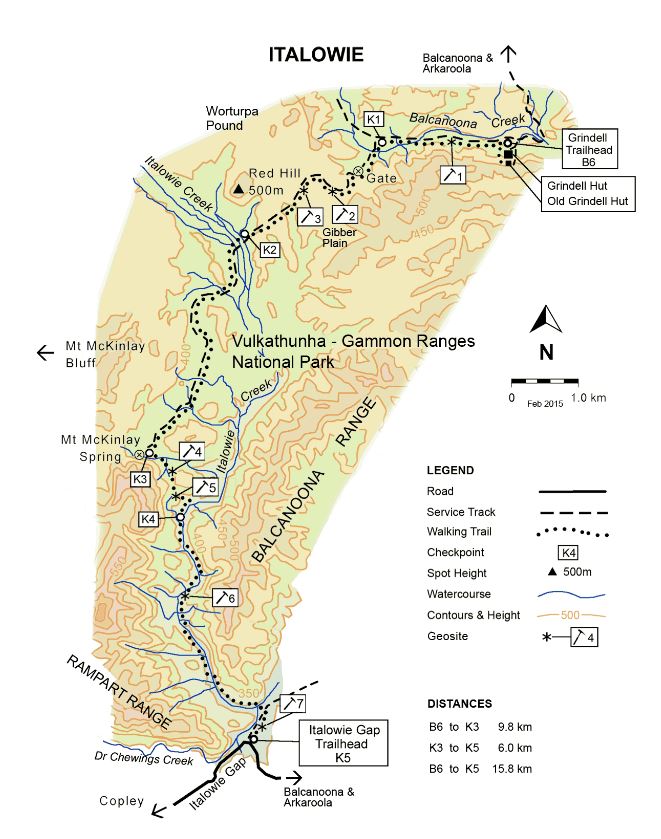
The Italowie Gap walk beckoned. This stretched from Grindells Hut trail head, south through to Italowie Gap, on the Copley road. It passed McKinlay Springs and for some of the way followed the gorge of Italowie Creek.

Unfortunately, the logistics of this demanded a vehicle at each end of the nearly 16km long track. Walkers sure as hell do not want to turn around and walk back again!

Rather than use both our vehicles, which would involve initial shuttling back and forth, and have legal issues – in that M’s Troopy only has two seats and seatbelts – we decided to only use Truck. I would drop the other two off at the Grindells Hut end of the track, then drive Truck, with its seats and belts for three (in travel mode we leave the rest of the back seat at home to make room for more gear!) to the other end of the track. This would give me some time to doodle about on my own, indulge in taking photos, and – importantly – save my Achilles from another huge walk. It was still deciding whether to continue to sulk over the last one, or cheer up and forget it!

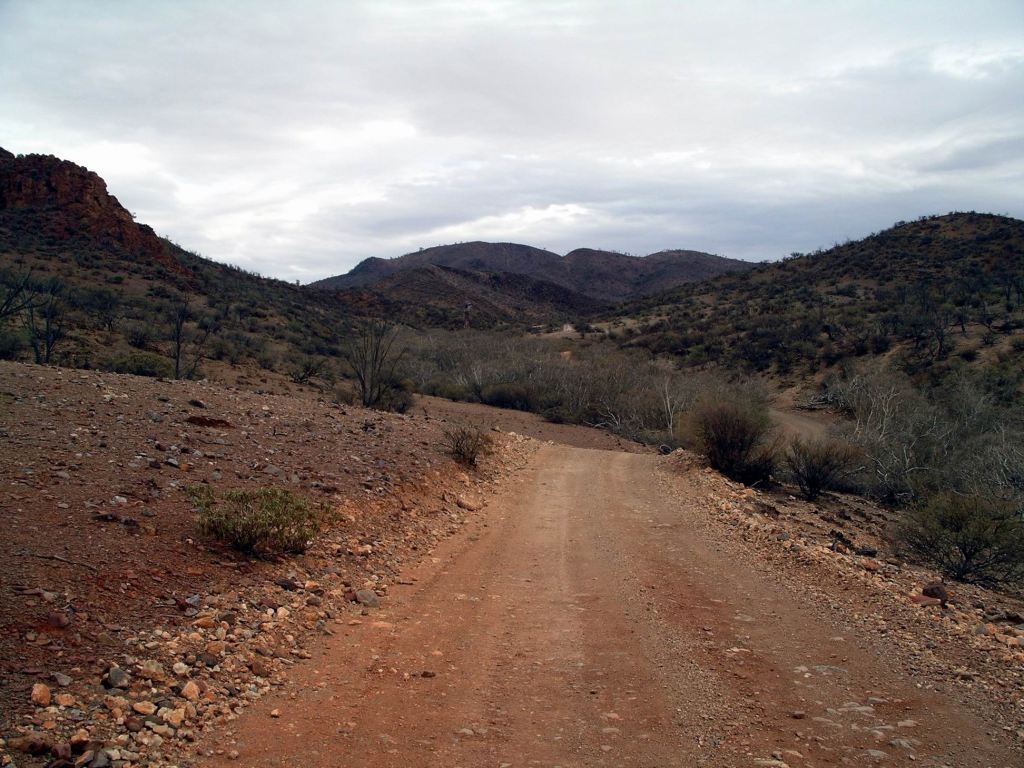
Along Mc Taggarts Track
McTaggart Track to Grindells Hut

After parking Truck at the Italowie Gap trail head I would walk north and meet the hikers coming the other way and return with them. I did not mind back tracking – things look different coming the other way…..

And thus it worked out. I really enjoyed being able to stop and take photos whenever the urge struck – that was a luxury.

Distant hills glowing in a patch of sunlight….
Weather undecided….

I eventually parked Truck and walked up the Gap track for about 4kms, before meeting up with them.

Start of the Italowie Gap track

Yet again, I could dawdle and take photos and just look about.

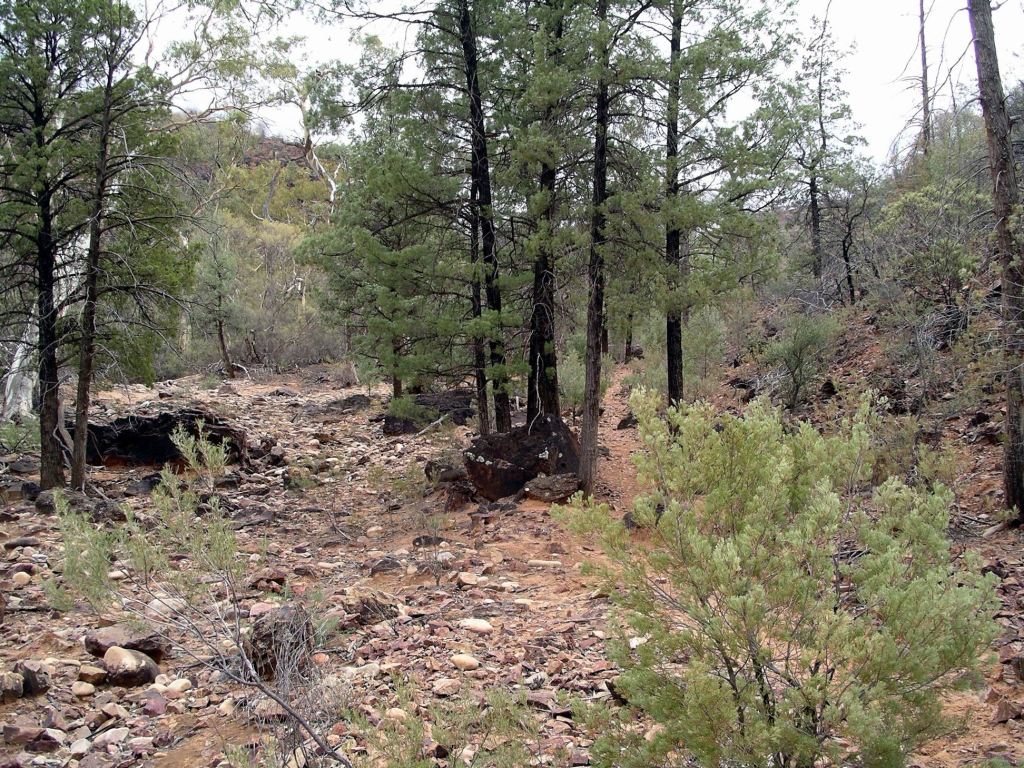
Native cypress pines. Track just to the right of the creek bed

I wasn’t focussed on making too much distance, knowing it would be doubled. Sat on a big rock and ate my packed lunch, enjoying the surrounds and solitude – totally only bush noises around me.

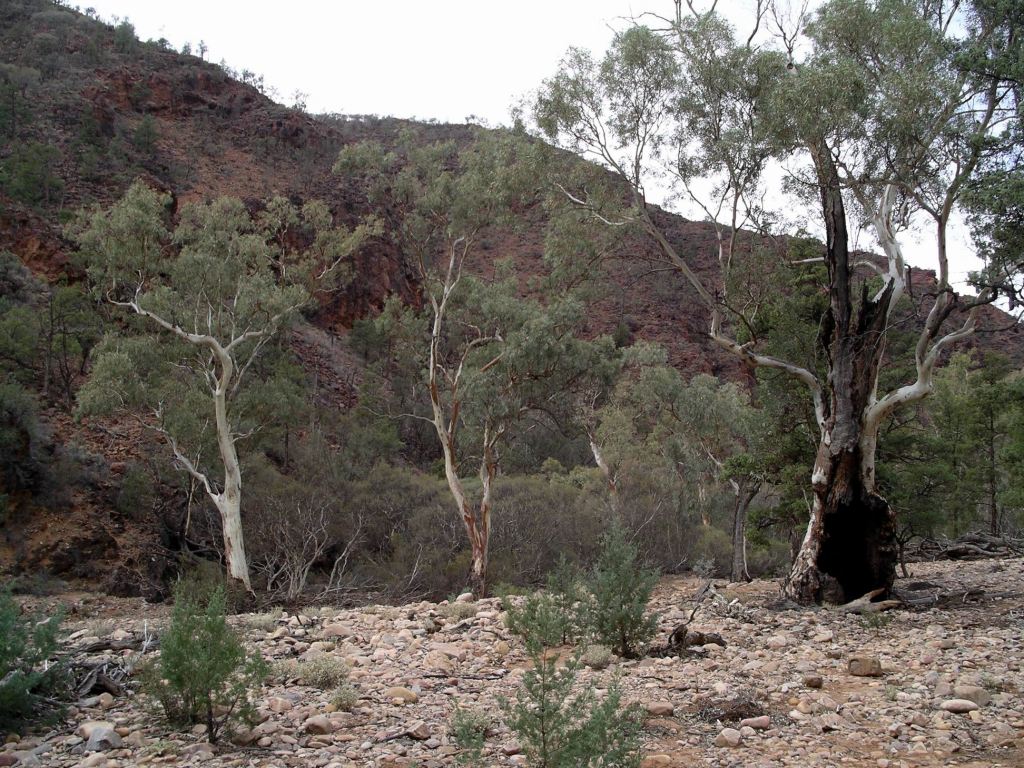
I wondered what had caused the hollowed out base of the old tree in the creek bed

The section I covered was a really attractive part of the walk, beside or along the dry creek bed, with red rock walls on either side and lots of vegetation.

At times it required fairly close attention to where I was putting my feet, especially on the rocky creek bed sections.

Advisable to stop walking before gazing at the scenery, on terrain like this….

The others  had made good time, including a lunch stop, so I was a little surprised to meet them as soon as I did. They had really enjoyed the walk, and the sense of meeting a challenge. They’d had some uphill and then downhill sections to do, whereas I got to walk the flat part!

Going back the way I’d come was not at all boring – it was a lovely part of the track, and it did look different! So, I did a fairly respectable walk of about 8 kms.

Through the day, the cloud cover occasionally broke up a bit and there were patches of blue sky, which brought out the colours in the gorge better, for photos. I was sorry that we’d not had a properly sunny day for this jaunt.

On the way back to camp did another firewood gathering stop.

It was quite chilly around tonight’s campfire. As usual, we rehashed our day. John was really pleased with his walk performance. I was happy that the Achilles did not seem to be worsening, despite the walking on uneven ground.  This mix of driving days and walking days seemed to be working out well.


1 Comment

2007 Travels May 9

WEDNESDAY 9 MAY     ARKAROOLA

It rained through the night. That ominous grey sky, yesterday, was for real. Today turned into a grey, chilly, damp one. What is it about us? We should charge for rain making, I reckon. It happens to us all the time – usually when someone says “It doesn’t rain up here at this time of the year.”

We spent most of the day in the van and M in her living tent. There is little motivation in parts such as these – or in any parts for that matter – for going out and getting wet, just for the sake of doing something.

I passed the time reading and writing diary; John played computer games; M did crosswords and read.

M and I walked up to the office and extended our stay by four  nights.

After lunch, it began to clear up, though it was still overcast.

About 3pm we decided to go for a (relatively) short drive – to Paralana Hot Springs, to the NE of Arkaroola, some 30 kms by track.

Had to drive back down the “main” road for about 6kms, then took the 4WD Stubbs Waterhole track, which eventually became the track to the springs.

The track was much rougher than we expected, so the “short” drive took longer than we’d expected. High clearance was definitely needed on that track!

From the parking area, we had to walk a short way to reach the pools that are the springs. These were steaming slightly, in the cool air. I found them quite sinister looking, but this feeling may be due to knowledge of their origin and nature – suggestivity?

Springs a little way in there…..

Paralana Hot Springs are one of only three radioactive hot springs in the world. The granite rocks in these parts contain uranium, which is breaking down and giving off heat – true “hot rocks”. Ground water passing through cracks in the rocks gets heated up and emerges as springs at around 60 degrees celsius temperature. Too hot for most things that would normally live in a spring fed pool in these parts,  (disregarding the radioactivity!)

Paralana Hot Springs

The uranium decaying process also gives off very highly radio active radon gas. This is a heavy gas and in still air settles over the surface of the pools and surrounding areas. It gets blown away when there is any breeze – fortunately, because it is very bad for life forms such as us!

Apparently, there is some primitive slime – extremophiles – in these pools that may be a remnant of the original life form on Earth – when things were much hotter. These are of great interest to scientists. They postulate that similar life forms may be found on Mars. If this stuff was the original life form on Earth, that must mean it is a very distant relative of ours.  Looking at it. I am not enthralled with that thought…..

Extremophile slime

There really is so much that is interesting and unique about this lesser known outlier of the Flinders Ranges.

It was dusk by the time we bumped and ground our way back over the atrocious track to better going, and hence back to camp.

No campfire tonight, in the chill and damp. Just tea, and a retreat to our respective boltholes.